
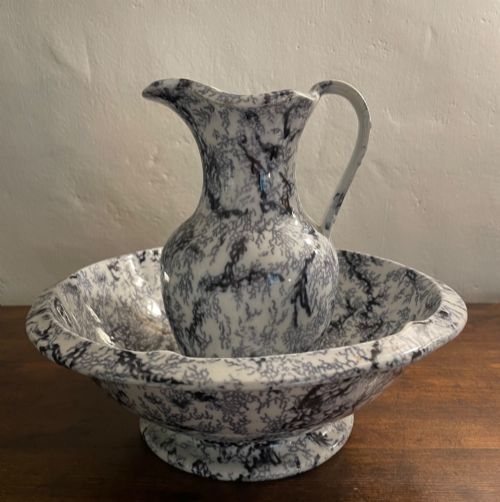
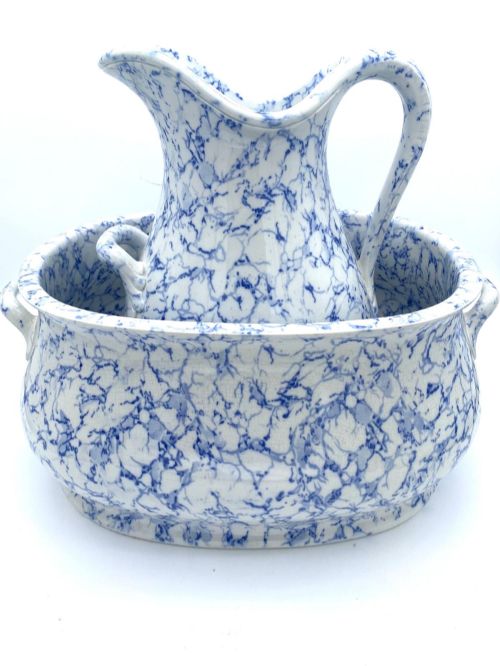
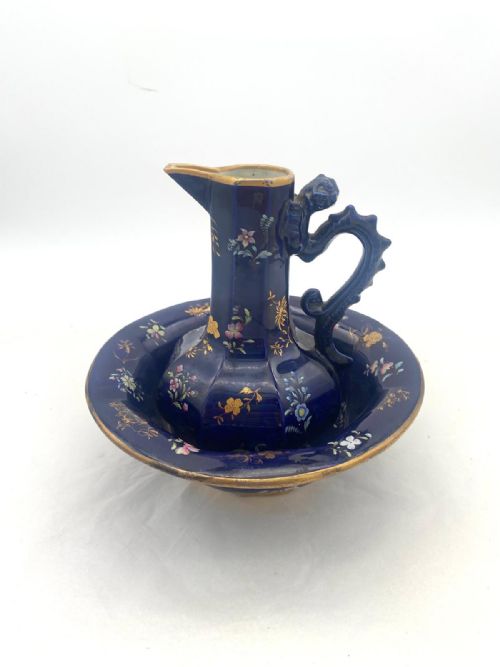
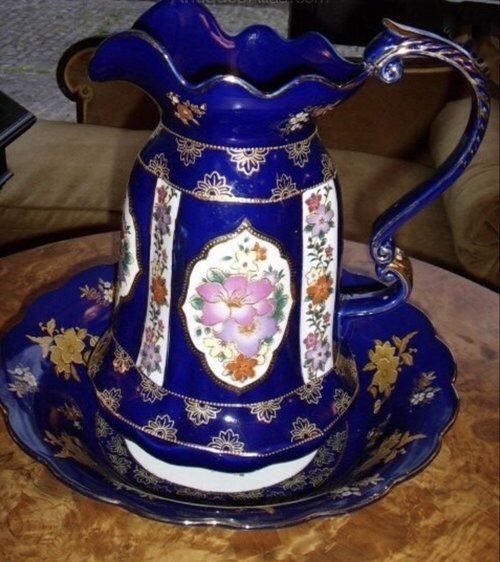
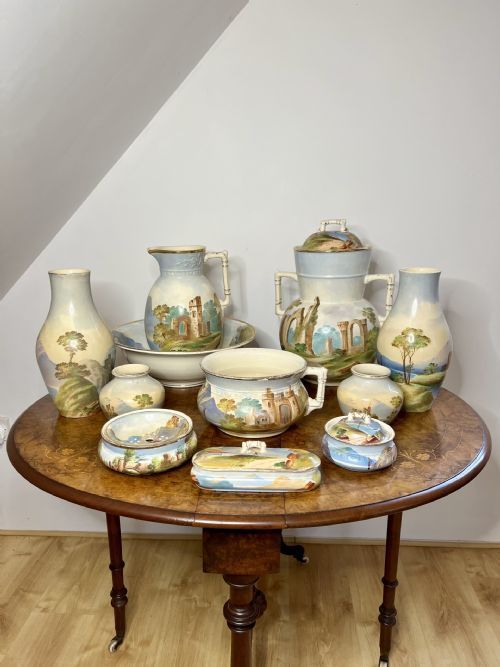


Blue Ceramic Wash Set
These blue ceramic wash set pieces bring washstand sets and jug and basin sets into modern homes for daily display and use.
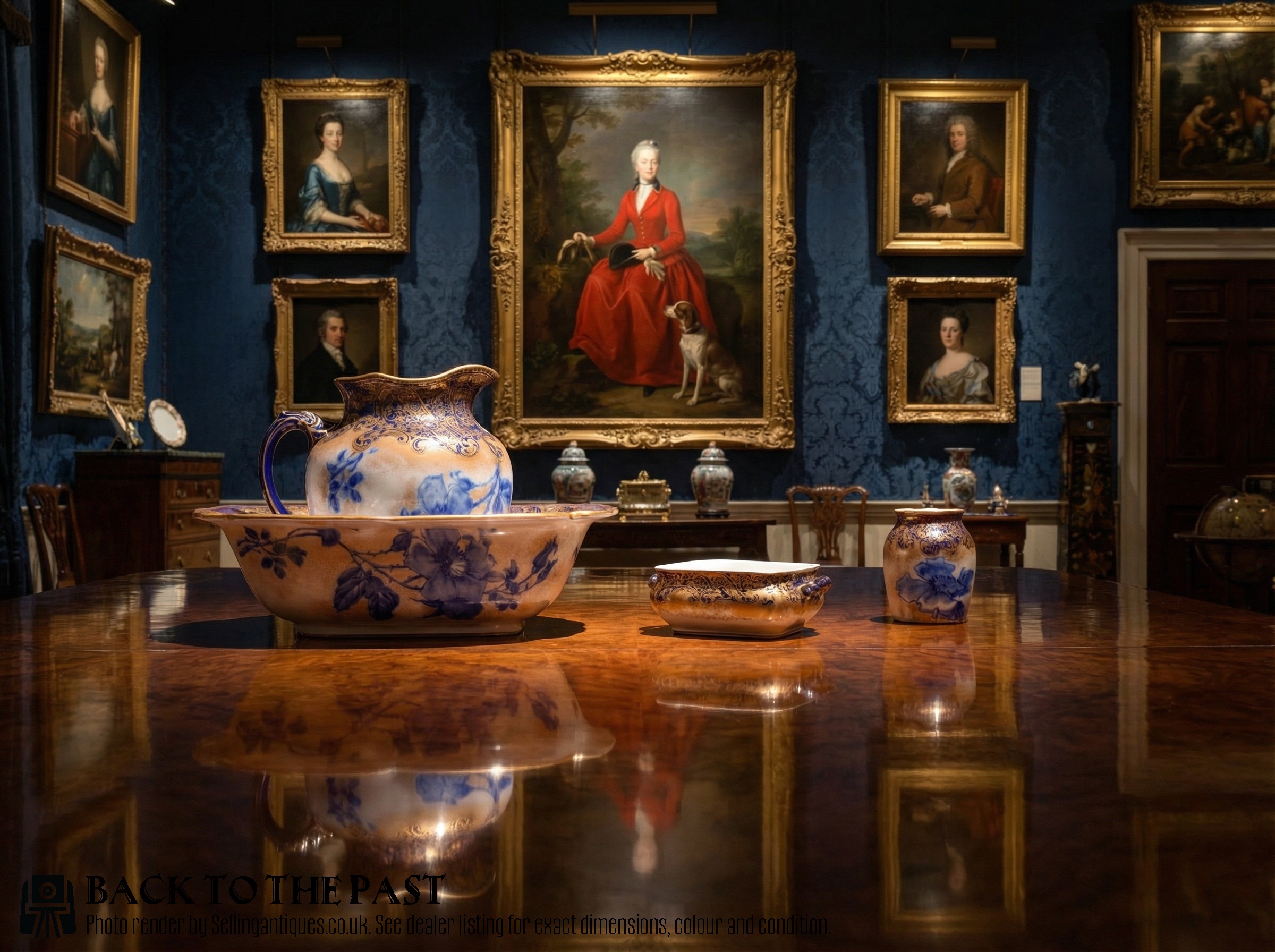
Blue Ceramic Wash Set
A blue ceramic wash set consists of a matching jug and basin, and occasionally supplementary pieces like a footbath or chamber pot, designed for personal hygiene before plumbed bathrooms. These sets span periods from the early nineteenth century through the Edwardian era, with Victorian examples appearing frequently.
Forms range from standard washstand sets and washware to specific items like pitchers and jugs or octagonal bowls. Makers from Staffordshire and factories such as Masons, Minton, and Doulton Burslem produced these items in earthenware and ironstone.
Buyers encounter styles including Victorian Chinoiserie, Regency, and Edwardian blue and white designs. The predominant decorative scheme relies on cobalt blue glaze, flow blue techniques, and flower patterns.
How they were made
Potters shaped these vessels from earthenware or ironstone, applying a white or tinted ground before adding cobalt blue glaze or flow blue decoration. Some pieces incorporate gold leaf or gilt highlights over the glaze.
Flow blue pottery achieved its characteristic blurred, misty effect during the firing process when volatile chloride salts were introduced into the kiln. Hand-painted floral designs and printed transfers decorated the surfaces of jugs and basins alike.
Some nineteenth-century users required a dedicated footbath alongside their wash jug to survive the winter chill.
What varies in quality
Quality in a blue ceramic wash set depends upon the crispness of the transfer printing and the depth of the cobalt blue glaze. Superior examples exhibit rich, even colour distribution and precise detailing in floral or Chinoiserie motifs.
The choice of body material also differentiates the wares, with sturdy ironstone and refined porcelain commanding attention alongside standard earthenware. Complete sets featuring ancillary vessels like footbaths demonstrate higher ambition from the maker.
Staffs·Minton·Masons Ironstone·Doulton Burslem
The Blue Ceramic Wash Set Glossary
- Flow blue
- A nineteenth-century ceramic printing technique where cobalt blue transfers blurred slightly into the surrounding glaze during firing. This chemical reaction created a distinctive misty, bleeding effect across the pattern.
- Ironstone
- A dense, durable type of earthenware patented in the nineteenth century to imitate Chinese porcelain. It resists chipping and provided a strong body for heavy utilitarian wash sets.
- Footbath
- A large, deep oval vessel used for soaking the feet, often matching the pattern of the accompanying wash jug. These pieces represent the larger end of nineteenth-century bathroom ceramics.
- Chinoiserie
- European decorative style imitating Chinese artistic traditions, featuring landscapes, pagodas, and figures. It appears frequently in blue and white on Victorian washware.
- Washstand
- A dedicated piece of furniture designed to hold the jug and basin set in a bedroom. These stands formed the centrepiece of personal washing arrangements before permanent plumbing.
Blue Ceramic Wash Set: Frequently Asked Questions
How were blue ceramic wash sets used?
These sets served as the primary washing apparatus in bedrooms before running water became common. Water was heated elsewhere, poured into the large jug, and used with the basin for morning and evening ablutions.
Additional vessels in a set, such as soap dishes or slop pails, accommodated related grooming tasks. The entire assembly sat upon a washstand to keep furniture protected from splashes.
How do I date a wash set?
Dating relies on maker marks stamped or printed on the base, stylistic clues, and the ceramic body type used. Early nineteenth-century pieces often feature ironstone bodies with Regency or Chinoiserie motifs.
Later Victorian and Edwardian sets display different floral transfer prints and factory registration numbers. Comparing the shape of the jug handle and rim helps narrow the decade of manufacture.
How do I display a wash set today?
Many collectors place the basin and jug together on a sturdy sideboard, low table, or within a bathroom setting. The large capacity of the bowls makes them suitable for holding rolled towels or dried florals.
Keeping the pieces away from heavy foot traffic protects the edges from accidental knocks. Grouping matching items maintains the visual impact of the original set.
What is the difference between earthenware and ironstone?
Earthenware is a porous, traditional pottery body that requires a complete glaze seal to hold water. It tends to be lighter in weight and was common in early production.
Ironstone is a heavier, vitrified ceramic developed to withstand harder daily use. It resists chipping better than standard earthenware and forms a durable base for heavy basins.