


Antique Ceramic Basin Set
An antique ceramic basin set brings the daily washing rituals of the nineteenth and early twentieth centuries into a modern interior with bold ceramic colour and pattern.
Antique Ceramic Basin Set
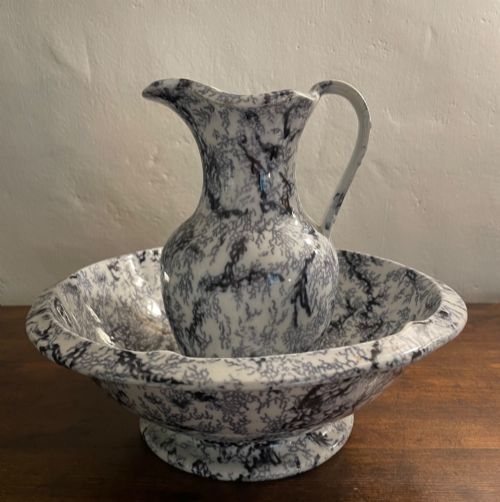
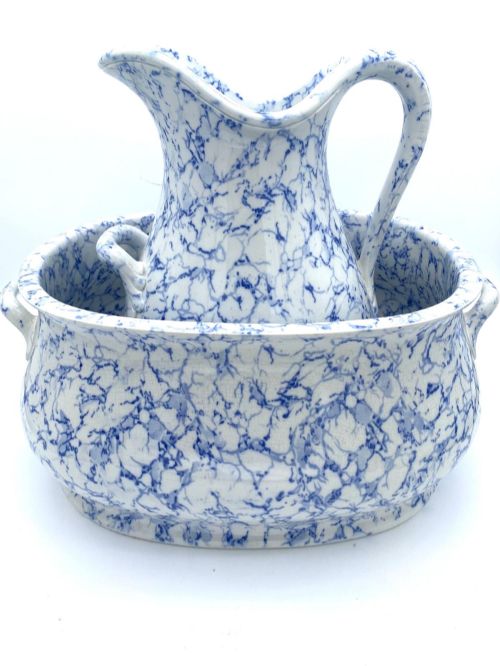
An antique ceramic basin set comprises matched sets of jugs and basins designed for the bedroom or dressing room before plumbed bathrooms became standard. These pieces span from the early nineteenth century through the Edwardian era, taking forms such as wash sets, washstand sets, and footbaths.
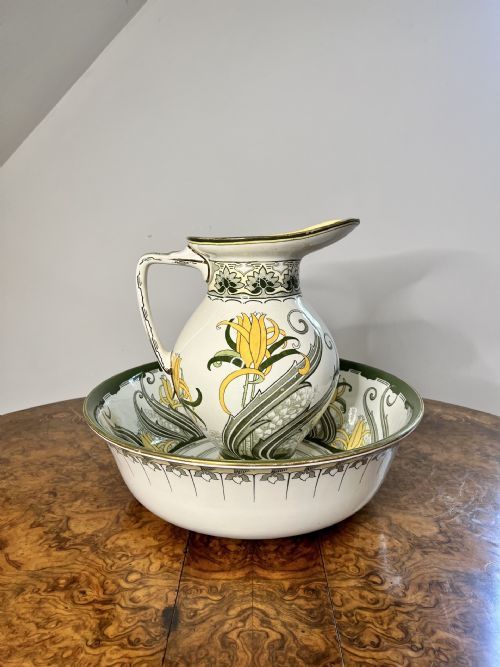
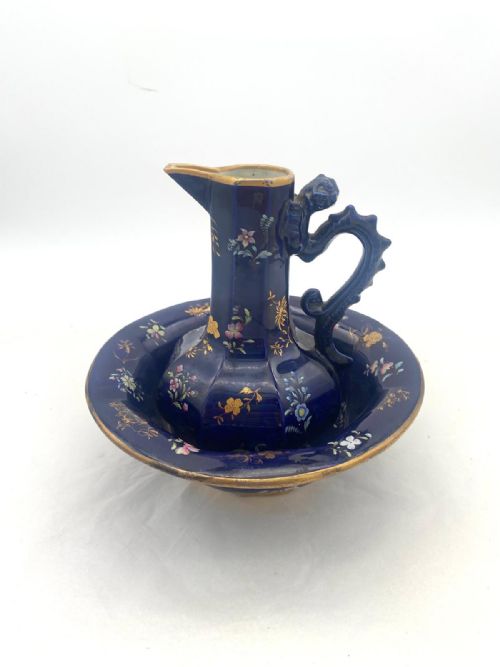
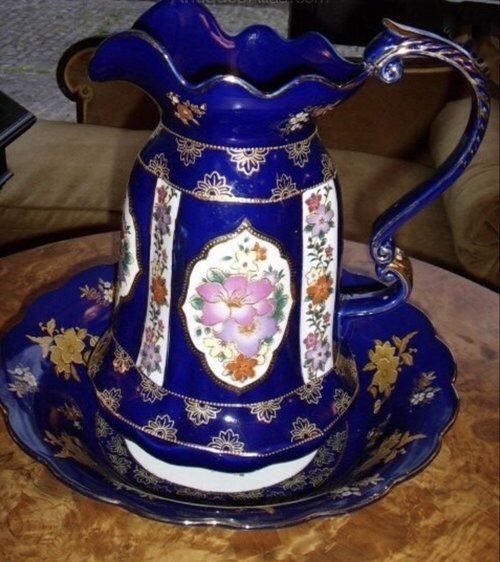
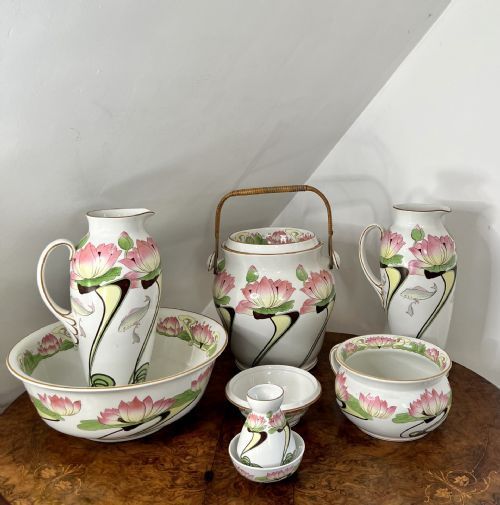
The most common examples encountered here date from the Victorian and Edwardian periods, typically featuring earthenware or porcelain bodies decorated with blue and white transfers, floral motifs, or cobalt glazes. Makers adapted these practical vessels to changing domestic styles, incorporating Art Nouveau contours and Chinoiserie patterns by the turn of the twentieth century.
Alongside standard domestic wash sets, related items like shaving stands and sugar boxes appear, demonstrating the wide variety of ceramic hollowware produced in these historical periods. The combination of a large pouring jug and a deep washing basin remains the defining feature of every set.
Materials and Manufacturing Techniques
Potters utilised earthenware, ironstone, and porcelain as the primary ceramic bodies for these utilitarian sets, shaping them on wheels or in moulds before firing. Ironstone provided a dense, heavy-wearing body suited to daily washing, while finer porcelain allowed for delicate translucent walls in nineteenth-century examples.
Glaze and transfer-printing techniques defined the surface decoration, with flow blue and cobalt blue colours bleeding softly into the wet glaze during firing. Some pieces received hand-painted floral details or accents of gold leaf and gilt to elevate the finished wash set.
Stoneware variants appeared later in the nineteenth century, offering salt-glazed surfaces and moulded Art Nouveau motifs that resisted water and heavy use. These diverse manufacturing methods ensured that each basin and jug combination endured decades of household service.
Early morning washing required considerable arm strength, as a filled ceramic water jug easily weighed several kilograms before a single drop touched the basin.
Distinctions in Quality and Manufacture
The sophistication of the ceramic body and the crispness of the transfer print separate standard utility items from superior production pieces. Finer porcelain bodies and detailed hand-applied gilding indicate higher workshop standards than plain earthenware.
Completeness and matching provenance strongly influence the standing of a set, as many jugs and basins became separated over generations of domestic use. Original matching pairs and multi-piece sets retain greater design integrity.
The ambition of the decorative scheme, ranging from simple cobalt blue glazes to intricate polychrome floral designs and moulded Art Nouveau reliefs, marks the difference between basic domestic ware and high-end pottery production.
Minton·Doulon Burslem·Masons Ironstone·Doulton Lambeth·Ridgway·Shelley
The Antique Ceramic Basin Set Glossary
- Earthenware
- A porous pottery body fired at lower temperatures, requiring a vitreous glaze to hold water effectively. It forms the base of many nineteenth-century wash sets.
- Flow Blue
- A cobalt printing style where lime or ammonia chloride was introduced during the kiln firing to intentionally blur the blue transfer design. This creates a soft, hazy aesthetic popular on nineteenth-century jugs and basins.
- Ironstone
- A patented heavy earthenware developed to imitate porcelain while offering greater durability for domestic washing vessels. It resists chipping and cracking better than standard pottery.
- Transfer-printing
- A decorating technique where an engraved copper plate transfers a design onto tissue paper, which is then pressed onto the ceramic biscuit before glazing. This allowed for intricate patterns to be applied rapidly to large basin sets.
- Stoneware
- A hard, impermeable ceramic fired at high temperatures, often salt-glazed for resilience. It appears in late nineteenth-century bathroom sets and utility wares.
Antique Ceramic Basin Set: Frequently Asked Questions
How were antique ceramic basin sets used?
These sets served as the primary washing apparatus in bedrooms before running water was installed in homes. Water was poured from the large jug into the basin for morning and evening ablutions.
They sat upon washstands or dressing tables alongside soap dishes and chamber pots. Today, they function primarily as decorative decorative elements or large planters in modern homes.
How do I date an antique wash set?
Dating relies on stylistic clues, ceramic bodies, and maker marks stamped or printed on the base of the pottery. Early nineteenth-century pieces often feature earthenware with flow blue transfers, while Edwardian sets display lighter floral patterns or Art Nouveau styling.
Changes in handle shapes and the complexity of the transfer print also help narrow the manufacturing decade. Comparing the mark to known pottery registry dates provides the most accurate timeline.
Can I use an antique basin for daily washing?
While these pieces were originally built for washing, antique ceramics can develop hairline cracks or lose glaze integrity when exposed to modern daily use and thermal shock. Older earthenware bodies are particularly susceptible to staining from standing water over long periods.
It is generally wiser to treat them as decorative display items rather than functional bathroom fixtures. Gentle cleaning with mild soap preserves the historic glaze and any gilt detailing.
Why do some sets include extra pieces?
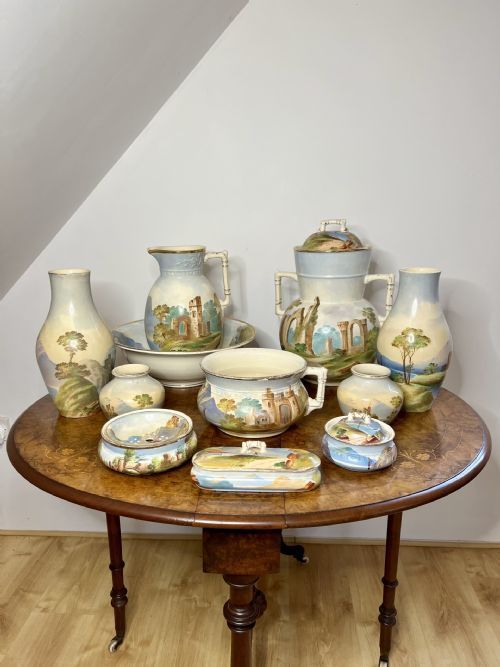
Larger toilet sets often included soap dishes, toothbrush holders, slop buckets, and chambers alongside the main jug and basin. These matched pieces created a uniform aesthetic for the grander Victorian or Edwardian bedroom.
Finding a complete multi-piece set remains uncommon because individual items were easily broken or separated over time. Surviving groups demonstrate the full scope of historical dressing room equipment.