




Antique Grooming Stand
An antique grooming stand is a practical piece designed for daily hygiene, offering adjustable mirrors and storage for the Victorian and Edwardian toilet routine.
Antique Grooming Stand
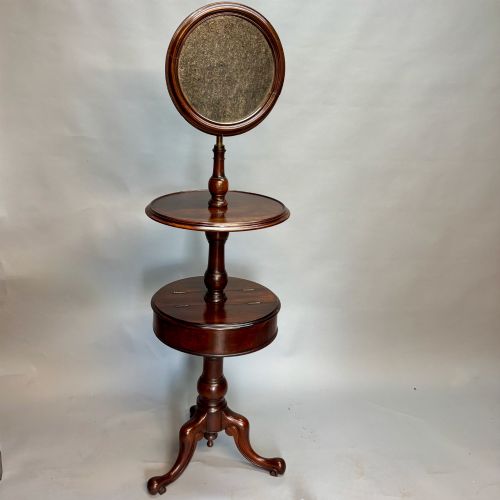
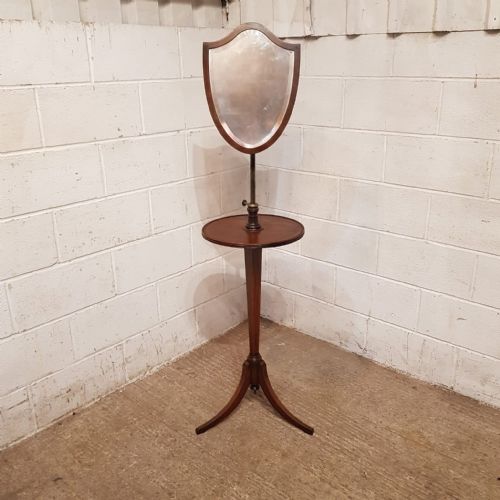
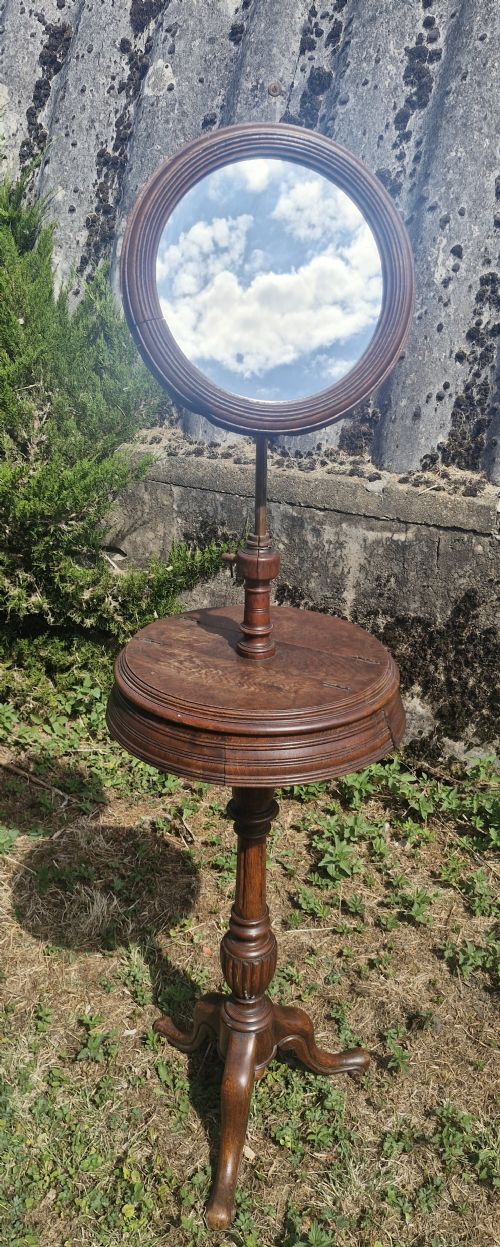
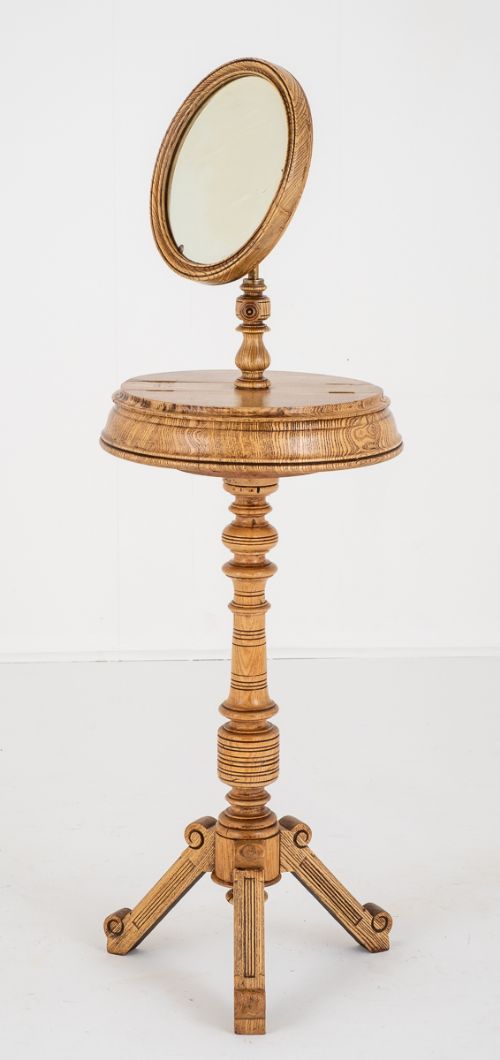
When you search for an antique grooming stand, you encounter functional furniture built to hold mirrors and shaving gear during the nineteenth and early twentieth centuries. These pieces appear primarily as shaving stands, vanity tables, shaving cupboards, and washstands spanning periods from George III up to the Edwardian era.
The versions most common on this page date from the Victorian and Edwardian periods, typically featuring adjustable mirrors mounted on timber frames. The forms range from compact tripod mirrors to larger freestanding gentleman's shaving stands equipped with dedicated cupboards and basins.
How they were made
Cabinetmakers constructed these stands predominantly in solid hardwoods such as mahogany, oak, walnut, and ash. Selected pieces incorporate fine inlay work, particularly visible in Viennese examples from the early twentieth century.
Functional elements rely on brass fittings for adjustable mirror mechanisms and pivoting brackets. Metal components and glass mirrors are integrated directly into the wooden cabinetry to withstand daily use.
Many of these stands still harbour tiny traces of old shaving soap tucked deep inside their smallest drawer corners.
What varies in quality
Quality in an antique grooming stand lies in the selection of timber grain and the precision of the joinery. Superior pieces show thoughtful integration of adjustable mechanisms alongside high-grade mahogany or walnut veneers.
Simpler workshop output relies on plain oak or painted metal with basic hardware. The refinement of the turning on legs and the clarity of the original glass mirror distinguish standard utility items from finer cabinetwork.
James Shoolbred
The Antique Grooming Stand Glossary
- Adjustable shaving stand
- A piece of furniture featuring a swiveling or height-adjustable mirror designed for grooming. These often include small platforms for soap and shaving cups.
- Gentleman's vanity table
- A specialised dressing table adapted for male grooming routines, typically incorporating compartments for razors, brushes, and bottles. Examples from the Edwardian period often display refined inlay.
- Tripod shaving mirror
- A tabletop or freestanding grooming glass supported by three legs. The base design allows the mirror to be tilted to various angles.
- Shaving cupboard
- An enclosed cabinet built with a fitted mirror on the door or upper section. It provides concealed storage for shaving paraphernalia.
- George III
- A design period spanning the late eighteenth century, known for restrained classical proportions and the use of quality mahogany.
Antique Grooming Stand: Frequently Asked Questions
What is an antique grooming stand?
An antique grooming stand is a specialised piece of furniture created to assist with personal hygiene, specifically shaving and dressing, during the nineteenth and early twentieth centuries.
These items typically combine a mirror, small shelves or drawers for razors and soaps, and sometimes a washing basin into a single compact unit.
How were shaving stands used?
Users stood before them in the morning to shave, comb hair, and complete their daily toilet before modern fitted bathrooms became common in homes.
The adjustable mirrors allowed the user to direct light onto the face, while small ledges held shaving mugs, brushes, and water basins.
How do I tell Victorian from Edwardian stands?
Victorian stands tend to utilise heavier timbers like dark mahogany, walnut, and oak with robust carving and functional turnings. They reflect the ornate tastes of the nineteenth century.
Edwardian pieces often appear lighter in construction, occasionally featuring delicate inlay work and simpler lines influenced by the transition into the twentieth century.
Where do I put a grooming stand today?
These pieces fit naturally into modern bathrooms, bedrooms, or dressing rooms as functional accent furniture. Their mirrors and small shelves remain useful for holding everyday items.
Placing them away from direct sunlight and excessive moisture helps preserve the antique wood and silvered glass mirrors.