





Shield Shape Mirror
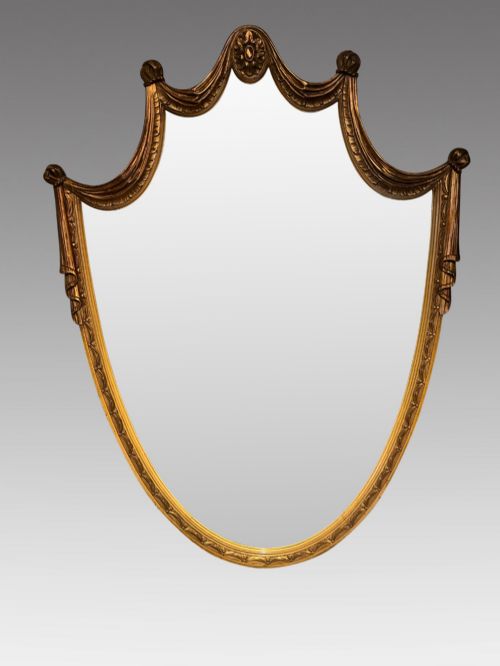
A shield shape mirror brings symmetry and fluid neoclassical line to a room, offering a versatile glass plate framed in mahogany, giltwood, or copper.
Shield Shape Mirror
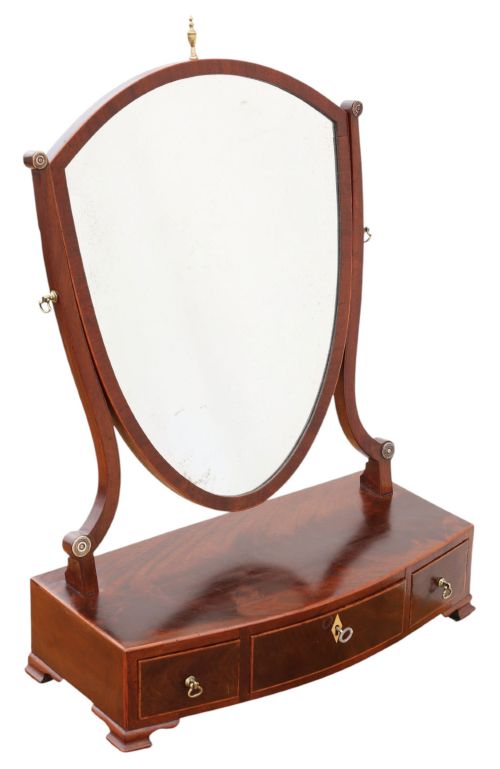
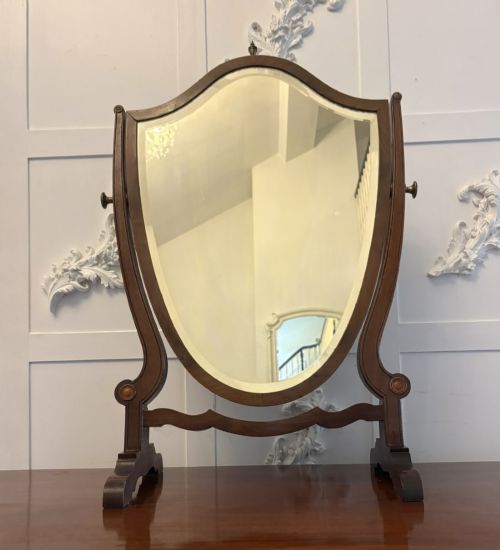
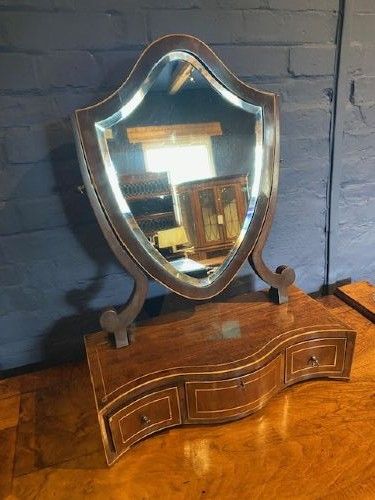
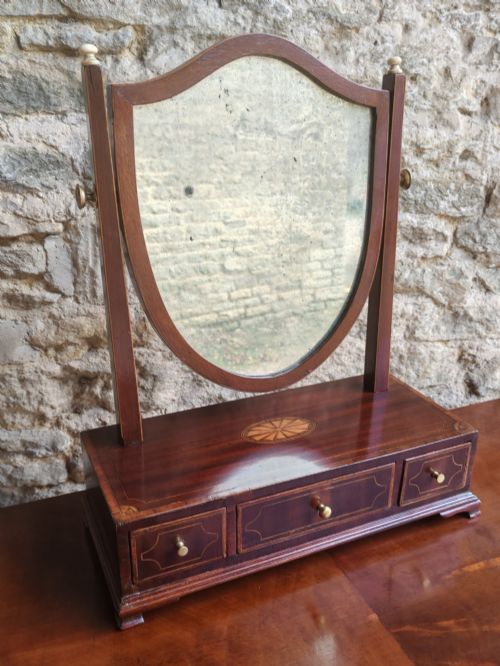
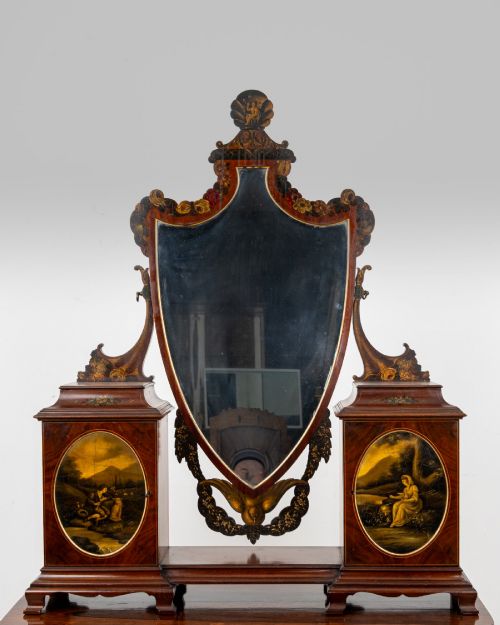
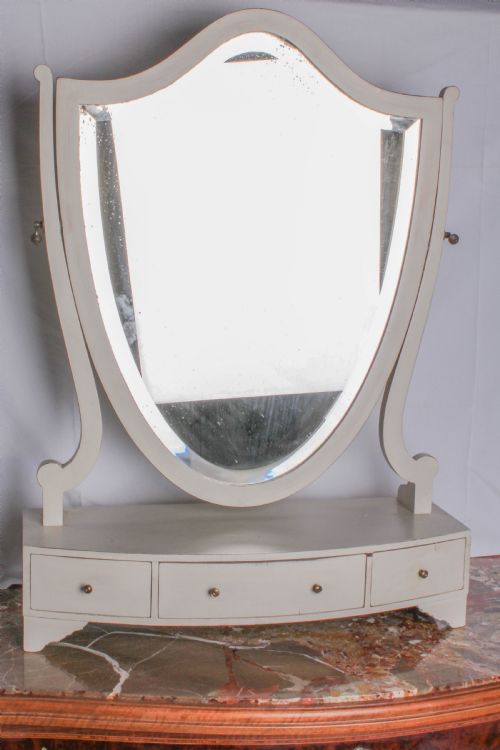
A shield shape mirror is primarily encountered as a dressing table or toilet glass dating from the Georgian and Edwardian periods, supported by scroll arms on a box base or standing independently as a cheval or wall-mounted glass.
The form draws on eighteenth-century design traditions, often presenting a tapered plate housed within mahogany, satinwood, or giltwood frames that pivot on brass pins.
Buyers seeking this phrase encounter both compact swing mirrors designed for chests of drawers and larger floor-standing cheval versions or wall-hung pieces incorporating inlay, bone, or velvet trim.
Materials and construction
Frames are constructed from timbers such as mahogany, walnut, and satinwood, frequently enhanced with decorative inlay, brass candle sconces, or copper fittings and applied giltwood carving.
The mirror glass is held within shaped wooden surrounds that rely on articulated brass or iron pivots, allowing the plate to tilt smoothly forward or backward within its upright supports.
Base structures on table models often incorporate serpentine drawers or trinket compartments, assembled using traditional cabinet-making joints to support the weight of the pivoting frame.
Shield Shape Mirror Retail Price Guide 2026
Typical asking prices for shield shape mirror among the pieces listed under this phrase on Sellingantiques today, from the lower quarter to the upper quarter. They describe what is for sale here now, not the wider market.
Listings feature shield shape mirrors spanning the Georgian, Victorian, and Edwardian periods, constructed in mahogany, giltwood, copper, and satinwood.
Judging quality in shield mirrors
Quality rests in the crispness of the timber selection, such as figured mahogany or finely grained satinwood, and the subtlety of the edge moulding around the shield profile.
Finer examples display careful proportion between the pivoting mirror plate and its supporting horns, alongside original brass hardware and well-fitted drawer boxes with hand-cut dovetails.
The Shield Shape Mirror Glossary
- Cheval mirror
- A large standing mirror supported by a frame with four legs that allows the glass to swing freely through a full vertical circle. These tall pieces often stand on the floor rather than resting on a table.
- Toilet mirror
- A smaller tabletop mirror designed to sit upon a dressing table, commode, or chest during the Georgian and Edwardian eras. They usually incorporate a small box base fitted with drawers.
- Swing mirror
- Any mirror plate suspended on horizontal pivots between two vertical uprights, enabling the user to tilt the glass angle. This mechanism is central to dressing and toilet mirrors.
- Inlay
- A decorative technique where contrasting woods, shell, or bone are inserted into recesses cut into the primary wood surface. Edwardian and Georgian makers used this to trace the outline of shield frames.
- Giltwood
- Timber carved and coated with a thin layer of gold leaf or metallic paint. This finish appears on elaborate neoclassical and revival wall mirrors.
Shield Shape Mirror: Frequently Asked Questions
How do I date a shield shape mirror?
Dating relies on timber choice, secondary woods, and construction details visible on the reverse and interior of the base. Georgian pieces typically employ solid mahogany with hand-cut joinery, while Edwardian versions often feature machine-cut elements and distinct inlay styles.
Hardware provides another clue, as original brass pivot screws and backboards change in manufacture style from the eighteenth century through the nineteenth and twentieth centuries.
Where should I place a toilet mirror?
Toilet mirrors were originally designed for dressing tables and chest tops in bedrooms, providing a portable glass for grooming. Today, they sit comfortably on low sideboards, console tables, or deep windowsills.
Because they incorporate pivoting stands, placing them at the correct height ensures the tilted glass reflects light and improves the sense of space in smaller rooms.
Are cheval mirrors stable on carpets?
Cheval mirrors stand on four feet or scrolling trestle bases designed to bear the weight of the pivoting frame. On thick carpets, tall floor-standing models require careful positioning to maintain balance.
Most historic examples feature substantial weighted feet or spread legs intended to keep the swinging glass steady during daily use.
What is the difference between wall and table versions?
Table versions include a supportive base, often with small drawers or a box structure, whereas wall-hung variants feature integrated mounting loops or frames designed for direct suspension.
Wall mirrors in this shape frequently adopt Arts and Crafts copper frames or giltwood neoclassical carving, while table and cheval pieces focus primarily on mahogany and satinwood cabinet work.