
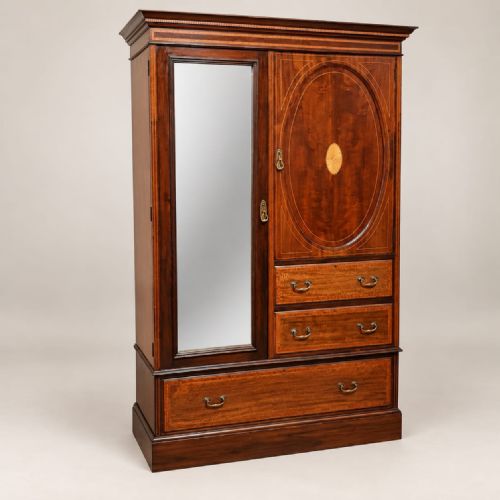
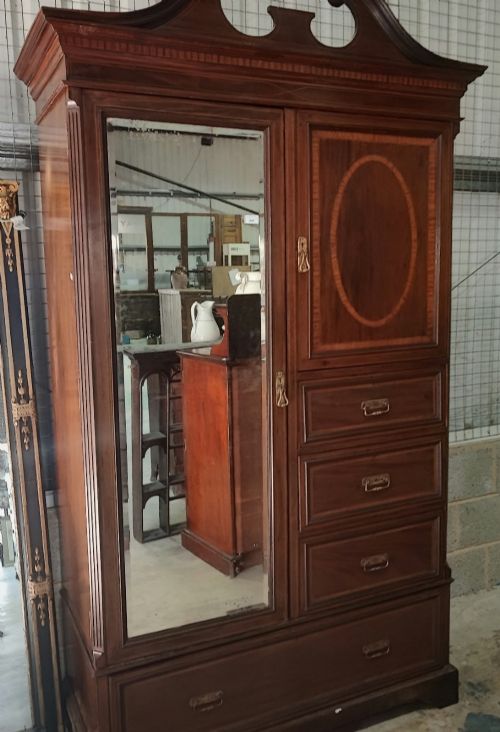
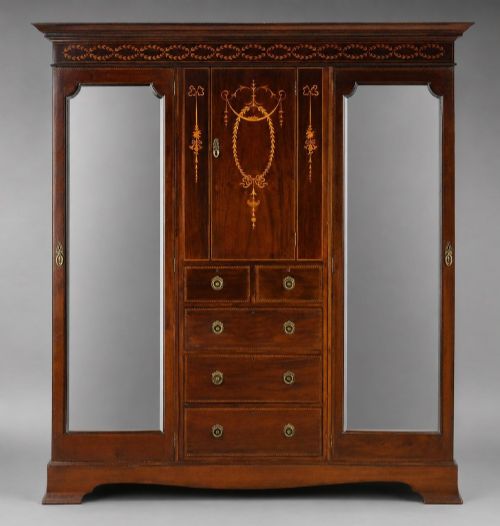
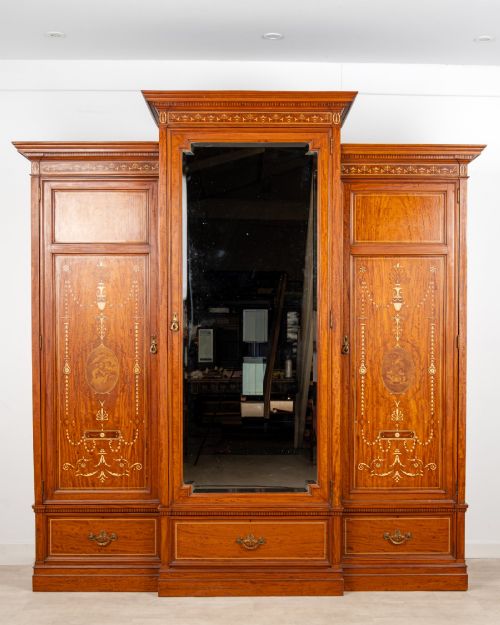


Satinwood Inlaid Mirror
A satinwood inlaid mirror brings warmth and bright grain to a room, offering both practical reflection and decorative depth through careful craftsmanship.
What these mirrors are
A satinwood inlaid mirror appears in several distinct forms across the listings, ranging from large cheval mirrors designed for full-length viewing to compact toilet mirrors intended for dressing tables. These pieces frequently emerge from the Georgian, Victorian, and Edwardian periods, reflecting the shifting domestic fashions of their respective eras.
The wall-hanging format also appears alongside the dressing and cheval variations, sometimes taking an oval or large rectangular shape. Buyers encounter these mirrors fashioned in forms that served bedrooms, dressing rooms, and principal living spaces throughout the nineteenth and early twentieth centuries.
The Edwardian era strongly influences the current selection, alongside examples dating back to eighteen hundred and eighteen ninety. Each piece demonstrates how makers combined practical reflective glass with the light-reflecting qualities of blonde timber veneers and contrasting inlay.
How they were made
Makers utilised satinwood as a primary veneer or solid timber, often pairing it with mahogany and ebony to create sharp visual contrast. Craftsmen applied delicate stringing and pictorial marquetry motifs into the wood surfaces, setting darker lines against the pale ground of the satinwood.
Structural elements incorporated traditional cabinetmaking techniques, securing mirror frames to sturdy stands or backboards with brass hardware. Glass plates were typically bevelled at the edges and held within adjustable swing frames or fixed wall mouldings.
Retail Price Guide 2026
Typical UK retail prices for satinwood inlaid mirror, calculated from the Sellingantiques database of over a million retail prices indexed since 2003. This retail price guide relies exclusively on Sellingantiques data; no external sources or auction records are used, so the figures do not describe the wider market.
Listings incorporate mahogany, satinwood, brass, and glass across wall, toilet, and cheval formats dating from the nineteenth and early twentieth centuries.
What varies in quality
The refinement of the inlay work separates standard production from exceptional examples, with tight, intricate banding demonstrating superior hand skills. The choice of timber grain also dictates the visual depth, where highly figured satinwood commands greater attention.
Proportion and scale play significant roles in the overall execution, particularly in larger cheval and toilet mirrors where balancing the weight of the glass requires robust framing. The integration of brass fittings and the preservation of original mirror plates further define the tier of craftsmanship.
Maple and Company·Holland and Sons
The Satinwood Inlaid Mirror Glossary
- Satinwood
- A durable, highly lustrous tropical timber with a golden sheen that takes a fine polish. It serves as both a primary surface veneer and a contrasting inlay material.
- Cheval mirror
- A full-length swing mirror supported by a vertical frame and four legs, designed to stand freely on the floor. These pieces allow a person to view their entire outfit.
- Toilet mirror
- A smaller mirror mounted on a small chest of drawers or a swing frame, historically placed on top of a dressing table. It facilitates close-up grooming.
- Inlay
- A decorative technique where pieces of contrasting wood, such as ebony or mahogany, are inserted into recessed cavities in the base wood. This creates flat patterns and linear borders.
- Pier mirror
- A tall mirror designed to hang on the wall between two windows, often placed above a pier table. It maximises light reflection in traditional room layouts.
Frequently Asked Questions
How do I date an inlaid mirror?
Dating relies on observing the framing construction, the style of the inlay, and the type of timber used. Edwardian pieces often display lighter satinwood veneers with delicate banding, whereas Georgian examples show heavier proportions and darker mahogany influences.
Examining the reverse of the mirror and the fixings also provides clues. Hand-cut screws and older backing boards point towards nineteenth-century production, while machine-made elements suggest later periods.
Were these mirrors always freestanding?
They were produced in multiple formats depending on their intended domestic use. Cheval mirrors and toilet mirrors were built to stand on floors or dressing furniture, while wall mirrors and pier mirrors required structural hanging.
Each format served a specific room layout, from bedrooms requiring full-length reflection to hallways and parlours utilising wall-mounted glass for light.
What is the difference between a cheval and toilet mirror?
A cheval mirror stands independently on the floor at near full height, supported by upright posts and feet. This format enabled dressing supervision for entire outfits in bedrooms and dressing rooms.
A toilet mirror is substantially smaller and sits upon a tabletop or a small set of drawers. It was traditionally used for close grooming tasks such as styling hair or applying cosmetics.
How should I care for satinwood veneer?
Satinwood requires protection from direct sunlight and extreme humidity fluctuations to prevent the delicate veneers from lifting or fading. Regular dusting with a soft, dry cloth maintains the surface without the need for heavy chemical polishes.
Maintaining a stable indoor climate preserves both the timber ground and the fine inlaid stringing work. Gentle maintenance ensures the grain retains its natural golden lustre.