




Antique Tilt Mirror
An antique tilt mirror is a practical dressing glass that pivots in a standing frame to catch the light.
What an antique tilt mirror is
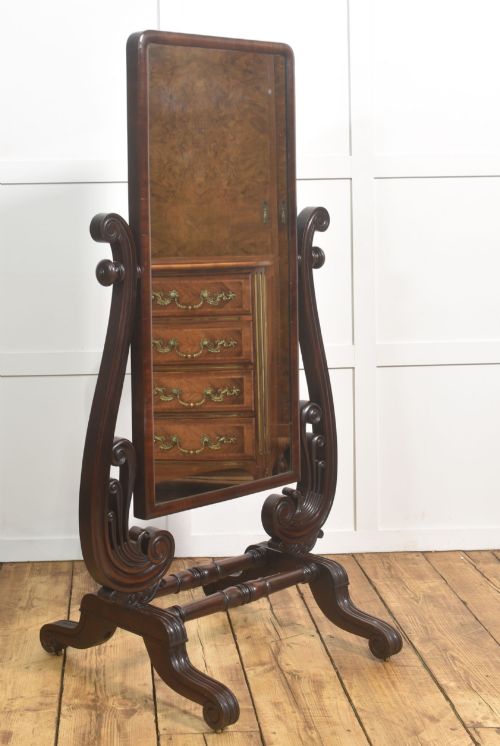
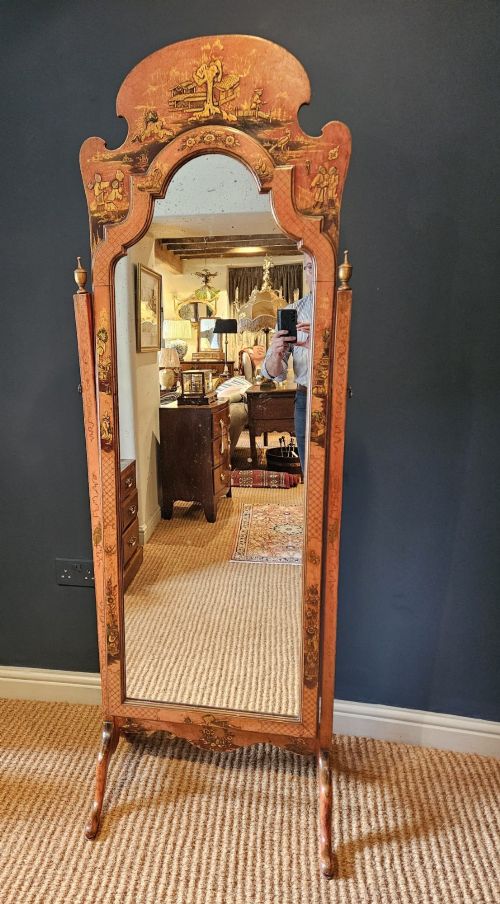
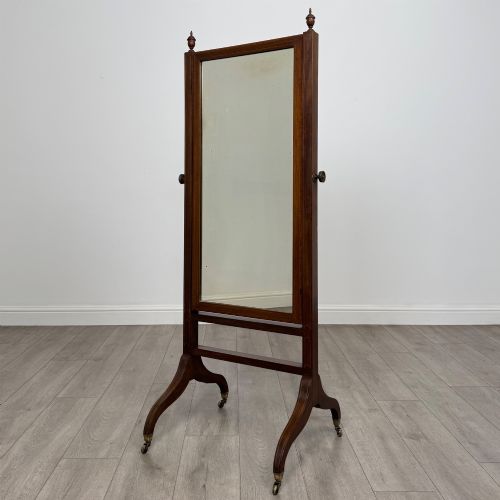
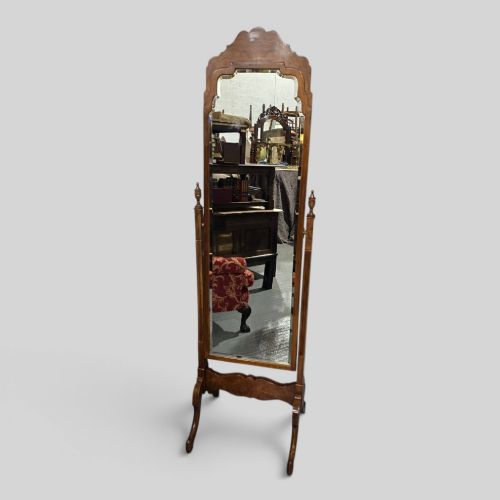
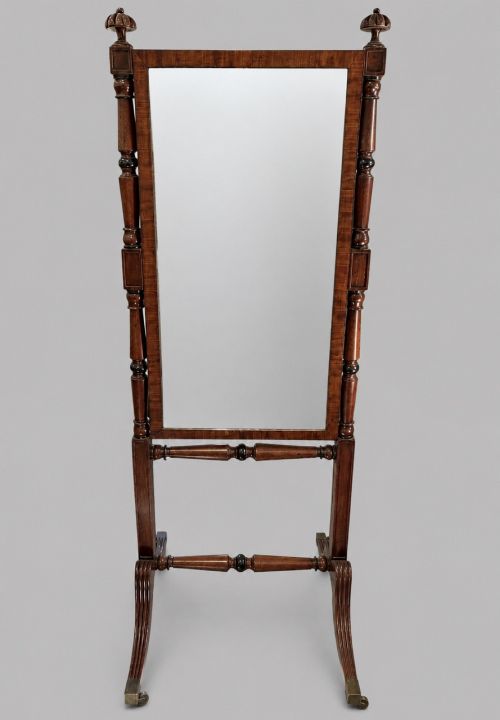
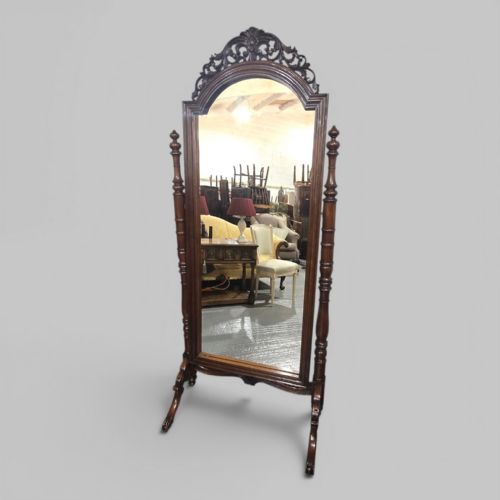
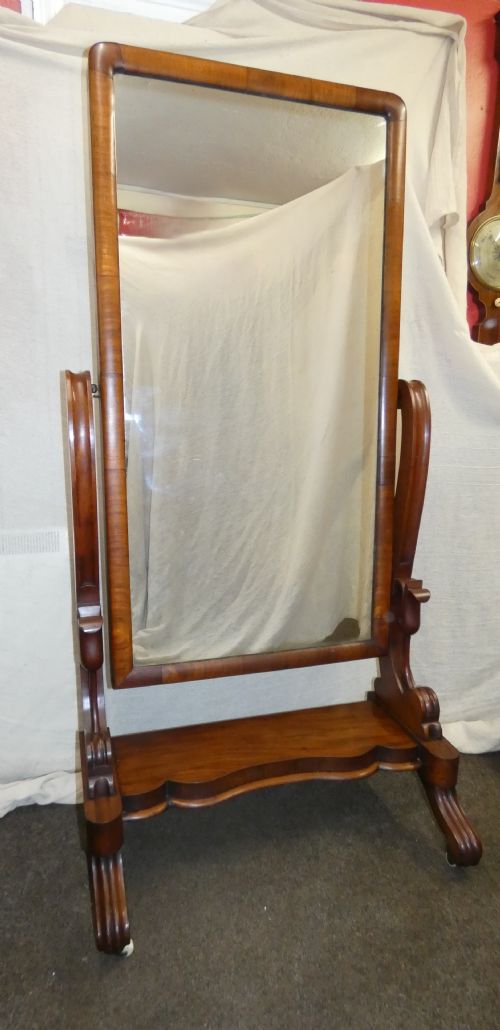
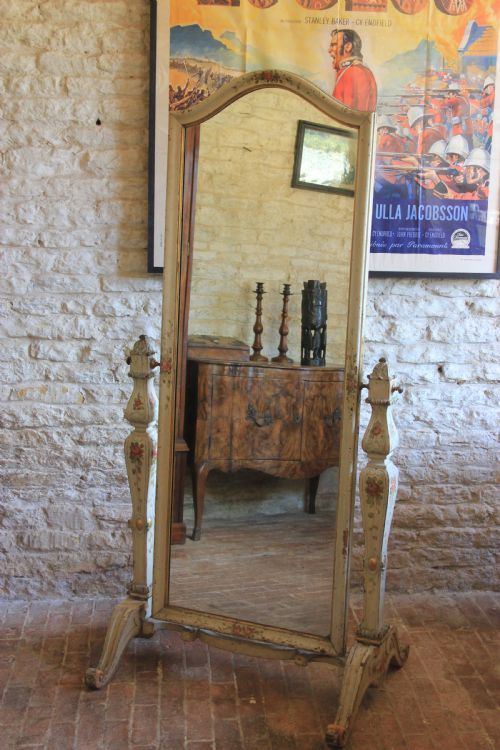
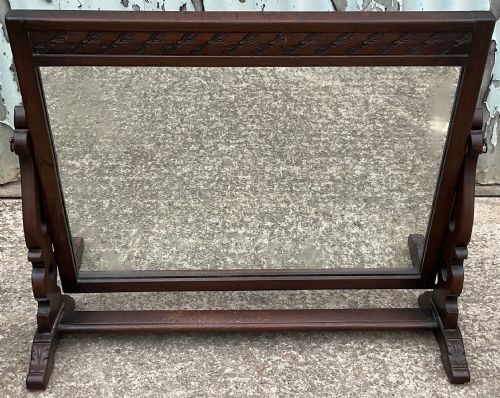
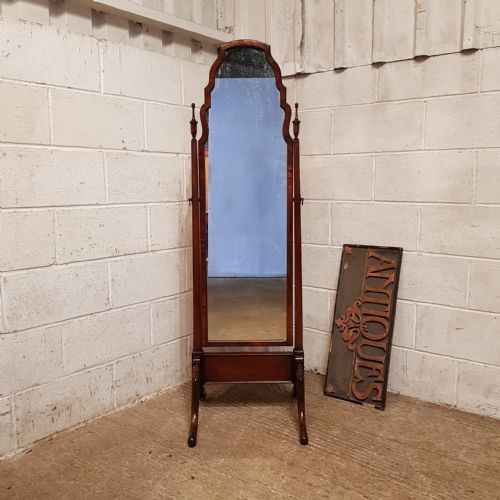
When you search for an antique tilt mirror, you encounter pieces designed to adjust the angle of reflection for the user. The form appears primarily as large cheval mirrors and smaller dressing table mirrors.
The pieces on this page span several distinct periods, including the nineteenth century, the Edwardian era, and the nineteen-thirties. Regency and Victorian examples sit alongside Edwardian inlaid designs and Art Deco walnut pieces.
Mahogany dominates the material record, frequently accompanied by satinwood, burr walnut, and standard walnut. Brass fittings and mirror glass complete the construction across these historical domestic objects.
How they were made
Cabinet makers utilised solid timbers such as mahogany and walnut, shaping the upright frames and floor supports by hand. Inlaid details in contrasting woods appear on Edwardian versions, demonstrating traditional marquetry skills.
The tilting mechanism relies on brass pivots and screws set into the side arms of the frame, allowing the glass to tilt forward or backward smoothly. Mirror glass is fitted into rebated wooden frames, sometimes backed with protective panels.
Retail Price Guide 2026
Typical UK retail prices for tilt mirror, calculated from the Sellingantiques database of over a million retail prices indexed since 2003. This retail price guide relies exclusively on Sellingantiques data; no external sources or auction records are used, so the figures do not describe the wider market.
Some dressing table mirrors hide tiny secret compartments beneath the base drawers for storing precious rings and hidden love letters.
What varies in quality
The distinction between standard examples and superior pieces rests on the choice of timber figure and the weight of the brass hardware. Finely figured mahogany and burr walnut display richer grain patterns than plain secondary woods.
Structural stability in the upright standards and the precision of the pivoting mechanism determine the overall execution. Robust joinery in the base prevents the frame from wobbling when the glass pivots.
Whytock & Reid
The Antique Tilt Mirror Glossary
- Cheval mirror
- A full-length dressing mirror supported on a freestanding wooden frame with four legs or feet. This tall form allows a person to view their entire outfit.
- Dressing table mirror
- A smaller mirror designed to sit atop a chest of drawers or a dressing table rather than standing directly on the floor. These versions typically feature a small box base with tiny drawers.
- Tilt mechanism
- The brass pivots, screws, and side plates that connect the mirror frame to the upright supports. These allow the glass plate to angle precisely.
- Inlay
- Pieces of contrasting wood set into the primary timber surface to create decorative borders or motifs. Edwardian pieces frequently utilise this technique.
- Rebate
- A recessed channel cut into the inside edge of the wooden frame to securely hold the mirror glass in place.
Frequently Asked Questions
What is a cheval mirror?
A cheval mirror is a tall, freestanding dressing glass mounted within a pivoting wooden frame that lets the user adjust the viewing angle.
The name derives from the French word for horse, reflecting the four-legged support structure underneath.
How do you date an antique tilt mirror?
Dating relies on examining the timber species, the style of the frame, the construction joints, and the type of brass hardware used on the pivots.
Earlier nineteenth-century pieces display heavier mahogany frames, whereas Edwardian versions often feature lighter inlaid decoration.
Where should I place a tilt mirror?
These mirrors suit bedrooms, dressing rooms, and hallways where they can reflect natural light and assist with daily dressing.
Positioning them opposite a window maximises the light they project into the surrounding space.
How do the pivoting mechanisms work?
Metal screw pins or threaded bolts pass through the upright standards into threaded brass sockets set into the sides of the mirror frame.
Tightening these pivots holds the glass firmly at the chosen angle.