


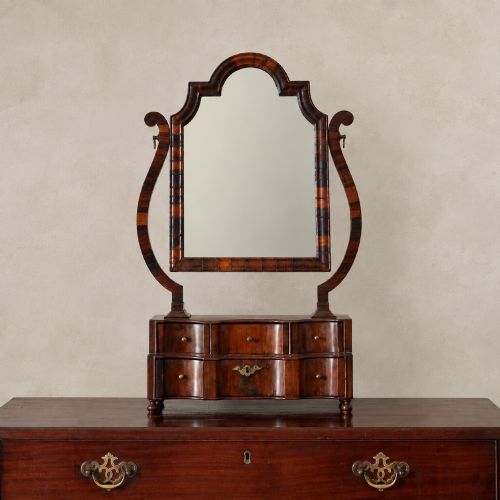
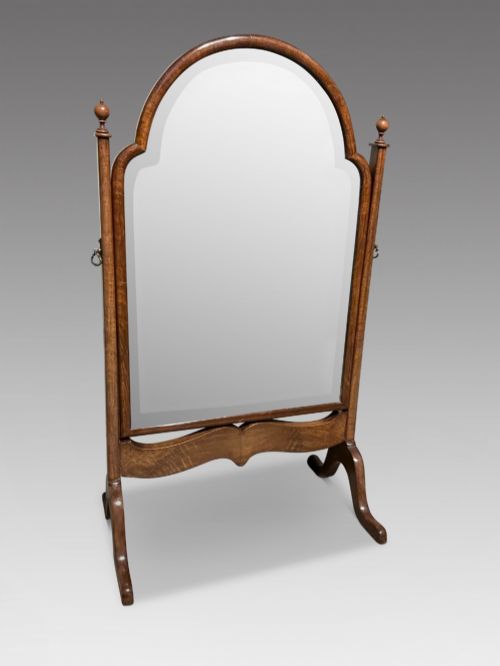
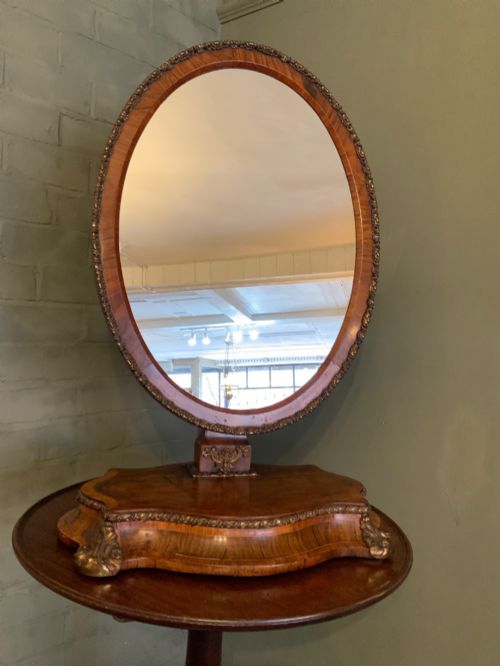
Walnut Dressing Table Mirror
A walnut dressing table mirror brings rich timber grain and adjustable reflection to a traditional bedroom.
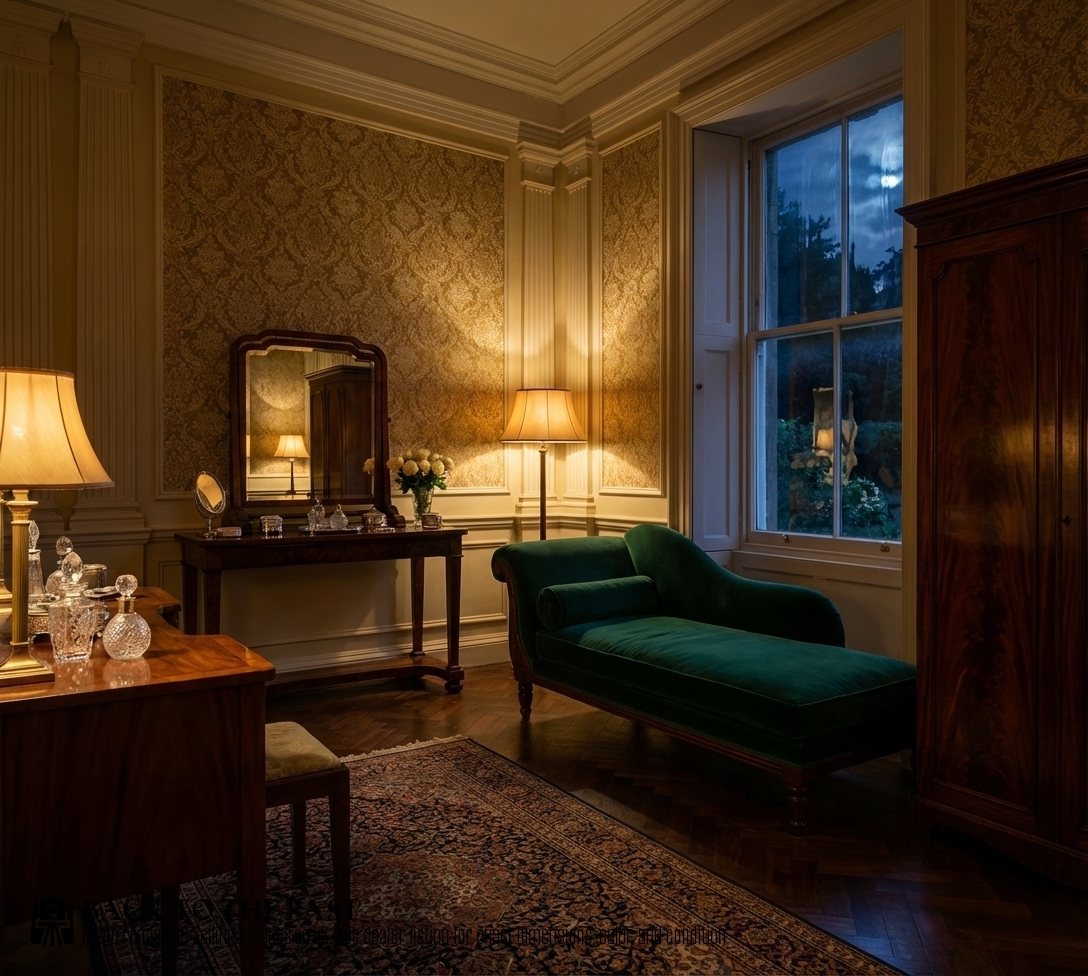
Walnut Dressing Table Mirror
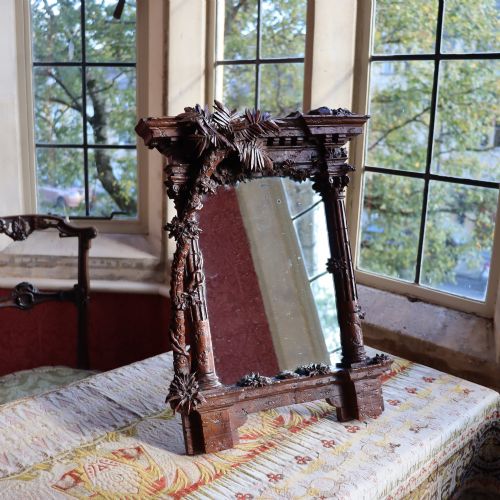
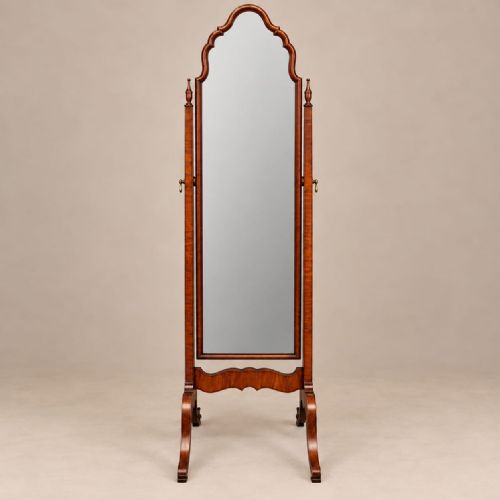
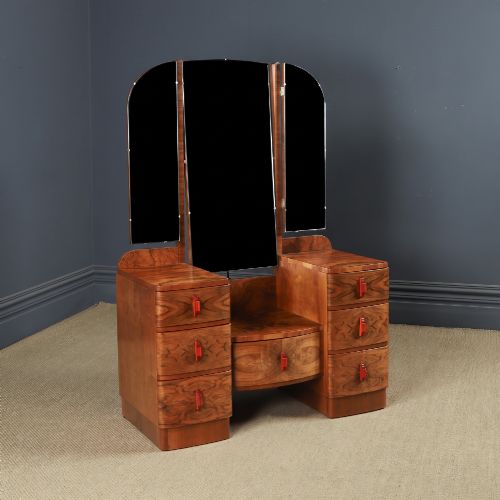
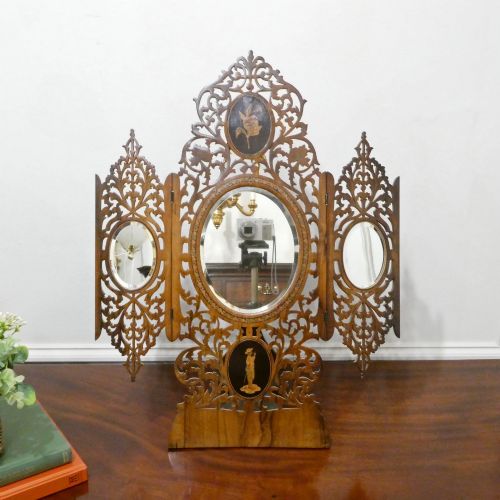
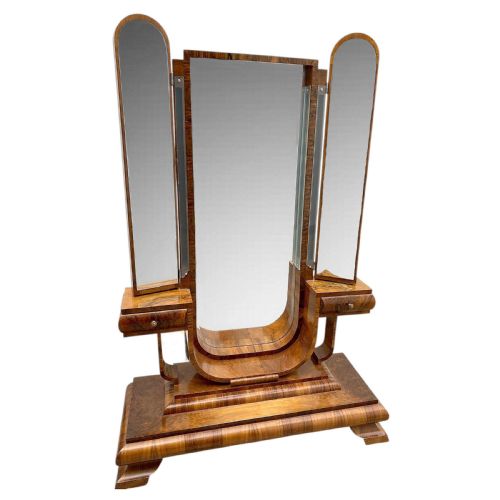
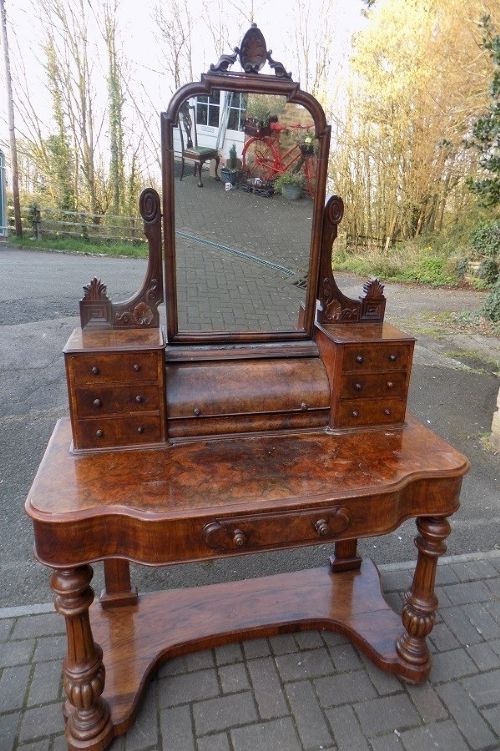
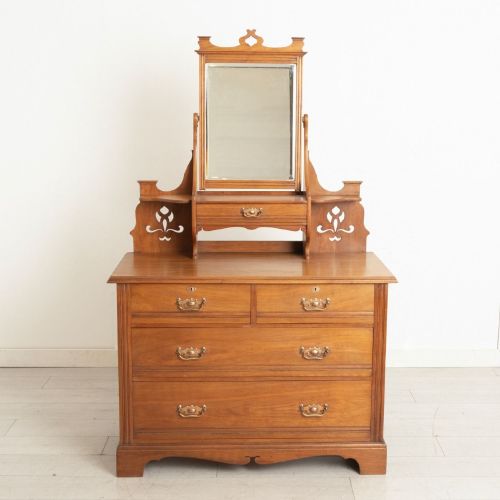
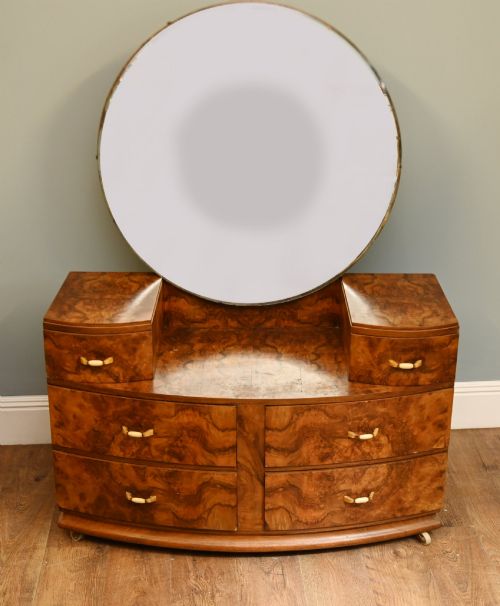
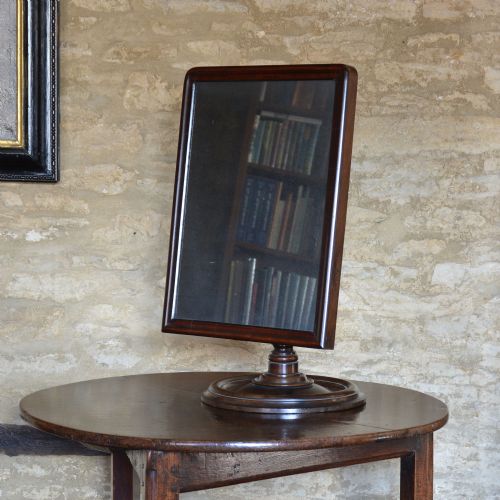
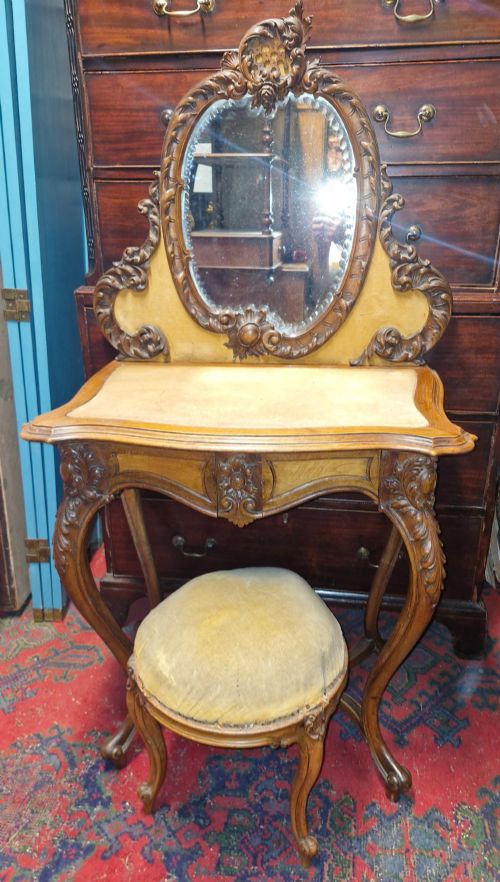
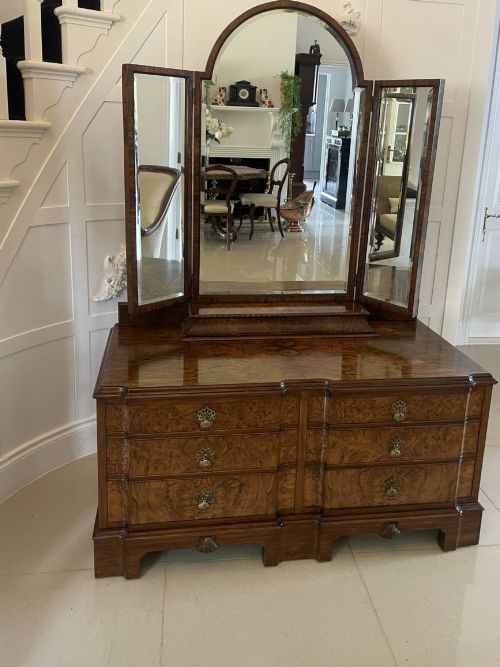
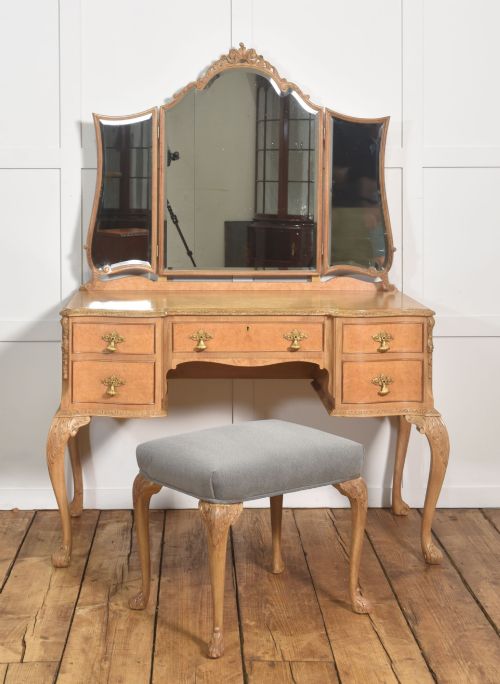
When searching for a walnut dressing table mirror, buyers encounter a focused selection of tabletop swing glasses, bureau fitments, and larger architectural pedestal dressing pieces designed to reflect light and assist with personal grooming. The pieces on this page span the 18th century, Victorian era, and Art Deco period, offering everything from early Queen Anne forms with arched plates to streamlined 1930s pedestal tables.
The most common formats range from compact table mirrors with shaped drawer bases to tripartite mirrors integrated into dressing chests. Early examples often feature slender uprights and small box bases containing trinket drawers, while later Victorian and Edwardian iterations frequently accompany larger bedroom suites or duchess dressing tables.
How they were made
Cabinet makers utilised solid walnut, burr walnut, and figured veneers applied to secondary woods, creating varied grain patterns across the mirror frames and drawer fronts. Cross-banding, stringing in boxwood or satinwood, and marquetry details frequently accent the primary surfaces of Georgian and Dutch pieces.
The mirror glasses themselves are held within adjustable swing frames supported by brass mounting hardware or carved wooden arms. Structural joinery typically incorporates dovetail construction in the small drawers and sturdy tenon joints in the upright supports.
Walnut Dressing Table Mirror Retail Price Guide 2026
Typical asking prices for walnut dressing table mirror among the pieces listed under this phrase on Sellingantiques today, from the lower quarter to the upper quarter. They describe what is for sale here now, not the wider market.
The listings span from 18th-century Queen Anne and Georgian forms to Victorian burr walnut and 1930s Art Deco styles.
What varies in quality
The distinction between standard and exceptional pieces rests upon the choice of timber veneer and the subtlety of its figuring. Highly prized burr walnut displays rich, swirling grain patterns that demand expert book-matching across the mirror plate and drawer facades.
Construction refinement and originality dictate the standing of a piece. Hand-cut dovetailing, matching brass hardware, and intact original mirror glass elevate a dressing mirror above later reproductions or heavily altered examples.
Waring & Gillows·Lamb of Manchester·Maurice Adams·Harry and Lou Epstein
The Walnut Dressing Table Mirror Glossary
- Burr walnut
- A figured wood grain obtained from walnut tree growths, prized for its intricate swirling patterns.
- Swing mirror
- A glass plate hung on pivots within a frame, allowing the user to tilt the angle of reflection.
- Toilet mirror
- A traditional term for a small dressing table mirror designed to sit on a chest or dedicated table.
- Triptych
- A three-panel mirror arrangement featuring a central glass flanked by two smaller adjustable side mirrors.
- Burl
- An alternative term for burr timber, highlighting the clustered knot formations in the grain.
Walnut Dressing Table Mirror: Frequently Asked Questions
What is a toilet mirror?
A toilet mirror is a small tabletop glass mounted on a stand, historically used for personal grooming and hair dressing.
These pieces typically feature a small box base fitted with small drawers for holding cosmetics and trinkets.
How do I identify a Georgian walnut mirror?
Georgian walnut mirrors often display pegged joinery, candle slides, and finely figured veneers across compact box bases.
The proportions tend to be restrained, with arched crestings and original brass side screws for tilting the glass.
Are Art Deco walnut mirrors different?
Art Deco mirrors lean into geometric shapes, rounded corners, and stepped pedestal designs popular during the 1930s.
They frequently utilise highly figured burr walnut without the traditional inlay or stringing found on earlier Georgian pieces.
Where should I place a table mirror?
A table mirror sits comfortably on top of a chest of drawers, sideboard, or dedicated dressing table.
Ensure the supporting surface is deep enough to balance the weight of the upright frame and swing glass.