


Freestanding Dressing Mirror
A freestanding dressing mirror brings absolute practicality and rich timber presence to a room, offering a full-length reflection without needing a wall for support.
Freestanding Dressing Mirror
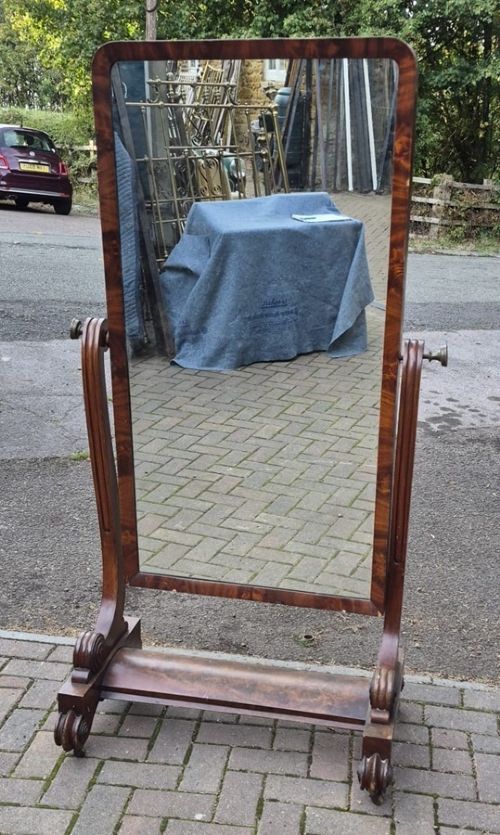
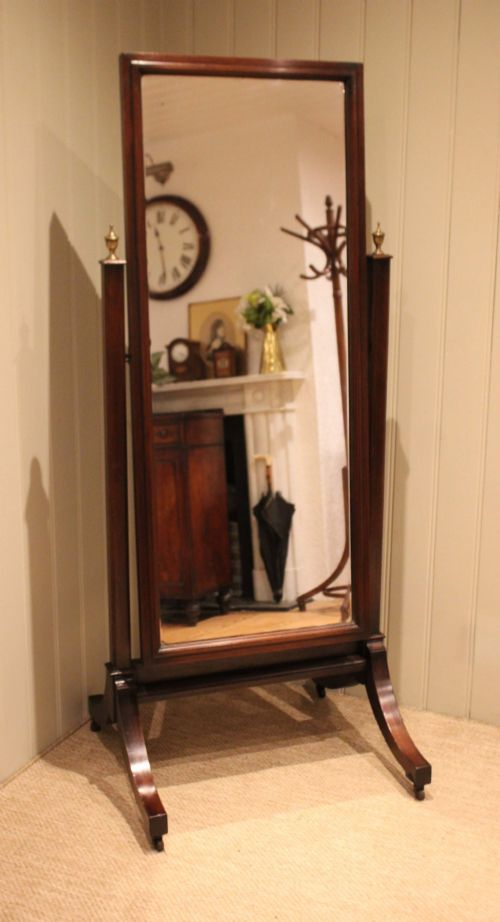
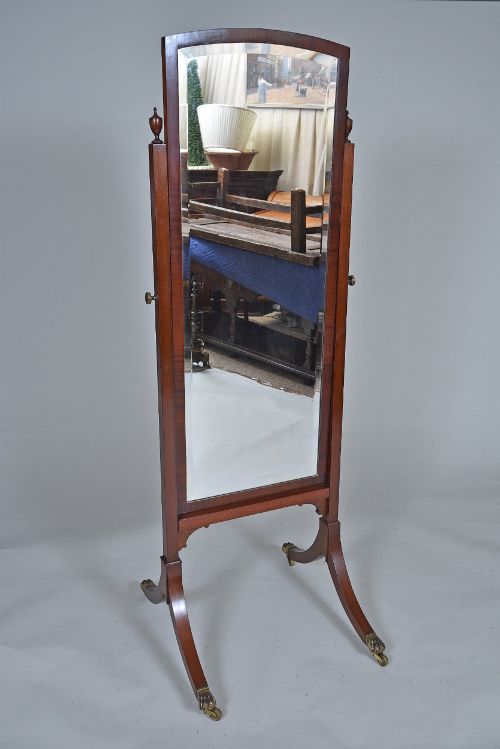
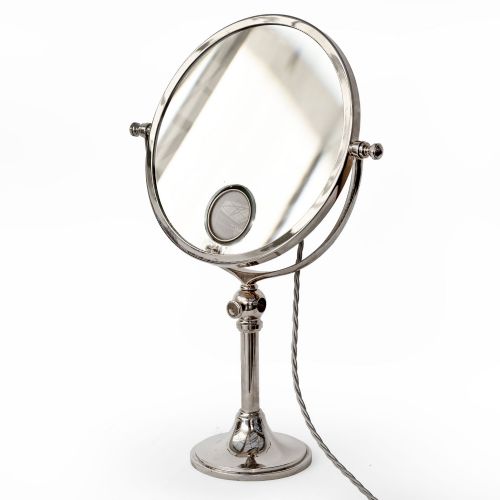
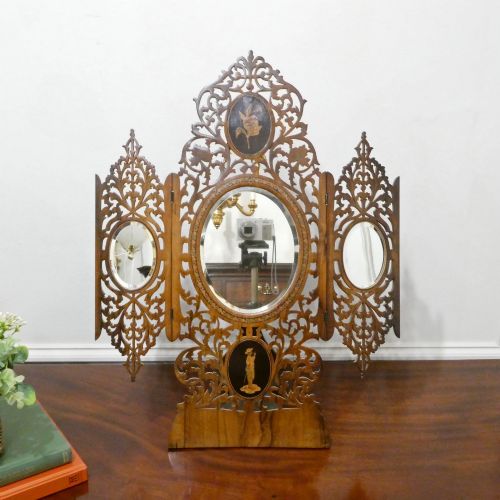
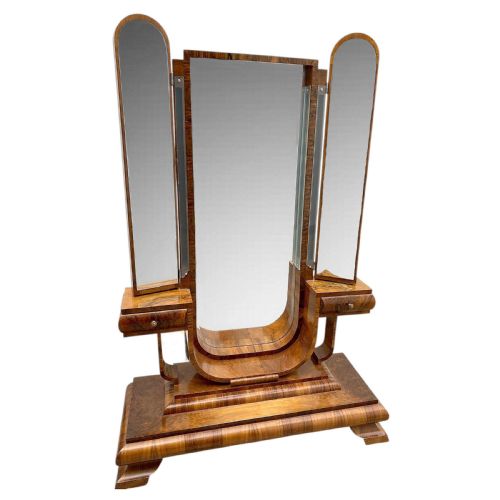
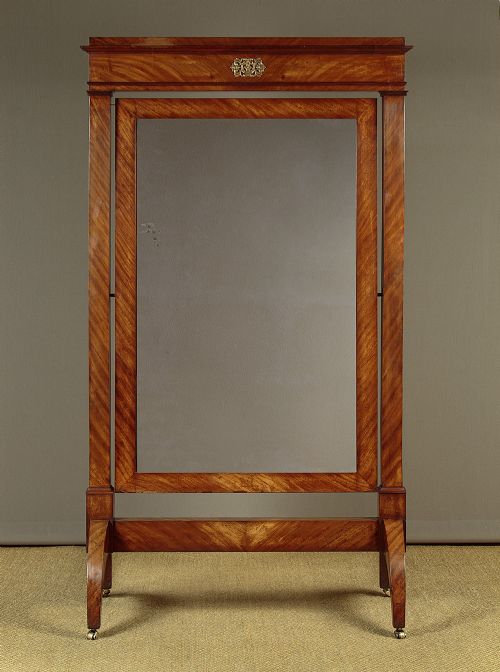
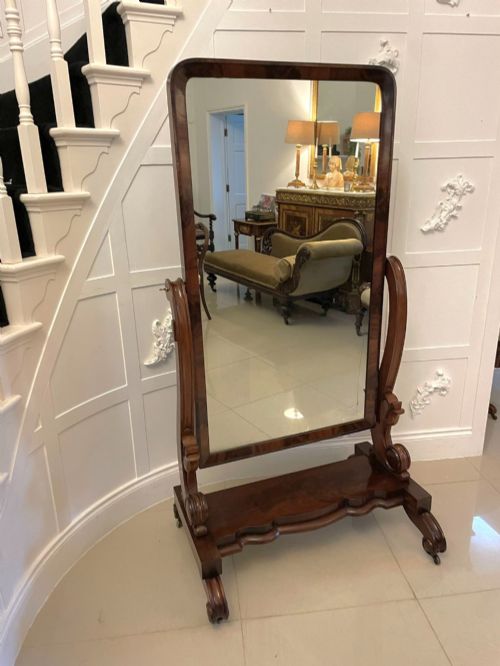
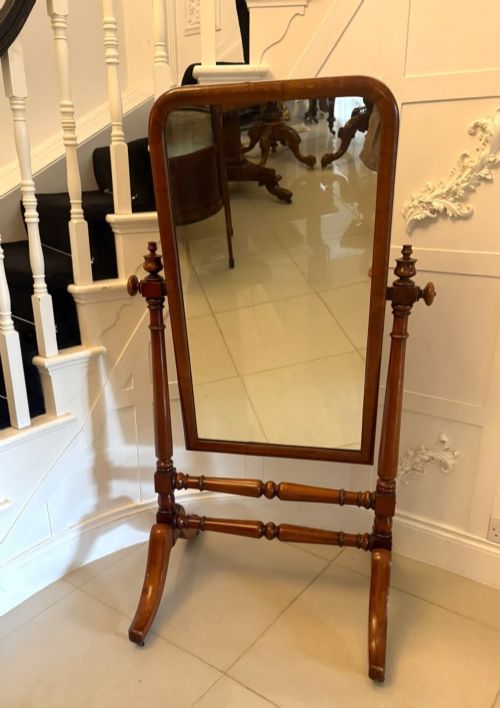
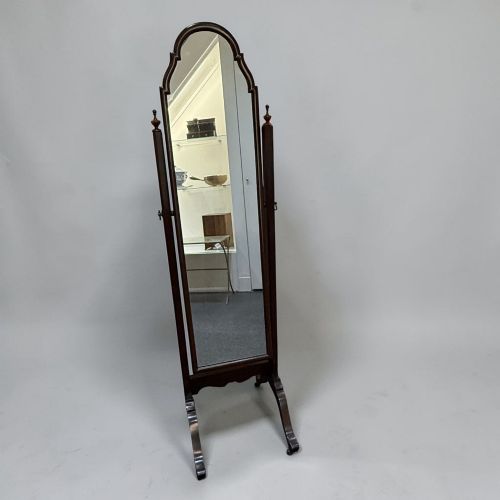
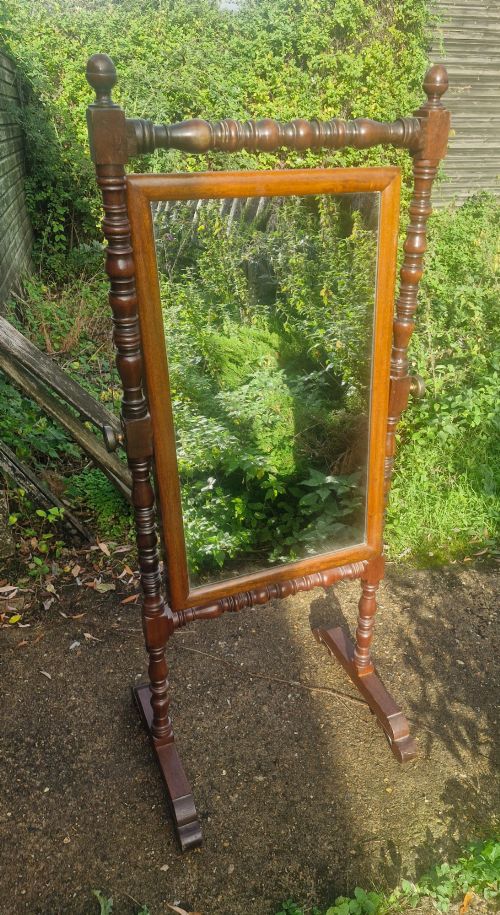
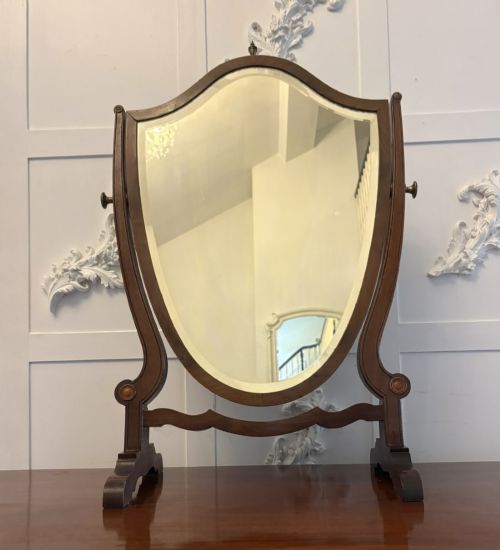
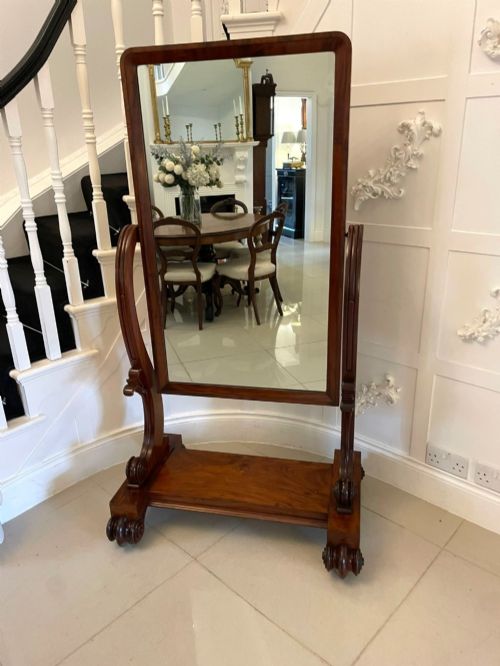
A freestanding dressing mirror serves as both a functional utility and a focal point within a bedroom or dressing room. When you search for a freestanding dressing mirror, you encounter forms ranging from large floor-standing cheval glasses to compact table mirrors designed for top surfaces.
The pieces appearing most frequently across this selection date from the nineteenth and early twentieth centuries, spanning Victorian, Edwardian, and Regency periods. Mahogany remains the dominant timber, accompanied by walnut, oak, and satin birch in various swing and swivel configurations.
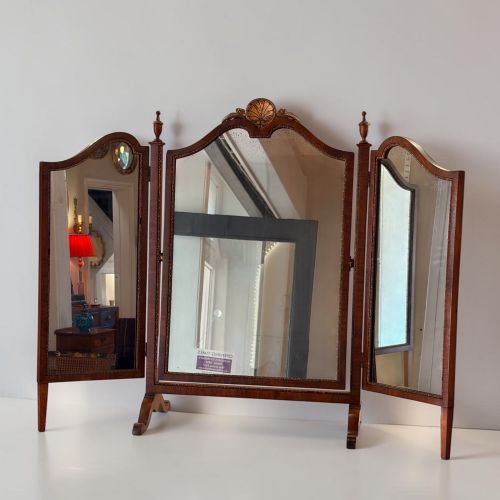
Formats divide broadly between full-length pivoting floor models supported by uprights and trestle bases, and smaller toilet or shaving mirrors meant for placement on chests or dedicated stands. Many incorporate adjustable frames or telescopic mechanisms to alter the angle of the glass.
Materials and Construction
Cabinetmakers constructed these frames using dense hardwoods like mahogany, walnut, and oak, often applying veneers such as flame mahogany or burr walnut to prominent surfaces. Timber framing provides the structural rigidity necessary to support heavy swinging glass plates without twisting.
Fittings typically involve brass pivots, screw caps, sabots, and castors that allow the mirror frame to tilt smoothly on its axis. Gesso, giltwood, pewter, and silver plating appear on select decorative examples from later periods, adding contrasting metallic texture to the woodwork.
Freestanding Dressing Mirror Retail Price Guide 2026
Typical asking prices for freestanding dressing mirror among the pieces listed under this phrase on Sellingantiques today, from the lower quarter to the upper quarter. They describe what is for sale here now, not the wider market.
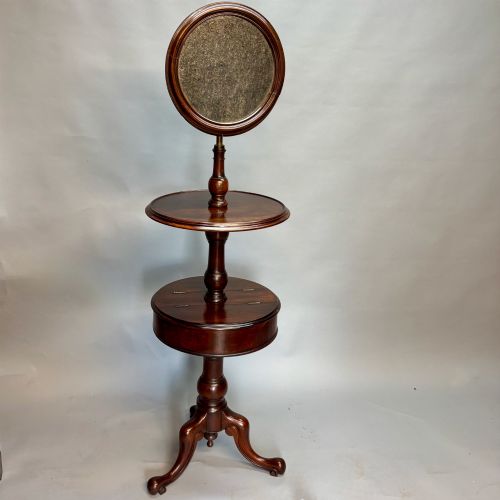
Victorian gentlemen relied on telescopic shaving mirrors with tripod bases to achieve the exact morning angle.
Distinguishing Quality
Quality reveals itself in the weight and stability of the frame construction, particularly how the upright standards connect to the supporting legs or plinth. Superior examples exhibit robust joinery and substantial timber scantlings that prevent wobble during use.
The refinement of the brass hardware and the crispness of any carved detailing, whether in classical revival styles or Art Nouveau curves, mark the difference between standard production and exceptional workshop output. Original mirror glass with clear silvering and minimal distortion further elevates a piece.
Louis Auguste Moreau·WMF
The Freestanding Dressing Mirror Glossary
- Cheval mirror
- A large floor-standing mirror suspended on a vertical frame that swings freely between two upright pillars. This form emerged to provide a full-length reflection for dressing.
- Toilet mirror
- A smaller mirror designed to sit upon a dressing table or chest of drawers, often incorporating small storage drawers in its base. These pieces date predominantly to the eighteenth and nineteenth centuries.
- Gesso
- A plaster-based material applied to wooden frames as a smooth surface for gilding or painting. Artisans carved intricate relief ornamentation directly into the dried gesso layers.
Freestanding Dressing Mirror: Frequently Asked Questions
Where should I place a cheval mirror?
A full-length cheval mirror functions best in a bedroom, dressing area, or large hallway where adequate clearance allows the frame to pivot freely. Positioning the glass opposite a window maximises natural light reflection within the space.
Ensure the floor surface remains level so the supporting feet or castors bear the weight evenly without straining the side pivots.
How do I adjust the swing mirror?
Most antique swing mirrors utilise threaded brass pivot screws inserted through the upright supports into the sides of the mirror frame. Tightening or loosening these thumbscrews regulates the tension required to tilt the glass to your desired angle.
Support the weight of the glass with one hand while adjusting the hardware to prevent sudden slipping or undue stress on the wood.
What is the difference between a cheval and a toilet mirror?
A cheval mirror stands directly on the floor as an independent piece of furniture, tall enough to show a person's entire figure. A toilet mirror is scaled much smaller and requires an existing surface, such as a dressing table or chest, to achieve working height.
Toilet mirrors often feature small drawers built into their plinths for storing small items, whereas floor-standing cheval models focus entirely on the upright frame.
How do I care for antique mirror glass?
Clean the glass surface using a soft, lint-free cloth and a mild glass cleaner sprayed onto the cloth rather than directly onto the mirror. This prevents moisture from seeping behind the bevelled edges and damaging the silver backing.
Avoid placing the mirror in areas subject to extreme humidity or direct, harsh sunlight to protect both the silvering and the surrounding timber finish.