

Antique Tilting Mirror
An antique tilting mirror provides a full-length reflection framed in period timber, offering both practical dressing utility and considerable decorative presence.
Antique Tilting Mirror
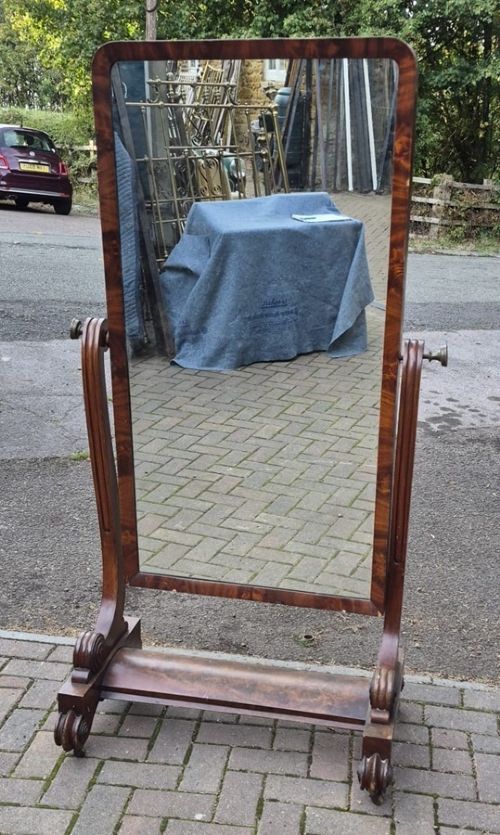
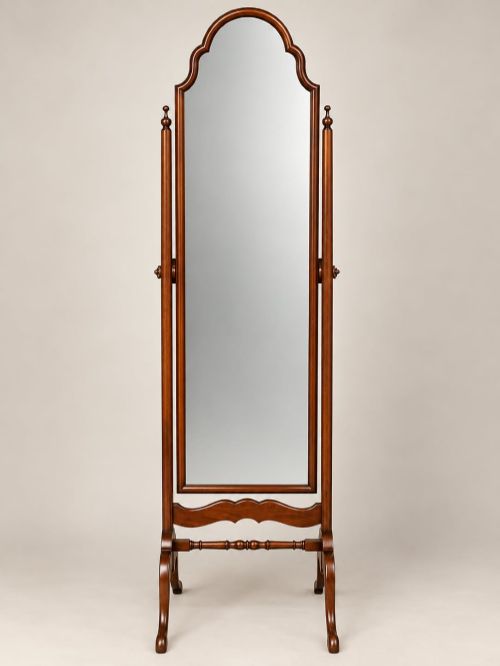
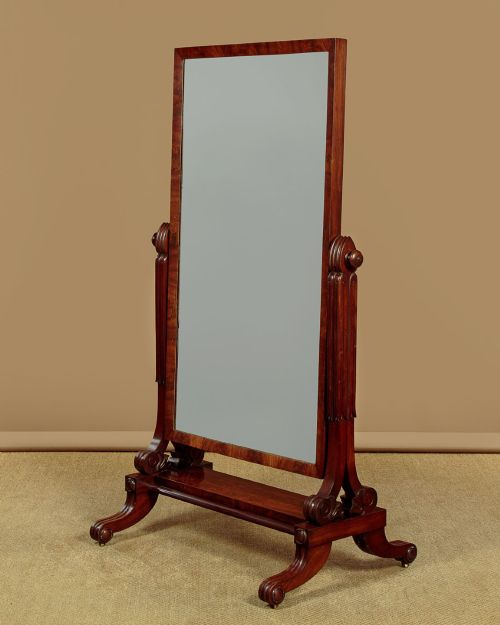
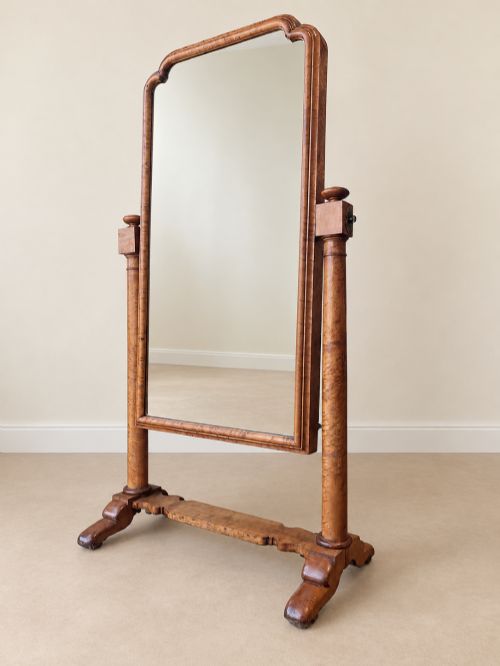
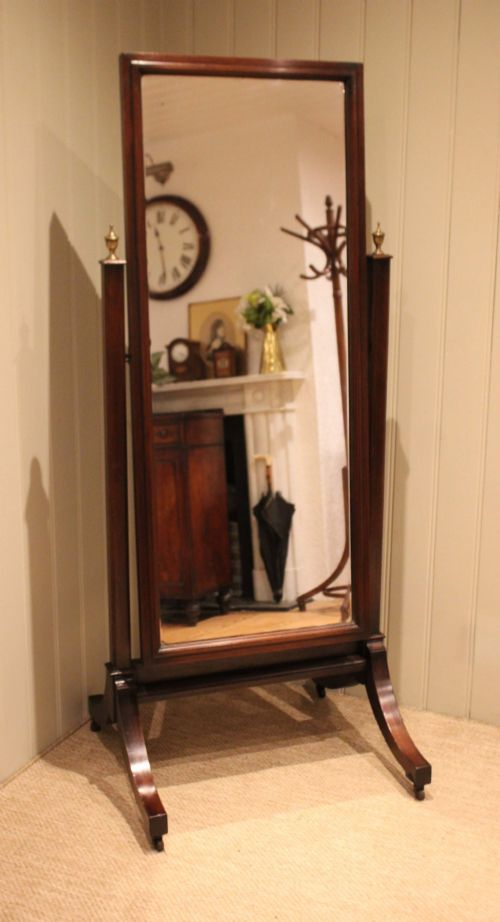
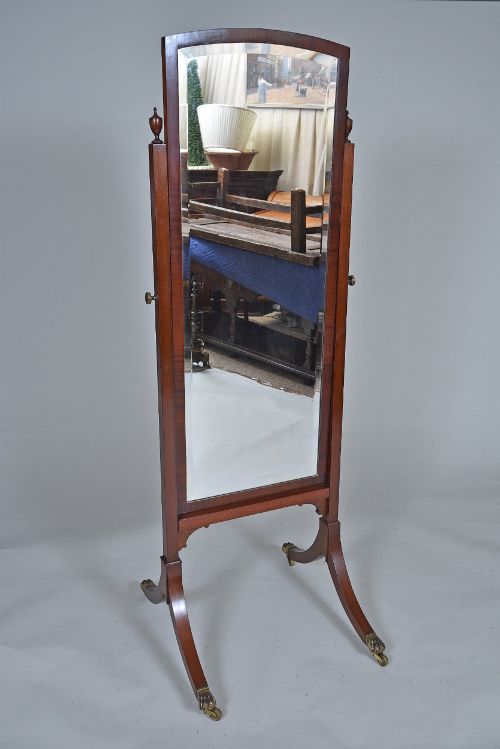
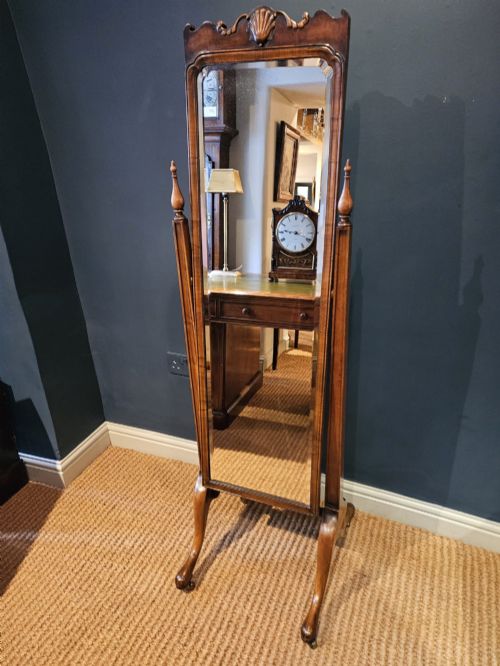
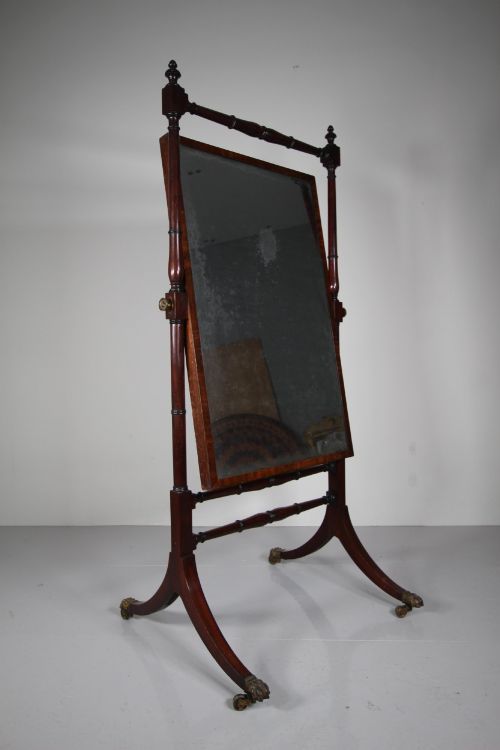
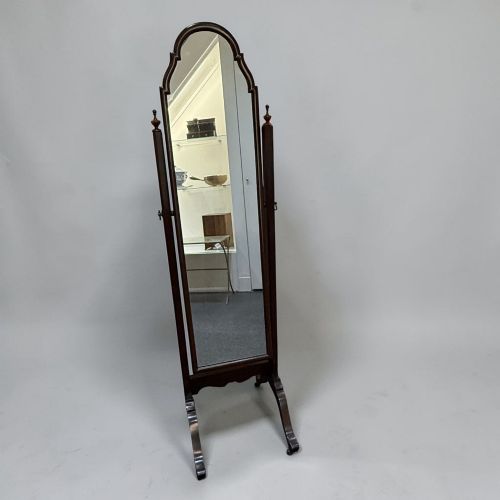
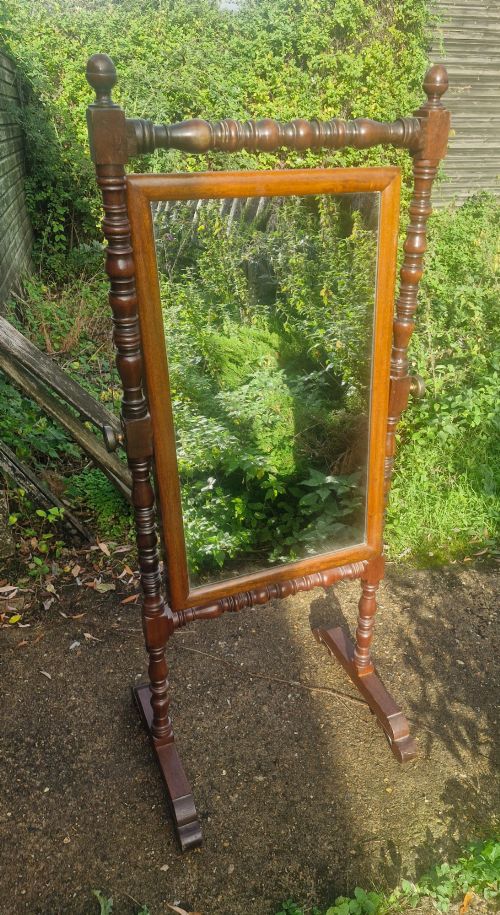
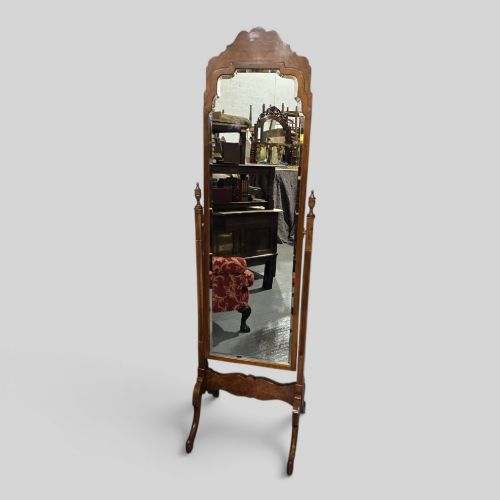
An antique tilting mirror is a freestanding or tabletop glass plate held within a pivoting frame, designed to adjust angles for personal grooming. When you search for an antique tilting mirror, you encounter two main variants: large floor-standing cheval mirrors and smaller dressing table versions.
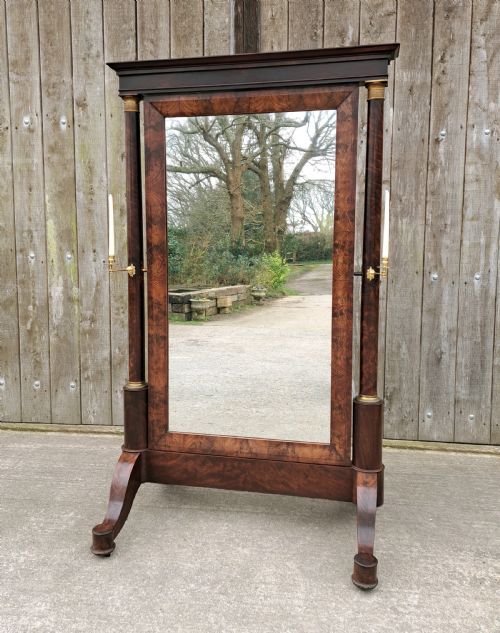
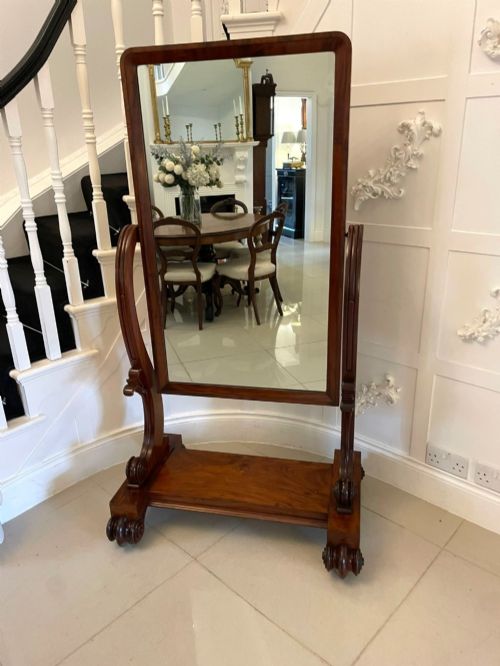
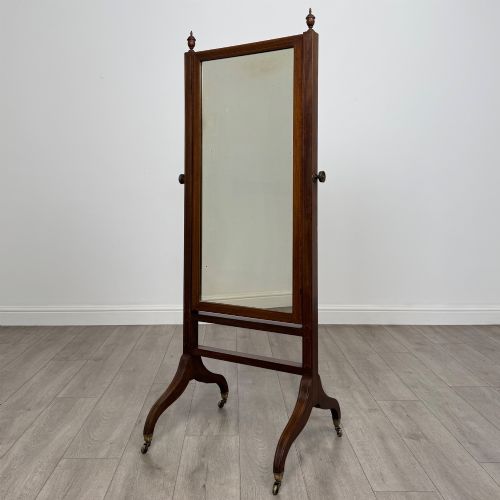
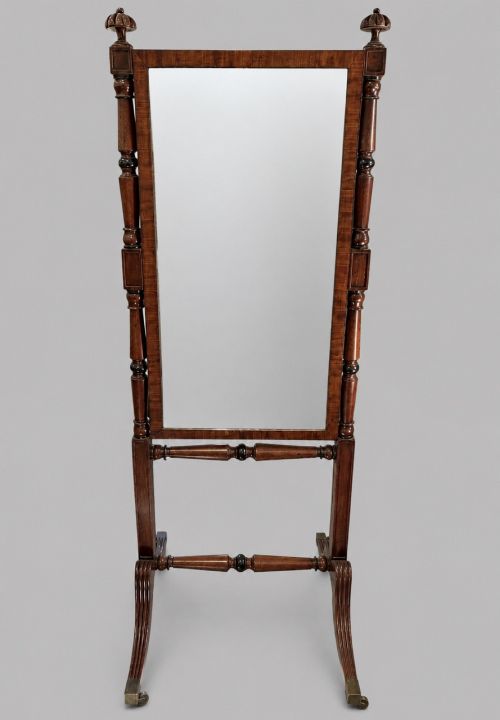
The floor-standing cheval mirrors dominate the selection on this page, offering full-length reflections supported by sturdy standing frames. These pieces originate from various periods including the Regency, Victorian, and Edwardian eras.
Tabletop and toilet mirrors also appear frequently, designed to sit upon chests of drawers or dressing tables. They share the same pivoting mechanism as their larger floor-standing counterparts while serving a more compact purpose.
How they were made
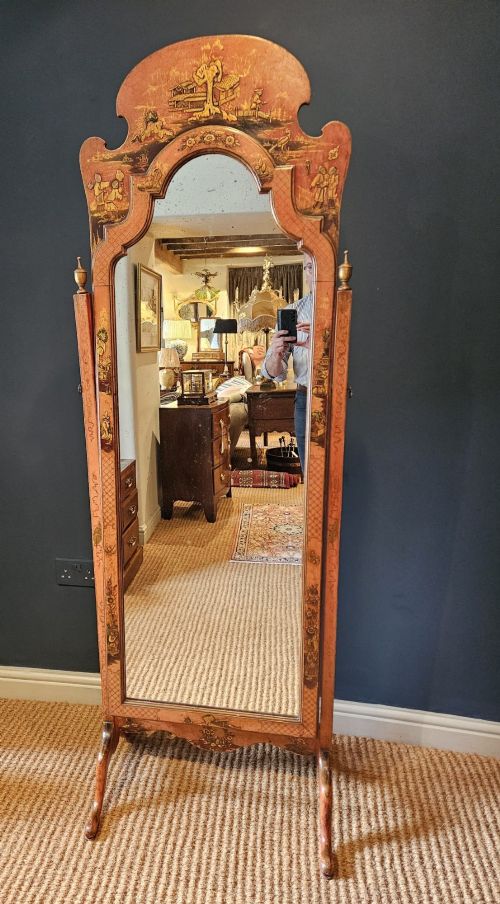
Cabinetmakers constructed the frames primarily using dense timbers such as mahogany, walnut, burr walnut, and oak. These woods were often selected for their rich grain patterns, including flame mahogany, and occasionally decorated with inlay or lacquered finishes in Chinoiserie styles.
Metal components played a crucial functional role in the construction, featuring brass for adjustable pivots, sabots, and castors on floor-standing models. The glass plates themselves were set into pivoting wooden frames that allowed the user to tilt the angle of reflection.
Antique Tilting Mirror Retail Price Guide 2026
Typical asking prices for tilting mirror among the pieces listed under this phrase on Sellingantiques today, from the lower quarter to the upper quarter. They describe what is for sale here now, not the wider market.
One recorded mirror once belonged to a General Meigs, crossing the Atlantic with a military pedigree.
What varies in quality
The overall quality of an antique tilting mirror rests heavily on the selection of timber and the sophistication of its joinery. Superior examples feature finely figured mahogany or burr walnut veneers, robust framing that prevents the glass from sagging, and well-balanced pivot mechanisms.
Hardware details separate standard production from finer cabinetmaking. High-grade pieces incorporate substantial brass fittings, such as castors and decorative sabots, alongside smoothly operating metal pivots that hold the heavy glass securely at any desired angle.
Waring and Gillow
The Antique Tilting Mirror Glossary
- Cheval mirror
- A freestanding full-length swing mirror supported by a vertical frame and four legs. The term derives from the French word for horse.
- Toilet mirror
- A smaller mirror designed to sit upon a dressing table or chest of drawers. These often incorporate small drawer bases.
- Sabot
- A metal shoe or cap fitted to the foot of a furniture leg for protection and decoration. Brass sabots frequently appear on Regency period stands.
- Tilt dressing glass
- An alternative historical term for a pivoting mirror used during grooming. It describes the adjustable angle of the glass plate.
Antique Tilting Mirror: Frequently Asked Questions
What is a cheval mirror?
A cheval mirror is a tall, floor-standing swing mirror held within a supportive wooden frame. It allows a person to view their entire outfit from head to toe.
The frame uses pivot pins on each side so the glass plate tilts forward or backward to adjust the viewing angle.
How do you use a tilting mirror?
You adjust the angle of the glass by gently pushing or pulling the top or bottom of the frame. The side pivots hold the glass firmly in your chosen position.
Floor-standing versions often include brass handles or thumb screws to tighten the tension on the pivoting mechanism.
Where should I place a tilting mirror?
These mirrors suit bedrooms, dressing rooms, or hallways where full-length reflections are practical. Placing them near a window helps bounce natural light around the room.
Ensure the floor beneath a heavy floor-standing model is level so the frame maintains its structural balance.