



Free Standing Floor Mirror
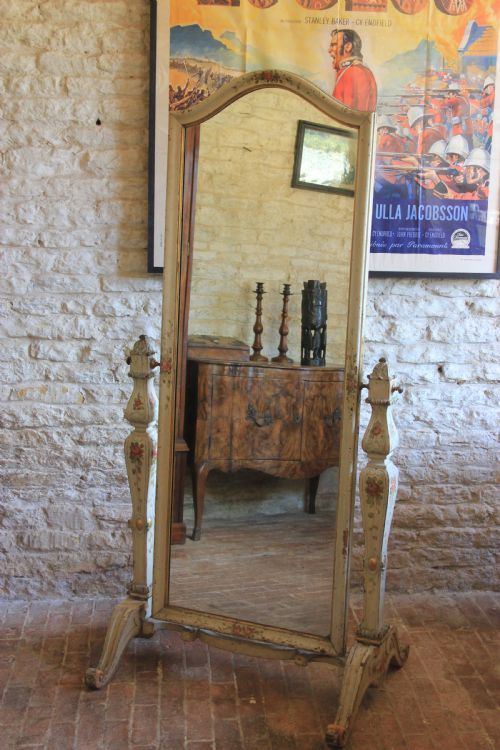
A free standing floor mirror is a movable looking glass that tilts within a frame, bringing both scale and utility to a dressing room or bedroom.
What They Are
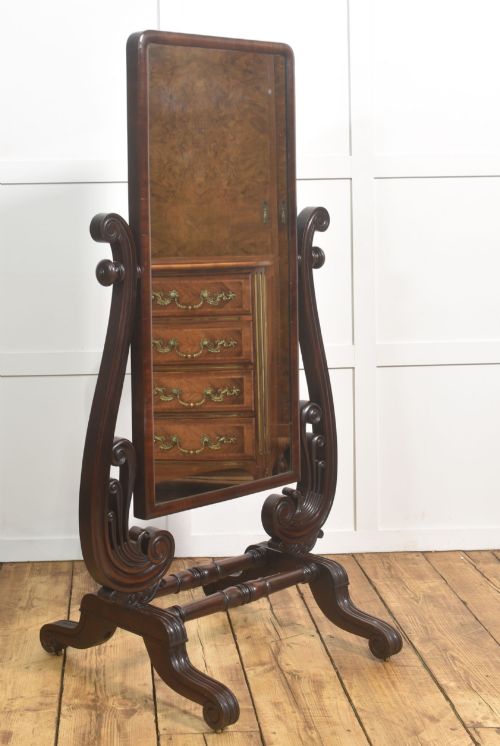
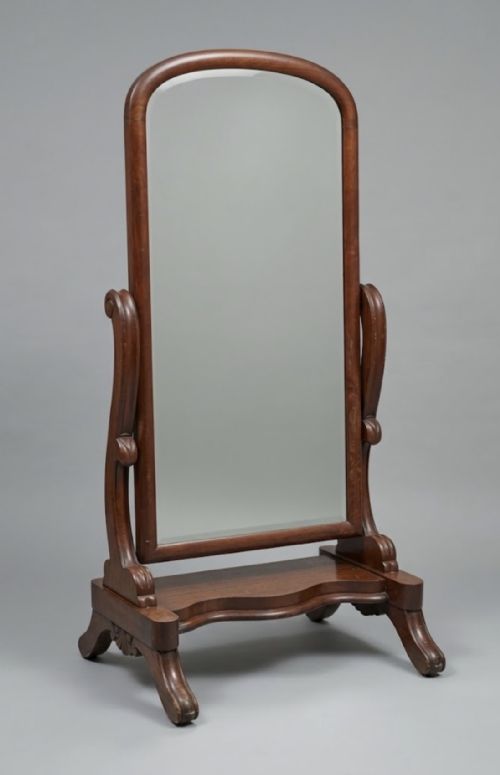
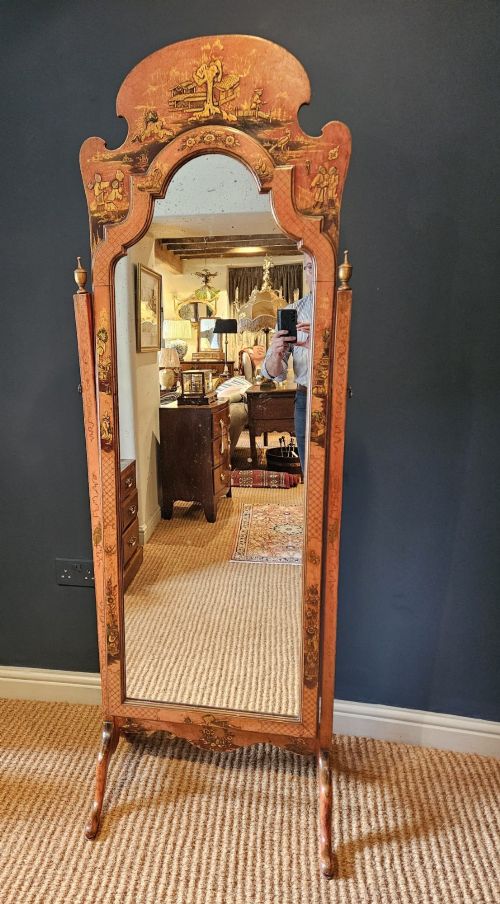
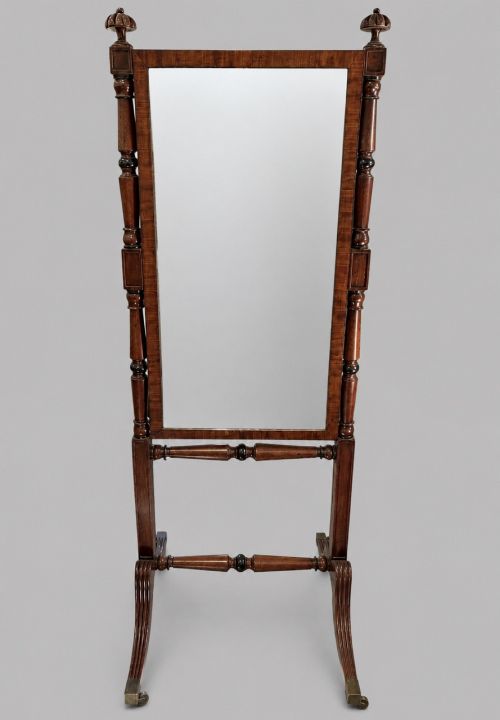
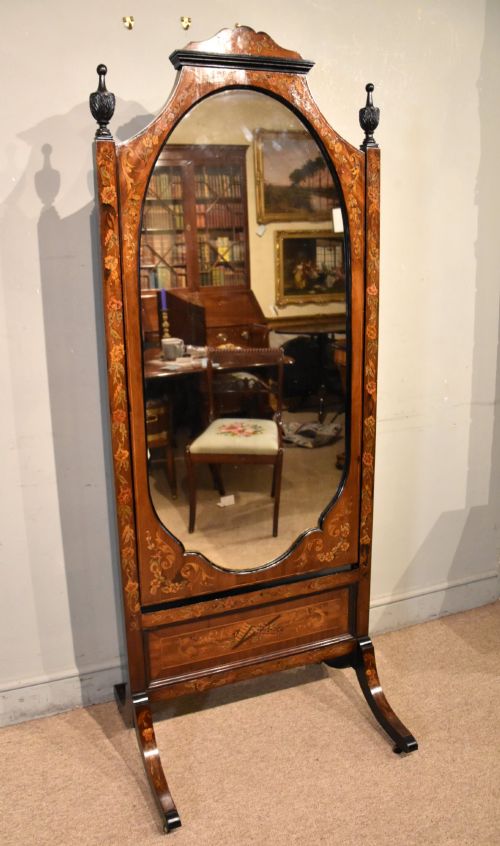
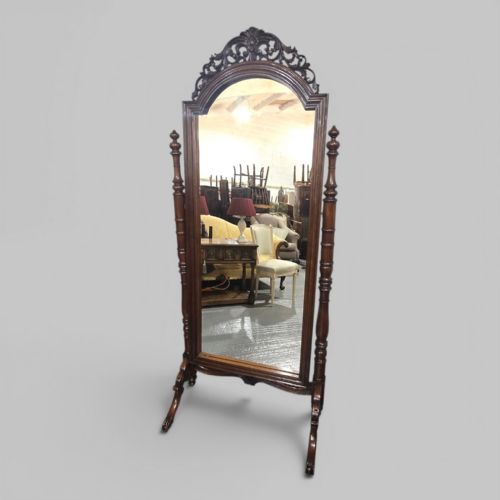
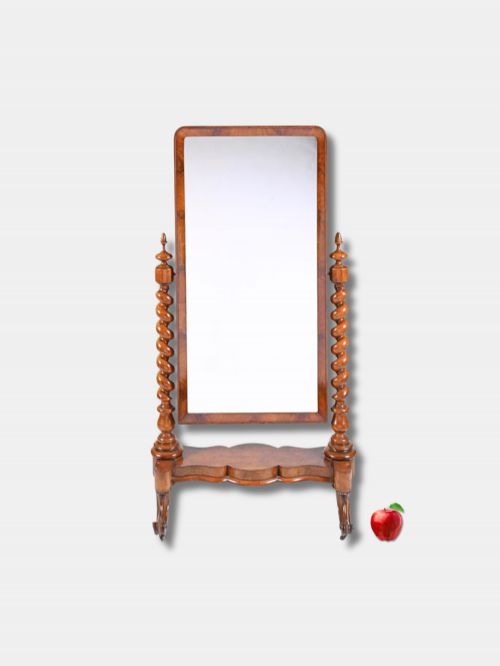
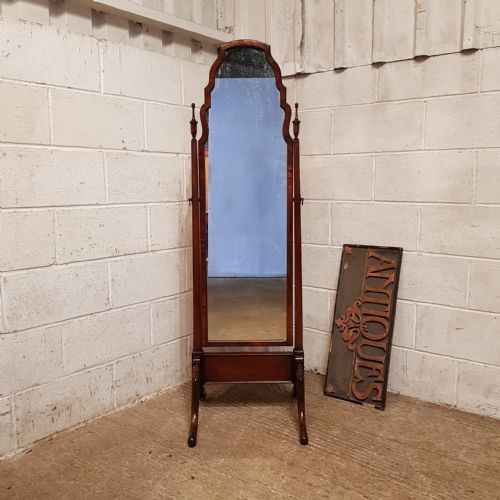
A free standing floor mirror usually takes the form of a cheval mirror, designed to stand directly on the floor without wall support. These tall dressing glasses allow the user to view their entire outfit from head to toe.
The pieces on this page span the 18th century, the 19th century, and the Victorian period, reflecting classic design traditions. Surviving examples include distinct George III pieces alongside later Victorian adaptations.
Most items function as both practical dressing mirrors and decorative furniture. They offer adjustable frames that tilt on pivots to alter the angle of reflection.
How They Were Made
Cabinetmakers constructed the frames and stands primarily from mahogany, prized for its strength, rich grain, and deep colour. This durable timber supported the considerable weight of a tall pivoting glass.
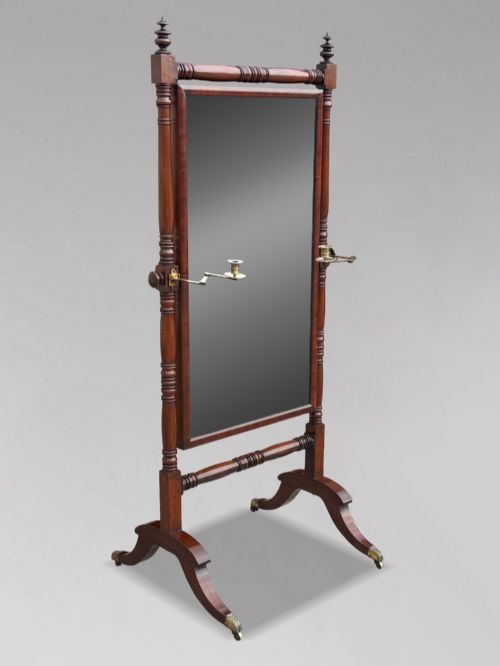
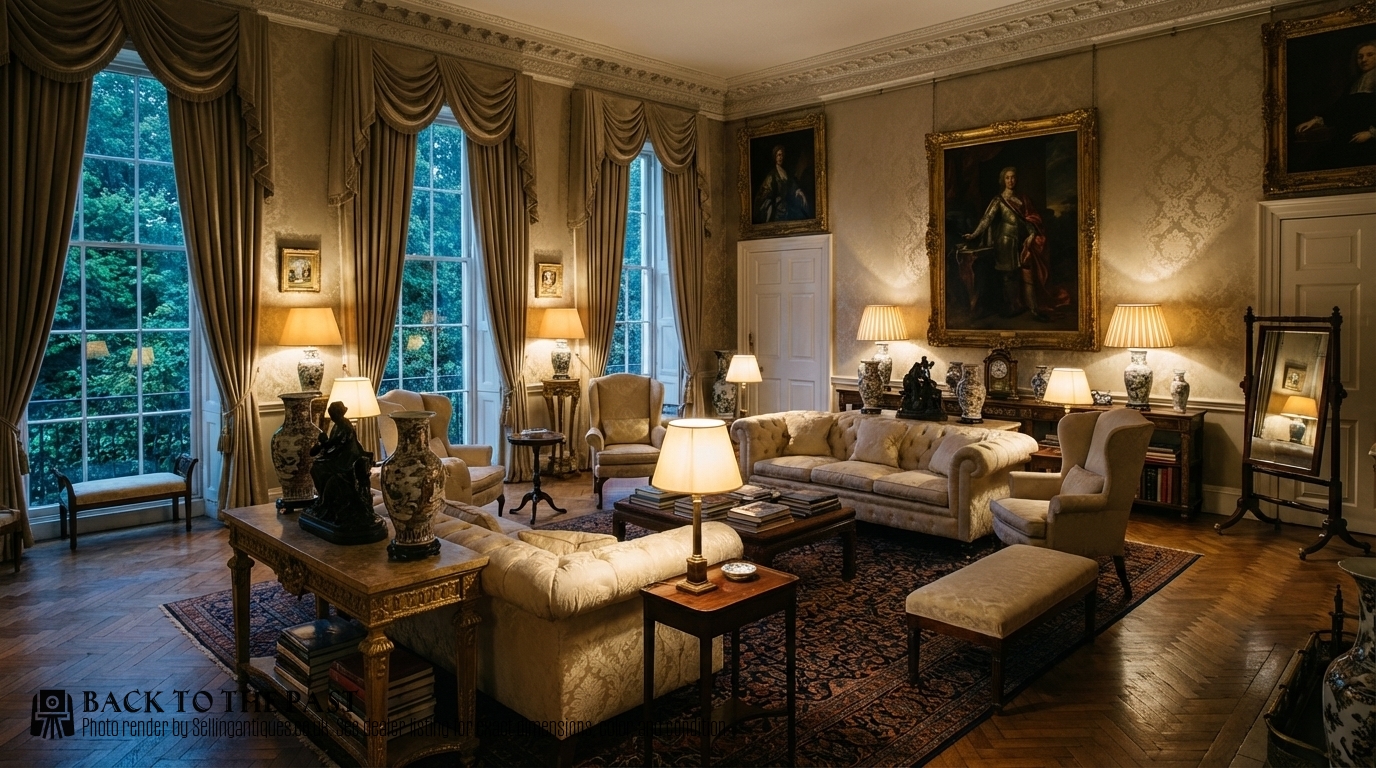
Metal components such as brass fastenings and pivot screws allowed the mirror plate to tilt smoothly within its upright supports. Mirror glass was carefully fitted into the wooden frame, often secured with internal mouldings.
Retail Price Guide 2026
Typical UK retail prices for free standing floor mirror, calculated from the Sellingantiques database of over a million retail prices indexed since 2003. This retail price guide relies exclusively on Sellingantiques data; no external sources or auction records are used, so the figures do not describe the wider market.
What Varies in Quality
The refinement of the timber and the subtlety of the woodwork distinguish the finer examples from simpler workshops. Superior pieces display carefully chosen mahogany veneers and well-proportioned uprights that provide steady support.
The quality of the metal fittings, particularly the brass pivots and tightening screws, marks the standard of construction. Heavier, solid brass elements indicate a more thoughtful execution than lighter, stamped replacements.
The Free Standing Floor Mirror Glossary
- Cheval mirror
- A large floor-standing mirror that hangs on a frame and tilts on vertical pivots. The name derives from the French word for horse, referencing the four-legged trestle base.
- Mahogany
- A durable tropical hardwood with a reddish-brown colour widely used in fine furniture. Cabinetmakers favoured it for its stability and resistance to warping.
- Victorian
- Pertaining to the period of Queen Victoria's reign during the 19th century. Furniture from this era encompasses various revival styles alongside traditional forms.
- George III
- Pertaining to the stylistic period of the reign of King George III in the 18th century. Pieces from this time often exhibit classical proportions and refined cabinetwork.
Frequently Asked Questions
How do I date a floor mirror?
Dating relies on examining the timber, the construction of the frame, and the style of the base. Details like brass pivot hardware and mahogany grain help place an object within the 18th or 19th century.
Comparing the joinery and overall silhouette to established period characteristics further clarifies the age of the piece.
Are these mirrors stable on carpets?
These floor mirrors rely on their sturdy wooden feet or trestle bases to stand upright on flat surfaces. Heavier mahogany frames provide natural ballast to keep the structure secure.
Thick carpets may require careful placement to ensure the four-legged base rests evenly without rocking.
Can the mirror angle be adjusted?
Most cheval mirrors feature side pivots made of brass that allow the glass frame to tilt forward or backward. Tightening the screws secures the mirror at the desired viewing angle.
This mechanism was an essential feature for full-length dressing mirrors used in bedrooms.
Where should I place a cheval mirror?
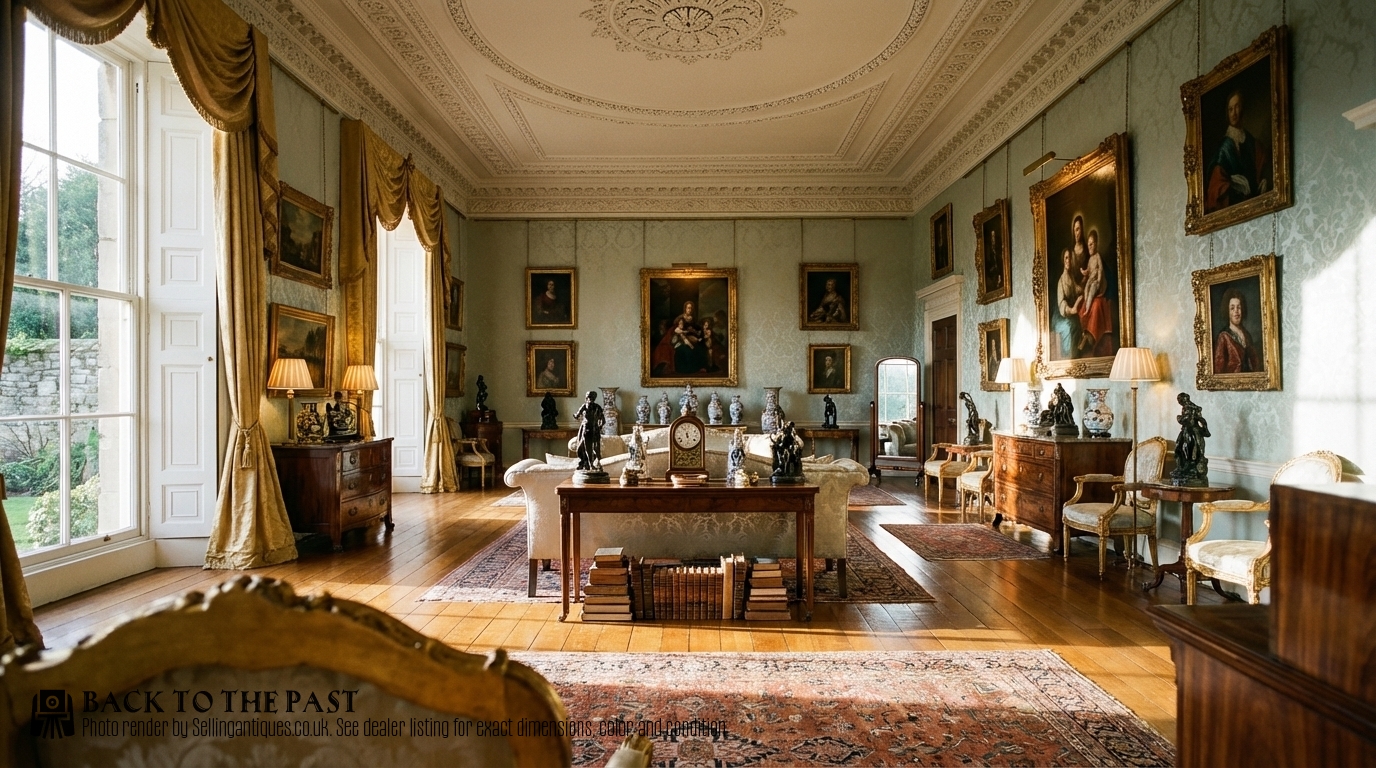
A free standing floor mirror suits bedrooms, dressing rooms, or hallways where full-length reflections are useful. Placing it near a light source helps brighten the surrounding space.
Ensure there is enough clearance around the base to allow the frame to tilt freely.