

Vintage Cheval Glass
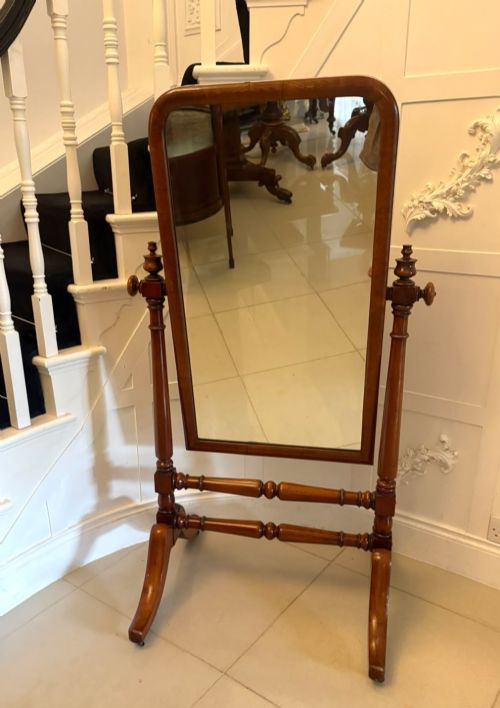
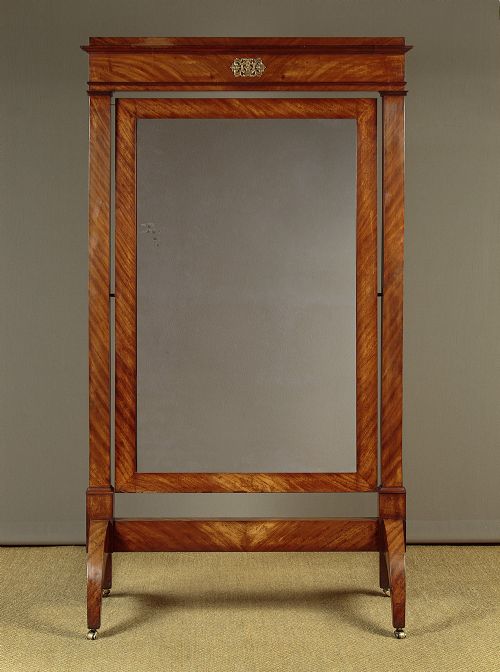
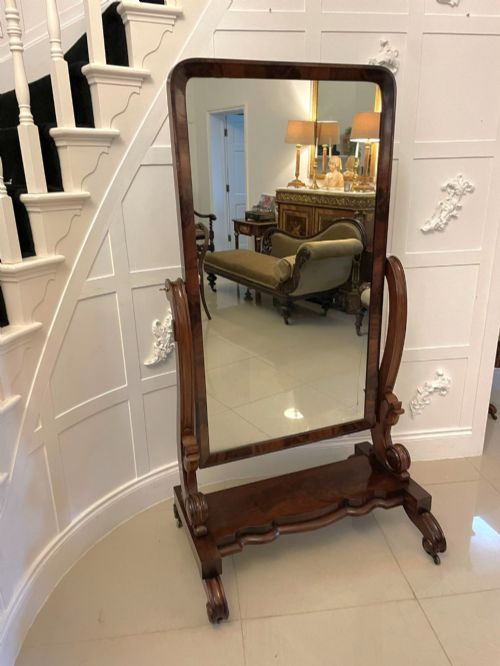
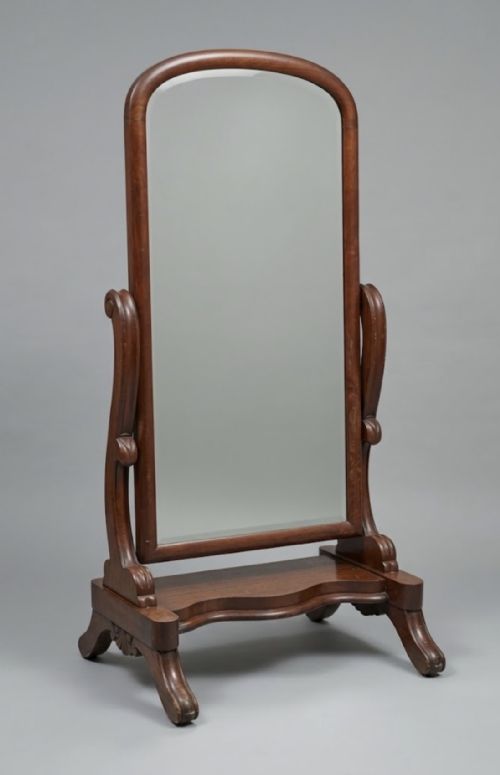
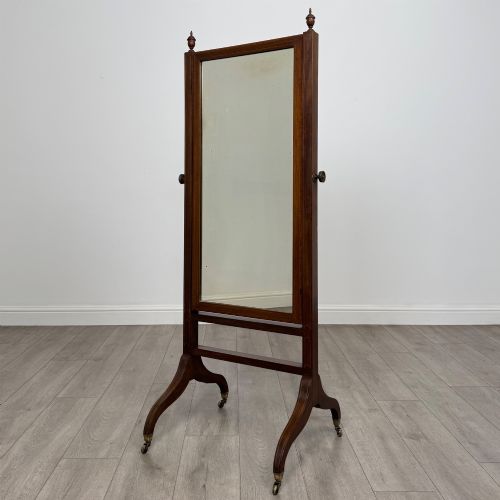
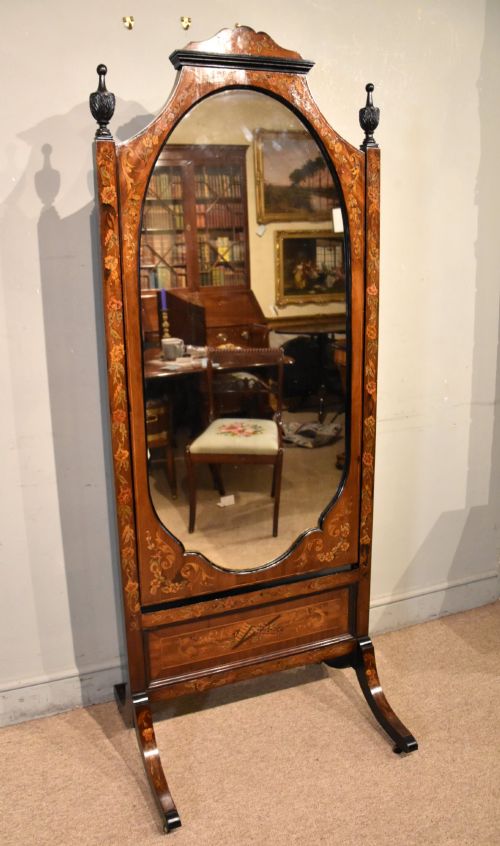
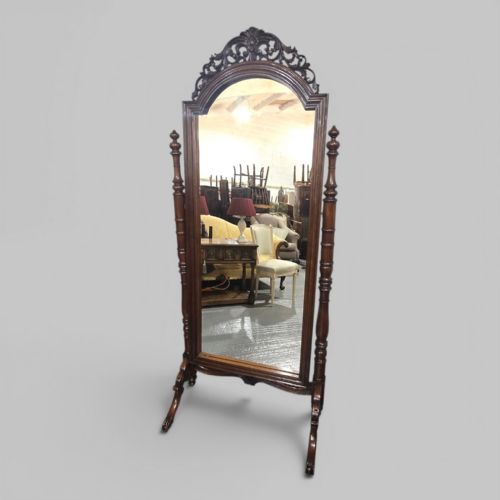
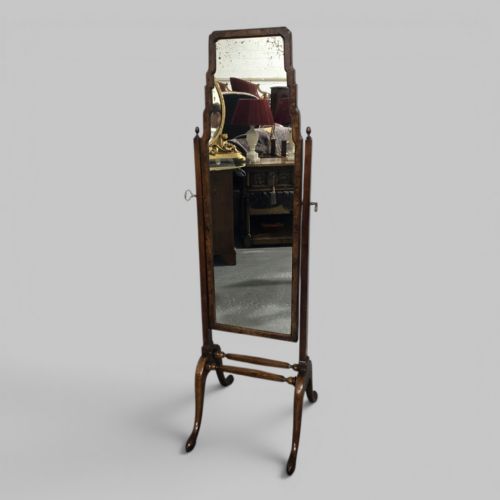
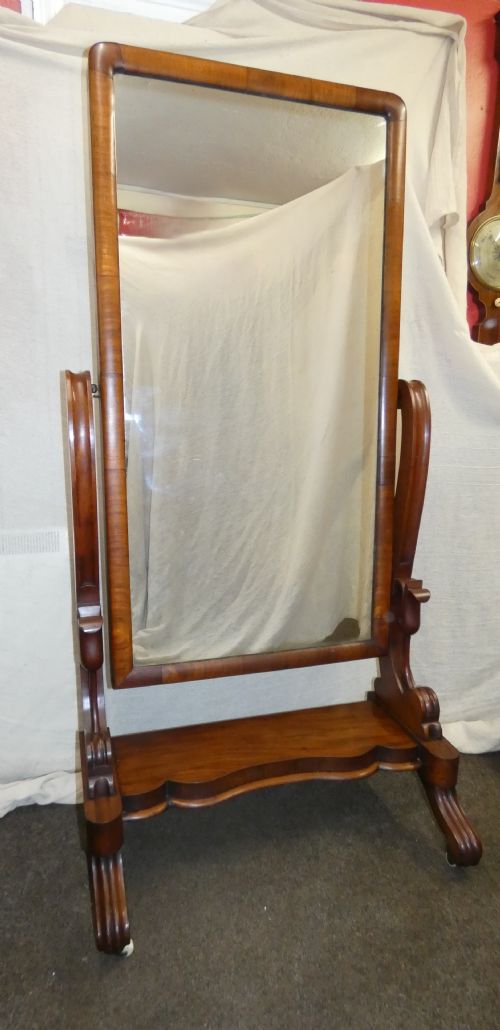
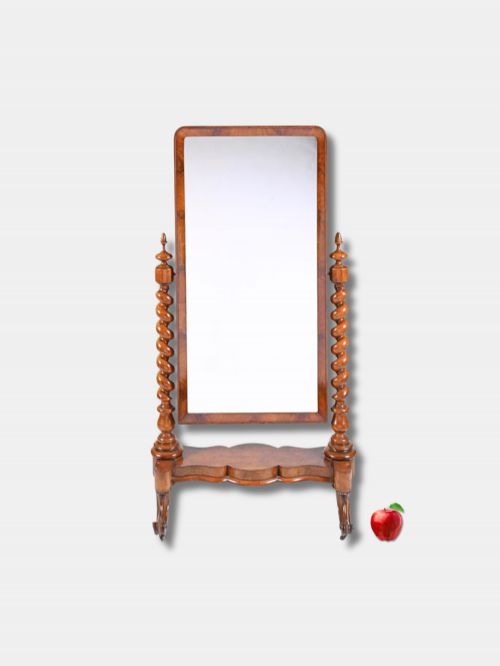
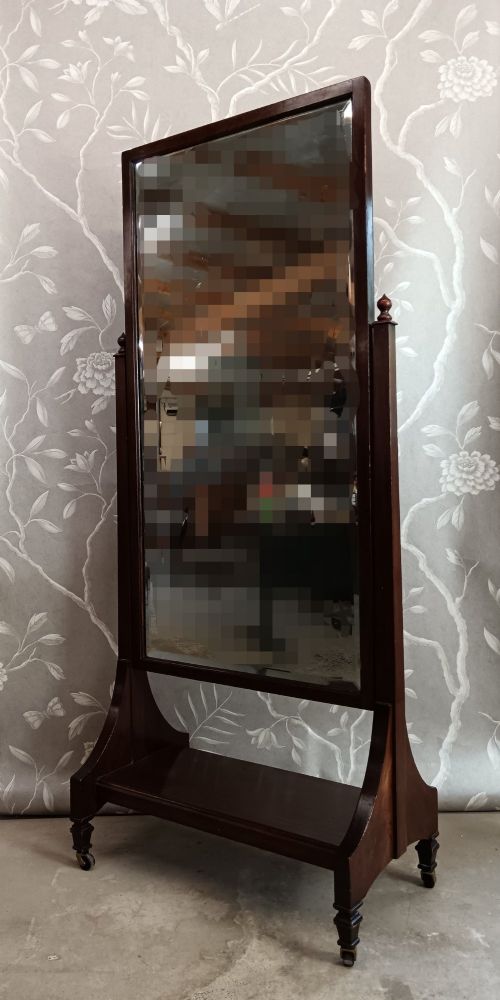
A vintage cheval glass stands as a tall, freestanding floor mirror designed to tilt between upright posts.
Vintage Cheval Glass
A vintage cheval glass provides a full-length reflection within a pivoting frame supported by sturdy vertical uprights and feet. These freestanding floor mirrors appear frequently from the nineteenth century onwards, alongside smaller dressing table versions.
Most pieces encountered here are constructed from mahogany, walnut, or satinwood, reflecting period cabinet-making traditions. Makers from the Victorian, Edwardian, and Regency eras dominated this form, producing large floor-standing mirrors as well as smaller toilet mirrors.
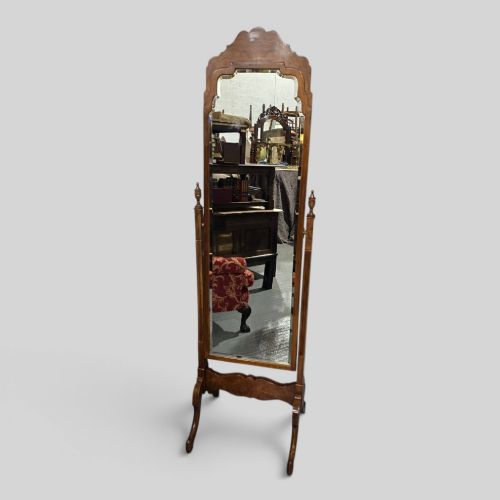
The form allows the glass to adjust at various angles for dressing. Examples range from simple nineteenth-century floor mirrors to elaborate French Chateau and Queen Anne style walnut pieces.
What varies in quality
The density and selection of the timber dictate the baseline quality of the frame. Figured mahogany, burr walnut, and flame mahogany denote higher grade cabinet work compared to plain secondary woods.
Proportion and stability distinguish superior examples from standard production. A heavy floor mirror requires substantial framing and robust brass pivot hardware to prevent the glass from slipping or warping over time.
Vintage Cheval Glass Retail Price Guide 2026
Typical asking prices for vintage cheval glass among the pieces listed under this phrase on Sellingantiques today, from the lower quarter to the upper quarter. They describe what is for sale here now, not the wider market.
One extraordinary nineteenth-century American cheval mirror once belonged to General Meigs, carrying military provenance straight into the dressing room.
The Vintage Cheval Glass Glossary
- Cheval glass
- A tall, freestanding mirror suspended on vertical posts that allow it to tilt. The name derives from the French word for horse, referencing the four-legged frame support.
- Toilet mirror
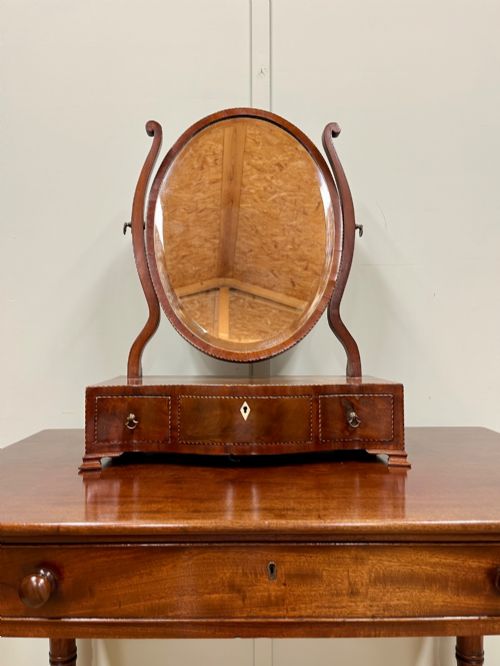
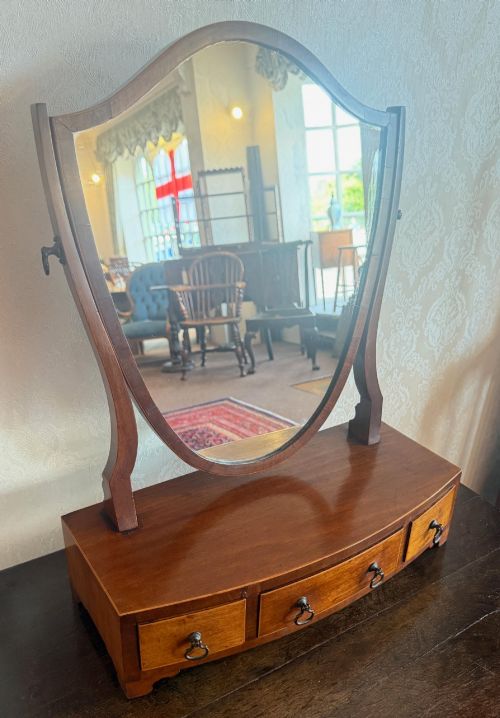
- A smaller dressing glass designed to sit upon a table or chest of drawers rather than stand on the floor. These often incorporate small storage drawers in the base plinth.
- Barley twist
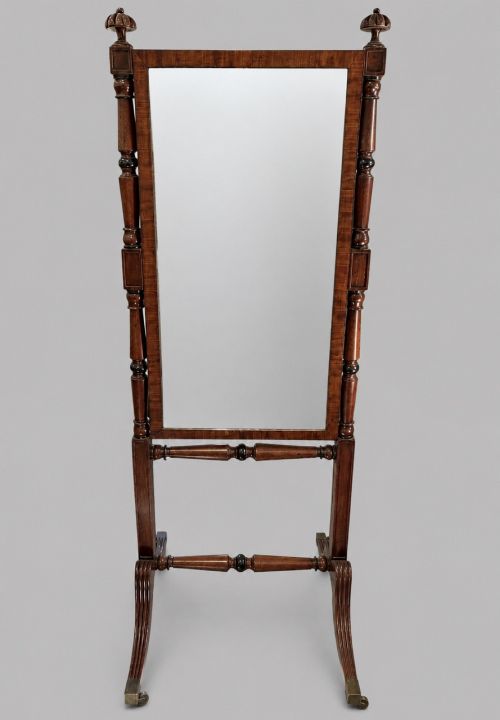
- A spiral turning carved into wooden uprights or supports. This decorative technique appears frequently on nineteenth-century furniture frames.
- Giltwood
- Wood that has been coated with a thin layer of gold leaf or gilt paint. It is typically found on decorative frames from the Victorian and later periods.
- Bespoke
- Made to individual order rather than produced as a standard stock item. Such pieces often display unusual dimensions or customised timber choices.
Vintage Cheval Glass: Frequently Asked Questions
What is a cheval glass?
A cheval glass is a full-length floor mirror mounted on a pivoting frame between two upright pillars. This design enables the user to tilt the glass plate to various angles.
Originating as a practical dressing accessory, these pieces became central items in bedrooms and dressing rooms throughout the nineteenth and early twentieth centuries.
How do I date a vintage cheval mirror?
Dating relies on examining the timber species, joinery techniques, and overall stylistic period markers. Victorian and Edwardian examples often feature mahogany or walnut with machine-cut screws and standard brass hardware.
Earlier Regency and Georgian pieces display hand-cut joinery, specific wood figurations, and distinct proportions associated with those design eras.
Where should I place a floor mirror?
A freestanding cheval mirror requires adequate floor space to allow the frame to tilt safely without obstruction. Placing the piece perpendicular to a window maximises reflected natural light in a room.
The sturdy base needs level flooring to ensure the pivoting frame operates smoothly without undue strain on the brass side screws.
Are dressing mirrors the same as cheval mirrors?
Dressing mirrors generally refer to smaller tabletop variants designed to sit on top of a chest of drawers or dressing table. Cheval mirrors are specifically tall, freestanding floor mirrors.
Both types utilise the same pivoting mechanism to adjust the angle of the glass, but they occupy entirely different positions within a room layout.