
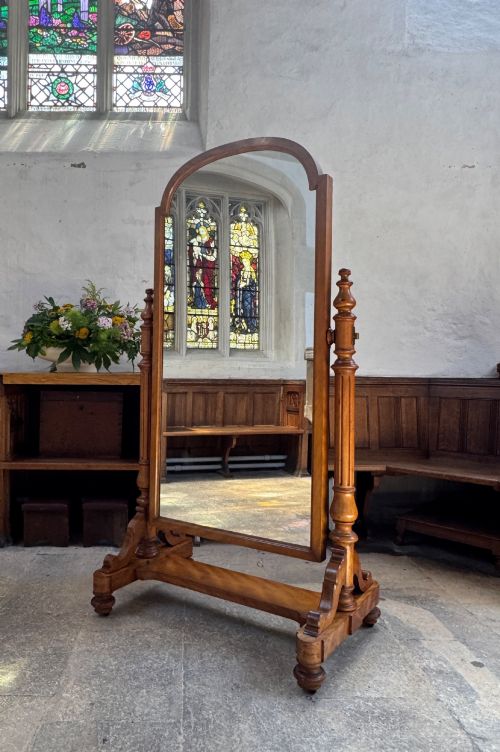


Satinwood Cheval Mirror
A satinwood cheval mirror is a freestanding full-length glass on a pivoting frame that brings light and elegance into a dressing room.
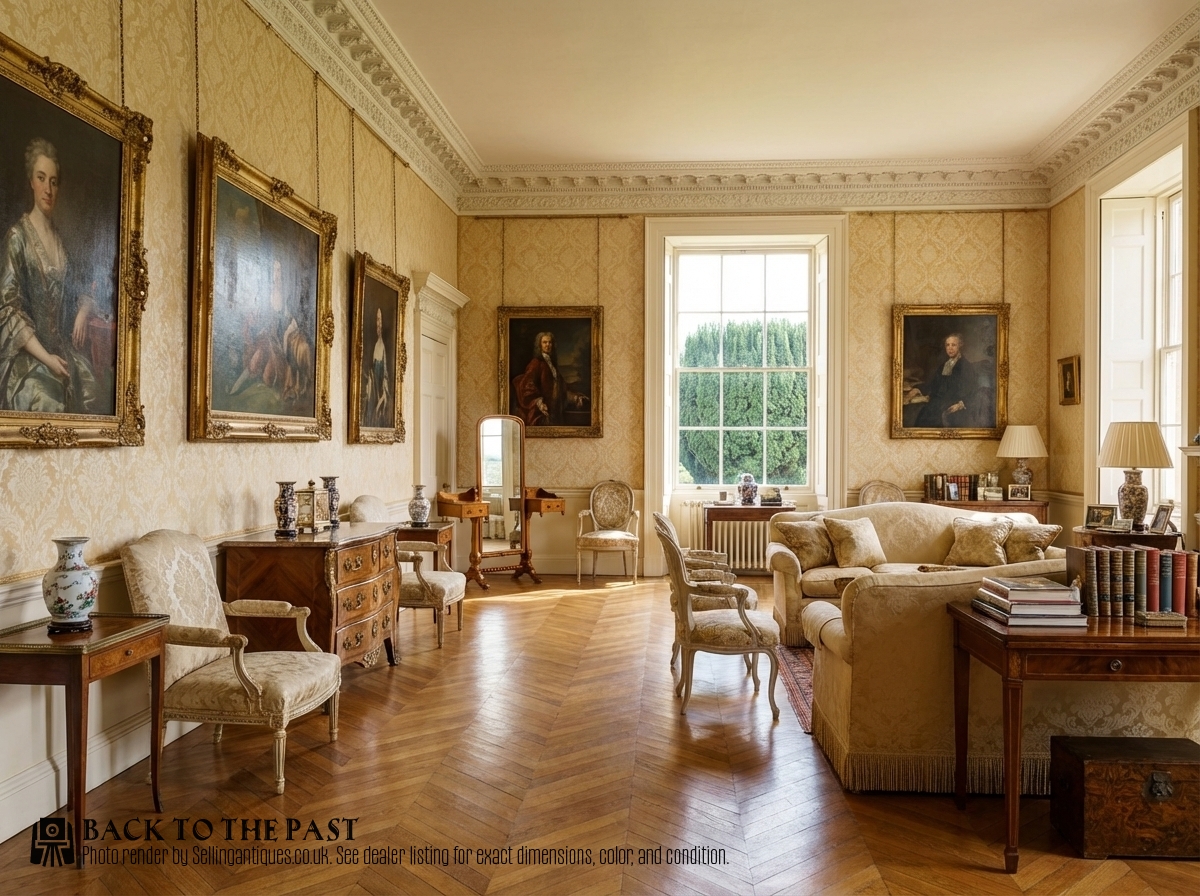
Satinwood Cheval Mirror
When you search for a satinwood cheval mirror, you encounter freestanding full-length glasses designed for dressing rooms and bedrooms. The examples on this page span the Victorian and Edwardian eras, alongside earlier Georgian forms and later revivals.
Most pieces you meet here date from the nineteenth and early twentieth centuries, featuring the pale timbers and adjustable frames characteristic of the period. Alongside true cheval mirrors, the selection includes related toilet mirrors and occasional robing stands.
The timber is the defining characteristic of these pieces, often paired with mahogany, satin birch or contrasting stringing. They range from simple Edwardian framing to elaborate marquetry-inlaid Victorian and Sheraton revival designs.
Materials and construction
Cabinet makers utilised satinwood veneers over firmer sub-woods, applying intricate marquetry, painted details or dark ebony stringing to ornament the surfaces. Brass fittings typically secure the pivoting mirror plate within its upright standards.
Frames rely on sturdy supporting legs and floor trestles to bear the weight of the heavy glass plate. Joinery methods of the Victorian and Edwardian periods ensure stability while allowing the mirror to tilt smoothly.
Satinwood Cheval Mirror Retail Price Guide 2026
Typical asking prices for satinwood cheval mirror among the pieces listed under this phrase on Sellingantiques today, from the lower quarter to the upper quarter. They describe what is for sale here now, not the wider market.
Listings demonstrate a strong presence of Edwardian and Victorian pieces, utilising satinwood alongside mahogany, brass and glass.
Distinctions in quality
The finesse of the inlaid marquetry and the choice of secondary timbers distinguish standard production from exceptional examples. Cabinet work showing crisp botanical or geometric decoration sits at the upper end of the scale.
The clarity and original condition of the glass plate, together with the substantial weight of the timber frame, mark out superior pieces. Hardware such as original brass pivot screws and castors also contributes to desirability.
Adams
The Satinwood Cheval Mirror Glossary
- Cheval mirror
- A freestanding full-length mirror mounted on a pivoting frame between two upright posts. This allows the user to adjust the angle to view their entire outfit.
- Satinwood
- A dense, lustrous tropical hardwood prized for its pale golden yellow colour and smooth sheen. It takes a fine polish and serves as a primary surface veneer in cabinet making.
- Marquetry
- The art of applying decorative veneer pieces to a structure to form intricate patterns or pictures. Craftsmen use various tinted woods to create contrasting pictorial designs.
- Toilet mirror
- A smaller dressing glass designed to sit upon a table or chest of drawers rather than stand independently on the floor.
- Sheraton revival
- A late nineteenth and early twentieth century design movement that reinterpreted the lighter, neoclassical styles of the eighteenth century cabinet maker Thomas Sheraton.
Satinwood Cheval Mirror: Frequently Asked Questions
How do I use a cheval mirror?
These tall mirrors stand directly on the floor and tilt on central side pivots. You adjust the angle by hand to check your full attire from head to toe.
Position the glass near a window to bounce daylight into darker corners of a bedroom or dressing space.
What rooms suit these mirrors?
Bedrooms and dressing rooms remain the traditional home for tall pivoting mirrors. Their reflective glass expands the visual boundaries of smaller spaces.
They also sit comfortably in grand hallways or landings, serving as both a functional glass and a decorative focal point.
How do I date a mirror?
Examine the construction methods, timber choices and decorative motifs used on the frame. Edwardian pieces often display lighter satinwood marquetry, while Victorian examples can incorporate heavier proportions and satin birch.
Earlier Georgian and revival pieces show distinct classical influences and hand-cut joinery details that separate them from later standard production.
Are the mirror plates original?
Many older pieces retain their original glass, which may exhibit minor foxing or light ageing marks. Replacement plates occur frequently due to the fragile nature of large historical mirrors.
Inspect the silvering behind the glass and the fitting into the wooden rebate to understand its history.