
Victorian Bedroom Mirror
A victorian bedroom mirror brings glass and mahogany, burr walnut or pine together to anchor dressing tables, wardrobes and cheval stands.
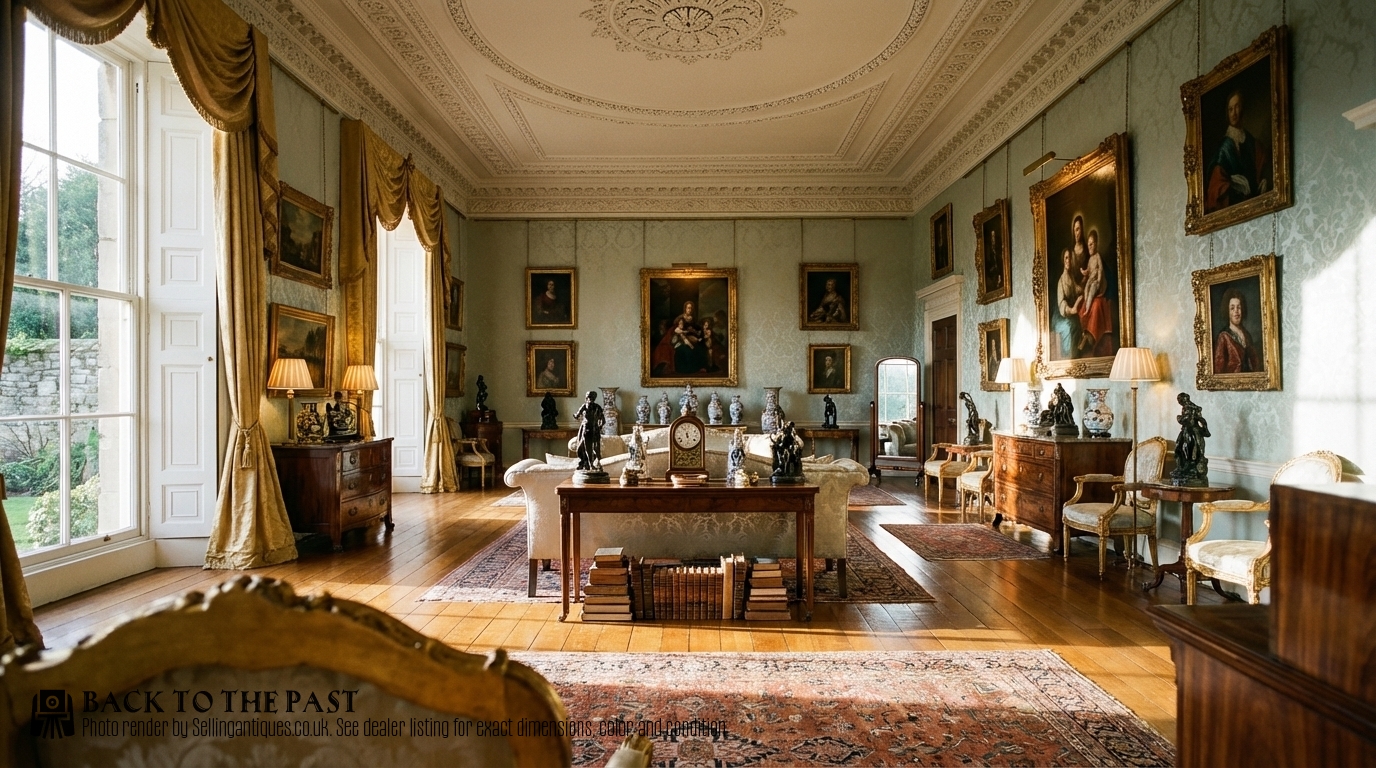
Victorian Bedroom Mirror
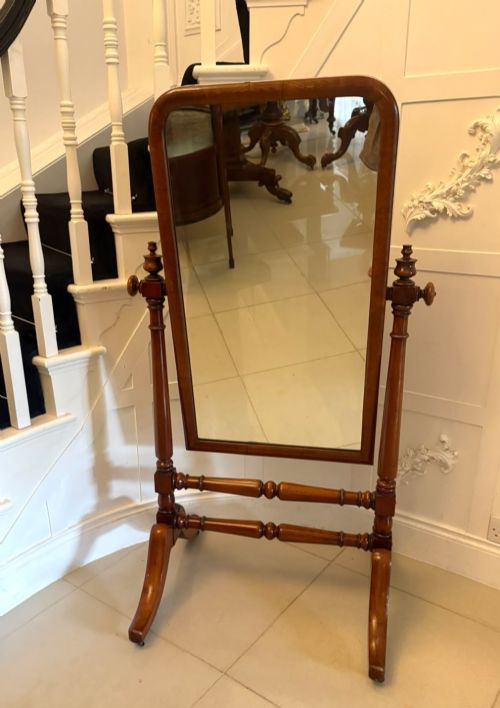
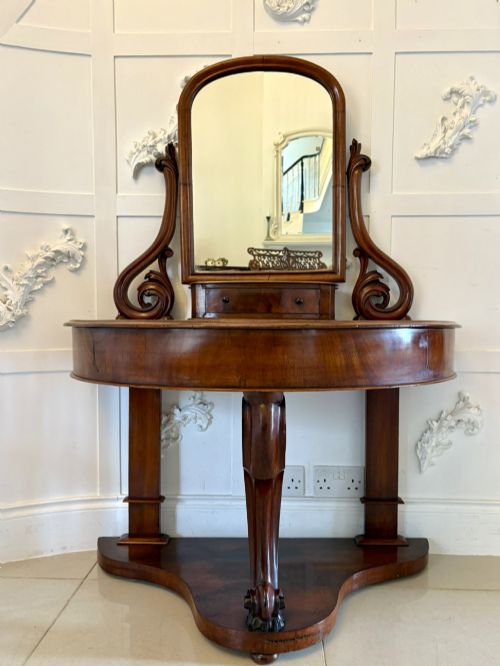
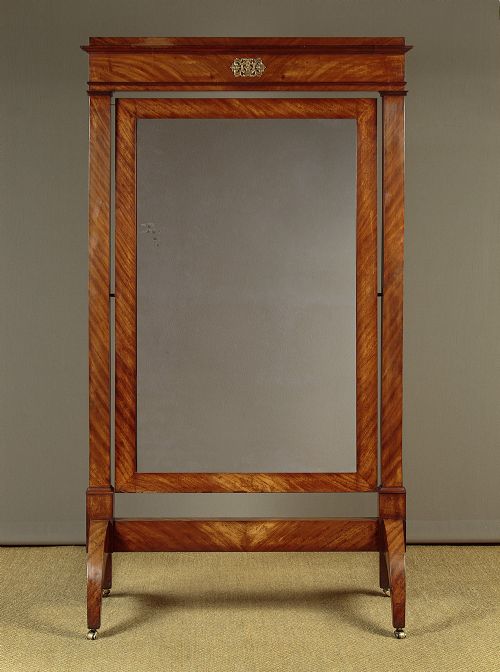
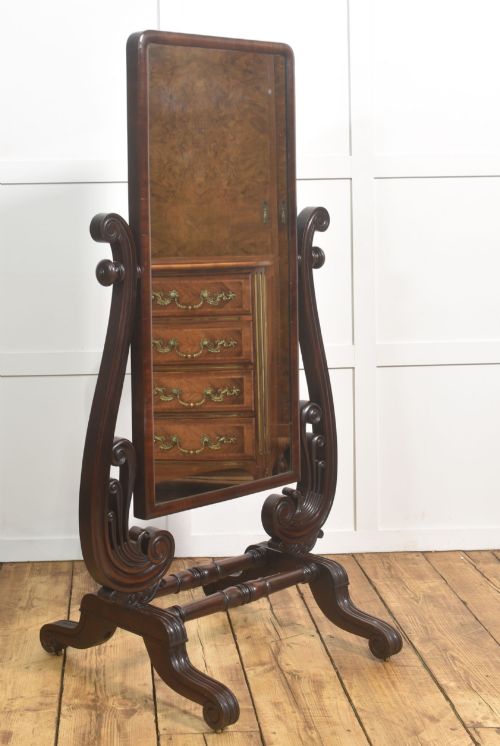
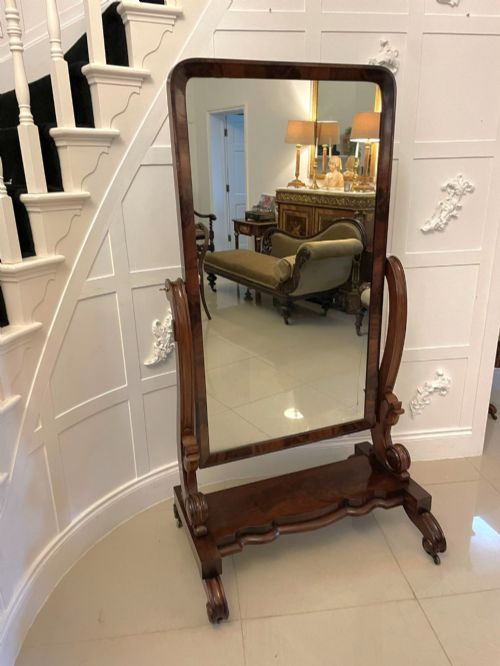
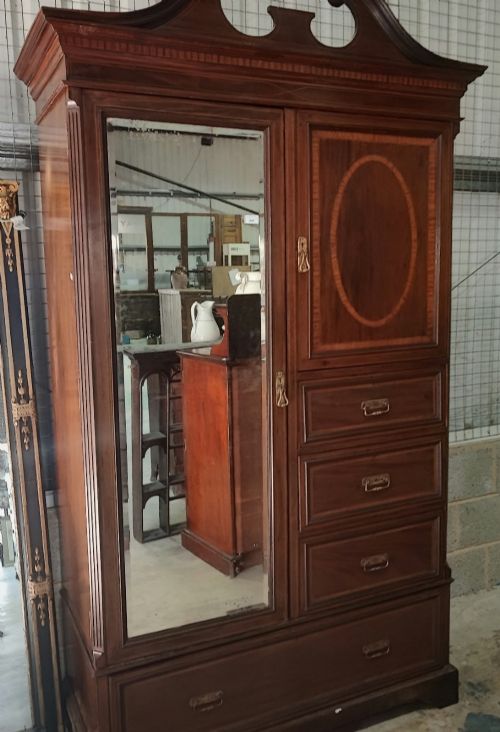
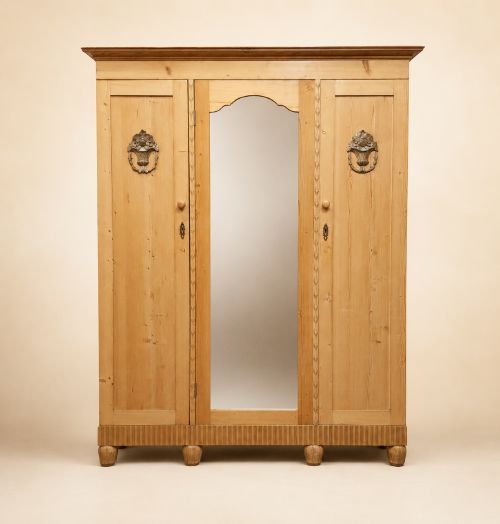
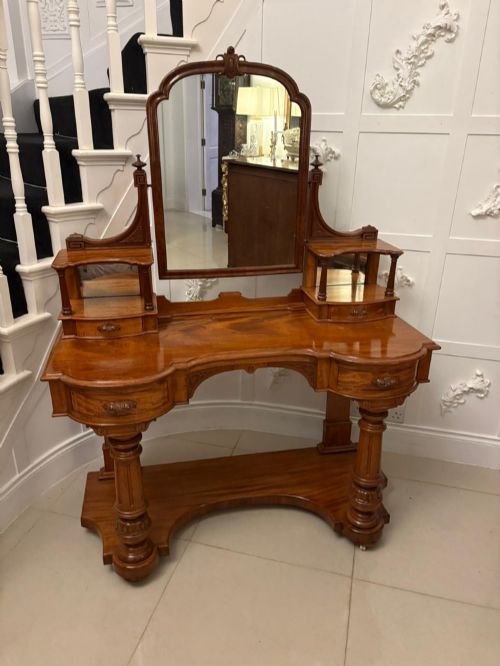
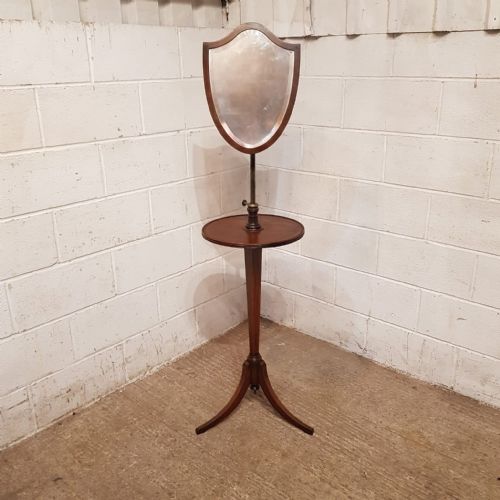
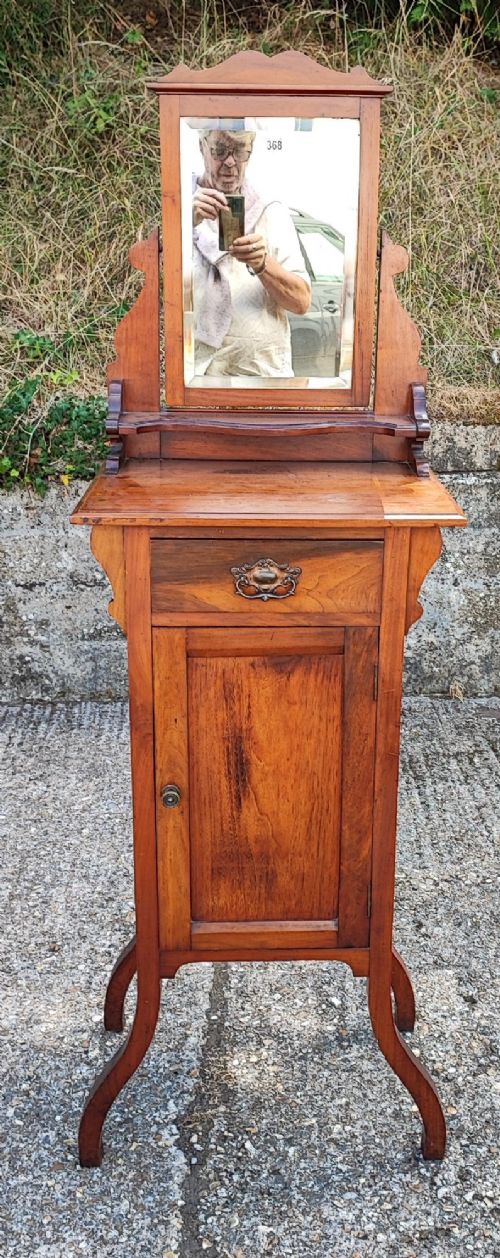
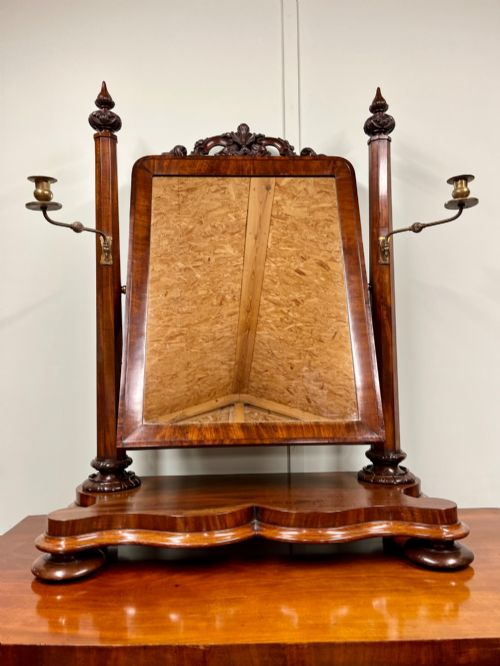
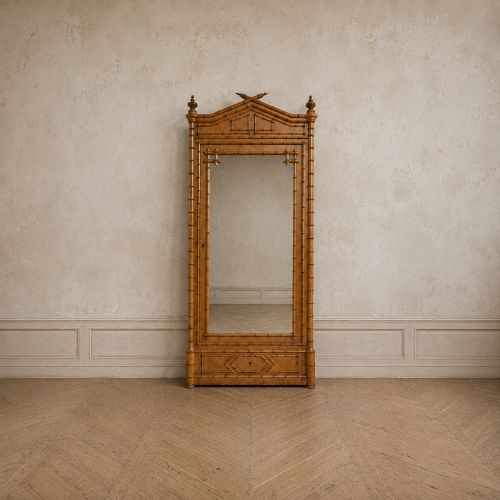
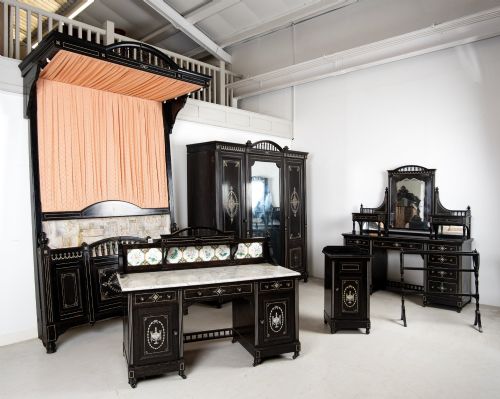
A victorian bedroom mirror appears across several distinct forms designed for the dressing room, including freestanding cheval glasses, table-top swing mirrors attached to dressing tables, and glass panels fitted directly into large wardrobes and armoires. These pieces span the nineteenth century and extend into the Edwardian era, incorporating styles from William IV designs through to Arts and Crafts and the French Aesthetic Movement.
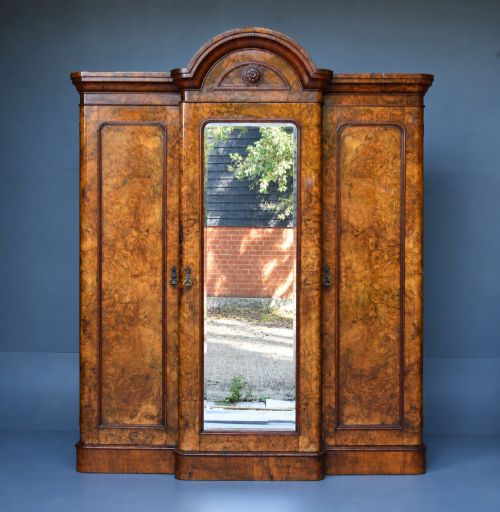
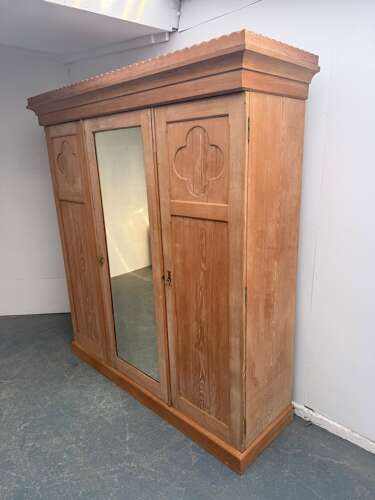
The version most commonly met on this page is the dressing table mirror or the full-height cheval mirror in solid or veneered mahogany, often pivoting between upright wooden supports. Alongside these dedicated mirror stands, the listings show larger bedroom furniture incorporating glass, such as compactum wardrobes, washstands and complete bedroom suites fitted with original bevelled or plain mirror plates.

Materials and construction
Cabinet makers utilised dense timbers like mahogany, walnut and burr walnut for framing, alongside softer woods such as pine, ash and pitch pine for carcases and secondary elements. Veneers were applied over sturdy frames, while boxwood, satinwood and marquetry inlay provided decorative contrast on late Victorian and Edwardian surfaces.
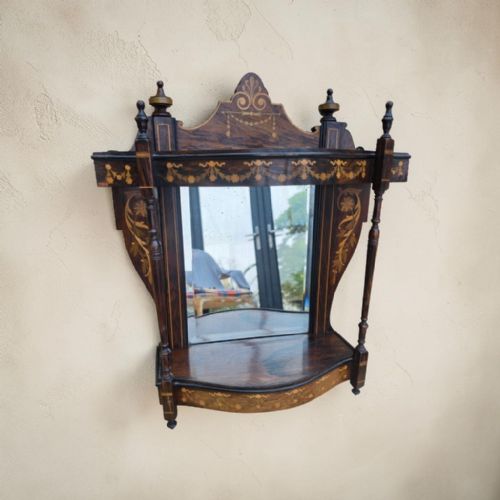
Glass plates were set into rebated frames and secured with wooden backs, sometimes supported by turned brass pivots on swing mirrors or heavy gilt bronze mounts on French wall and cheval models. Carved details, ebonised finishes and faux bamboo turnings further defined the construction methods employed by workshops during the period.
Victorian Bedroom Mirror Retail Price Guide 2026
Typical asking prices for victorian bedroom mirror among the pieces listed under this phrase on Sellingantiques today, from the lower quarter to the upper quarter. They describe what is for sale here now, not the wider market.
Listings feature mahogany, burr walnut, pine and ash across Victorian and Edwardian periods.
Distinctions in manufacture
Quality rests in the selection of timbers and the precision of the joinery, where finely figured burr walnut or satinwood inlay distinguishes superior pieces from plain pine alternatives. The weight and stability of the frame dictate how well a tall cheval mirror or heavy wardrobe door sustains daily use without sagging at the pivots or hinges.
Maker attribution elevates certain pieces, with workshops such as Edwards and Roberts, Holland and Sons, or Waring and Gillows applying high standards of craftsmanship to hardware, secondary timbers and internal fittings. Originality of the glass plate, backboards and brass fitments also separates standard commercial items from exceptional survivals.
Edwards and Roberts·Holland and Sons·Waring and Gillows·Harrods
The Victorian Bedroom Mirror Glossary
- Cheval mirror
- A freestanding full-length mirror mounted on a vertical frame with pivots that allow the glass to tilt. These large pieces typically stood on four legs with or without castors.
- Compactum wardrobe
- A large fitted wardrobe combining hanging space with internal drawers, shelves and sometimes a central mirror door. They provided comprehensive storage for Victorian bedroom suites.
- Toilet mirror
- A smaller table-top swing mirror designed to sit on a dressing chest or dressing table for personal grooming. They frequently incorporate small base drawers.
- Burr walnut
- A highly prized wood veneer taken from the knotted growth of a walnut tree. It yields intricate, swirling grain patterns favoured on high-end Victorian furniture.
- Satinwood
- A pale, hard timber from tropical trees used extensively for stringing and decorative inlay work. Its golden lustre contrasts sharply against darker woods like mahogany.
Victorian Bedroom Mirror: Frequently Asked Questions
How do I date a mirror?
Dating relies on combining the timber choice, construction methods and stylistic markers visible in the frame and any associated furniture. Pieces from the middle of the nineteenth century often show solid mahogany framing, while later decades introduce ebonising, lighter pine and extensive veneer work.
Hardware offers further clues, as original brass pivots, screws and lock plates match the manufacturing practices of specific decades. Comparing the piece to dated examples in bedroom suites helps narrow the period of manufacture.
What is a cheval mirror?
A cheval mirror is a tall, freestanding glass designed for full-length reflection in a bedroom or dressing room. The glass swings on vertical pivots supported by a stable frame with feet.
Originating in the eighteenth century, these mirrors became standard fixtures in Victorian and Edwardian dressing rooms. They allow a person to view their entire outfit from head to toe.
Are dressing mirror glasses original?
Determining originality involves examining the silvering behind the glass and how the plate sits within the wooden rebate. Age often manifests as minor darkening or oxidation around the edges of the mirror plate.
Replacement glass frequently lacks the slight distortions and handmade inconsistencies found in nineteenth-century float and sheet glass. Original backboards and securing pins also support the authenticity of the glass.
How were compactum wardrobes used?
Compactum wardrobes served as multi-functional bedroom storage units that consolidated several furniture types into one piece. They featured hanging compartments alongside banks of drawers, sliding trays and mirror doors.
This layout allowed occupants to store garments, linens and accessories within a single footprint. Their scale made them central pieces in Victorian and Edwardian bedroom suites.