

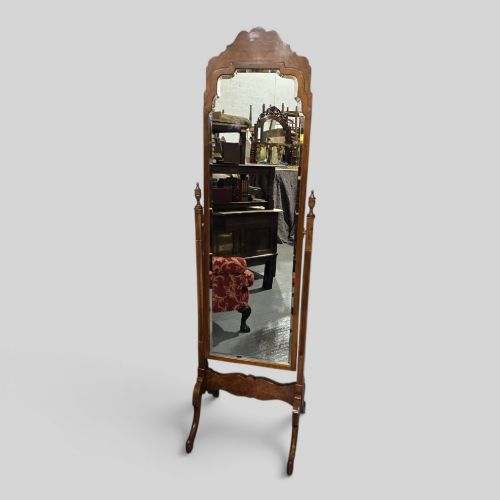
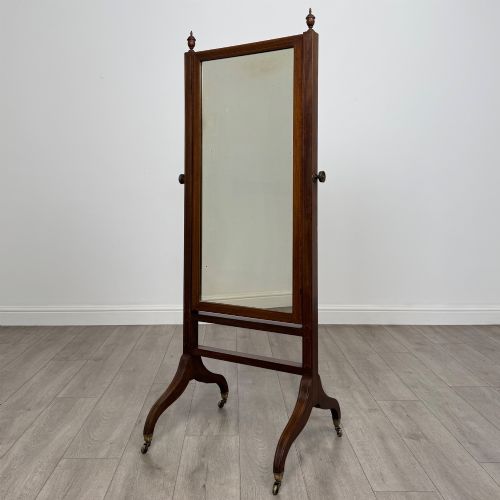
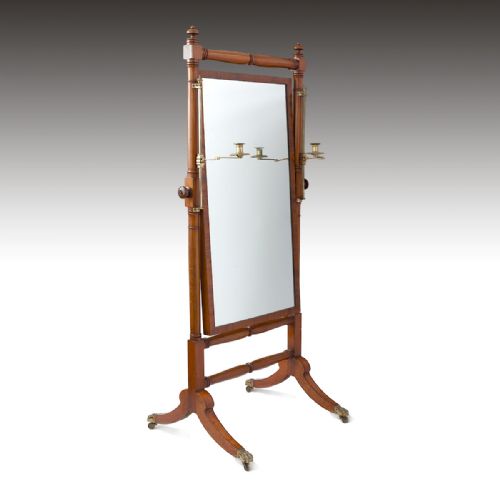
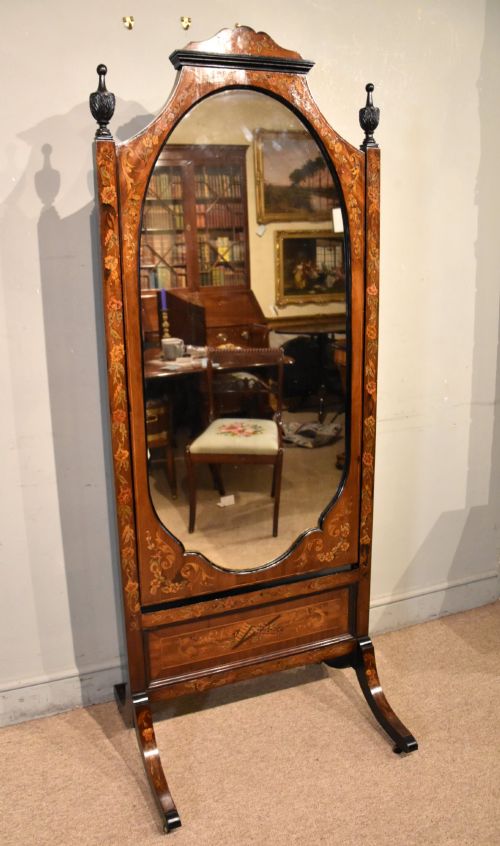
Freestanding Full Length Mirror
A freestanding full length mirror brings both light and proportion to a room, offering the practical luxury of a complete view.
Freestanding Full Length Mirror
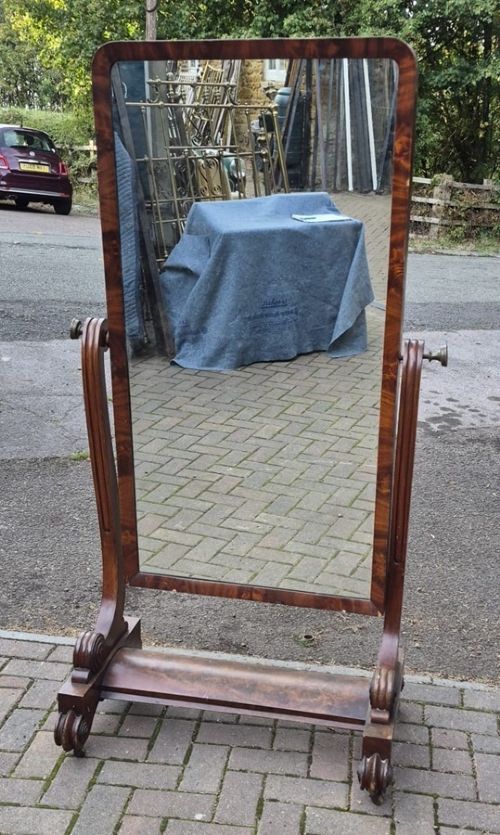
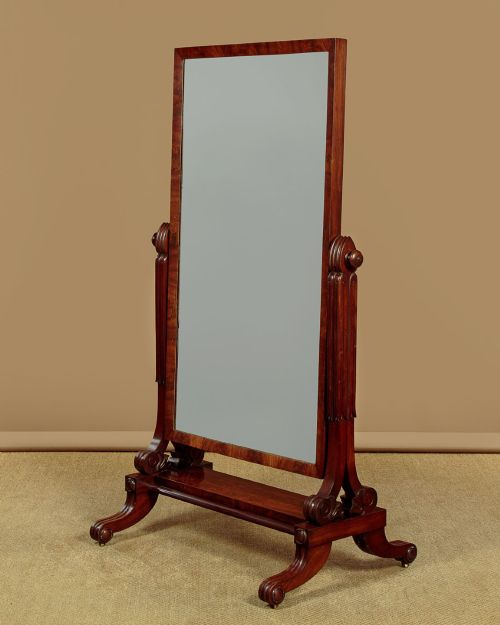
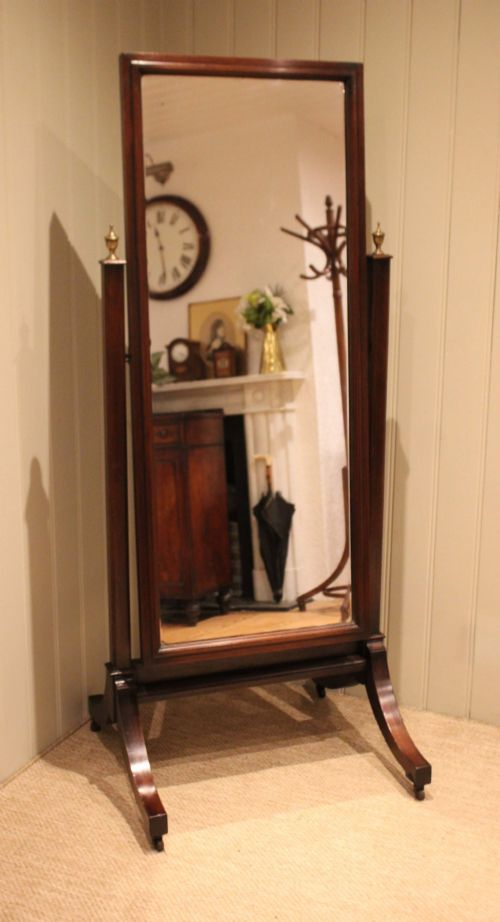
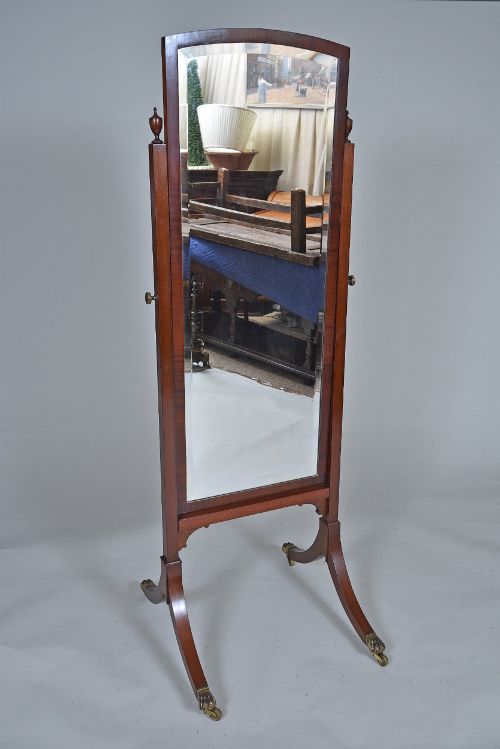
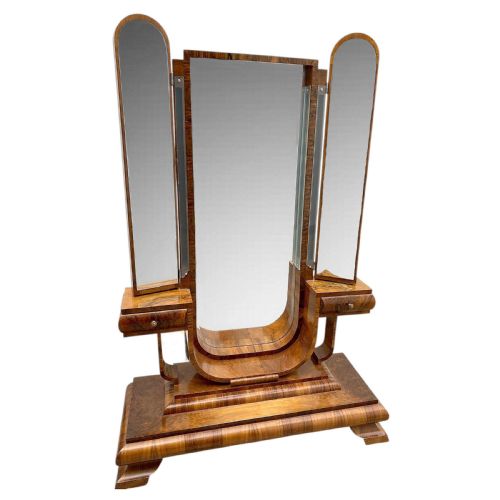
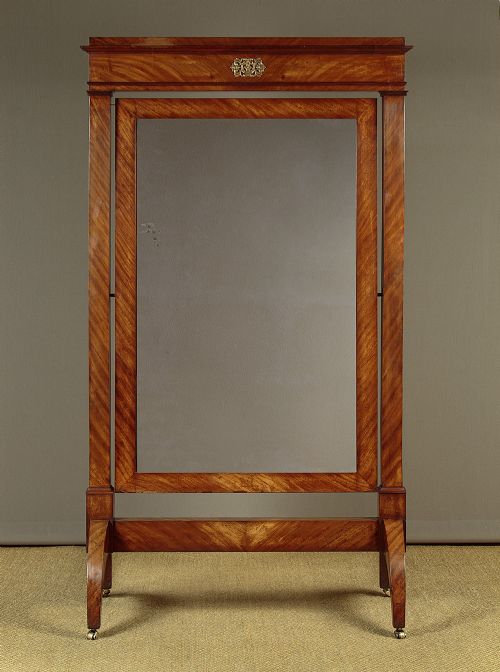
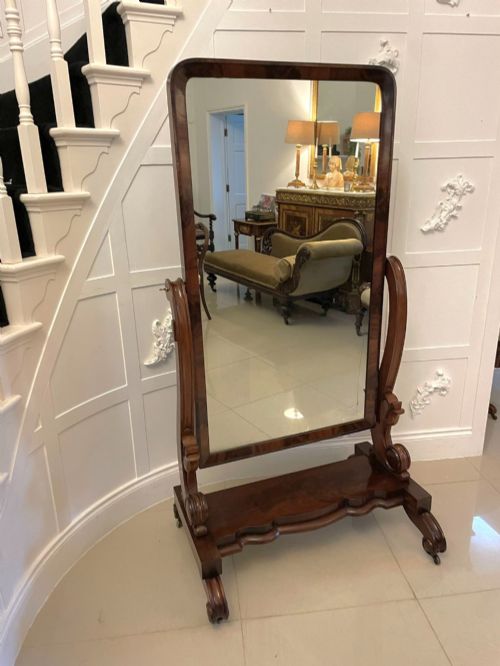
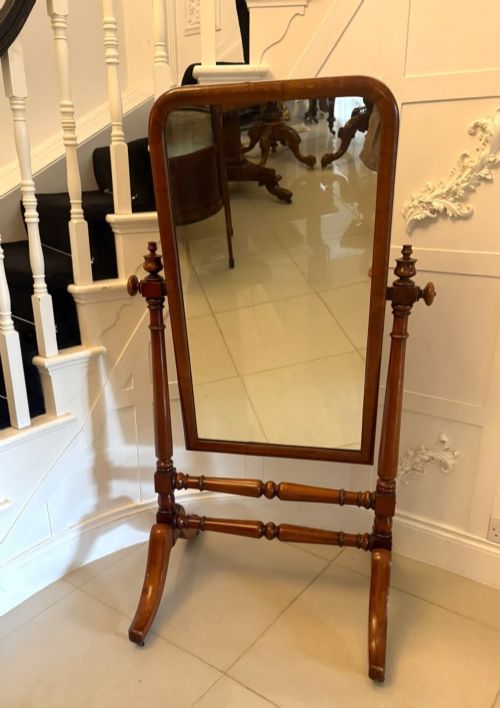
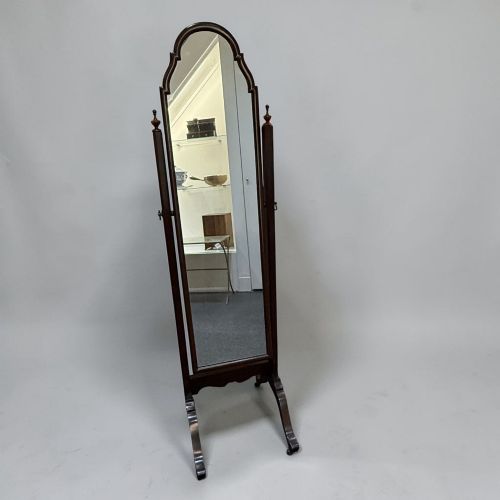
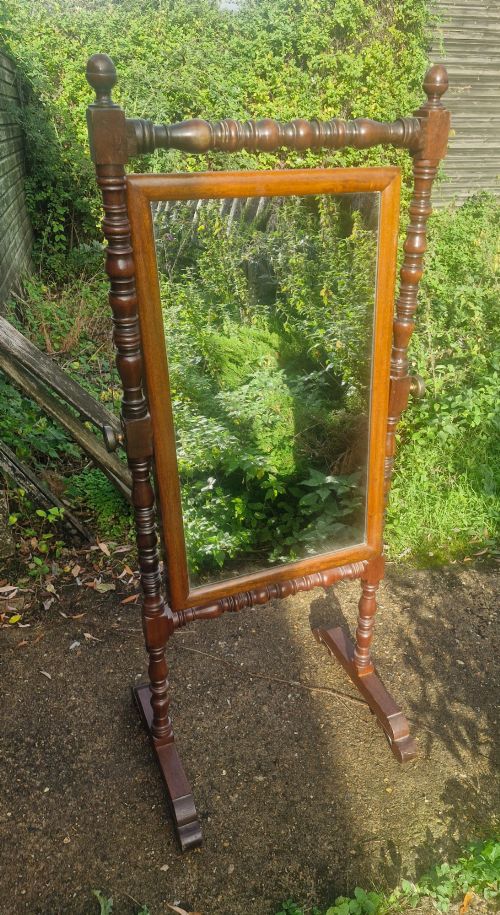
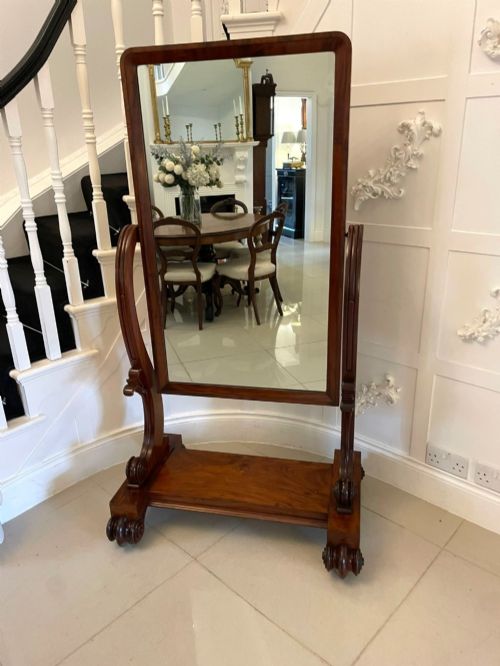
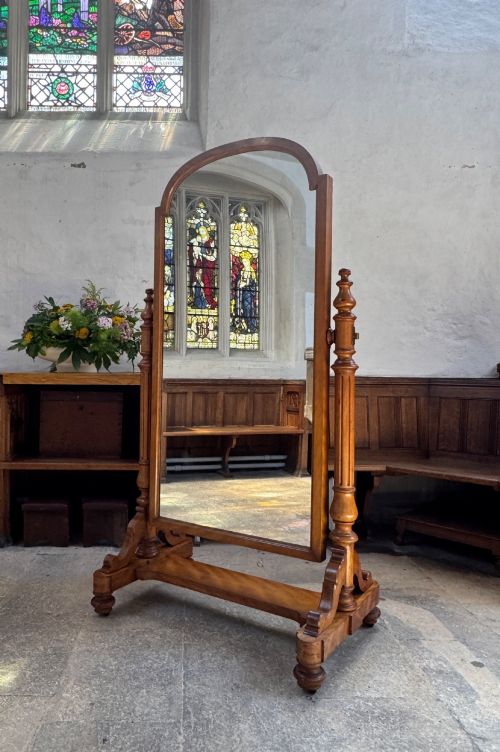
When you search for a freestanding full length mirror, you encounter cheval mirrors designed to pivot within a sturdy upright frame. These pieces originate predominantly from the nineteenth and early twentieth centuries, spanning the Regency, Victorian, and Edwardian eras. Mahogany remains the most common timber encountered on this page, often supplemented by walnut, satin birch, and oak.
The typical form stands tall on four legs, frequently featuring sabre supports or castors for mobility. Many examples incorporate a tilt mechanism, allowing the glass to angle according to the user's height. Country house and smaller dressing room variations appear regularly, demonstrating the versatility of the form across different domestic spaces.
What varies in quality
The refinement of the carving and the choice of timber veneer establish the baseline of a piece's ambition. Heavy, stable frames with well-cast brass sabots indicate superior workshop execution compared to lighter, simpler constructions.
The fluidity of the tilt mechanism and the retention of original mirror glass distinguish finer examples. Proportions that maintain stability while supporting a large vertical plate demonstrate the maker's mastery.
Freestanding Full Length Mirror Retail Price Guide 2026
Typical asking prices for freestanding full length mirror among the pieces listed under this phrase on Sellingantiques today, from the lower quarter to the upper quarter. They describe what is for sale here now, not the wider market.
The listings span the nineteenth and twentieth centuries, featuring woods such as mahogany, walnut, oak, and satin birch alongside brass and glass.
Waring and Gillow·Gillow
The Freestanding Full Length Mirror Glossary
- Cheval mirror
- A large standing mirror mounted in a frame that allows it to swing back and forth. The term derives from the French word for horse, referencing the four-legged support structure.
- Sabots
- Metal sleeves fitted to the base of furniture legs for protection and adornment. They are commonly cast in brass on nineteenth-century pieces.
- Trunnion
- A pin or pivot on which a mirror frame rotates. It allows the glass to tilt to various angles.
- Flame mahogany
- A veneer showing a distinctive flame-like grain pattern. Cabinet makers prized this figure for prominent display surfaces.
Freestanding Full Length Mirror: Frequently Asked Questions
How do I secure a tilting mirror?
Most tilting mirrors rely on threaded brass screw caps fitted to the side trunnions. Tightening these knobs increases friction against the frame to hold the glass at your chosen angle.
If the mirror slips, check that the internal washers are present and properly seated within the pivot joint.
Where should I place a cheval mirror?
Position the piece perpendicular to a window to capture and reflect natural light across the room. Avoid placing it directly opposite a bare wall if you wish to maximise the sense of depth.
Ensure the floor beneath the castors is level to prevent undue strain on the upright frame.
How do I identify a Regency mirror?
Regency examples often feature bold architectural lines, sabre legs, and precise brass mounts. The timber selection typically favours rich mahogany with minimal carved ornamentation.
Proportions tend to be classical, reflecting the early nineteenth-century taste for ancient Greek and Roman forms.
Can these mirrors be dismantled for moving?
Many nineteenth-century pieces separate into distinct components such as the base feet, side uprights, and the mirror frame itself. Removing the central plate first reduces weight and prevents damage to the glass during transit.
Keep all original brass screws and fixings together, as replacements rarely match the thread pitch.