


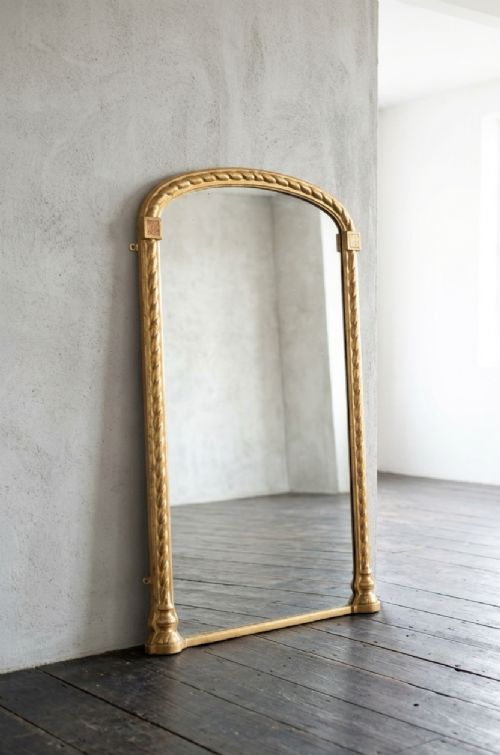
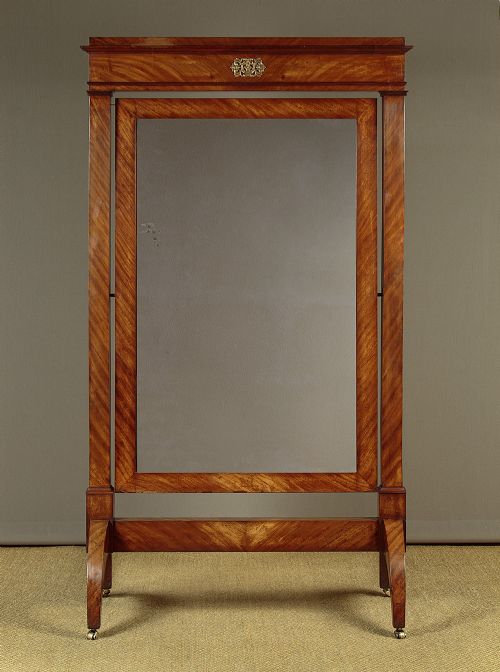
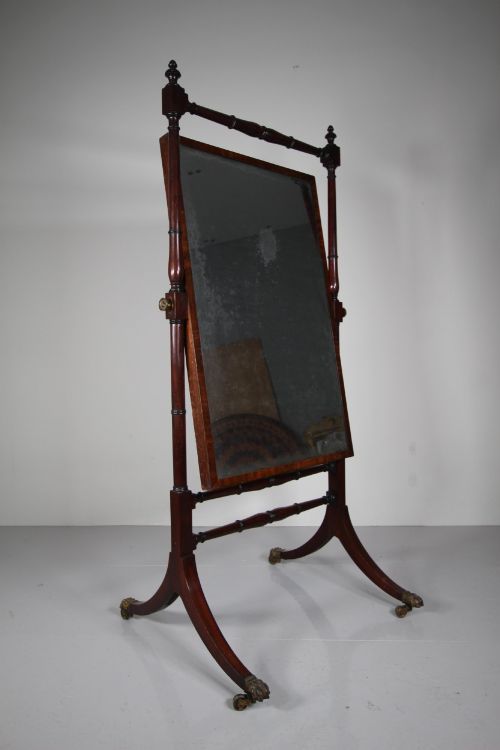
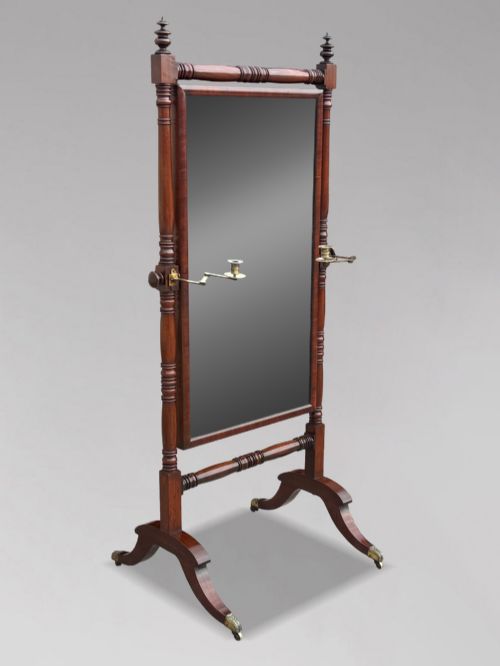
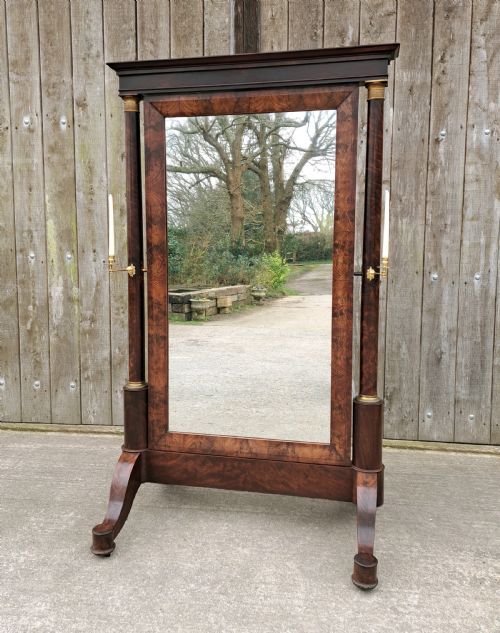
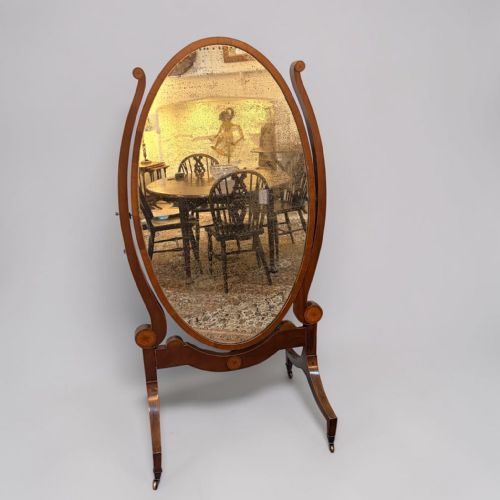
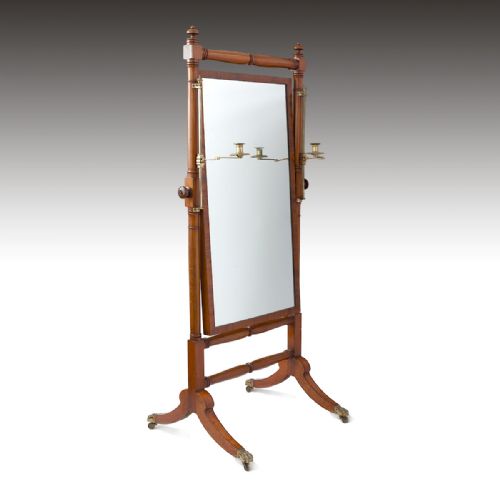
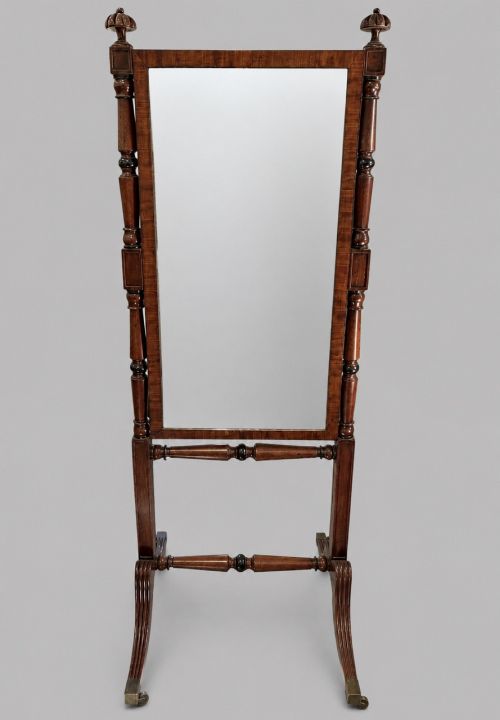
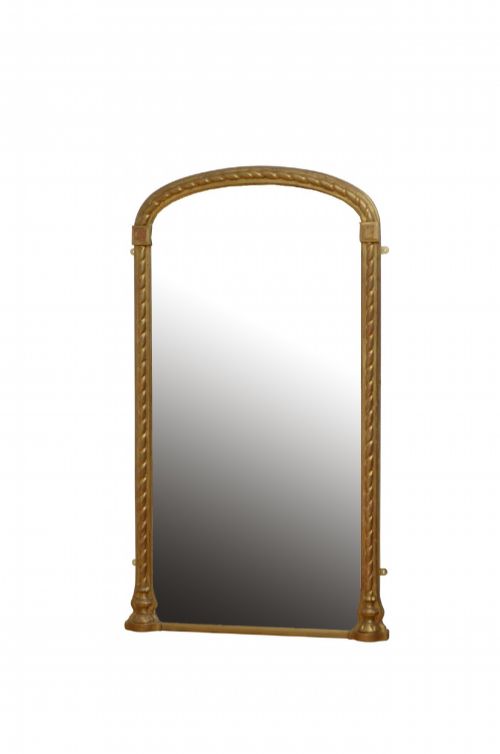

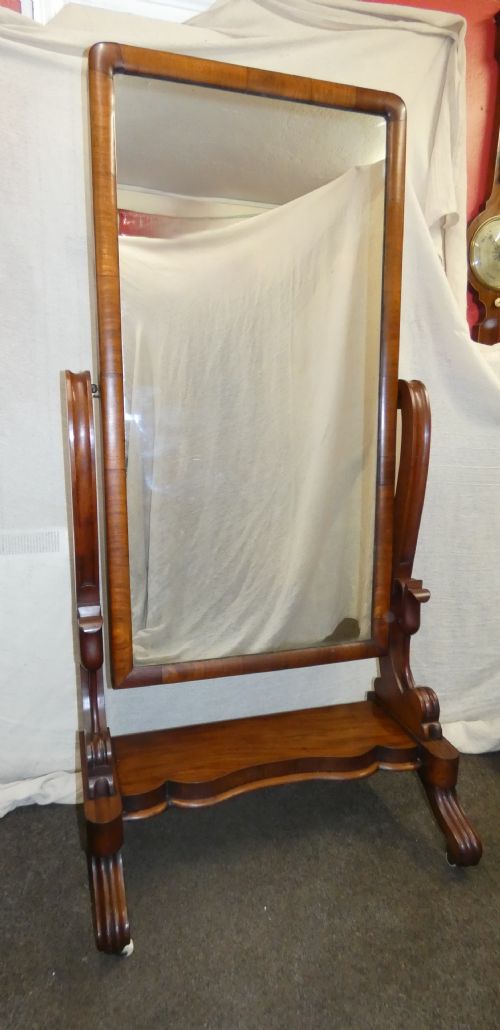


Regency Floor Mirror
Regency floor mirrors are stately mahogany cheval mirrors built to hold full-length glass on pivoting stands.
Regency Floor Mirror
A regency floor mirror is a freestanding cheval glass designed to tilt on vertical pivots held by a sturdy wooden frame. These pieces belong to the Regency and nineteenth-century periods, capturing an era of refined domestic furniture.
The inventory on this page centres on mahogany construction, with several examples described specifically as cheval mirrors and one noted as a dressing mirror. Scale varies from neat domestic versions up to large country house proportions.
How they were made
Cabinet makers constructed these frames primarily from mahogany, often finishing details with gold leaf or mounting elements in brass. The glass itself rests securely within adjustable plates that pivot between sturdy upright pillars.
Joinery techniques from the period relied on solid timber framing and precision turning for the support stands and stretcher bars. These methods ensured the heavy glass plate remained stable while tilting smoothly on its axis.
Regency Floor Mirror Retail Price Guide 2026
Typical asking prices for regency floor mirror among the pieces listed under this phrase on Sellingantiques today, from the lower quarter to the upper quarter. They describe what is for sale here now, not the wider market.
Every morning, these pivoting mirrors stand ready to judge whether your cravat is tied with absolute Regency precision.
What varies in quality
Quality separates grand country house pieces from simpler neat chambers through the ambition of the design and the presence of fine mounts. Finer examples display meticulous attention to proportion, sophisticated mahogany grain, and crisp brass or gold leaf detailing.
The distinction lies in whether a mirror is a straightforward utilitarian dressing glass or an accomplished architectural statement in the manner of leading makers. Heavier timber frames and sophisticated pivoting mechanisms elevate the presence of the piece.
The Regency Floor Mirror Glossary
- Cheval mirror
- A freestanding full-length mirror mounted on a pivoting frame. This design allows the glass to tilt at various angles.
- Regency
- A style and period of British furniture dating from the early nineteenth century. It is known for classical restraint and clean lines.
- Mahogany
- A dense, dark hardwood favoured by period cabinet makers for its rich grain and stability. It forms the primary structure of these mirrors.
- Gold leaf
- Beaten gold applied to decorative portions of the frame. This technique adds a bright metallic contrast to the dark wood.
- Dressing mirror
- A smaller table or floor mirror intended for use while grooming. These often share the pivoting mechanism of larger cheval glasses.
Regency Floor Mirror: Frequently Asked Questions
What is a regency floor mirror?
A regency floor mirror is a freestanding cheval glass designed to pivot within a supportive wooden frame.
These pieces date from the early nineteenth century and utilise mahogany construction for stability.
How do you use a cheval mirror?
Cheval mirrors stand directly on the floor to provide a full-length reflection for dressing.
The pivoting frame tilts the glass to suit the viewer's exact angle.
What materials are used in these mirrors?
The primary material is mahogany, paired with glass for the reflective surface.
Finer examples incorporate brass hardware and gold leaf decoration.
How do you identify the period?
Period pieces display nineteenth-century construction methods, specific mahogany framing, and traditional pivoting hardware.
Stylistic cues align closely with Regency design principles.