



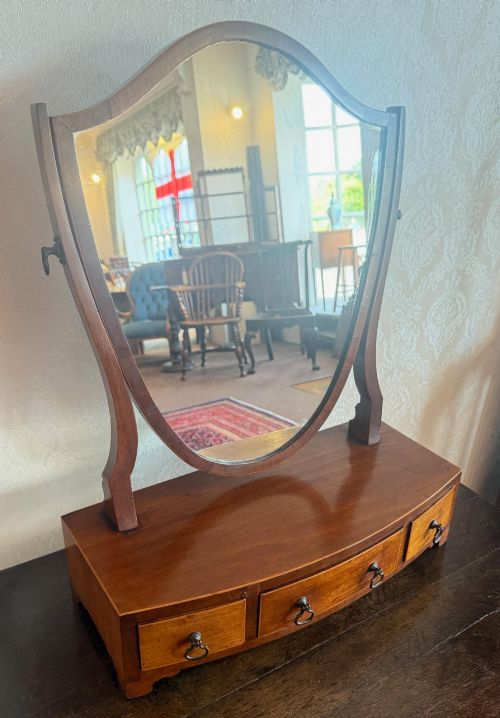

Georgian Cheval Glass
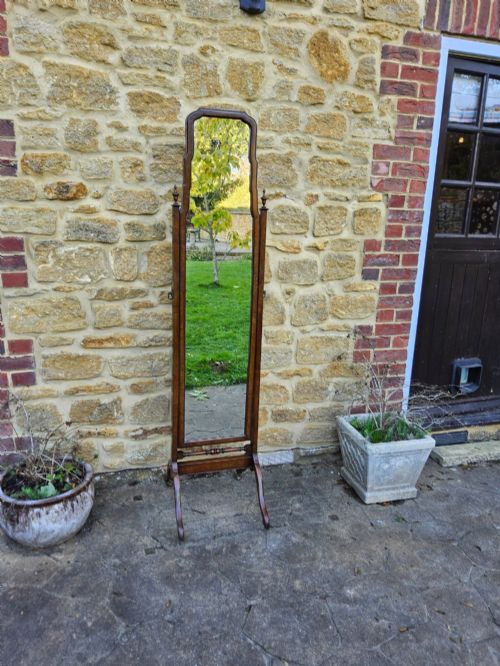
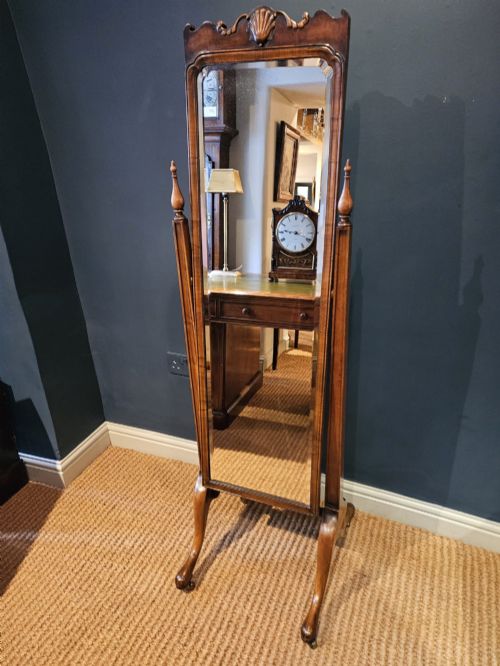
A georgian cheval glass stands tall on a pivoting frame, offering a full-length reflection that defined dressing rooms from the eighteenth century onward.
Georgian Cheval Glass
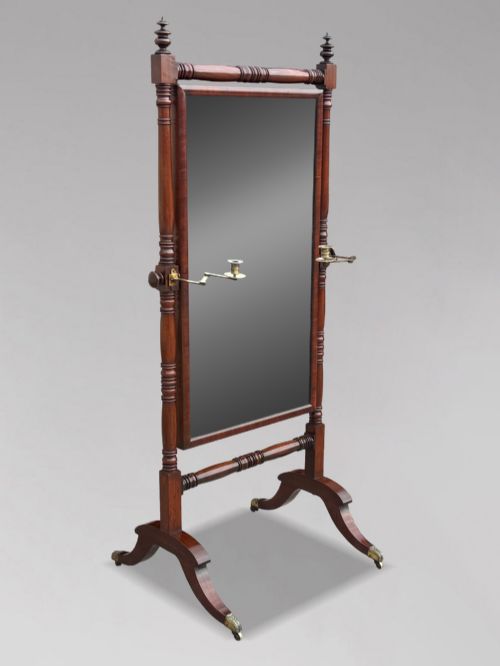
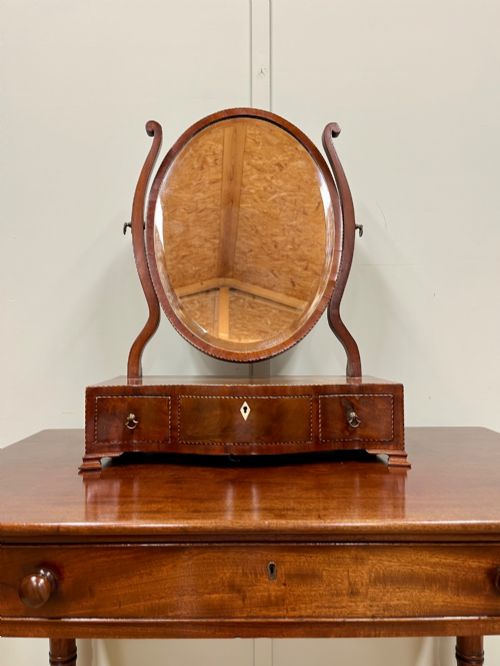
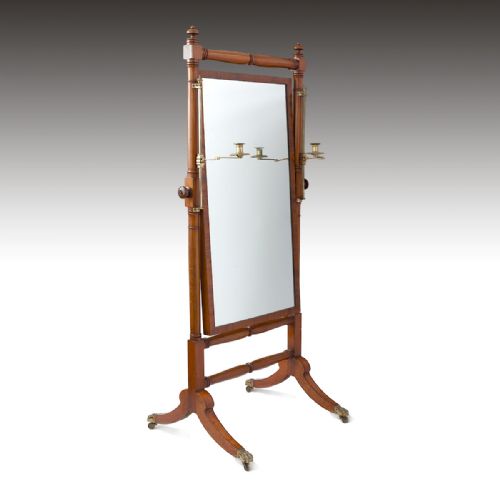
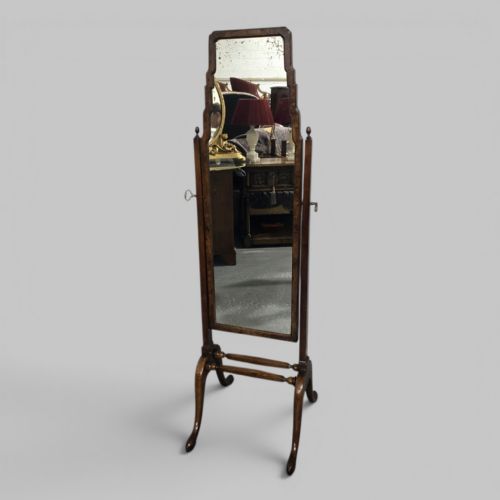
A georgian cheval glass is a floor-standing swing mirror designed to tilt within a sturdy wooden frame, allowing the user to view their entire outfit at once. The form evolved from smaller table-top dressing glasses into substantial, full-height pieces that anchored bedroom and dressing room interiors during the Georgian and Regency periods.
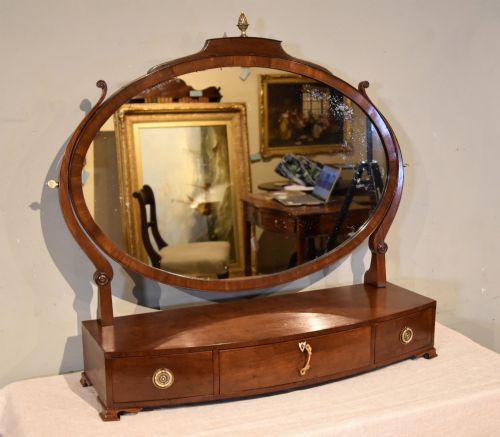
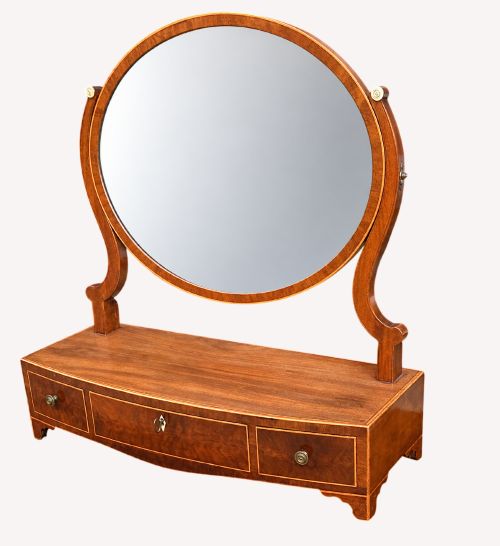
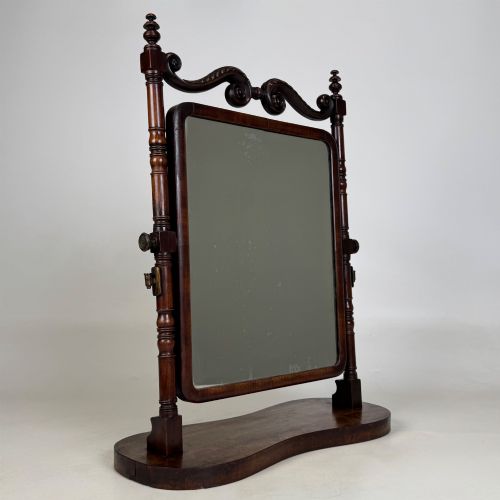
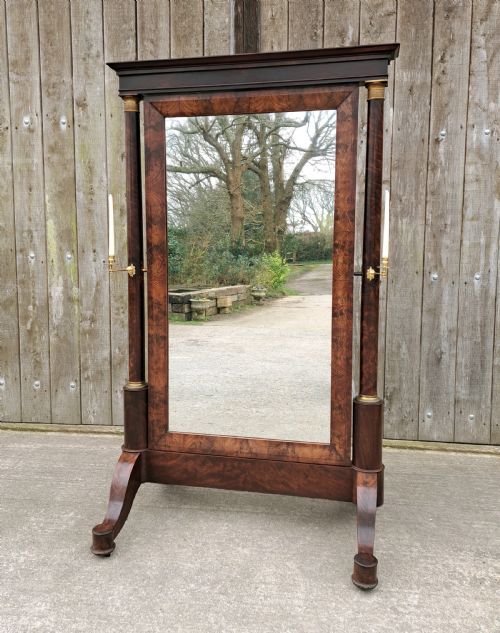
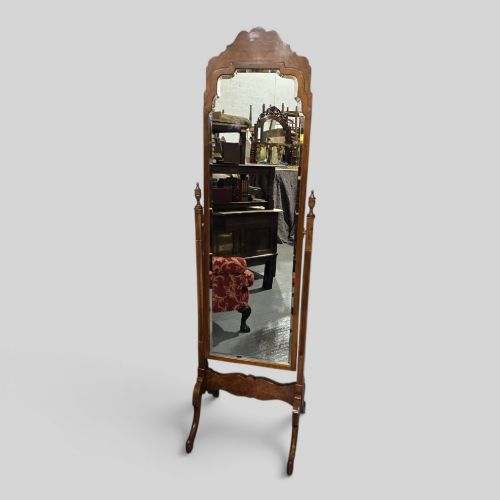
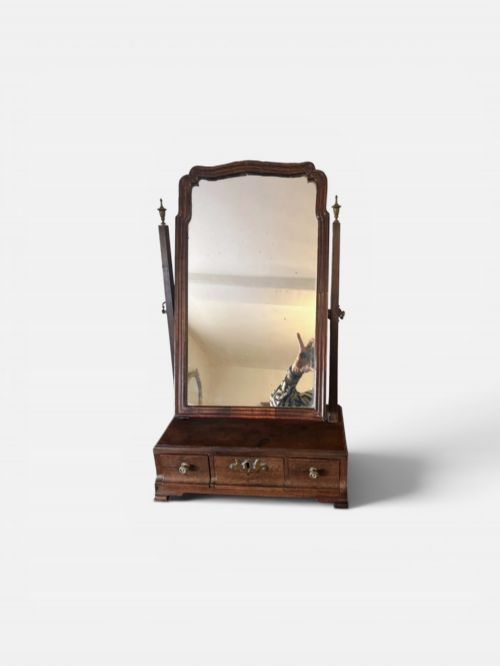
The versions encountered on this page span several decades, featuring upright floor-standing cheval mirrors alongside smaller desk and table-top dressing mirrors. Mahogany remains the dominant timber across these examples, supported by period variations in walnut, satinwood, and giltwood.
Origins stretch from the eighteenth century into nineteenth-century revivals, encompassing George III and Regency designs alongside later Queen Anne style interpretations. Makers and craftsmen of the era utilised boxwood inlay, marquetry, and brass hardware to elevate the functional mirror into a decorative centrepiece.
Judging Quality and Craftsmanship
The distinction between standard workshop output and top-tier pieces lies in the crispness of the timber carving and the subtlety of the veneer work. Superior examples exhibit tightly figured mahogany grain, finely executed boxwood stringing, and heavy cast brass mounts that operate smoothly without sagging.
Proportion and engineering dictate the longevity of a pivoting mirror frame. Higher quality pieces maintain rigid upright supports that prevent the swinging glass plate from listing or straining the pivot joints over years of adjustment.
Georgian Cheval Glass Retail Price Guide 2026
Typical asking prices for georgian cheval glass among the pieces listed under this phrase on Sellingantiques today, from the lower quarter to the upper quarter. They describe what is for sale here now, not the wider market.
Many of these towering mirrors were originally built heavy enough to stay upright while nobles practiced their bowing posture.
Gillows
The Georgian Cheval Glass Glossary
- Cheval glass
- A large floor-standing mirror mounted in a frame that allows it to swing freely. The name derives from the French word for horse, referencing the four-legged trestle base.
- Toilet mirror
- A smaller mirror fitted with a small box base containing drawers, designed to sit upon a dressing table. These are also frequently catalogued as dressing table mirrors.
- Giltwood
- Wood that has been coated with fine gold leaf or gold paint for decorative effect. This finish appears on more elaborate Regency and revival frames.
- Marquetry
- Decorative veneer work formed by fitting together contrasting pieces of wood, shell, or ivory to create pictorial or geometric patterns. It frequently decorates satinwood and mahogany panels.
- Serpentine front
- A curved furniture front featuring a convex centre flanked by concave ends, or vice versa. This shaping is commonly found on the base drawers of finer dressing glasses.
Georgian Cheval Glass: Frequently Asked Questions
What is a cheval glass?
A cheval glass is a full-length dressing mirror mounted in a pivoting wooden frame that stands directly on the floor. It allows the viewer to adjust the tilt of the glass to check an entire outfit.
Unlike fixed wall mirrors, these freestanding pieces were designed to be positioned anywhere within a bedroom or dressing room.
How do I date a Georgian mirror?
Dating relies on examining the timber species, secondary woods used in the framework, and the construction methods of the drawer linings if a base is present. Early pieces often feature dense mahogany and simpler brass pivot hardware.
Later nineteenth-century revivals frequently incorporate softer secondary woods or machine-cut veneers that distinguish them from eighteenth-century originals.
Where were these mirrors placed?
These mirrors stood in bedrooms, dressing rooms, and grand hallways where occupants dressed for the day or evening. Floor-standing cheval models required adequate floor space to allow the frame to pivot safely.
Smaller table variants rested atop dressing tables and chests of drawers to assist with close-up grooming.
What wood was used?
Mahogany is the primary timber found across these pieces, prized for its durability and rich grain. Walnut and satinwood also appear regularly, particularly on earlier or more decorative examples.
Inlays of boxwood and elaborate marquetry further embellished the primary woods to catch the light.