
Swivelling Dressing Mirror
A swivelling dressing mirror is a practical and decorative table or floor glass designed for personal grooming, bringing period craftsmanship into a modern room.
Swivelling Dressing Mirror
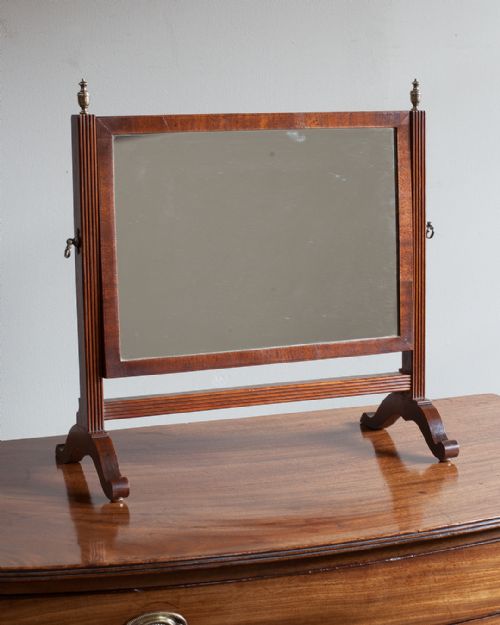
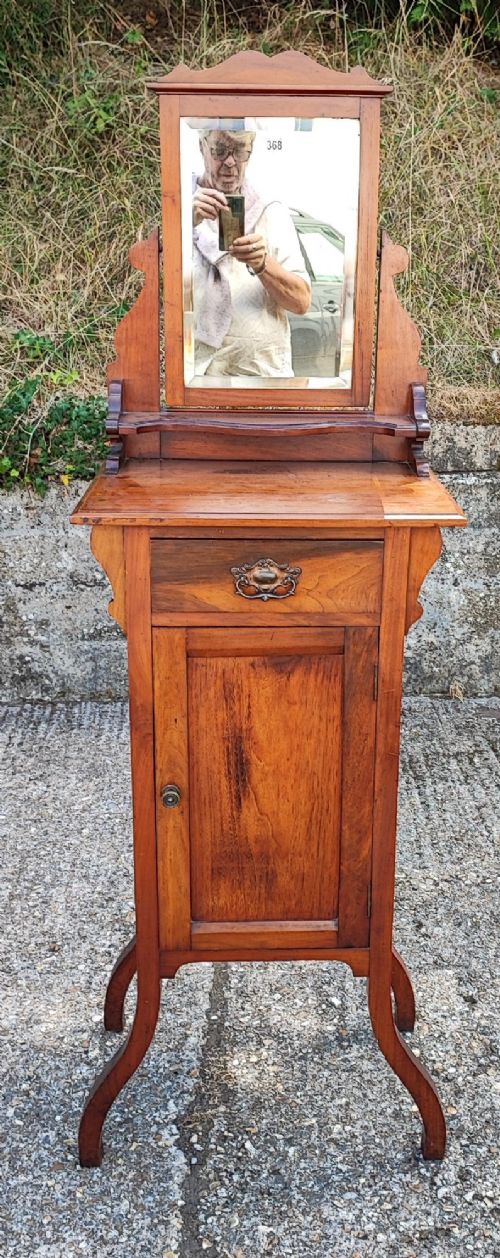
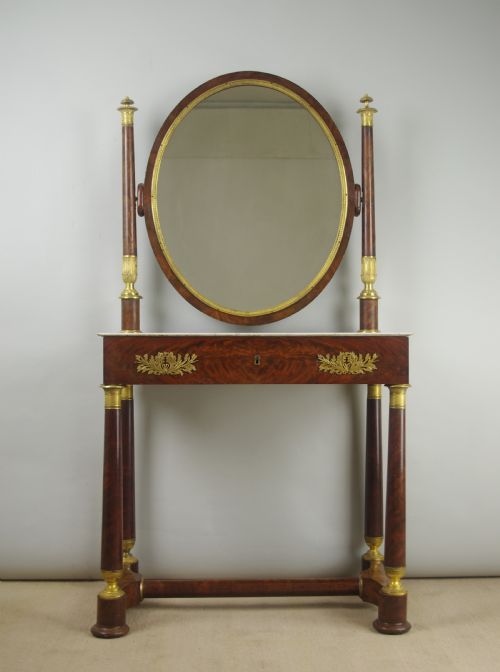
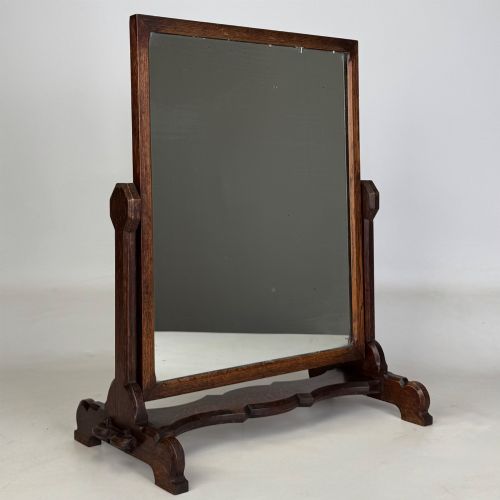
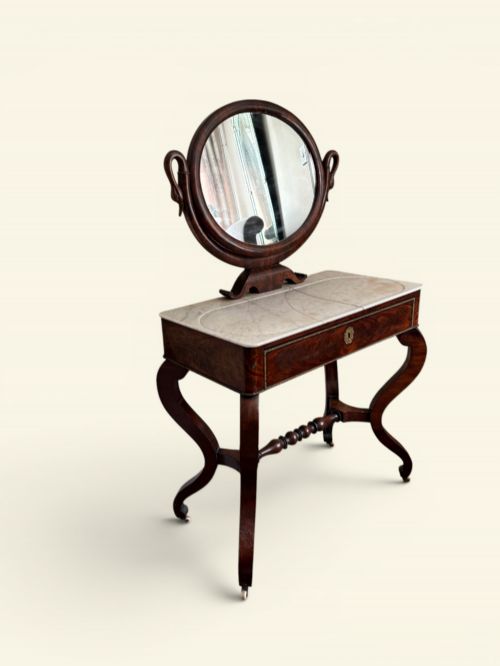
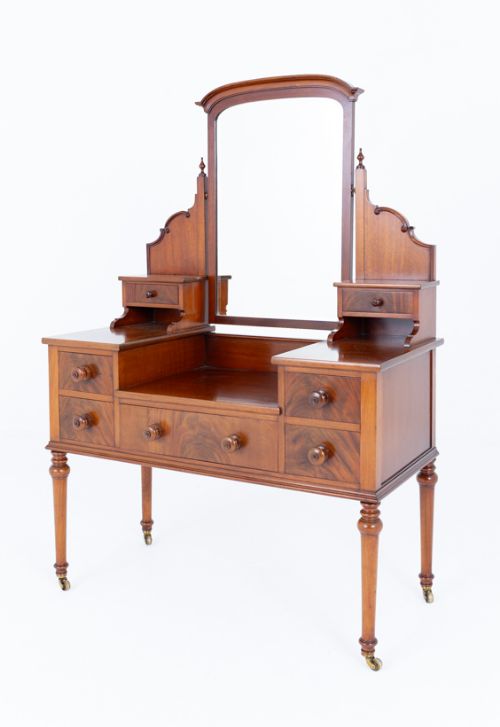
A swivelling dressing mirror is designed for personal grooming, offering a pivoting glass plate set within a supportive frame that tilts to adjust the angle. The pieces on this page span several centuries, encompassing compact table versions as well as full-length floor-standing cheval forms.
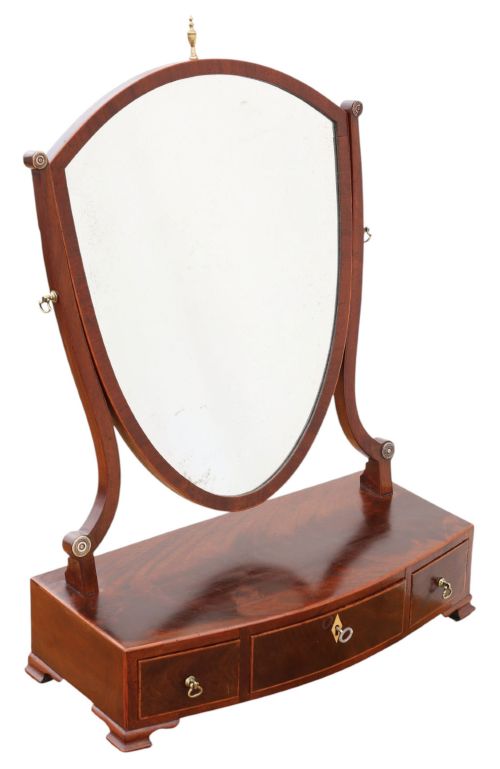
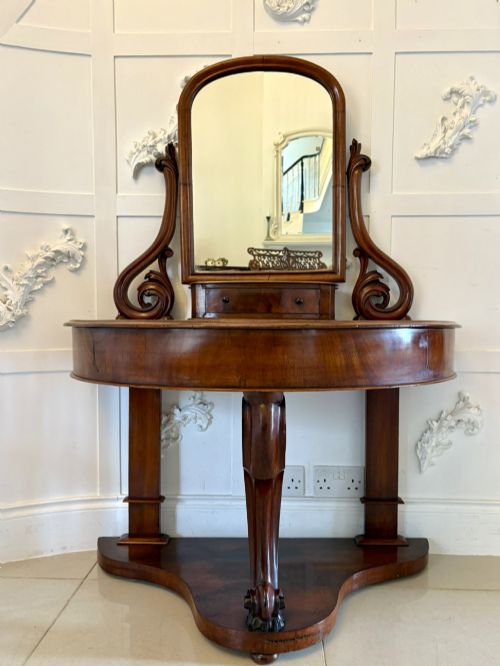
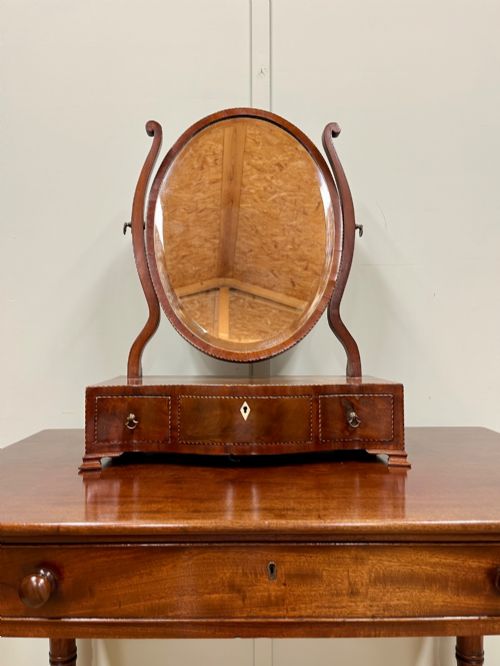
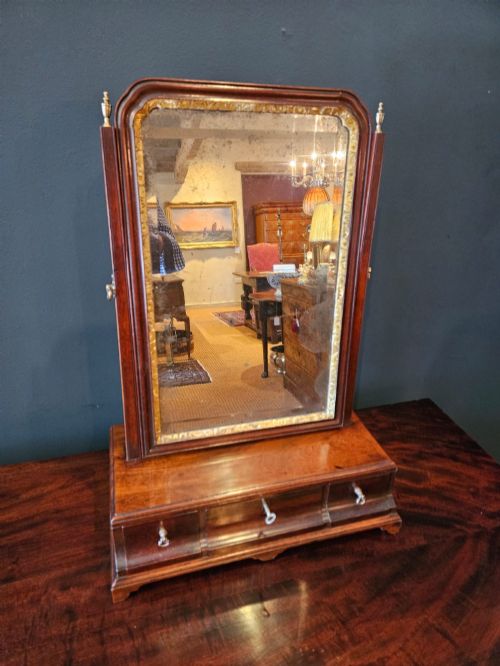
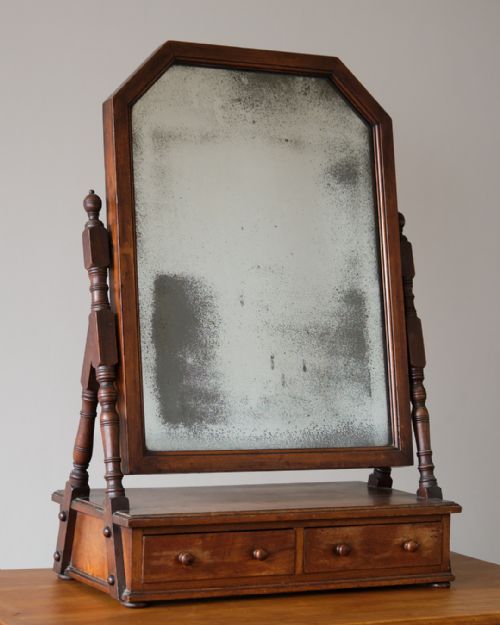
The most common versions to meet here are mahogany table top swing mirrors from the Georgian and Victorian periods, often resting on shaped box bases fitted with small drawers. These range from shield-shaped plates supported by scroll arms to larger rectangular swing frames sitting atop serpentine or plain plinths.
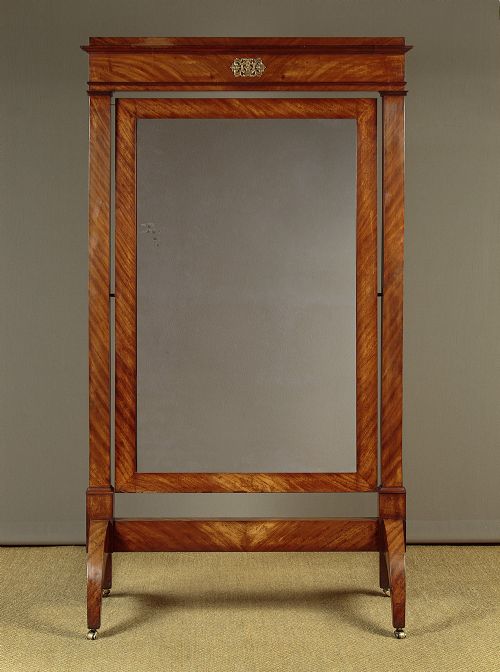
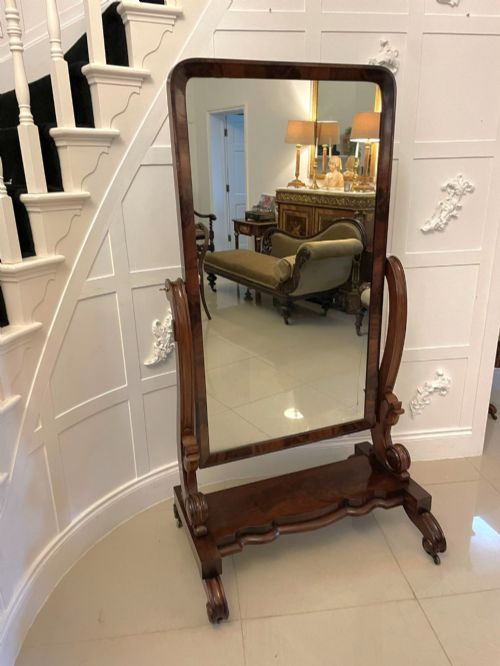
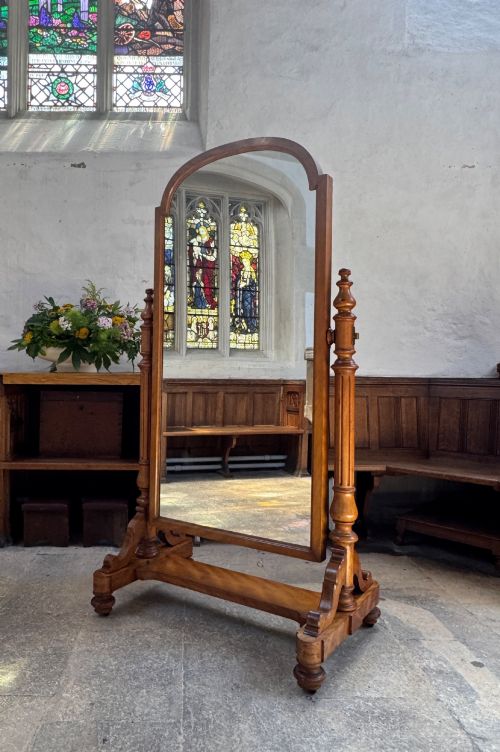
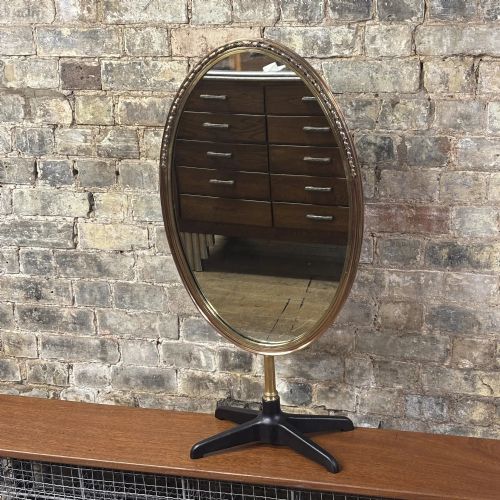
Taller floor-standing cheval mirrors also appear among the listings, offering a full-length reflection supported by upright pillars and sturdy feet. Alongside these traditional timber designs, variations in brass, oak, burr walnut and giltwood reflect the changing domestic tastes from the eighteenth century into the early twentieth century.
How they were made
Cabinetmakers constructed these pieces primarily using solid timbers and veneers of mahogany, walnut, oak and satin birch, frequently shaping the uprights and bases with scrollwork, turnings or boxwood stringing. Glass plates were held securely within pivoting frames using brass screw caps or wooden pivot pins that allowed the mirror to tilt.
Detailing often included parcel-gilding, bone inlay, or ormolu mounts, particularly on pieces influenced by French Empire or Rococo Revival styles. Box bases incorporated small dovetailed drawers for holding trinkets, utilising traditional joinery methods that ensured stability despite the weight of the tilting glass.
Listings feature timbers including mahogany, walnut, burr walnut, satin birch and oak, alongside brass, glass and giltwood.
What varies in quality
The quality of a swivelling dressing mirror rests in the crispness of its timber carving, the proportion of its upright supports, and the harmonious balance of the mirror plate within its frame. Superior examples demonstrate refined proportions where the weight of the base securely anchors the tilting glass without requiring stiff tension adjustments.
Finer pieces distinguish themselves through selected veneers such as burr walnut or figured mahogany, meticulous dovetailing on any base drawers, and the retention of original brass hardware or pivot pins. Lesser examples may exhibit heavy proportions, clumsy replacement feet, or uninspired timber selection that lacks natural grain movement.
Heal & Sons·Harrods
The Swivelling Dressing Mirror Glossary
- Cheval mirror
- A large, full-length dressing glass supported by a standing frame with four feet and vertical pillars. It pivots freely between the uprights, allowing a complete view of the person standing before it.
- Toilet mirror
- A smaller table-top dressing glass, historically placed upon a chest of drawers or a dressing table. These typically feature an integrated box base containing one or more small drawers.
- Swing mirror
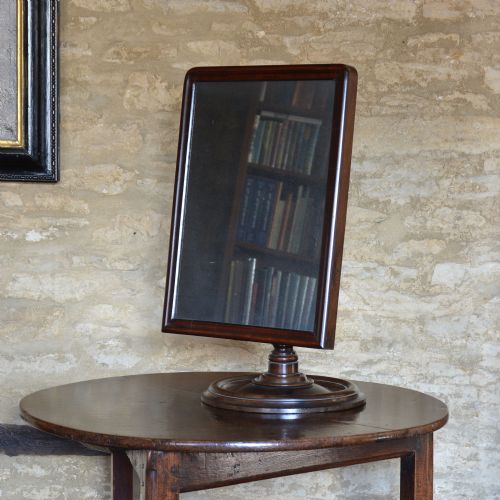
- A pivoting glass plate suspended within side arms attached to a base or stand. This term is frequently used interchangeably with table mirror.
- Parcel-gilt
- Partially gilded, where thin layers of gold leaf are applied only to specific carved details, mouldings or ornaments to highlight them against the dark mahogany or walnut background.
- Shield-shaped
- A plate cut into the outline of a heraldic shield. This silhouette was particularly popular on Georgian and Regency table mirrors.
Swivelling Dressing Mirror: Frequently Asked Questions
What is a swivelling dressing mirror used for?
These mirrors were originally created for grooming and dressing, allowing the user to tilt the glass to various angles for personal checks. Today they function as both decorative dressing table accessories and practical bedroom or hallway mirrors.
Because they pivot on side pins, they offer adjustable reflections without requiring a fixed wall installation. Many incorporate small drawer bases that double as storage for jewellery or small daily items.
How do I tell a Georgian mirror from a Victorian one?
Georgian mirrors typically exhibit restrained proportions, simpler mahogany or walnut frames, and often feature shield or ogee shapes with delicate box bases. They rely on clean lines and subtle bracket feet.
Victorian examples tend to be larger and heavier, sometimes incorporating elaborate mouldings, burr walnut veneers, or turned barley twist supports. They frequently reflect revived historical styles like Rococo or French Empire.
Are cheval mirrors free-standing?
Cheval mirrors are designed to stand directly on the floor rather than resting on a table or chest. Their tall frames are supported by four sturdy legs and vertical side pillars.
This floor-standing format allows the entire glass to pivot completely, providing a full-length reflection suitable for checking entire outfits.
Where should I place a table dressing mirror?
Table mirrors are traditionally placed atop dressing tables, chests of drawers, or sideboards where their height brings the glass to a comfortable viewing level. They require a stable surface with enough depth to accommodate their box bases and swing clearance.
Placing them near a window helps maximise the reflected light in a room, enhancing both their functional use and their decorative presence.