
Mahogany Cheval Glass
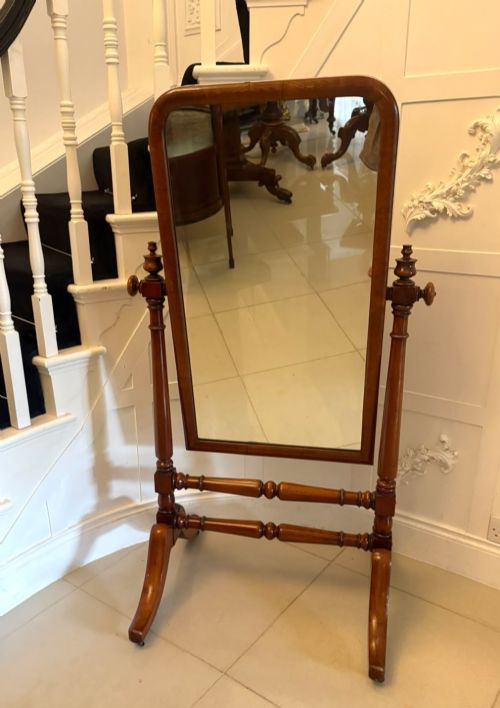
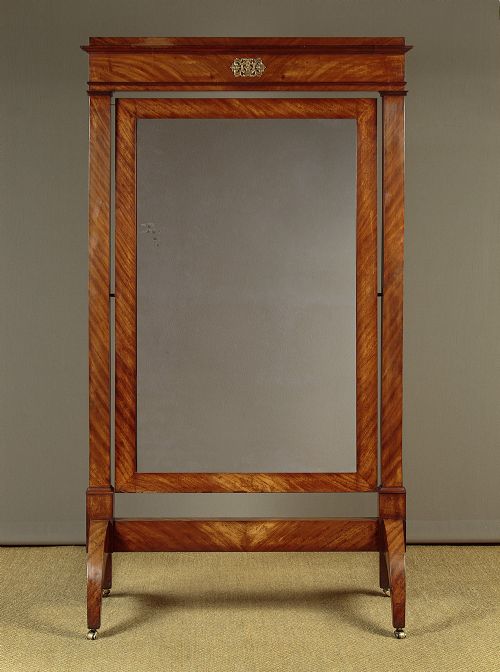
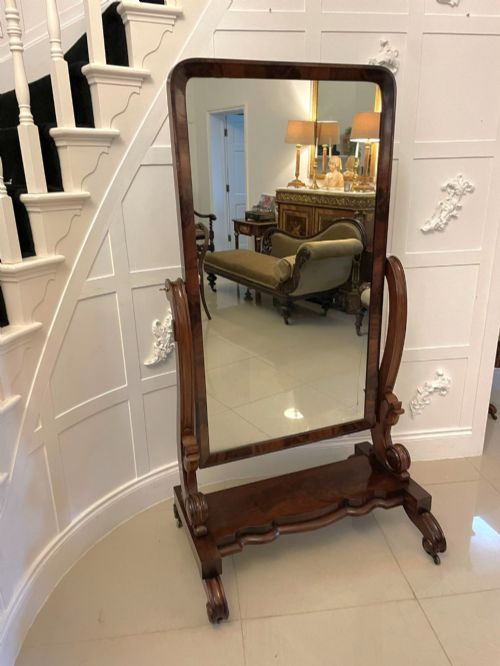
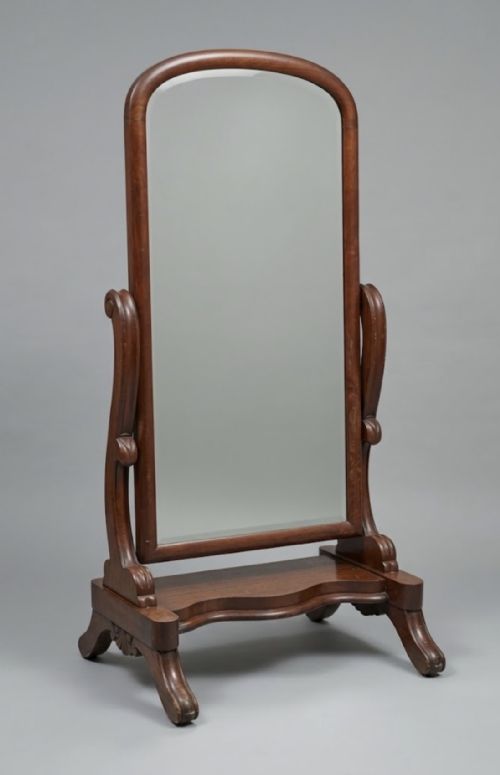
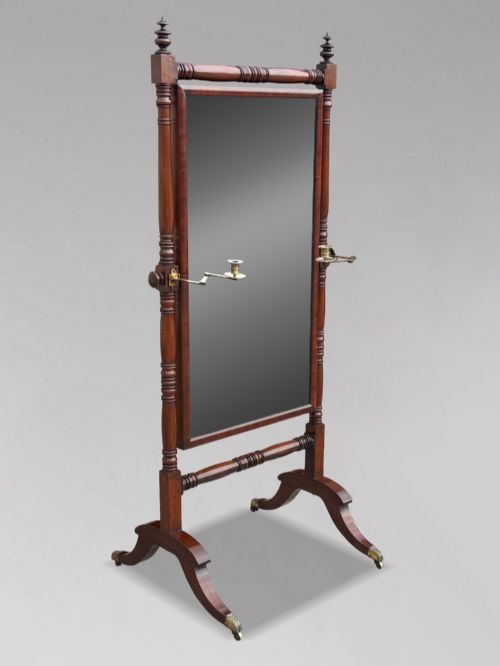
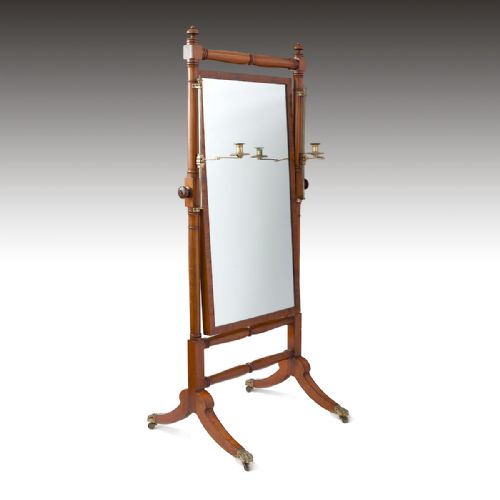
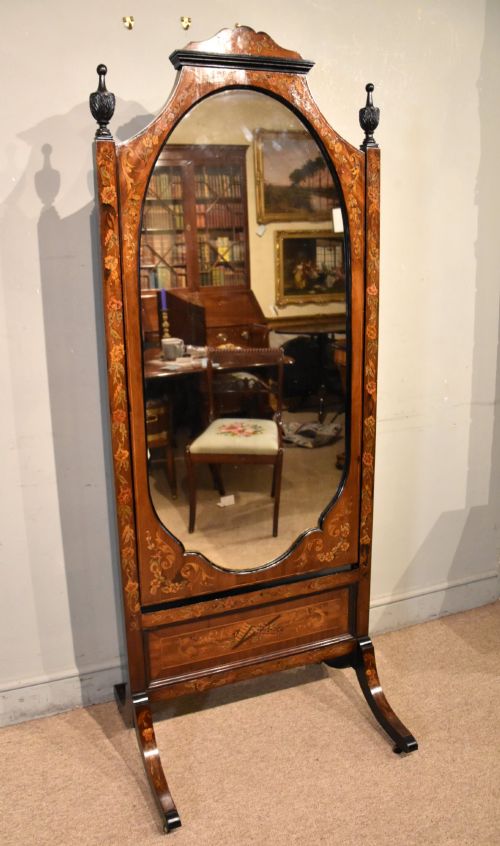
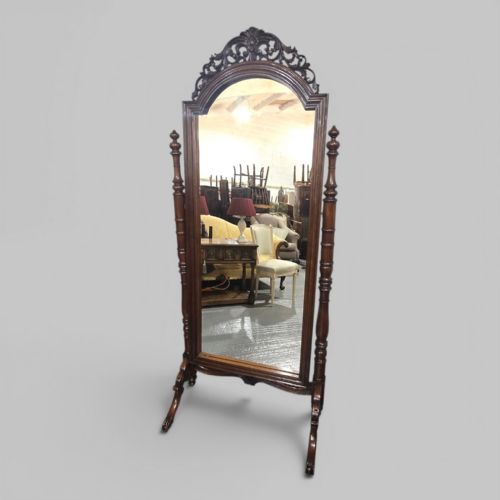
A mahogany cheval glass is a freestanding floor-length swing mirror designed for full-figure reflection, offering height and poise to a dressing room.
Mahogany Cheval Glass
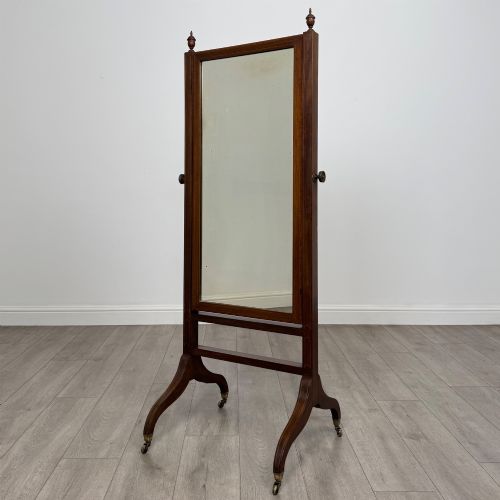
A mahogany cheval glass is a tall, adjustable floor-standing swing mirror supported by a heavy frame and four upright legs, designed for full-length reflection in a bedroom or dressing room. The listings show these pieces appearing across the Georgian, Regency, William IV, Victorian, and Edwardian periods.
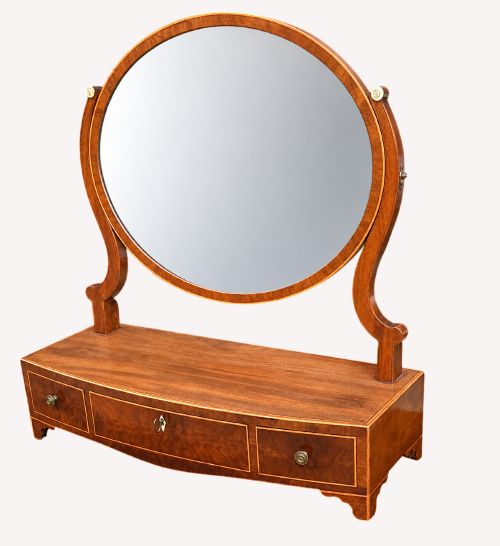
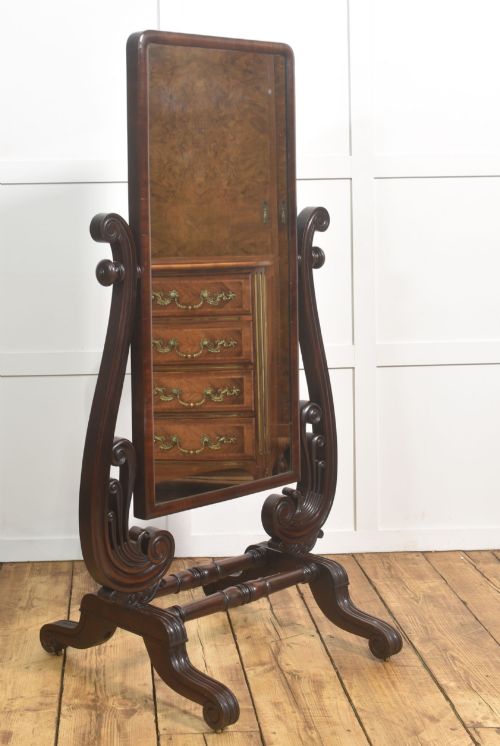
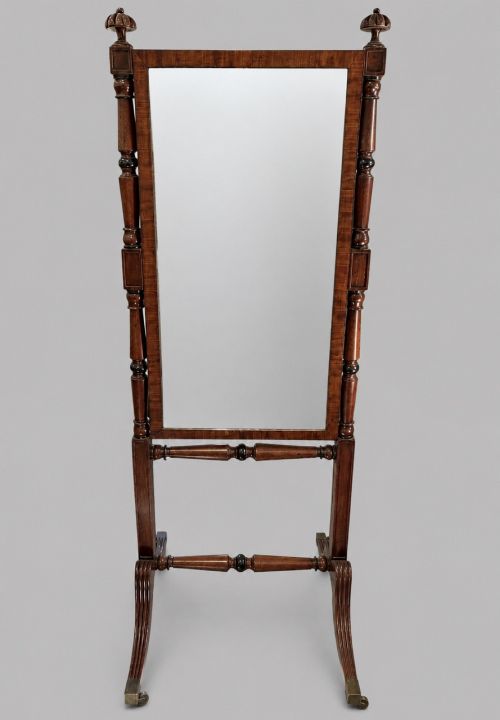
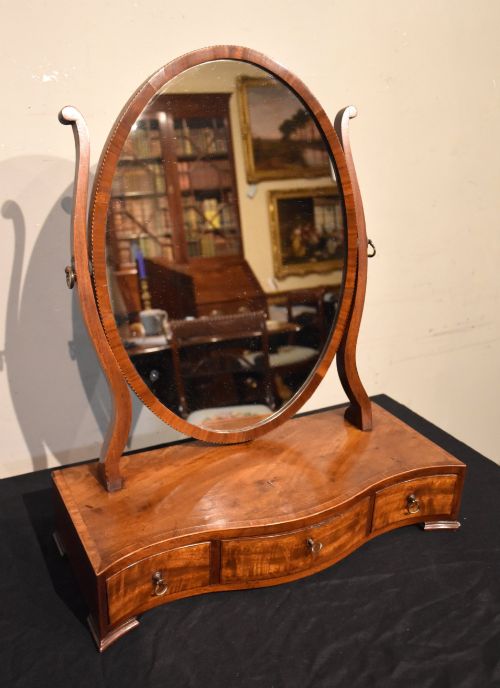
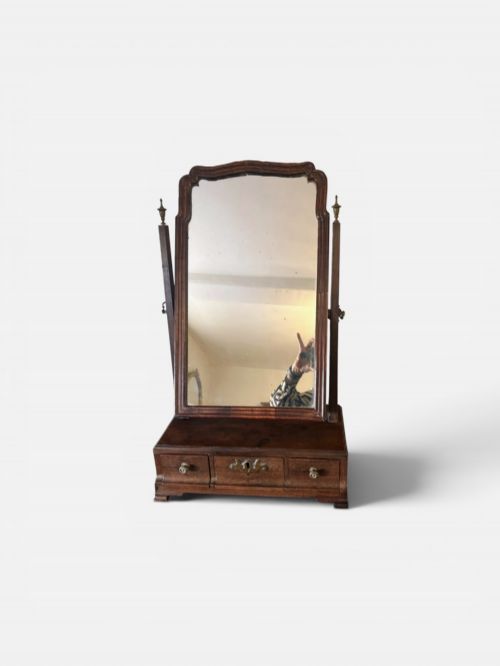
Buyers are most likely to encounter Victorian and Regency examples on this page, alongside smaller table-top dressing mirrors and toilet mirrors that share the same timber and swing-frame mechanics. These floor-standing pieces range from restrained country house designs to large, exhibition-quality frames mounted on barley twist supports or fitted with drawers and jewellery cabinets.
Origins stretch from English workshops, including pieces in the manner of Gillow, to continental French Empire and Dutch examples. The primary timber is mahogany, often accented with boxwood inlay, bone, or marquetry, holding a swinging mirror plate that tilts on brass pivots.
How they were made
Makers built these frames using dense, rich mahogany timbers, selected for structural strength to support the heavy weight of a pivoting mirror glass. Cabinet makers employed fine joinery for the upright posts and supporting trestles, frequently incorporating boxwood inlay, marquetry, or bone details to ornament the surfaces.
Listings span the 18th, 19th, and 20th centuries, covering Georgian, Regency, William IV, Victorian, and Edwardian periods in solid mahogany.
What varies in quality
Quality in a mahogany cheval glass rests upon the architectural proportion of the frame and the crispness of its secondary decorative elements, such as inlaid boxwood, marquetry, or carved barley twist supports. Pieces designated as exhibition quality or bearing attribution to makers like Gillow display superior timber selection and more complex base construction.
The integrity of the mirror glass itself and the original brass pivoting hardware distinguish higher-tier examples from standard utility pieces. Retaining original mirror glass and functional, unreplaced brass fittings elevates the standing of an antique mirror significantly.
Gillow
The Mahogany Cheval Glass Glossary
- Cheval glass
- A tall floor-standing swing mirror supported by a stable four-legged frame. The word derives from the French for horse, referring to the four-legged trestle base.
- Toilet mirror
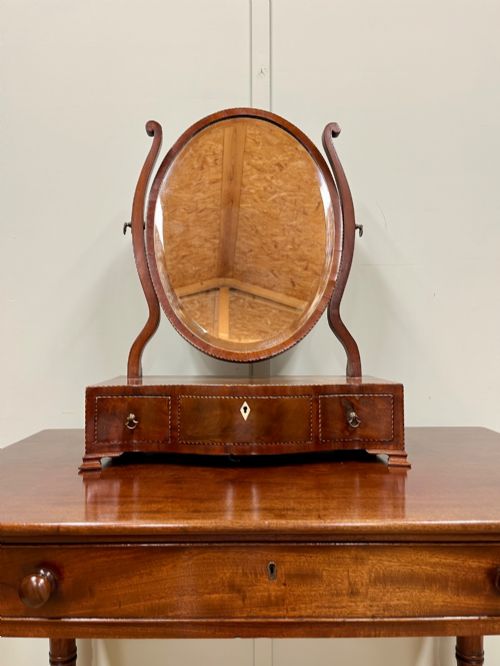
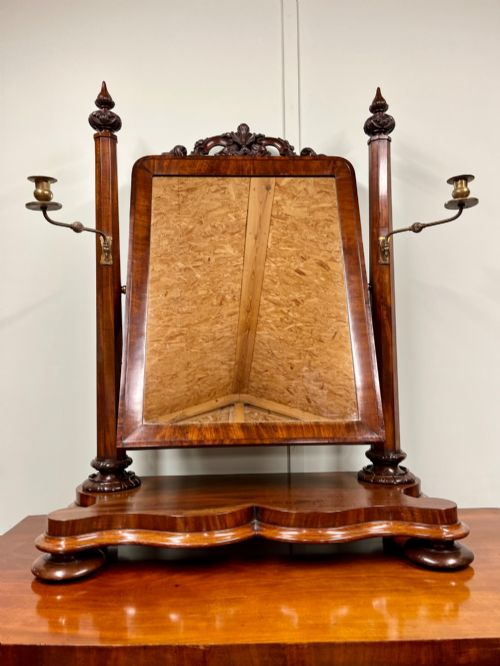
- A smaller swing mirror designed to sit atop a dressing table or chest of drawers. These often incorporate small storage drawers in their base plinths.
- Barley twist
- A carved spiral column support popular during the Victorian period. It adds dynamic texture to the upright posts of the mirror frame.
- Tilt dressing glass
- A mirror plate mounted on pivots that allows the user to adjust the viewing angle. These mechanisms require solid brass fittings to hold the weight of the glass.
Mahogany Cheval Glass: Frequently Asked Questions
What is a cheval glass?
A cheval glass is a full-length floor-standing mirror mounted on a swinging frame between two upright posts, allowing the glass to tilt.
First developed in the Georgian era, these pieces were designed for full-figure viewing in bedrooms and dressing rooms.
How do I date a mahogany mirror?
Dating relies on stylistic clues such as the Regency preference for classical brass mounts or the Victorian taste for barley twist supports and deeper mahogany tones.
Construction details, including the type of screws, backboards, and secondary timbers like boxwood, also help pinpoint the period of manufacture.
Can I adjust the mirror angle?
Yes, these mirrors use a pair of brass pivots screwed into the sides of the frame that let the glass swing freely.
Tightening or loosening these pivot pins allows you to set and maintain your preferred viewing angle.
Are some mirrors fitted with storage?
Many dressing table mirrors and certain floor-standing examples include integrated drawers or small jewellery cabinets built into the base plinth.
These compartments provided practical storage for small personal items and accessories in period dressing rooms.