


Swivel Floor Mirror
A swivel floor mirror brings height and full-length reflection to a room, moving smoothly on side pivots to tilt your view as needed.
Swivel Floor Mirror
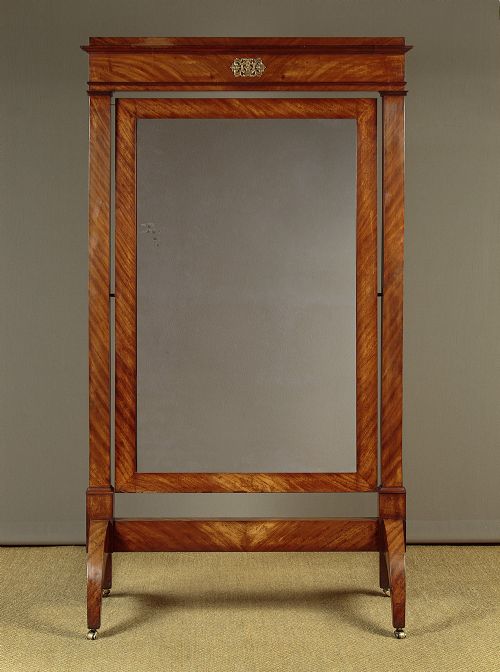
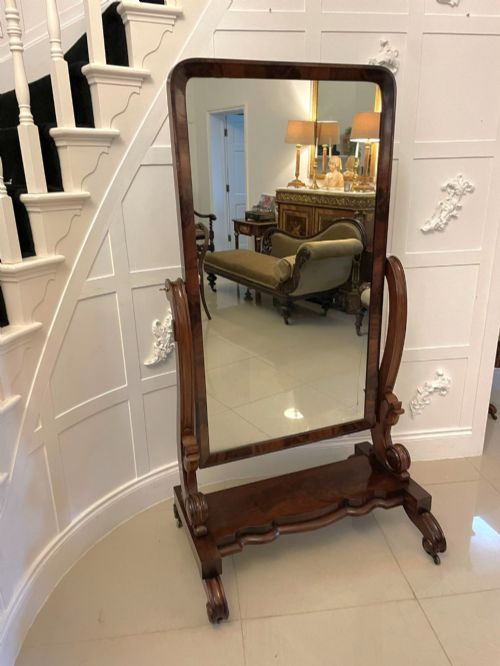
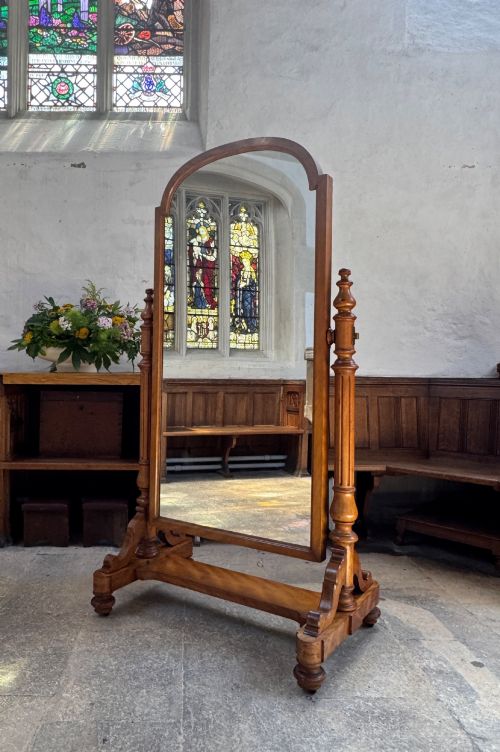
A swivel floor mirror, also known as a cheval mirror, stands independently on a framed base and tilts within upright supports. These pieces range from substantial Regency and Victorian designs to lighter Edwardian and 1920s interpretations.
Most examples found here utilise mahogany, walnut, or satin birch, often taking the form of a tall plate set into a stable freestanding frame. You will encounter styles spanning Georgian restraint through to ornate Victorian Gothic and revival movements.
The format serves dressing rooms, bedrooms, and grand hallways alike, providing an unbroken vertical reflection supported by clever pivoting hardware. Each piece balances decorative woodwork with functional mobility.
Materials and Construction
Makers constructed these frames predominantly in dense timbers like mahogany and walnut, occasionally selecting satin birch or satinwood for lighter aesthetic effects. Timber sections were joined with traditional cabinetry methods to bear the weight of the swinging plate.
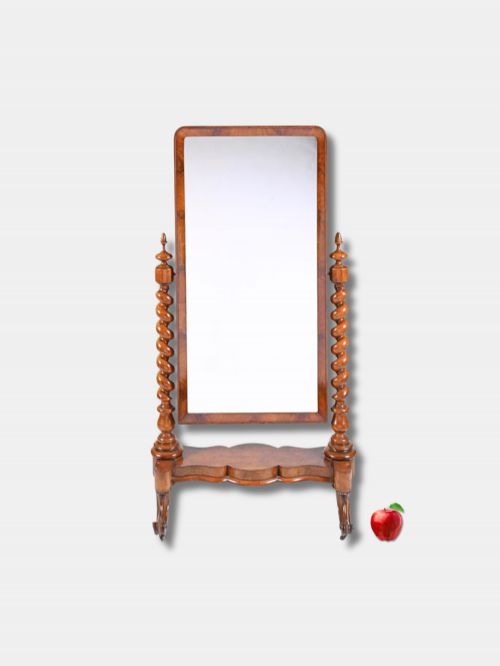
Mirrored glass is held within a dedicated frame suspended between vertical posts by brass pivot pins, sometimes accompanied by articulated candle holders or brass sabots. Carved details, barley twist supports, and marquetry inlays appear across various periods to enrich the timber surfaces.
Swivel Floor Mirror Retail Price Guide 2026
Typical asking prices for swivel floor mirror among the pieces listed under this phrase on Sellingantiques today, from the lower quarter to the upper quarter. They describe what is for sale here now, not the wider market.
Materials recorded across the inventory include mahogany, walnut, satin birch, satinwood, glass, and brass.
Markers of Quality
Superior execution shows in the selection of figured timber veneers, such as burr walnut or dense mahogany, paired with crisp hand-carving on the upright supports. The stability of the frame and the smooth action of the brass pivot mechanism indicate thoughtful original engineering.
Simpler versions rely on straightforward joinery and plain framing without decorative inlays or turning. The presence of original brass castors, sabots, and articulated fittings elevates the distinction of a piece.
The Swivel Floor Mirror Glossary
- Cheval mirror
- A freestanding full-length dressing mirror suspended on pivots within a floor-standing frame. The name derives from the French word for horse.
- Sabot
- A metal sleeve or shoe fitted to the foot of a furniture leg, commonly executed in brass. It protects the wood and adds a decorative finish.
- Barley twist
- A carved wooden column resembling the spiral form of a twisted rope or barley sugar. This decorative turning is frequent on Victorian supports.
- Marquetry
- Decorative patterns formed by fitting contrasting pieces of veneer into a prepared wood surface. Edwardian and Georgian revival pieces often utilise this technique.
- Brass pivot
- The metal pin and socket assembly allowing the mirror frame to tilt back and forth. Quality versions permit smooth adjustment without slipping.
Swivel Floor Mirror: Frequently Asked Questions
What is a swivel floor mirror?
A swivel floor mirror is a freestanding looking glass mounted on vertical pivots that allow the frame to tilt forward or backward. These pieces provide a full-length reflection while standing independently on a base rather than hanging on a wall.
Originating for dressing and tailoring use, they combine functional mobility with decorative timber framing. The pivoting design lets users adjust the viewing angle with ease.
How do I date a swivel floor mirror?
Dating relies on timber selection, construction methods, and stylistic details associated with periods like the Georgian, Regency, and Victorian eras. Earlier examples often feature heavy mahogany with simple sabots, while later Edwardian pieces introduce lighter satinwood and marquetry.
Hardware such as brass castors and pivot mechanisms also provides clues to the manufacturing decade. Examining the backboards and joinery helps confirm the period of construction.
Where should I place a swivel mirror?
These mirrors suit bedrooms, dressing rooms, and hallways where full-length reflection and floor-standing presence work best. Because they do not require wall mounting, you can position them to capture light from nearby windows.
Ensure the surrounding floor space allows room for the legs and permits the mirror plate to tilt freely. Placing them opposite a light source maximises illumination in the room.
How do I maintain the pivot mechanism?
Keep the pivot pins clean and free from dust buildup to ensure smooth movement when tilting the frame. Check the tension screws periodically to prevent the mirror plate from sagging or moving too loosely.
Avoid applying heavy lubricants that might attract dust onto the surrounding timber or brass. Gentle tightening of the original fixings maintains stability over time.