
Large Floor Mirror
A large floor mirror brings immediate presence to a room, offering grand scale and historic character through its substantial frame.
Identifying a Large Floor Mirror
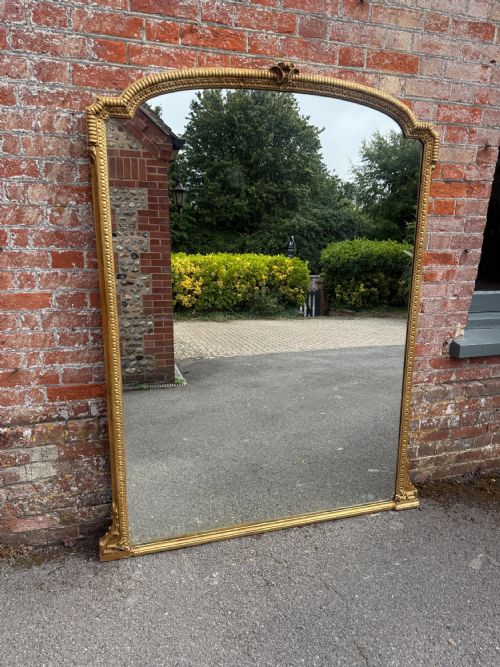
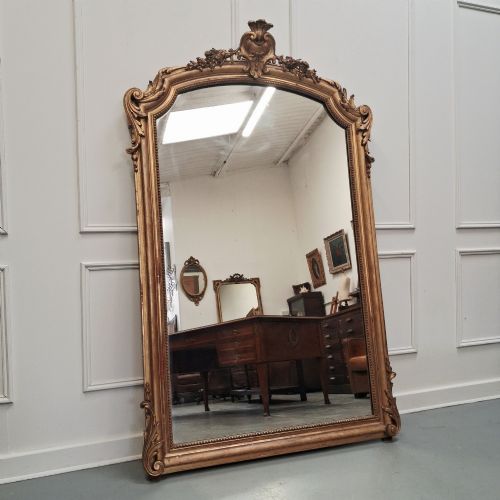
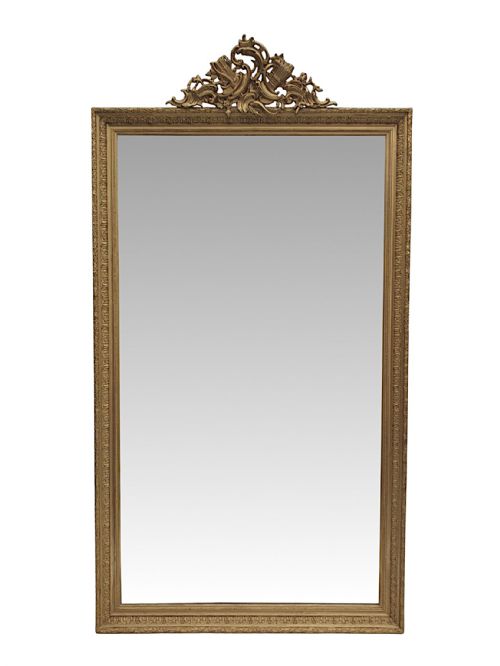
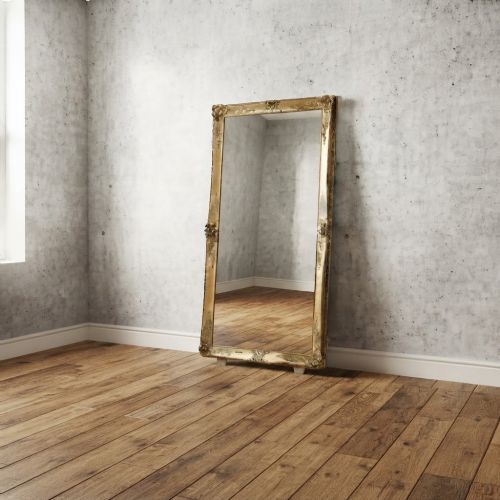
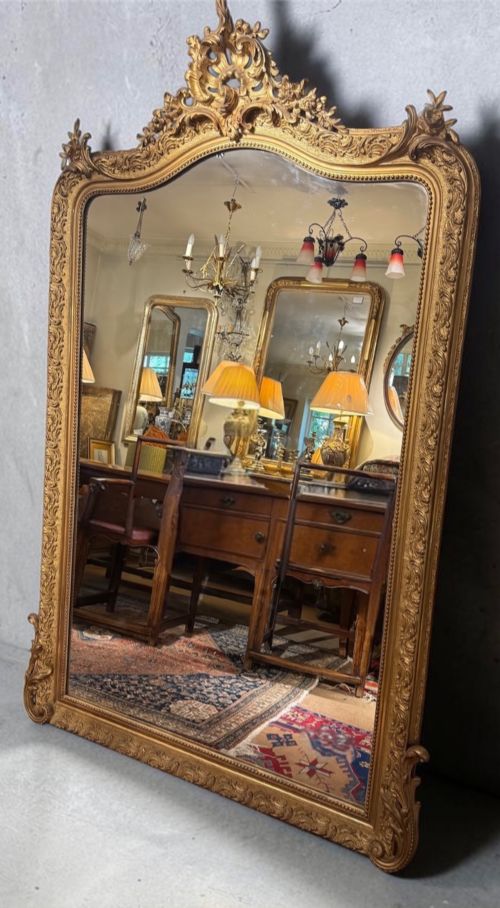
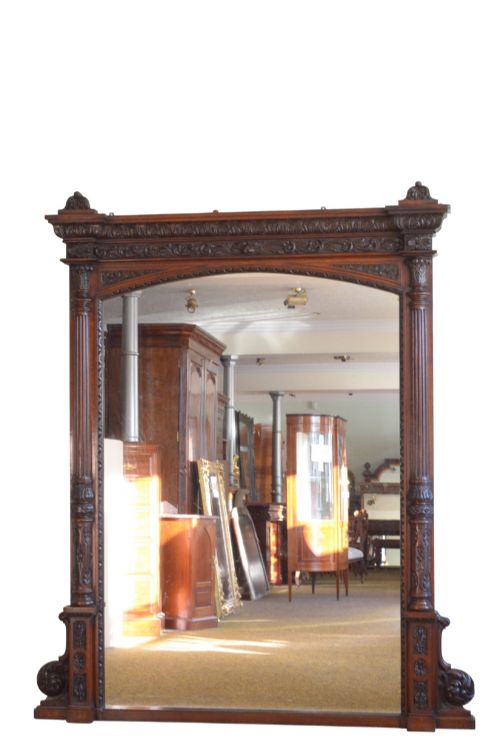
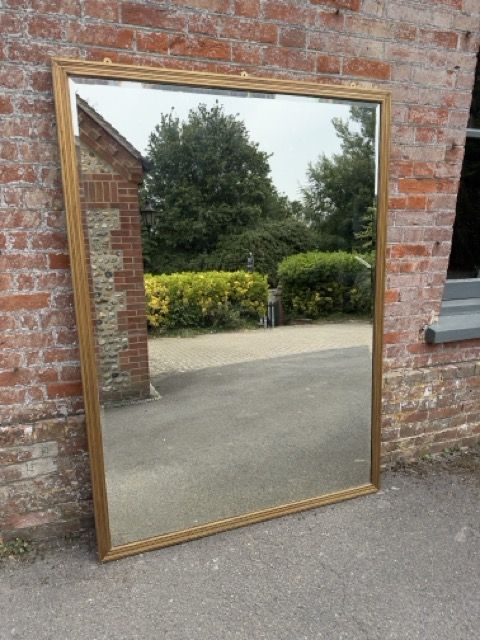
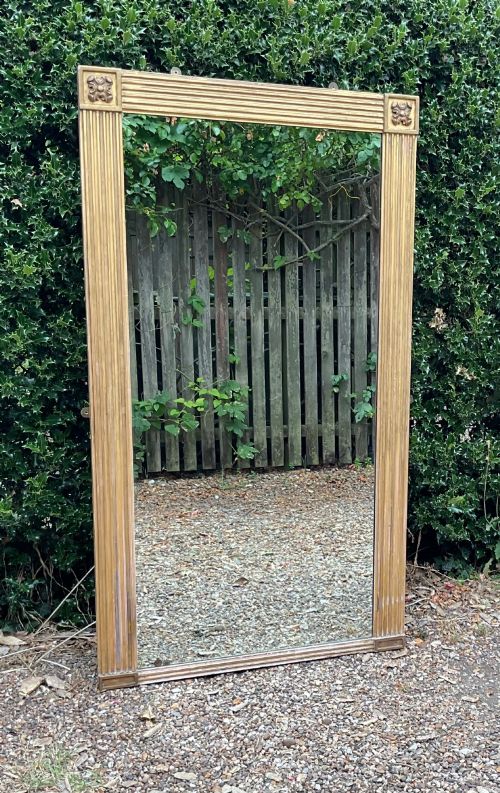
A large floor mirror serves as a commanding architectural element in an interior, designed to stand directly on the floor or lean against a wall. When searching for a large floor mirror, buyers encounter imposing nineteenth-century and early twentieth-century examples originating from English and French workshops. These pieces frequently span major historic periods including the Victorian era, the Edwardian period, and nineteenth-century French revivals.
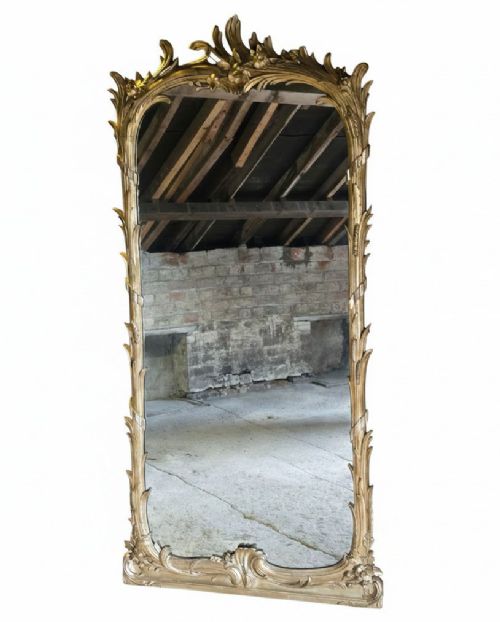
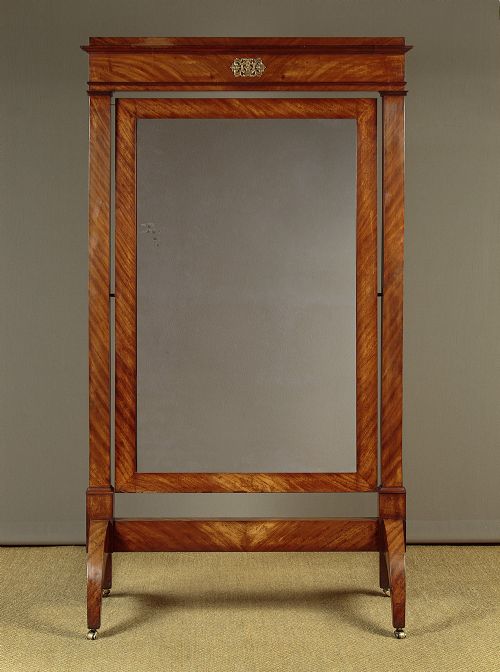
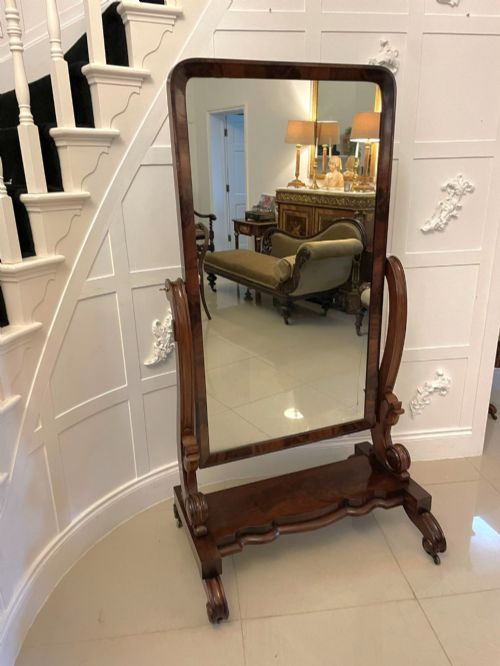
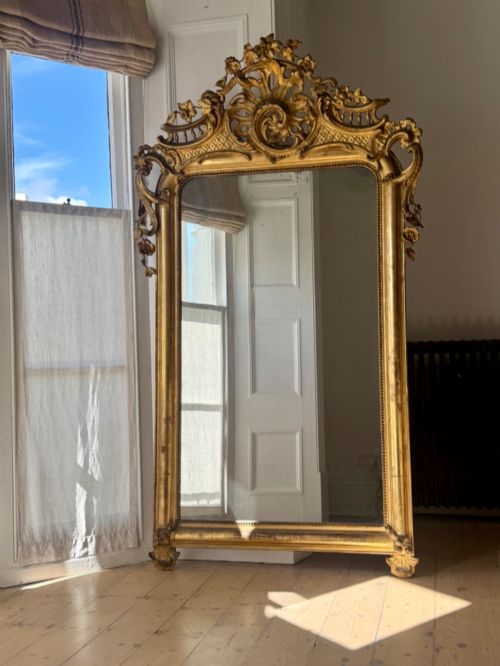
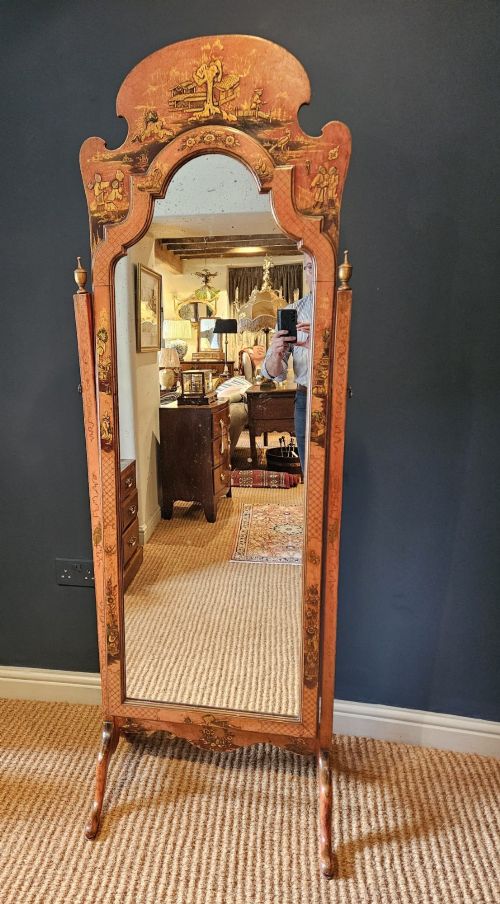
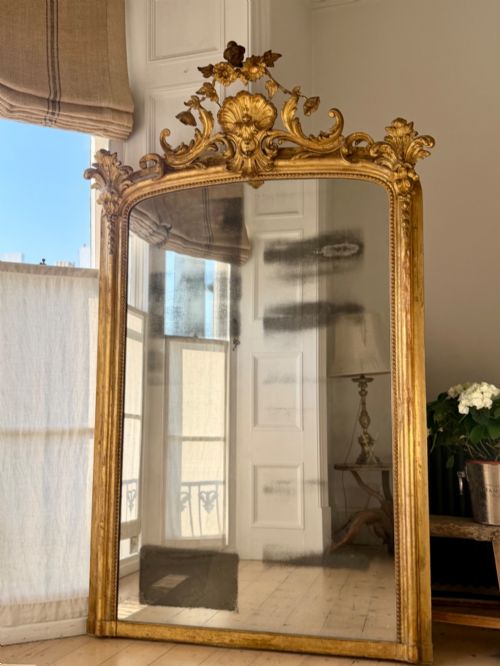
The dominant forms recorded across these listings include solid oak frames, carved wood and gesso structures, and giltwood designs. Many examples display shaped tops, arched profiles, or original crests positioned above the glass. While some pieces are built specifically as floor-standing or cheval mirrors, others adapt large overmantle mirrors for vertical placement.
Materials and Construction
Makers constructed these frames using timber foundations such as oak, mahogany, and carved wood, overlaid with gesso to accept intricate decorative moulding. Artisans applied gold leaf, silver gilt, and paint finishes to enrich the surfaces, creating the ornate ornamentation characteristic of French Rococo Revival and Victorian Gothic styles.
The glazing relies upon heavy mirror glass and silvered looking glass, occasionally featuring bevelled edges. Frames often incorporate structural support elements at the rear to sustain the immense weight of the full-height glass during floor placement.
Retail Price Guide 2026
Typical UK retail prices for large floor mirror, calculated from the Sellingantiques database of over a million retail prices indexed since 2003. This retail price guide relies exclusively on Sellingantiques data; no external sources or auction records are used, so the figures do not describe the wider market.
The recorded inventory spans the Victorian era, Edwardian period, and nineteenth-century French revivals, utilising oak, mahogany, gesso, and giltwood.
Distinguishing Quality in Frames
Quality reveals itself in the depth and crispness of the carved wood and gesso ornamentation, where superior pieces exhibit hand-carved detailing rather than repetitive moulded composition. The integrity of the original giltwood or painted finish also dictates the piece's standing, with untouched historic surfaces holding greater artistic merit.
Structural heft and timber selection separate ordinary frames from exceptional ones, particularly in solid oak and mahogany constructions. The clarity and weight of the mirror glass itself, along with the retention of original backing boards and crests, complete the assessment of a fine historic example.
Charles Nosotti
The Large Floor Mirror Glossary
- Gesso
- A plaster-like mixture applied to wood frames to create a smooth surface for gilding or painting. Artisans carved intricate decorative motifs directly into this dried layer.
- Giltwood
- Timber coated with gold leaf or metal leaf applied over a prepared ground. This technique creates a brilliant metallic lustre that defines formal nineteenth-century frames.
- Cheval mirror
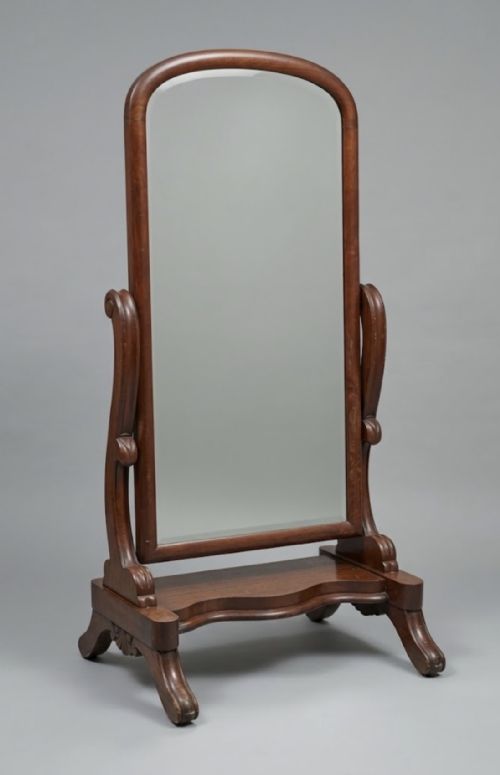
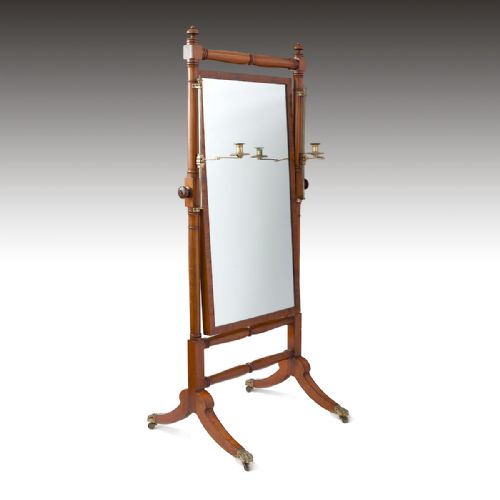
- A freestanding mirror suspended on a central swivel axis within a supportive frame. This design allows the glass to tilt to various angles.
- Overmantle mirror
- A large mirror originally manufactured to hang above a fireplace mantelpiece. Many examples are subsequently adapted for use as floor-standing mirrors.
- Crest
- An ornamental feature mounted at the very top of a mirror frame. It provides a focal point and frequently incorporates carved floral or architectural details.
Frequently Asked Questions
How do I secure a heavy floor mirror safely?
Large historic mirrors carry substantial weight from their timber frames and thick glass. Many tall examples are designed to lean against a wall but benefit from discreet wall anchors to prevent tipping.
Securing the frame at the upper rear protects both the piece and the room, particularly when positioned on high-pile carpets or uneven historic floors.
Can an overmantle mirror stand on the floor?
Many large nineteenth-century overmantle mirrors function successfully as floor-standing mirrors by resting directly against a wall. Their original proportions and decorative crests suit vertical placement.
Checking the lower frame construction ensures the piece bears weight evenly without stressing the historic joinery along the bottom edge.
What is the difference between a cheval mirror and a floor mirror?
A cheval mirror is a freestanding glass plate mounted on a pivoted axis between two vertical posts, allowing it to tilt. Standard floor mirrors are fixed frames that stand upright or lean against a wall.
Cheval mirrors emerged strongly in the Georgian and Victorian periods as dressing pieces, whereas static floor mirrors served grand reception spaces.
How do I identify French and English nineteenth-century styles?
French nineteenth-century mirrors often display fluid Rococo Revival curves, ornate gesso crests, and bright gilt or ebonised finishes. English counterparts frequently employ solid oak or mahogany with more restrained architectural detailing.
Examining the timber species and the style of the carved ornamentation helps clarify the workshop origin of the frame.