

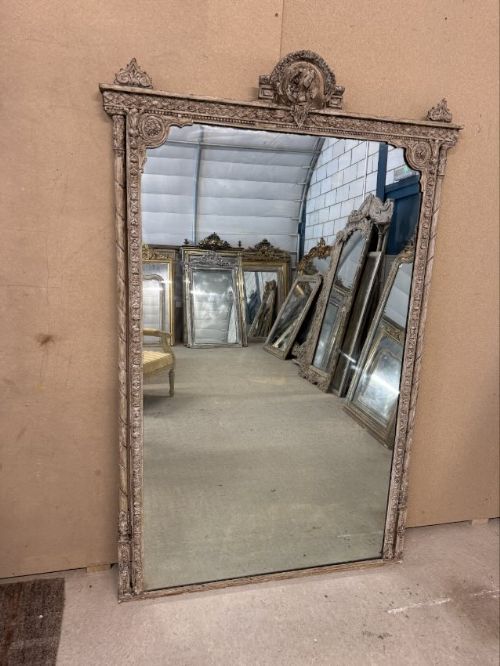
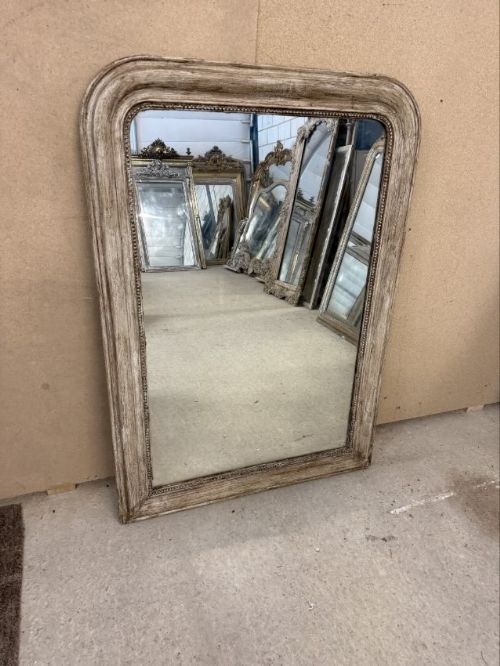
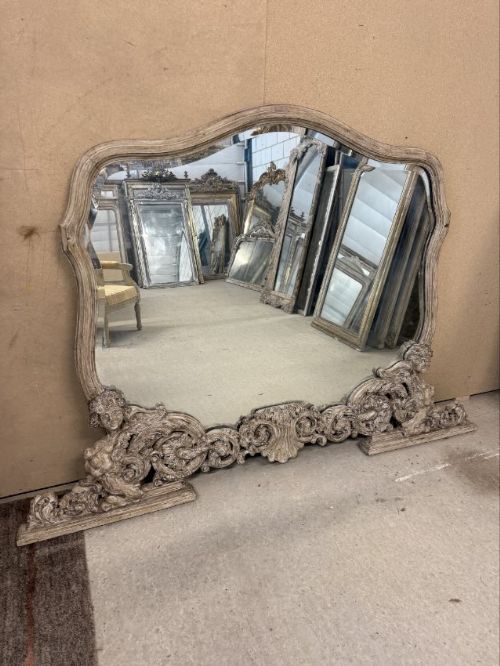
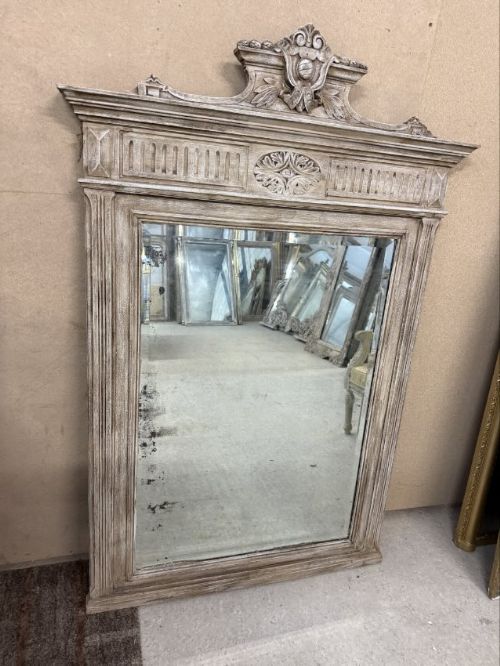


Grey Painted Mirror
A grey painted mirror brings subtle architectural weight and muted tonal depth to a room through centuries of French and English craftsmanship.
Grey Painted Mirror
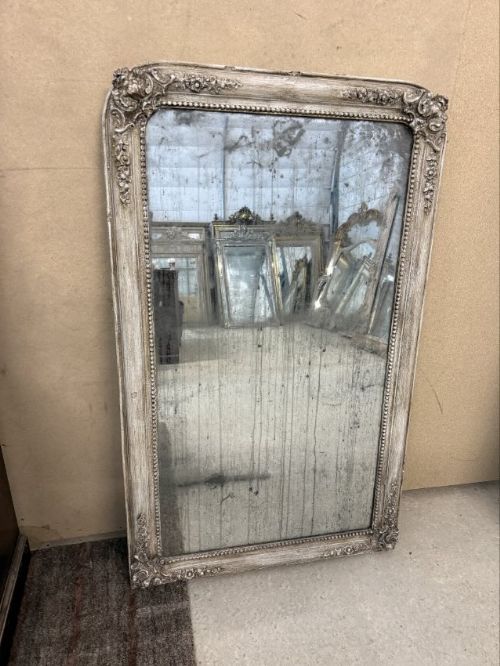
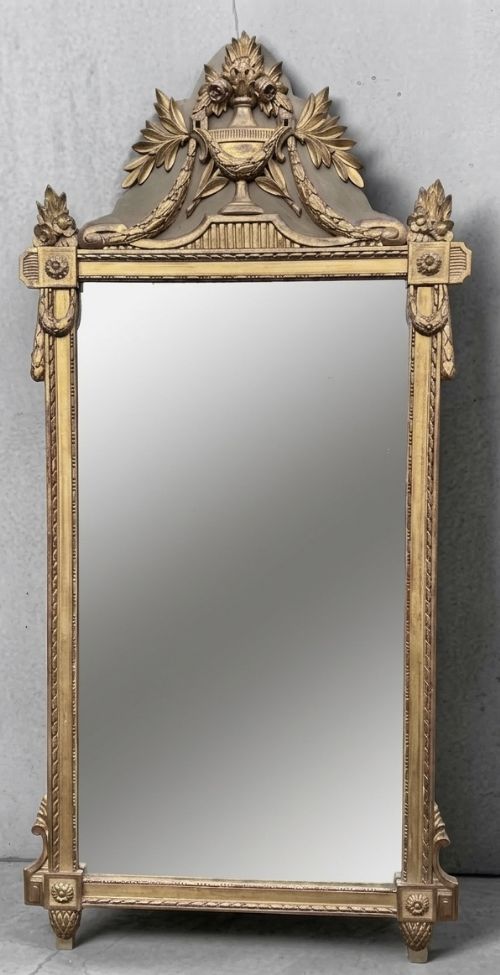
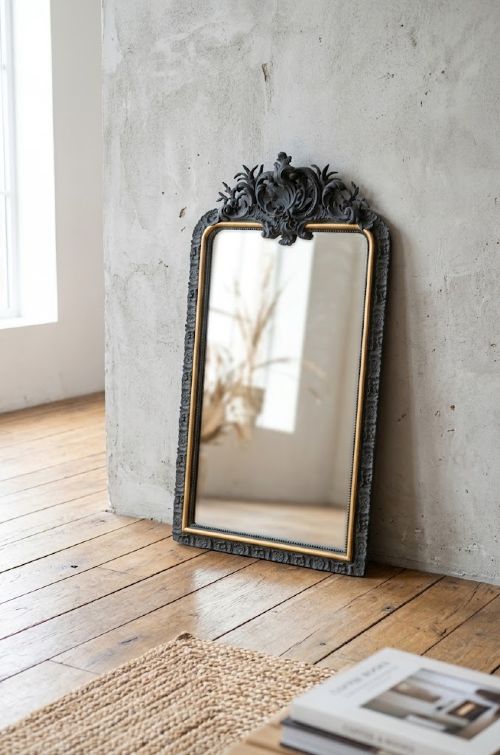
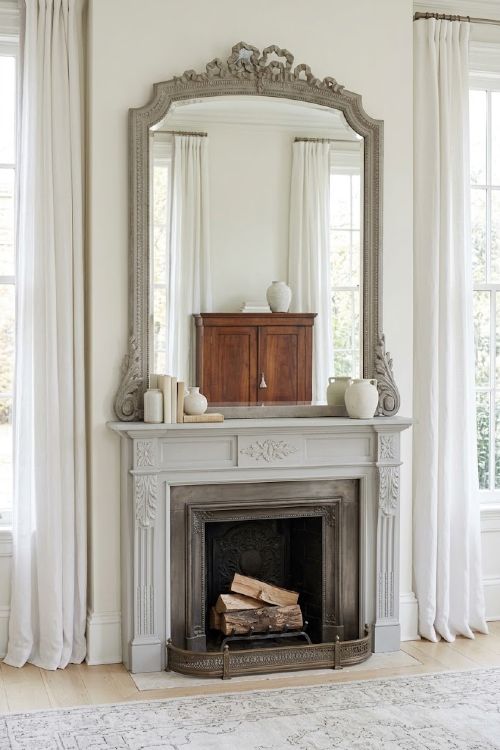
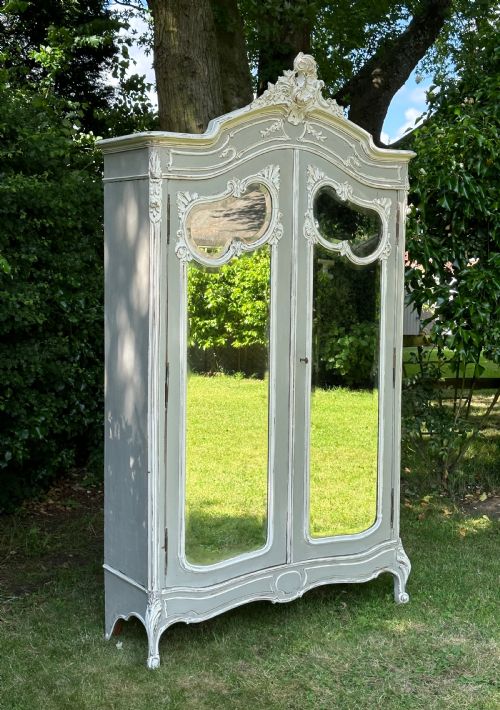
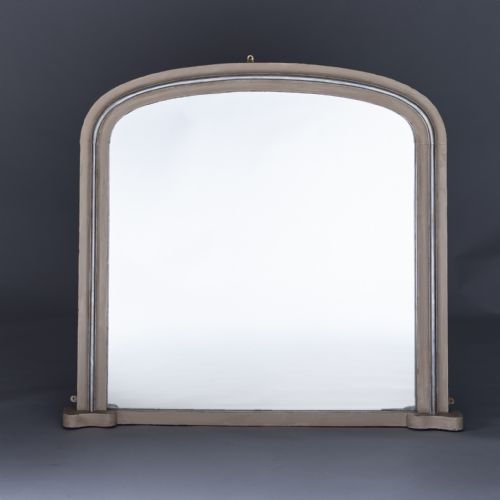
When searching for a grey painted mirror, collectors encounter substantial nineteenth-century wall hangings and overmantels originating from French chateaux or Victorian English drawing rooms. The selection heavily favours grand architectural formats, including arched tops, pier mirrors, and trumeaux designed to reflect light across high-ceilinged spaces.
Many examples display the influence of French Provincial and Rococo Revival styles, featuring shaped wooden frames or decorative relief panels alongside the characteristic muted finish. Alongside dedicated wall pieces, buyers also find smaller dressing table mirrors and occasional console tables integrated with matching frames.
Originating predominantly from the period between 1850 and 1900, these pieces combine utility with decorative presence. The underlying structure often reveals traditional joinery beneath layers of historic paint, connecting current interior trends with nineteenth-century workshop practices.
How they were made
Carved wood and gesso form the primary structural foundation for these frames, allowing artisans to build intricate moulded motifs and relief panels before applying surface colour. Wood types such as oak, walnut, or pine provide the rigid base, shaped by hand into arched tops and column-framed profiles.
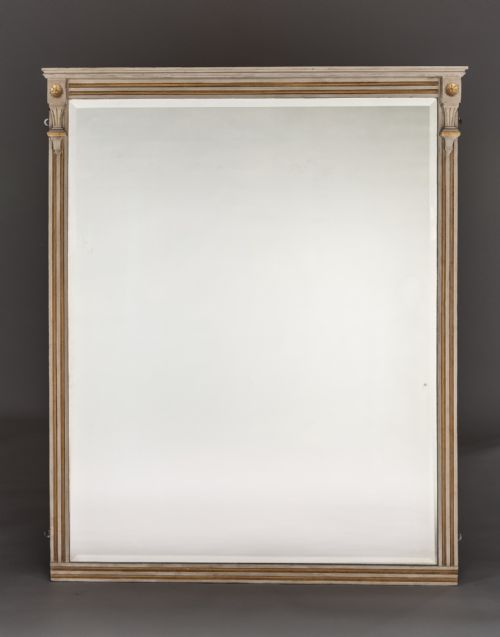
The characteristic surface relies on traditional paint applications, sometimes combined with gold or silver leaf parcel details to highlight raised mouldings. In many instances, mercury glass or heavy bevelled mirror plates are secured within the rebated frame behind timber backing boards.
Grey Painted Mirror Retail Price Guide 2026
Typical asking prices for grey painted mirror among the pieces listed under this phrase on Sellingantiques today, from the lower quarter to the upper quarter. They describe what is for sale here now, not the wider market.
Listings span the nineteenth and early twentieth centuries, featuring glass, gesso, and carved wood across French provincial and Victorian architectural forms.
What varies in quality
The distinction between tiers rests upon the depth and intricacy of the hand-carved wooden ornament integrated into the frame. Pieces featuring deeply modelled gesso enrichments and well-proportioned architectural framing demand greater artisan skill than simple flat surrounds.
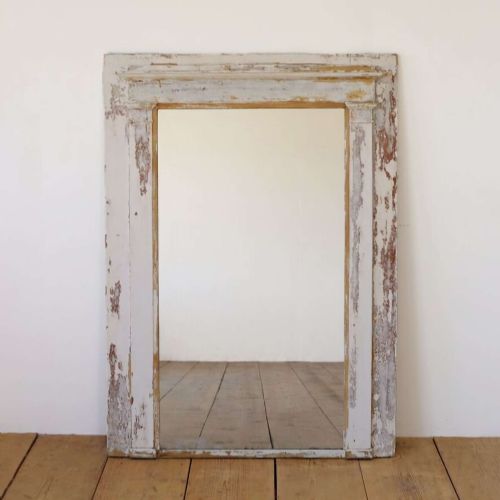
Surface integrity and the character of the mirror plate itself determine the upper echelon of examples. Original mercury glass with authentic foxing sits alongside period-correct painted finishes that show genuine age rather than flat modern repainting.
The Grey Painted Mirror Glossary
- Trumeau mirror
- A decorative wall mirror designed to fit into the panel above a fireplace or between two windows, frequently incorporating oil paintings or carved wood motifs within the frame.
- Overmantel mirror
- A wide mirror specifically proportioned to hang on the wall directly above a mantelpiece, often featuring an arched top or architectural pilasters.
- Gesso
- A plaster-like mixture applied to carved wooden frames to create a smooth, mouldable surface for subsequent painting and gilding.
- Parcel-gilt
- A decorative treatment where portions of an object are selectively highlighted with gold leaf while the main body remains painted or stained.
- Mercury glass
- A type of double-walled glass blown with a silvering solution between the layers, producing a distinctive speckled reflection.
Grey Painted Mirror: Frequently Asked Questions
Where should a large overmantel mirror be hung?
These large mirrors sit naturally above a fireplace mantel or anchor a main reception room wall where their proportions can reflect natural light.
Securing them properly requires locating structural wall studs due to the substantial weight of the timber and gesso construction.
What is a trumeau mirror?
A trumeau is a specialised architectural mirror originating from French interior design, traditionally fitted into wall panelling or placed between windows.
They frequently combine decorative carved wooden panels or painted scenes with the mirror glass itself.
How can I tell original paint from later decoration?
Original painted surfaces show cumulative wear, subtle crazing, and tonal variations accumulated over decades of exposure to ambient light.
Later or secondary paint layers often present a more uniform thickness and lack the integrated wear patterns seen around high-contact areas like inner frames.
Are these mirrors suitable for bathrooms?
Historic painted wooden frames require stable humidity levels to prevent the gesso and underlying timber from expanding or contracting.
Placing them in damp environments risks accelerating the degradation of both the wooden structure and the historic silvered mirror plate.