

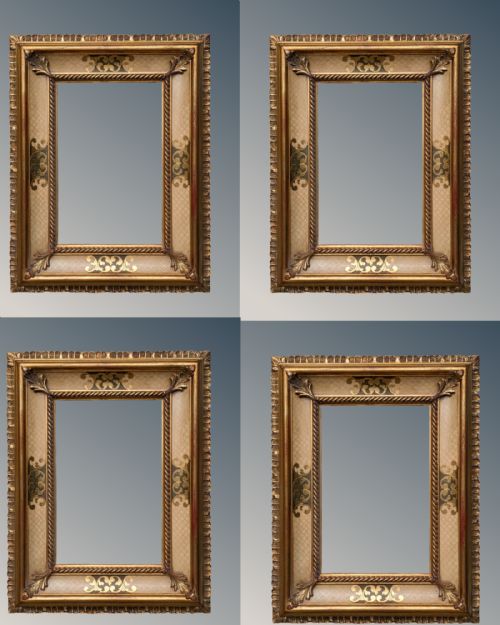


Painted Wooden Mirror
A painted wooden mirror brings texture and historic colour to a room, offering both practical reflection and decorative presence.
What these painted wooden mirror pieces are
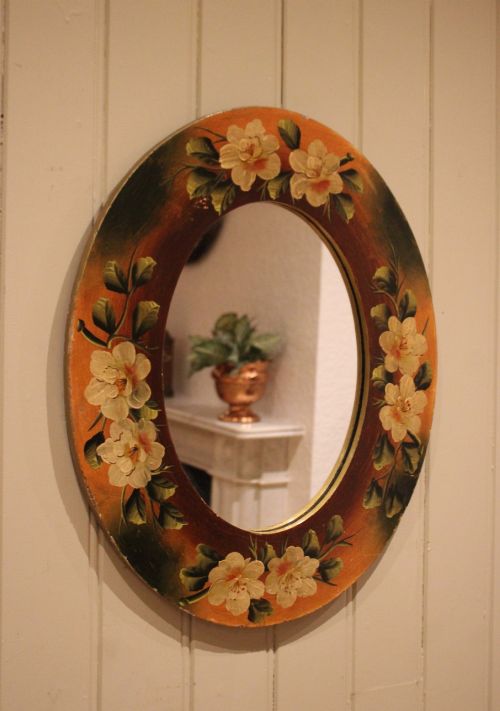
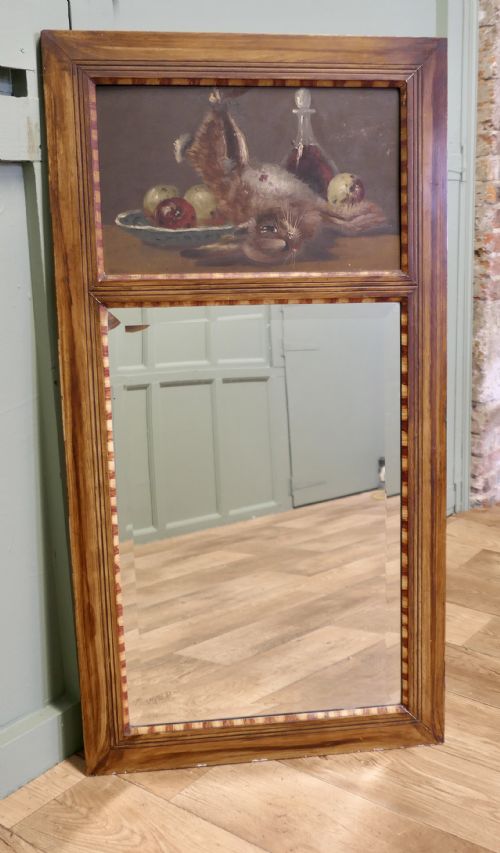
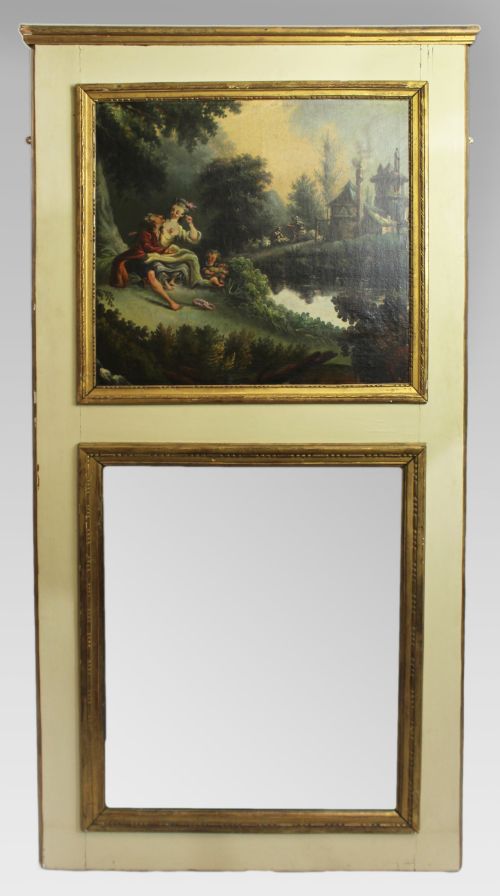
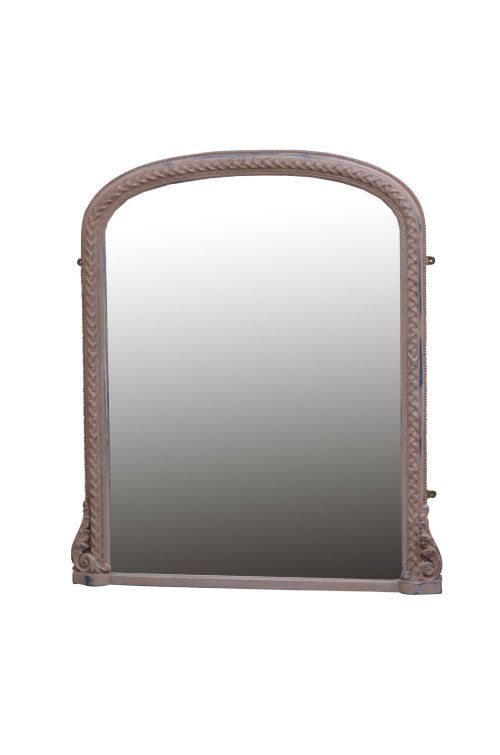
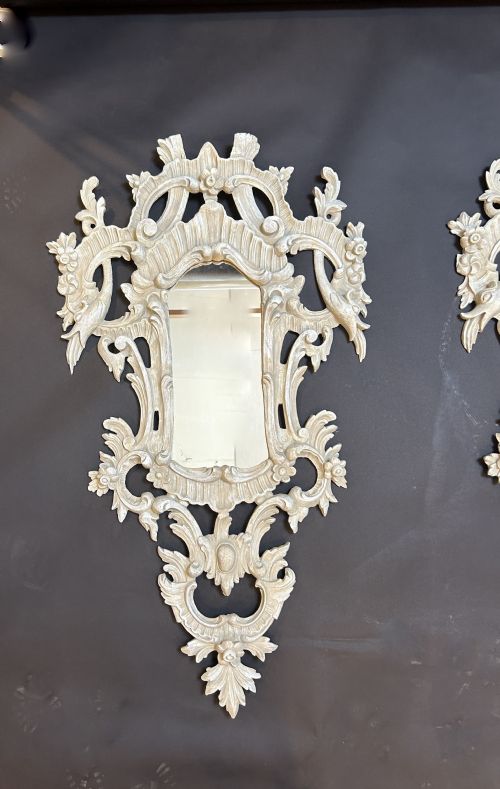
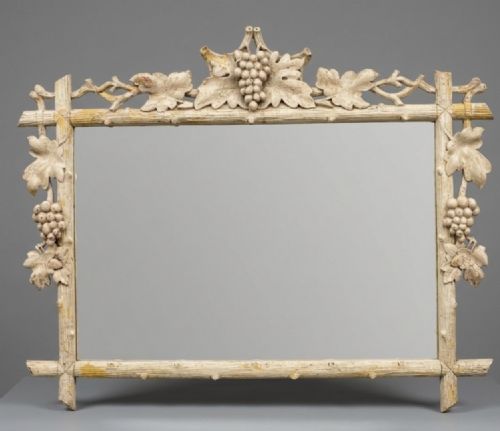
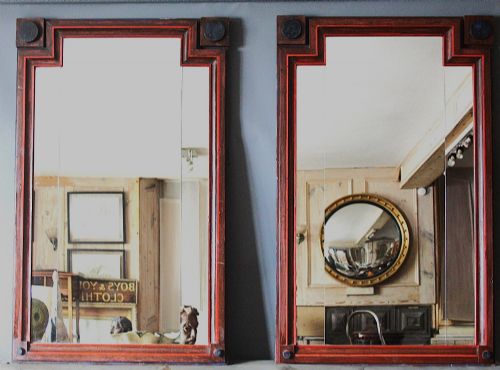
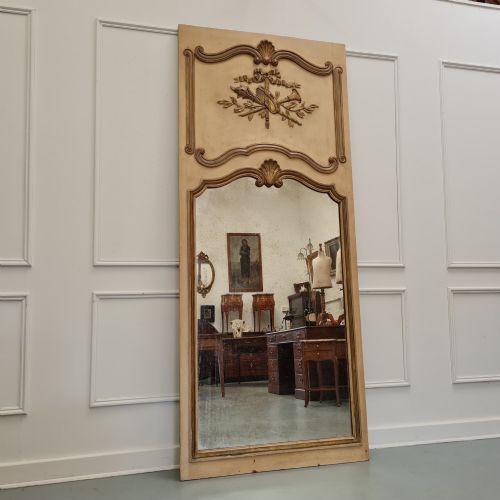
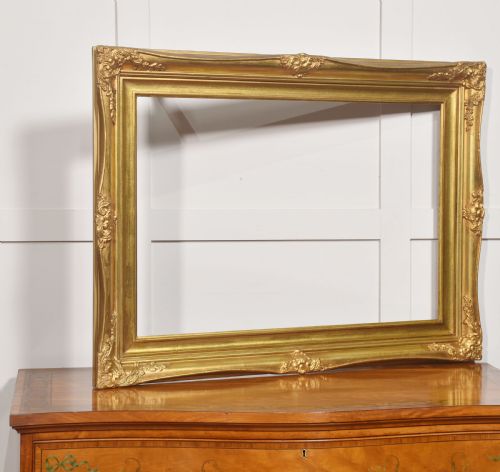
A painted wooden mirror is a wall-hanging or overmantel piece combining a timber frame with a painted, gilt, or gesso surface. The selection spans the nineteenth and early twentieth centuries, drawing on French Provincial, Victorian, Neoclassical, French Rococo, Edwardian, and fairground aesthetics.
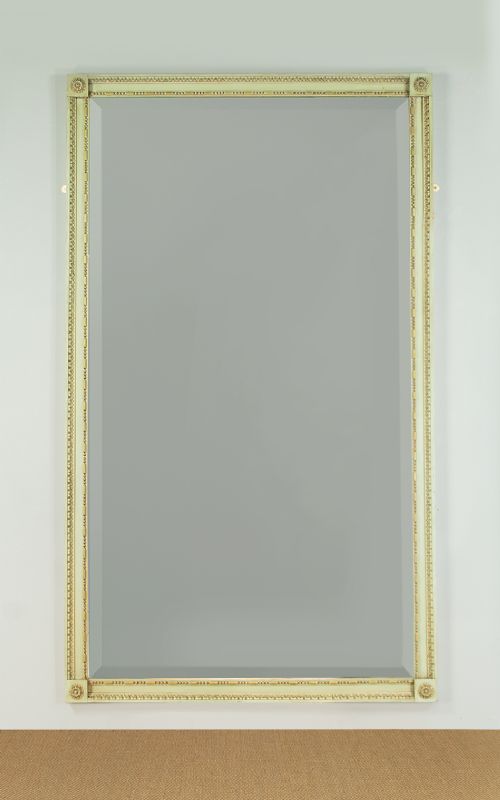
Most examples found here are substantial overmantel mirrors or large wall mirrors designed to anchor a principal room. Makers shaped these frames from carved wood, applying layered palettes such as lilac and ink blue, alongside traditional gold leaf and gilt finishes.
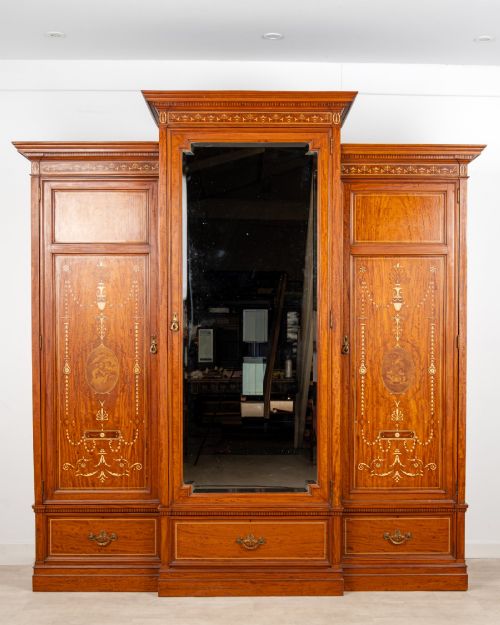
Earlier nineteenth-century items sit alongside Edwardian and early twentieth-century boards, showing how makers adapted carved wooden forms across decades. Buyers encounter both plain mirror glass and sectional window configurations within this group.
How they were made
Craftsmen built these frames from solid wood, frequently employing carved wooden mouldings and applied gesso to build up decorative relief before painting. Gilt and gold leaf details were then added to catch the light against the painted surfaces.
The painted finishes rely on layered pigments, ranging from ink blue and lilac to antique monochrome tones applied directly over wood or preparation layers. Mirror glass is set within these frames, sometimes taking the form of large single plates or sectional window layouts.
Retail Price Guide 2026
Typical UK retail prices for painted wooden mirror, calculated from the Sellingantiques database of over a million retail prices indexed since 2003. This retail price guide relies exclusively on Sellingantiques data; no external sources or auction records are used, so the figures do not describe the wider market.
Materials recorded across the inventory include gesso, gold leaf, mirror glass, and painted wood.
What varies in quality
The distinction between standard and superior pieces rests on the depth of the wood carving and the complexity of the gesso work beneath the paint. Deeply carved French and Victorian frames demonstrate a sharper execution of ornament than simpler commercial alternatives.
Surface preservation dictates the visual impact of each piece, particularly where original layered paint schemes or historic gilt remain intact. The quality of the mirror glass itself, whether retaining original silvering or showing age, contributes to the overall character.
The Painted Wooden Mirror Glossary
- Gesso
- A plaster-like mixture applied to wood frames to create a smooth surface for painting or gilding. It allows carvers to achieve crisp details that timber alone cannot hold.
- Overmantel mirror
- A large mirror specifically designed to hang above a fireplace mantelpiece. These pieces often feature wide horizontal proportions to balance the hearth below.
- Gilt
- A thin layer of gold leaf or gold paint applied to a surface to give a metallic sheen. It warms the appearance of carved wooden mouldings.
- Sectional mirror
- A glass plate divided into multiple smaller panes, often mimicking the grid of a window frame. This layout adds geometric rhythm to the wall.
- Pier mirror
- A tall mirror designed to hang on the narrow wall space between two windows. They make efficient use of light in traditional room layouts.
Frequently Asked Questions
Where should I hang an overmantel mirror?
These large mirrors traditionally sit directly above a fireplace mantelpiece to reflect light and anchor the wall space.
They also work effectively on any principal living room wall where a substantial focal point is required.
How do I identify a Victorian painted mirror?
Victorian pieces often feature heavy carved wood frames finished with gesso and traditional painted or gilt surfaces.
Look for proportions and decorative styles that align with nineteenth-century French and English design traditions.
What is a fairground board mirror?
Fairground boards incorporate painted wooden elements originating from vintage amusement structures.
These early twentieth-century pieces bring a bolder, more vernacular decorative style compared to formal domestic mirrors.
How do I care for antique mirror glass?
Clean the glass gently with a soft cloth and mild cleaner, avoiding harsh chemicals that might damage old frames.
Take care not to let moisture seep behind the wooden backing or into the edges of the silvering.