


White Painted Mirror
A white painted mirror brings light and proportion to a room, drawing on periods from the eighteenth century to the twentieth.
White Painted Mirror
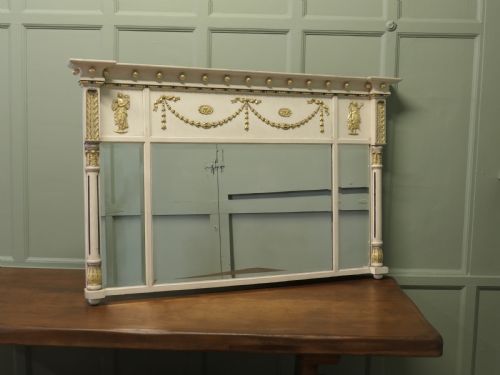
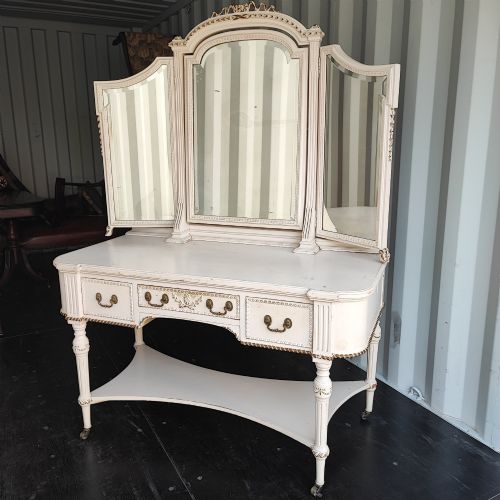
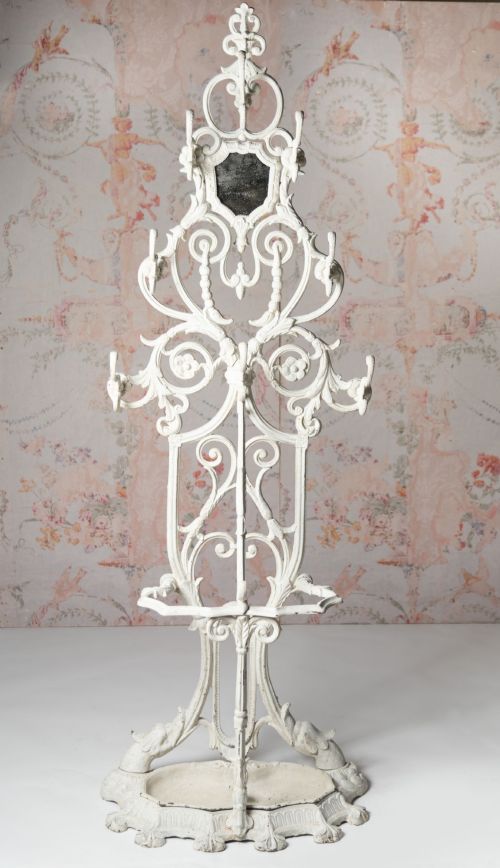
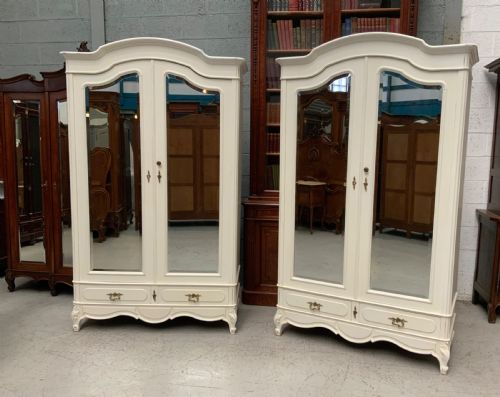
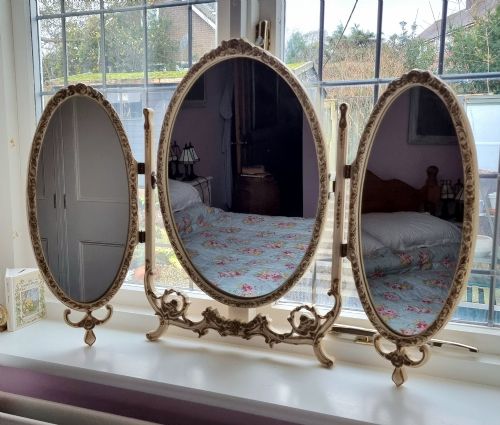
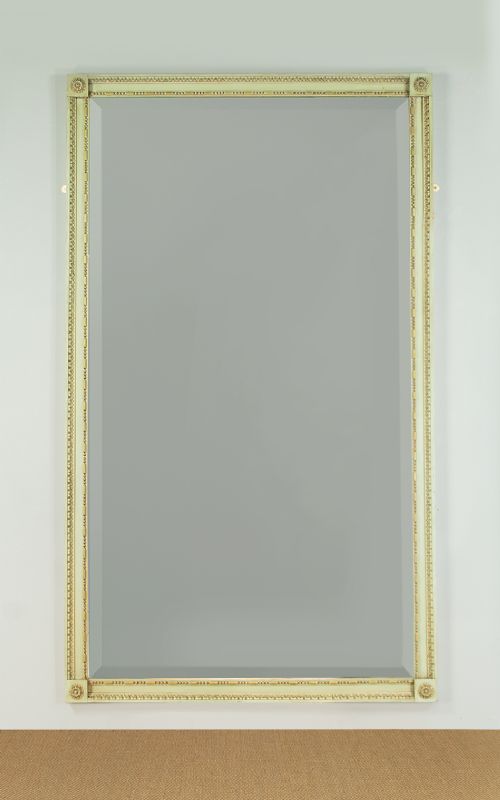
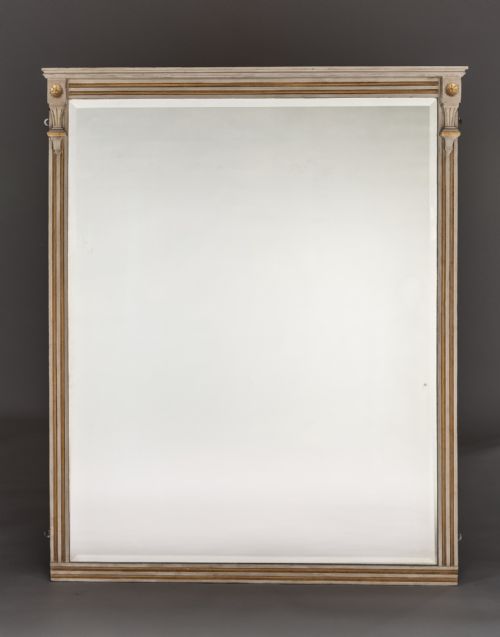
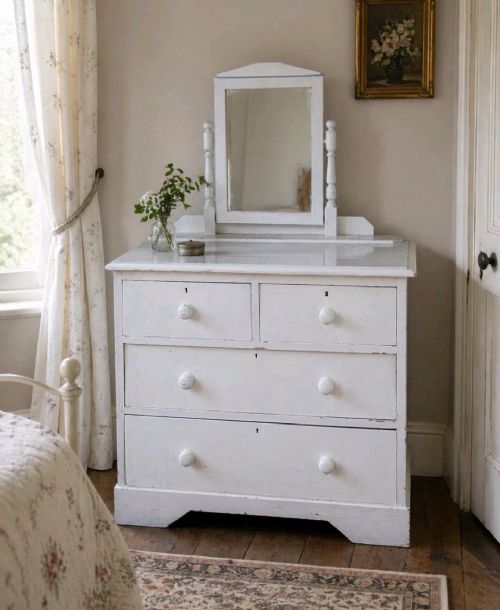
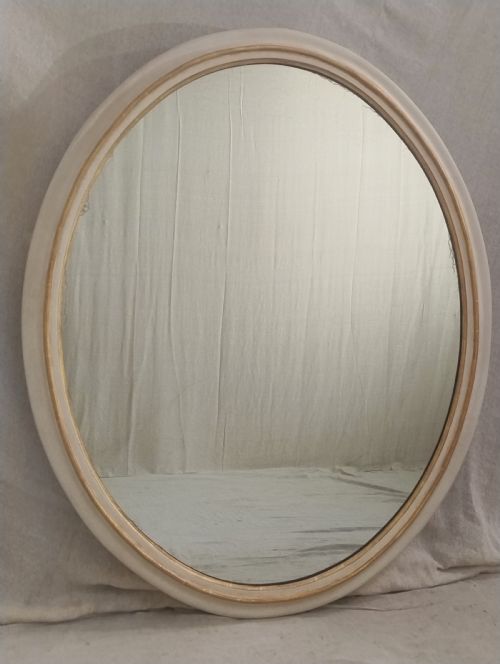
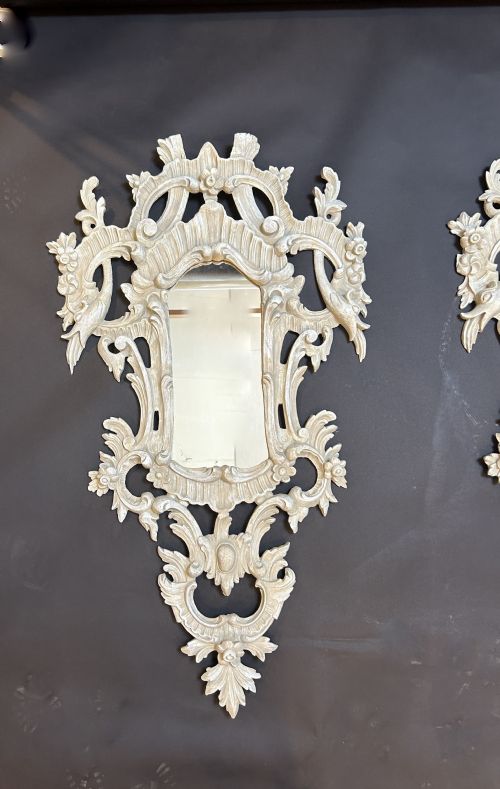
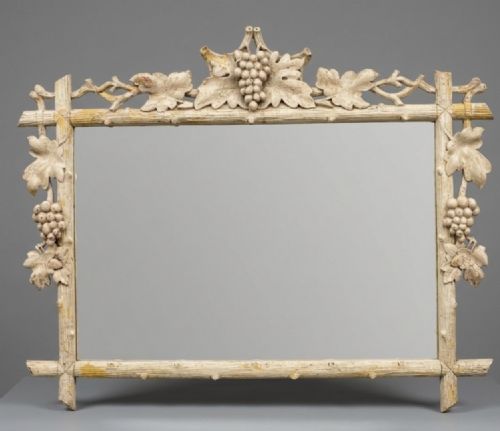
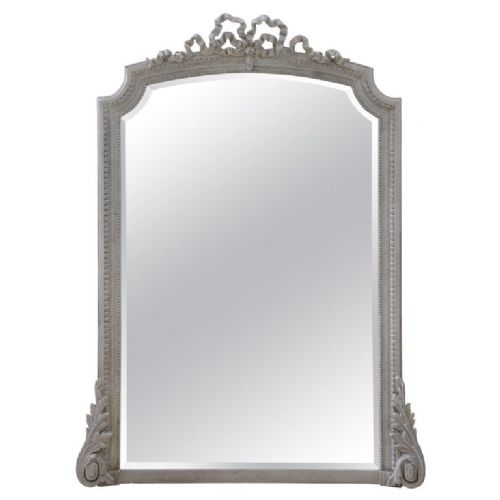
When you search for a white painted mirror, you encounter a distinct variety of wall-hanging, overmantel, and cheval forms originating from English and continental workshops. The selection centres heavily on large nineteenth-century overmantel pieces, alongside French chateau designs, Regency triptychs, and Edwardian ovals.
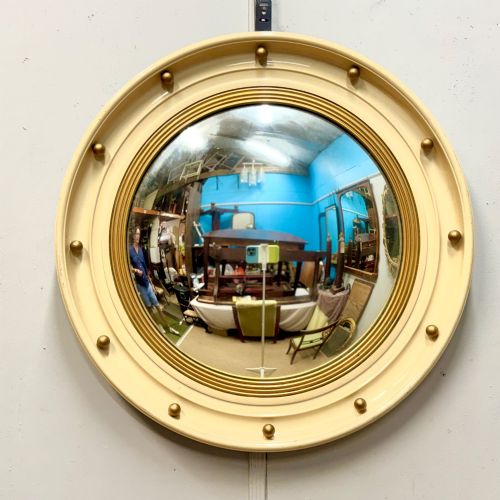
Makers shaped these frames from carved wood and gesso, often applying white paint over earlier gilding or combining the paint with parcel-gilt highlights. Architectural formats dominate the available objects, ranging from arched tops and rectangular proportions to convex round butler's mirrors and marginal glass panels.
Materials and technique
The construction relies fundamentally on carved wood frameworks built from pine or hardwood, coated in layers of gesso to provide a smooth ground for decorative detailing. Artisans then applied paint finishes, frequently incorporating gold leaf accents on carved motifs such as acorn and oak leaf details or classical moulding.
Mirror glass is set within these frames, utilising silvered plates that sometimes show age through foxing or crackle finishes. Structural integrity depended on sturdy timber backs and jointed framing designed to support heavy glass panels in domestic interiors.
White Painted Mirror Retail Price Guide 2026
Typical asking prices for white painted mirror among the pieces listed under this phrase on Sellingantiques today, from the lower quarter to the upper quarter. They describe what is for sale here now, not the wider market.
Listings feature 19th-century periods, Edwardian ovals, and French chateau styles framed in painted wood, gesso, and glass.
Quality variations
Quality reveals itself in the depth of the wood carving and the crispness of the gesso mouldings beneath the paint layers. Superior examples display harmonious proportions and original surface treatments where subsequent overpainting is minimal or absent.
The integrity of the glass plate and the weight of the timber frame distinguish higher grade output. Finer pieces maintain balanced parcel-gilt detailing that complements the white painted ground without obscuring the underlying craftsmanship.
The White Painted Mirror Glossary
- Overmantel mirror
- A large mirror designed specifically to hang above a fireplace mantelpiece. These pieces often feature architectural framing to anchor them within the room.
- Gesso
- A plaster-like mixture applied to wood frames to create a smooth surface for carving and gilding. It allows artisans to shape intricate relief ornamentation.
- Parcel-gilt
- A decoration method where parts of an object are gilded with gold leaf while other areas are painted. This technique highlights specific carved details on the frame.
- Trumeau
- A decorative wall mirror paired with a panel, often positioned above a fireplace or between windows. French examples frequently incorporate painted wooden panels.
- Convex glass
- Curved mirror glass that provides a wide-angle reflection of the interior space. These plates are typically found in round butler's mirrors.
White Painted Mirror: Frequently Asked Questions
Where should I hang an overmantel mirror?
These large mirrors sit naturally on the chimney breast above a fireplace to reflect light and anchor the room's proportions. They also function effectively along principal walls in hallways or reception rooms.
Ensure the wall structure supports the substantial weight of timber and glass before installation. Positioning them opposite a window maximises the natural light they bring into the space.
How do I care for a painted antique frame?
Dust the carved wood and gesso surfaces gently with a dry, soft cloth to prevent buildup. Avoid chemical cleaners or moisture, which can damage aged paint layers and exposed gesso.
Preserve the original finish by keeping the piece away from direct heat sources and strong sunlight. Gentle handling ensures the fragile gesso mouldings remain intact over time.
What is a cheval mirror?
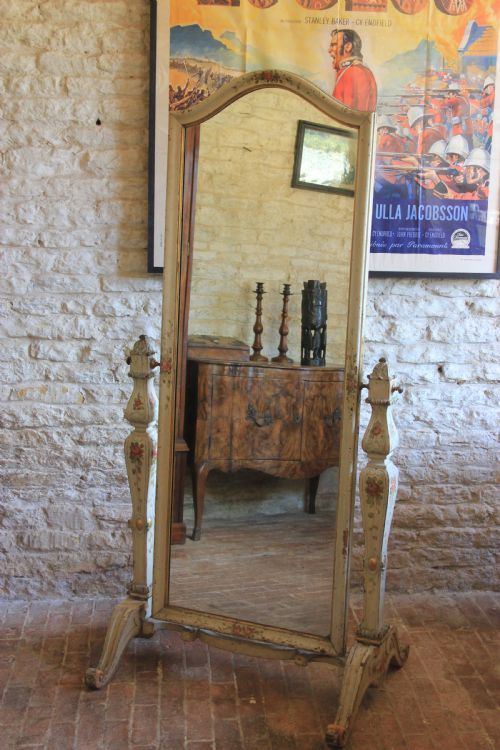
A cheval mirror is a freestanding full-length glass set within a movable wooden frame supported by legs. These pieces allowed individuals to view their entire outfit in dressing rooms and bedrooms.
Nineteenth-century versions often feature pivoting mechanisms mounted on sturdy vertical uprights. Their design combines practical utility with decorative presence.
How can I tell a French style from an English one?
French mirrors often exhibit flowing Rococo curves, Neoclassical revival motifs, and distressed white painted surfaces associated with chateau interiors. English examples tend to favour structured architectural lines, parcel-gilt highlights, and traditional overmantel proportions.
Examining the underlying timber construction and decorative carving style helps clarify the piece's geographic origin. Both traditions utilise carved wood and gesso foundations.