

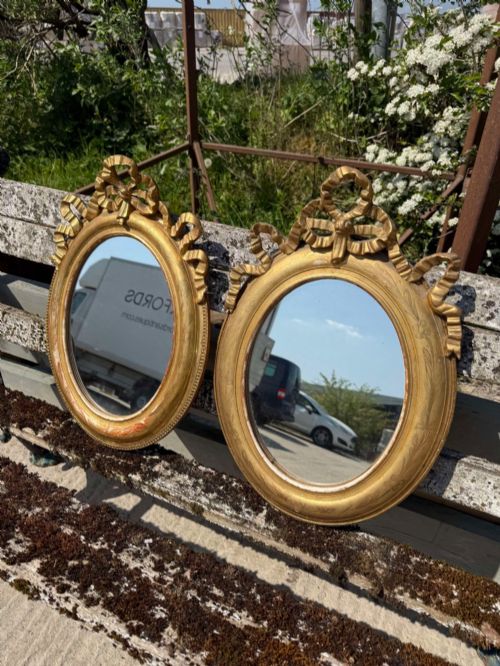
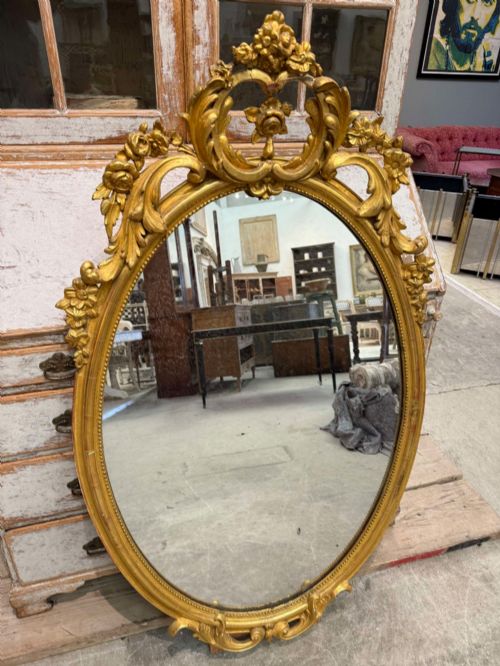
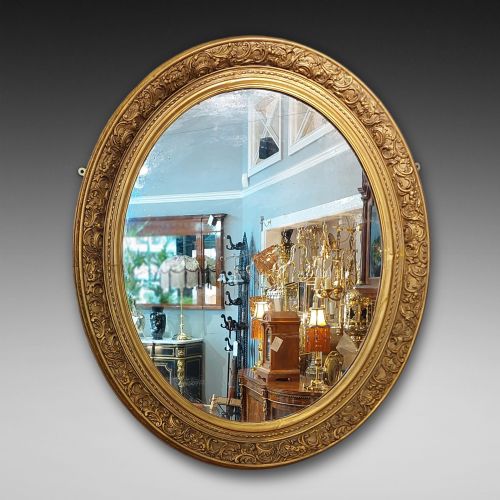
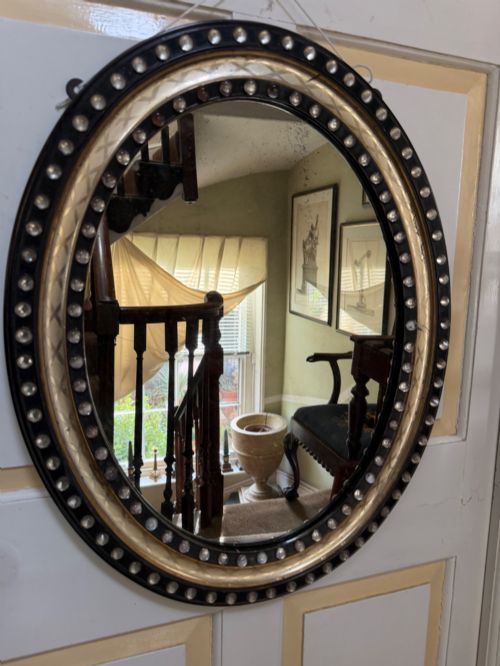


Vintage Oval Mirror
A vintage oval mirror brings immediate curve and reflection to a room, drawing the eye away from straight walls and sharp corners.
Vintage Oval Mirror
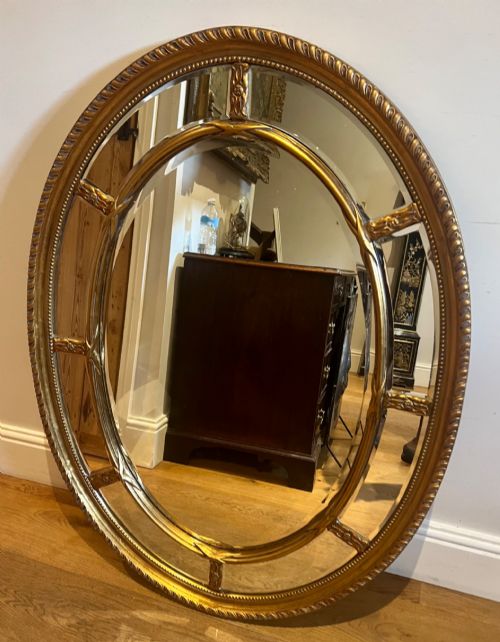
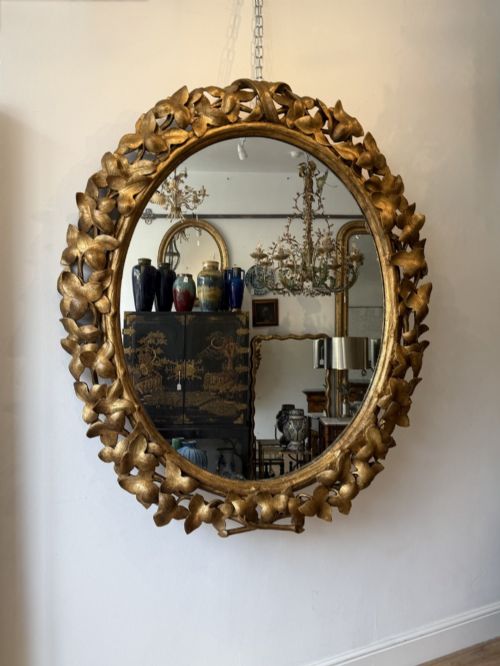
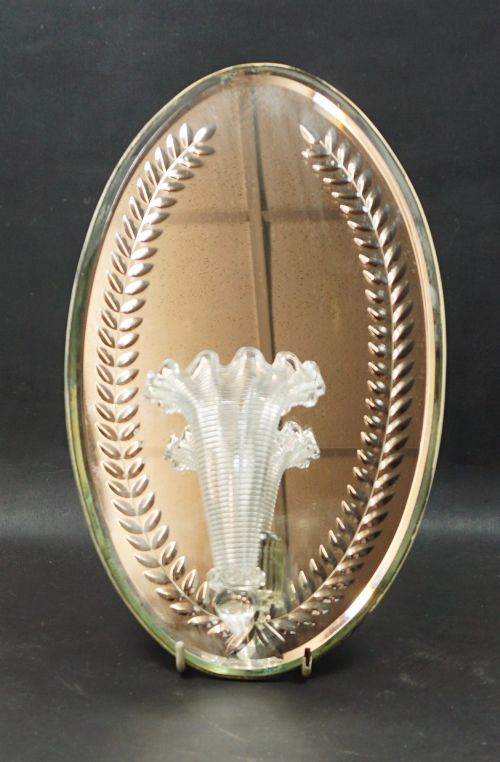
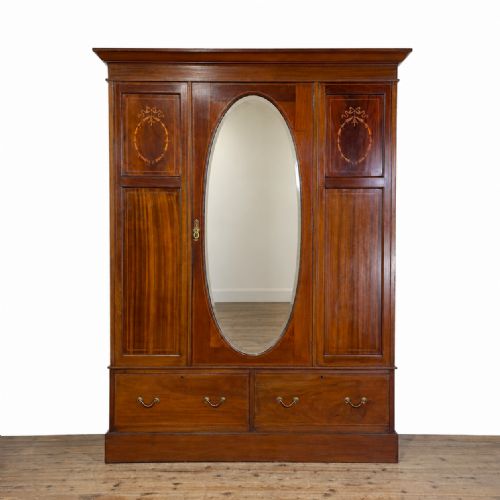
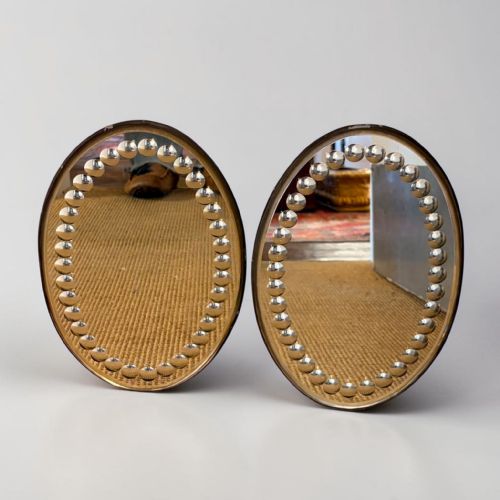
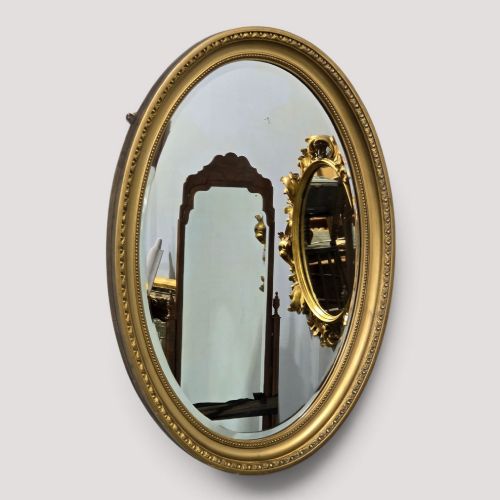
When you search for a vintage oval mirror, you encounter wall-hanging glasses and tabletop dressing pieces spanning the Victorian, Edwardian and early twentieth-century periods. These objects served functional daily uses in bedrooms, hallways and formal reception rooms across domestic interiors.
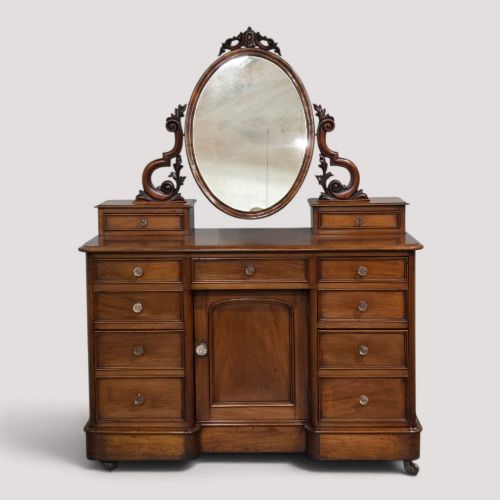
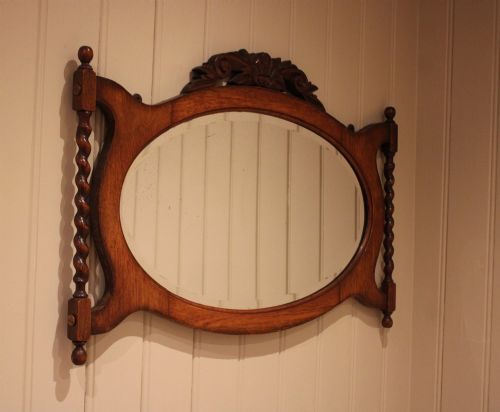
The most common examples on this page date from the late nineteenth century through to the nineteen-twenties, showing the enduring appeal of curved frames in domestic design. Wall mirrors dominate the selection, alongside smaller dressing table glasses intended to sit atop matching mahogany or oak furniture suites.
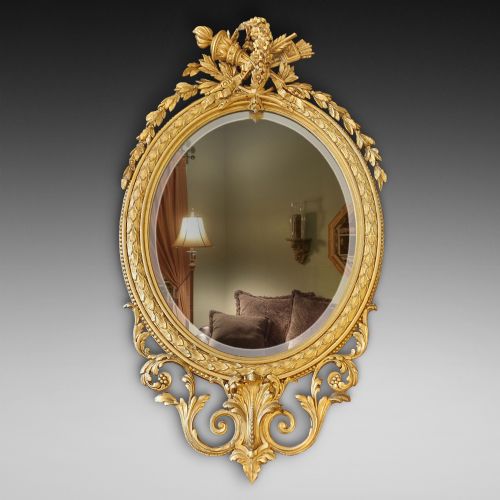
Origins stretch from English workshops to French ateliers, incorporating regional timber choices and distinct decorative traditions. Pieces range from simple brass frames to ornate gilt wall hangings influenced by Rococo revival and Arts and Crafts ideals.
How they were made
Frames rely upon traditional timber construction, utilising solid mahogany, oak, walnut and carved softwoods shaped by hand. Many of these wooden structures receive layers of gesso before taking gold leaf or parcel gilt finishes.
Surfaces often feature intricate carved details, floral motifs, or applied brass, copper and gilt metal elements. Glass plates are secured within the rebates, sometimes retaining early mercury silvering or featuring bevelled edges produced by skilled hand-polishing techniques.
Vintage Oval Mirror Retail Price Guide 2026
Typical asking prices for vintage oval mirror among the pieces listed under this phrase on Sellingantiques today, from the lower quarter to the upper quarter. They describe what is for sale here now, not the wider market.
The listings span the Victorian, Edwardian and Georgian eras, incorporating materials such as giltwood, gesso, brass, mahogany and copper.
What varies in quality
The depth and crispness of the carving distinguish finer frames from simpler production pieces, particularly where hand-chased gesso or deep-relief timber work is concerned. Superior examples maintain the integrity of their original gilding and structural joinery without heavy modern intervention.
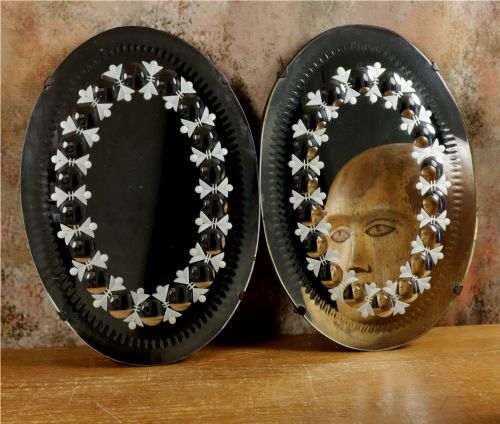
Glass quality also marks a clear distinction, with thicker plates, original bevels and authentic mercury backing offering greater depth of reflection than later replacement mirror glass.
The Vintage Oval Mirror Glossary
- Gesso
- A plaster-based material applied to wood frames to provide a smooth surface for gilding. It allows craftsmen to model sharp, intricate decorative details before applying gold leaf.
- Giltwood
- Timber that has been coated with gold leaf or gold paint. This technique adds warmth and reflectivity to the frame.
- Mercury Plate
- An older type of mirror glass produced using a tin and mercury amalgam. It creates a characteristically mottled, deep reflective surface.
- Crossbanded
- A method of veneer application where narrow strips of wood are laid across the grain of the primary surface. It creates a decorative border on mahogany dressing table pieces.
- Bevelled glass
- A mirror plate with angled, polished edges that catch the light. This treatment adds a refined finish to the outer perimeter of the glass.
Vintage Oval Mirror: Frequently Asked Questions
Can I clean original mercury mirror glass?
Original mercury glass requires gentle care because the backing and silvering are delicate and prone to moisture damage. Use a soft, dry microfibre cloth to remove dust without applying pressure to the surface.
Avoid standard chemical glass cleaners, as liquid can seep behind the plate and accelerate the degradation of the historic backing material.
How do I date an oval mirror?
Dating relies on examining the construction methods of the timber frame, the fixing screws, and the characteristics of the glass plate. Victorian and Edwardian pieces often show hand-planed backs, cut nails, and specific gesso layering techniques.
Style indicators such as Rococo revival motifs or Arts and Crafts copper work also help narrow the period of manufacture alongside any maker labels.
Are dressing table mirrors removable?
Many tabletop mirrors detach from their supporting upright arms to allow for easier transport and placement. The side thumbscrews or pivot pins can be loosened to separate the glass frame from the base.
Check the stability of these pivot points before adjusting the angle of the glass to ensure the frame remains secure during daily use.