


Oval Hanging Mirror
An oval hanging mirror brings a softer geometric rhythm to a room, trading rigid corners for a curved silhouette.
What oval hanging mirrors are
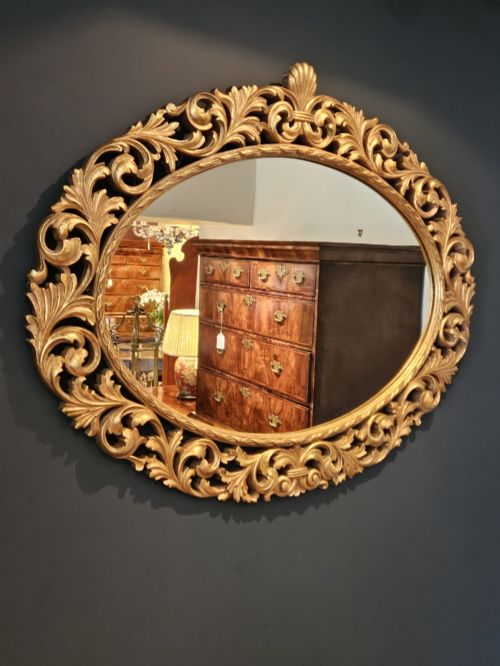
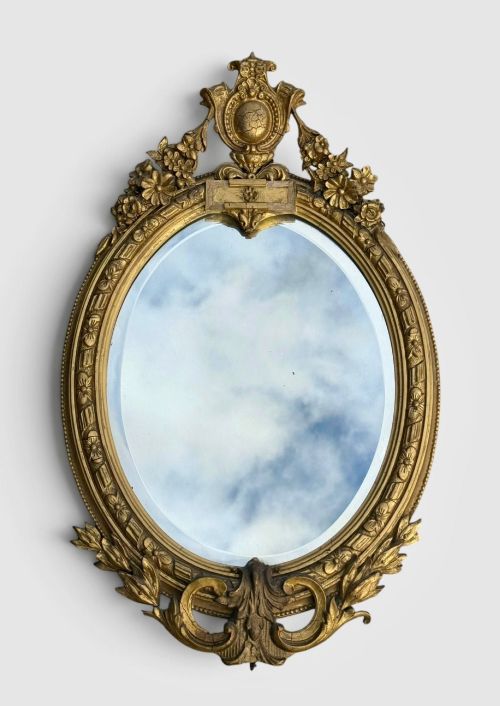
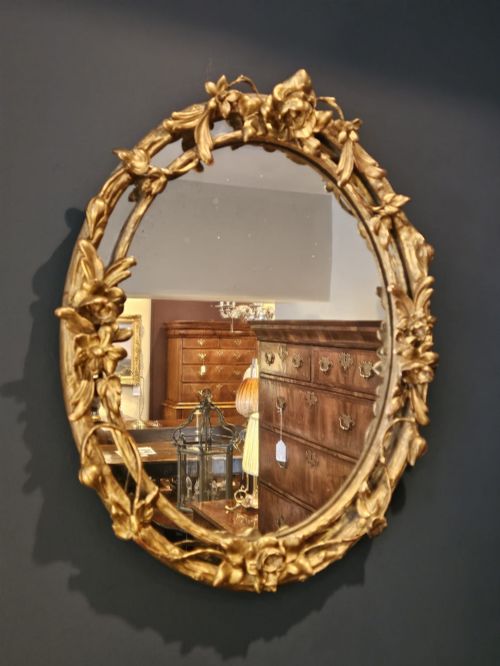
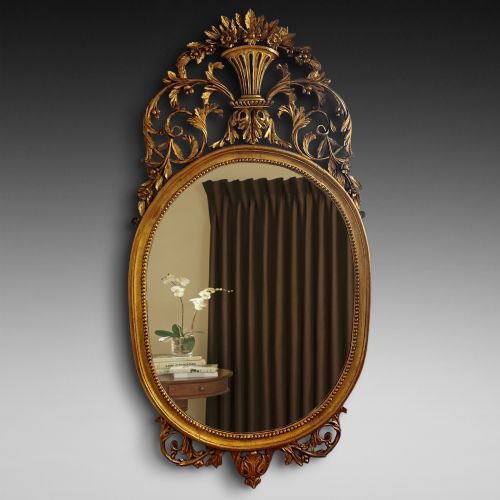
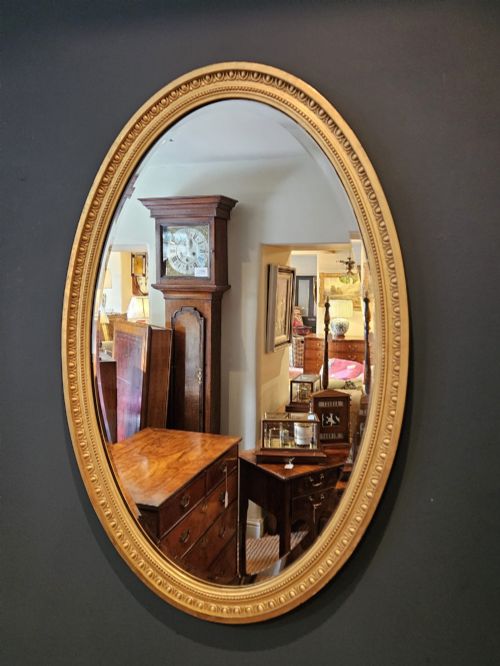
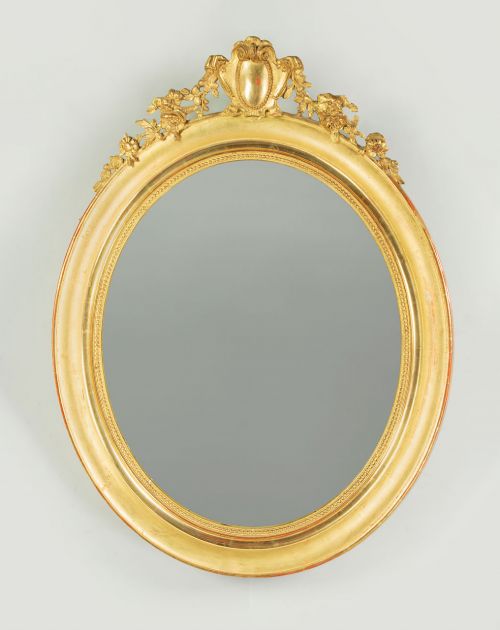
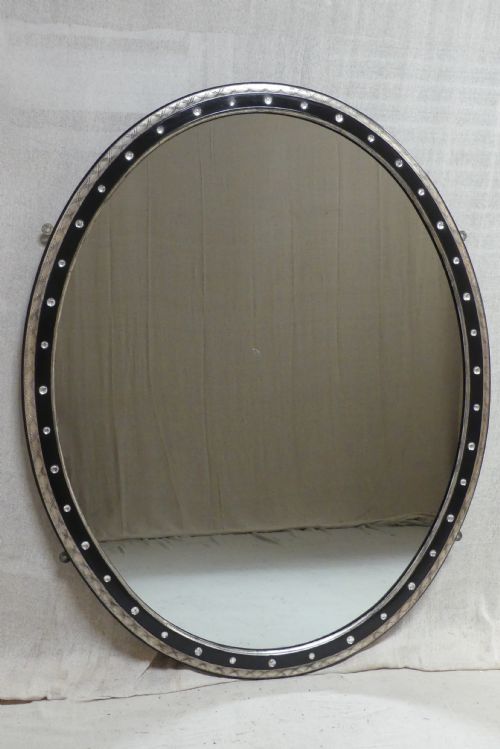
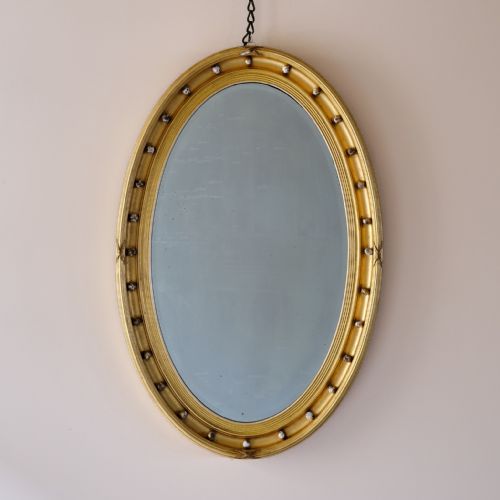
When you search for an oval hanging mirror, you encounter pieces spanning from the eighteenth century through the Edwardian period and the Art Deco era. The selection draws heavily on Victorian, Edwardian and Georgian style pieces designed to hang upon a wall.
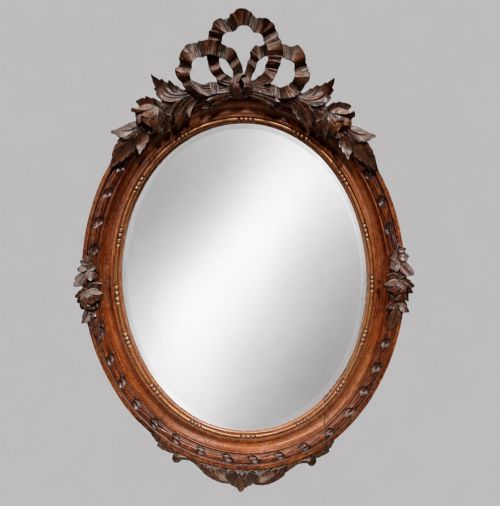
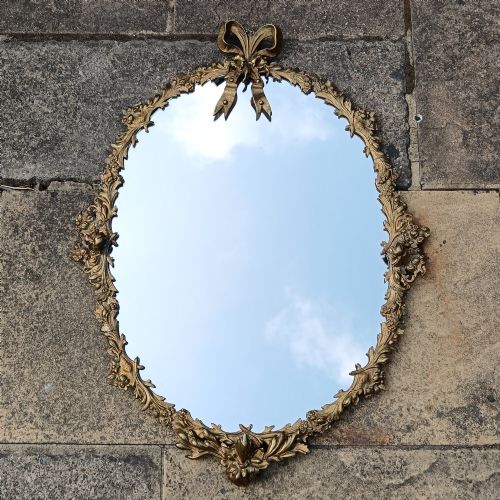
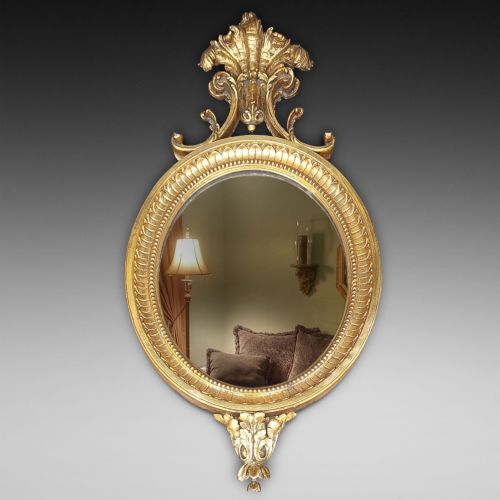
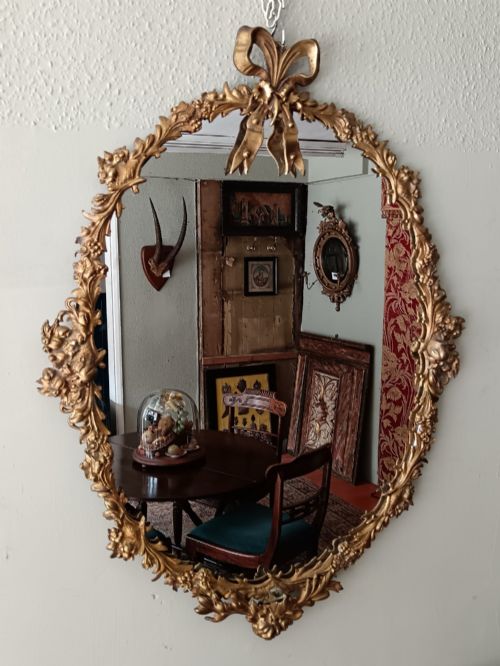
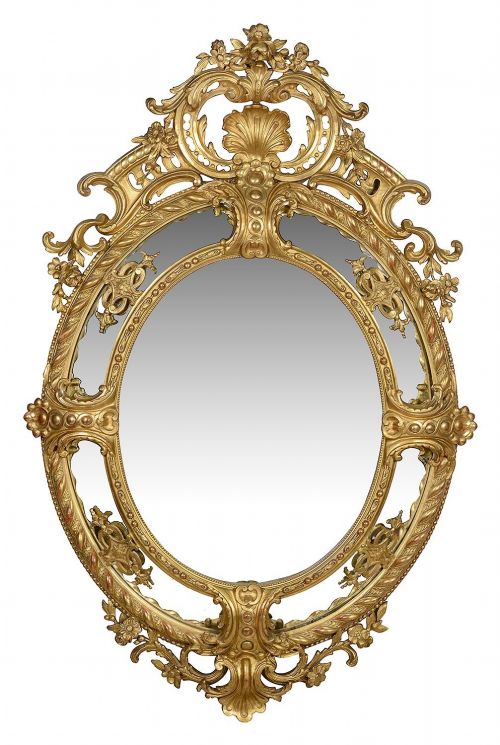
Most examples appear in rich timbers such as mahogany and oak, alongside gilded frames rendered in gesso or giltwood. Certain pieces lean towards neoclassical vocabularies like the Adam style, featuring delicate ribbon decorations or reeded mouldings.
These looking glasses function equally well above a mantlepiece or as a solitary focal point in a hallway. The assortment ranges from understated wooden frames with bevelled edges to ornate gilt creations ornamented with classical motifs.
How they were made
Makers constructed the timber frames using solid mahogany and oak, frequently incorporating decorative wood inlay to enhance the grain. Gilded surfaces relied on gesso applied over a wooden base, which was then leafed and polished to a bright finish.
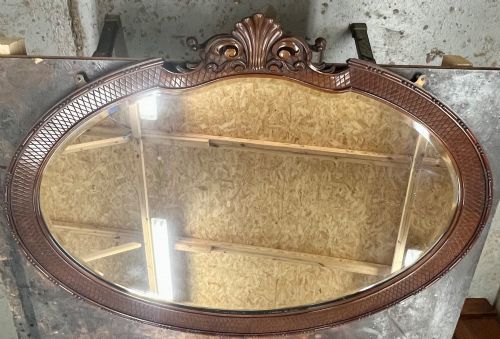
Glass plates were often bevelled at the edges to catch the light, a technique requiring considerable skill from the glazier. Frames frequently integrated carved elements, ranging from classical swags to simple moulded profiles.
Retail Price Guide 2026
Typical UK retail prices for oval hanging mirror, calculated from the Sellingantiques database of over a million retail prices indexed since 2003. This retail price guide relies exclusively on Sellingantiques data; no external sources or auction records are used, so the figures do not describe the wider market.
The listings show materials spanning giltwood, gesso, mahogany, oak, copper and glass across Victorian, Edwardian and Georgian styles.
What varies in quality
Quality reveals itself in the crispness of the carving and the depth of the gilding on gesso surfaces. Finer timber frames show careful selection of mahogany or oak veneers and precise inlay work that remains intact across the centuries.
The clarity and weight of the glass plate also set superior examples apart from standard production. Original silvering and bevelling demonstrate the standard of craftsmanship invested in the piece during its initial creation.
The Oval Hanging Mirror Glossary
- Gesso
- A plaster-like mixture applied to wood frames as a base for gilding. It allows for intricate moulded details and ornaments.
- Bevel edge
- A sloping border ground along the perimeter of the glass plate. This edge refraction catches the light distinctively.
- Inlay
- Contrasting pieces of wood fitted into the primary timber frame to form decorative patterns. Edwardian makers utilised this extensively on mahogany.
- Overmantle
- A large mirror specifically proportioned to hang directly above a fireplace. These pieces often feature horizontal or grand vertical oval formats.
Frequently Asked Questions
Where should I hang an oval mirror?
These pieces suit positions above mantelpieces, dressing tables, or narrow hallway walls where their curved lines soften rectilinear spaces.
Ensure the wall fixings match the weight of the frame, particularly for substantial giltwood or oak examples.
How do I date an antique mirror?
Examine the timber species, framing technique, and the backboards for clues about the period of manufacture. Edwardian pieces often display mahogany with fine string inlay, while earlier Victorian examples favour heavy gilt gesso.
Glass characteristics and silvering oxidation also help confirm the age of the looking glass.
Are these mirrors heavy?
Weight varies considerably depending on the materials used in the construction of the frame. Large oak and gilt gesso pieces require secure wall anchors to support their substantial mass safely.
Mahogany frames and smaller Edwardian variants generally prove lighter and simpler to hang.
What is the Adam style?
The Adam style draws inspiration from classical antiquity, featuring symmetrical neoclassical motifs and delicate ornamentation. Mirrors in this aesthetic often incorporate ribbons, swags, and urns within the frame design.
Victorian interpretations frequently revived these eighteenth-century neoclassical elements.