

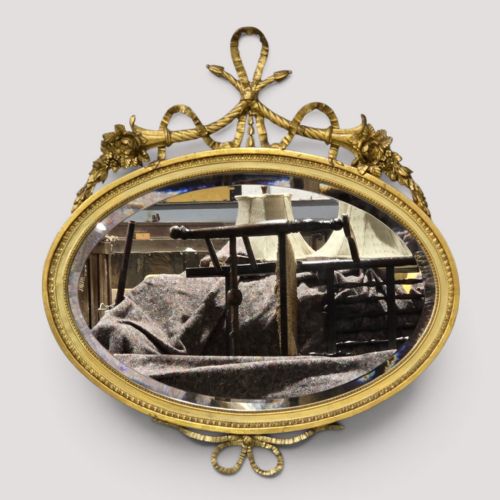
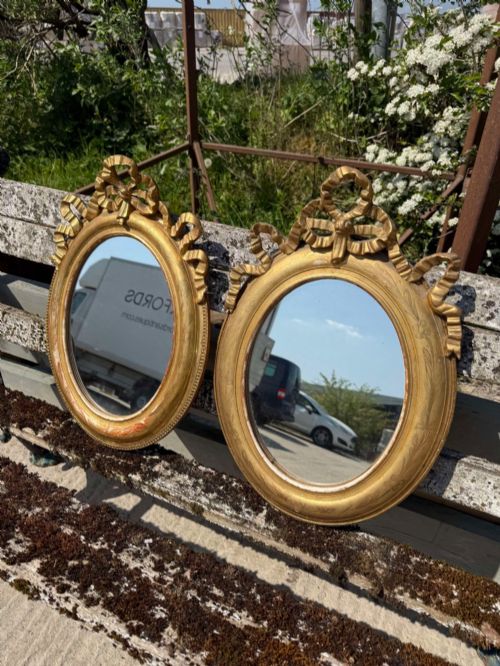
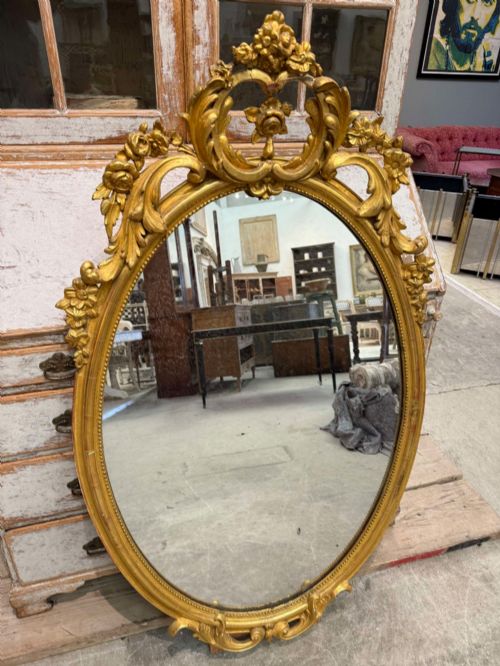
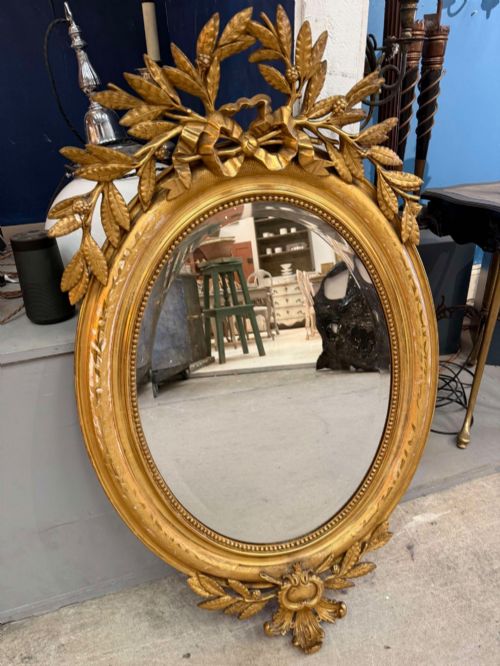
Giltwood Oval Mirror
A giltwood oval mirror brings warmth and reflective depth to a room, uniting classical proportion with the rich luminosity of gold leaf.
Giltwood Oval Mirror
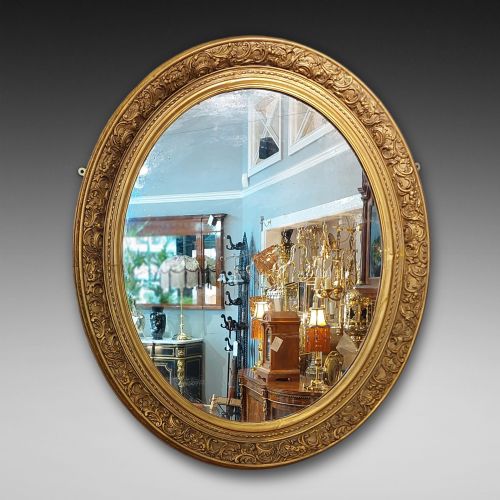
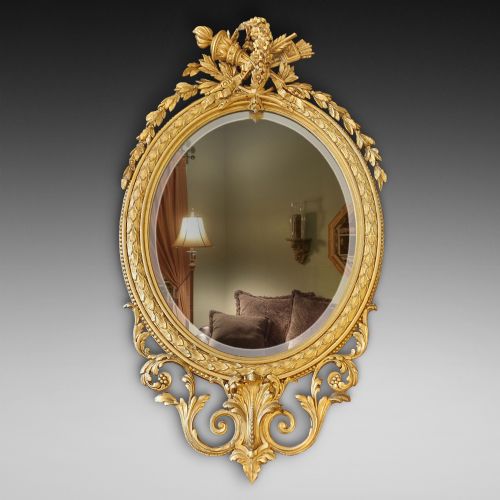
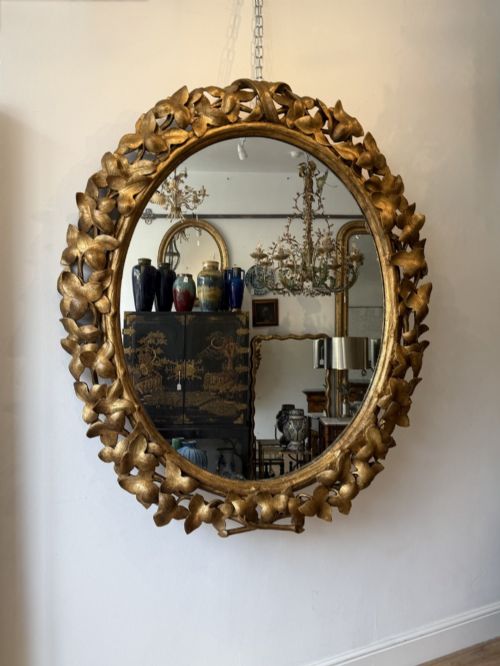
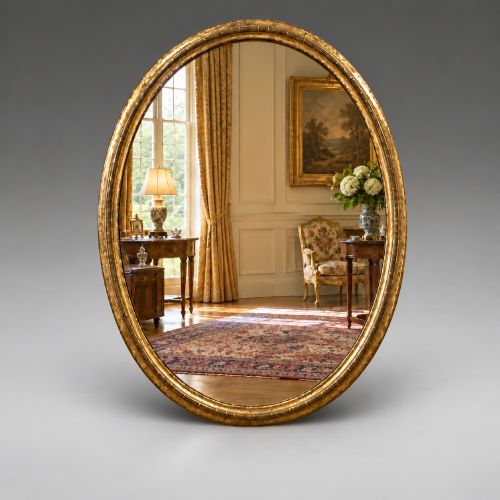
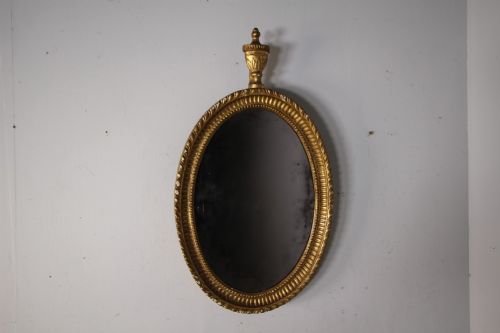
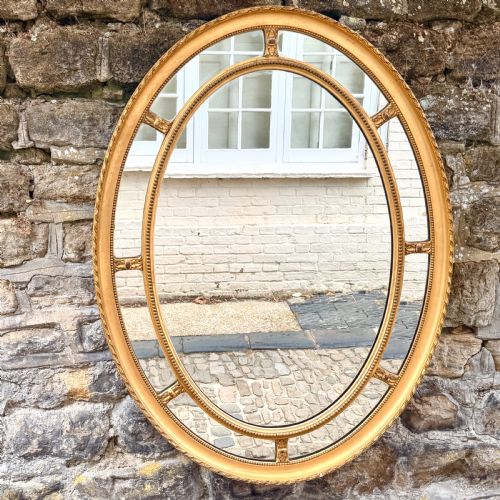
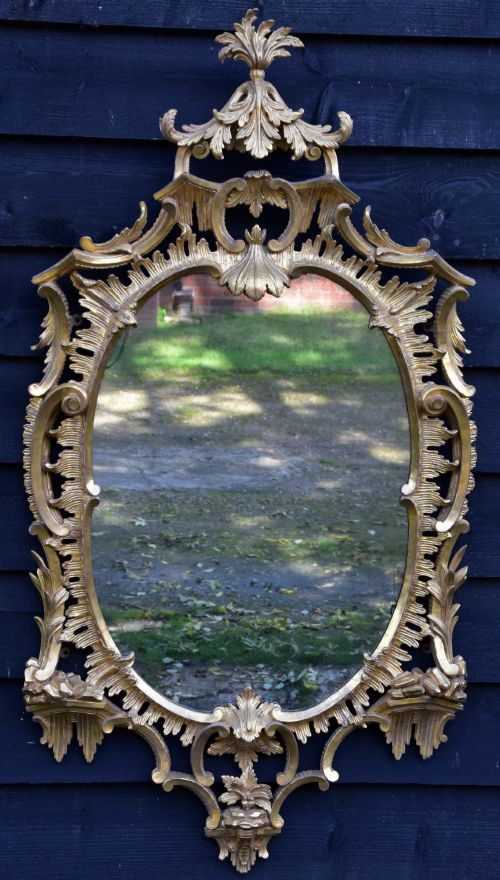
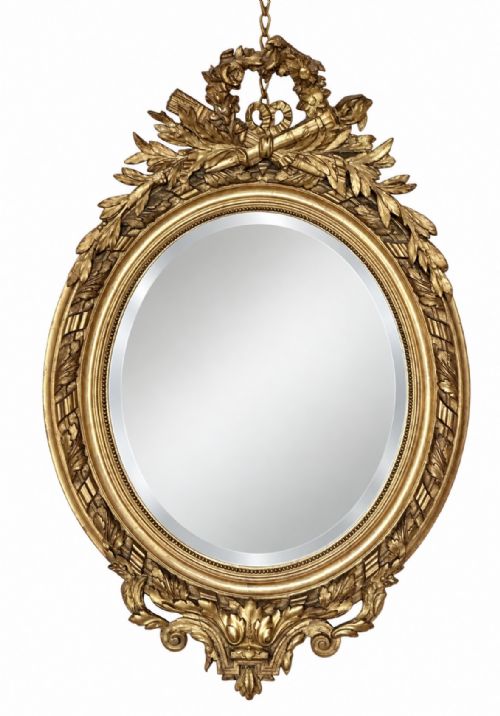
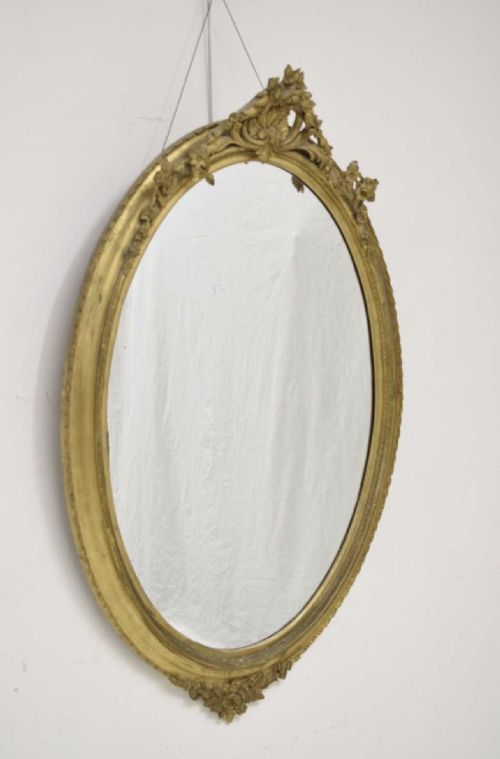
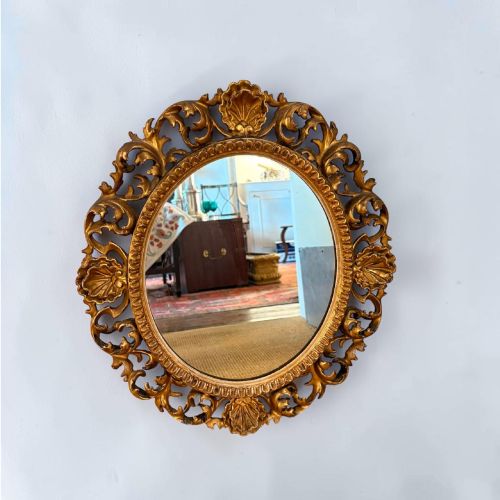
A giltwood oval mirror is a decorative wall hanging or tabletop glass plate framed in carved timber, gesso, and gold leaf. The oval format softens interior angles, drawing the eye along curved lines that define periods from the Georgian era through the Victorian epoch.
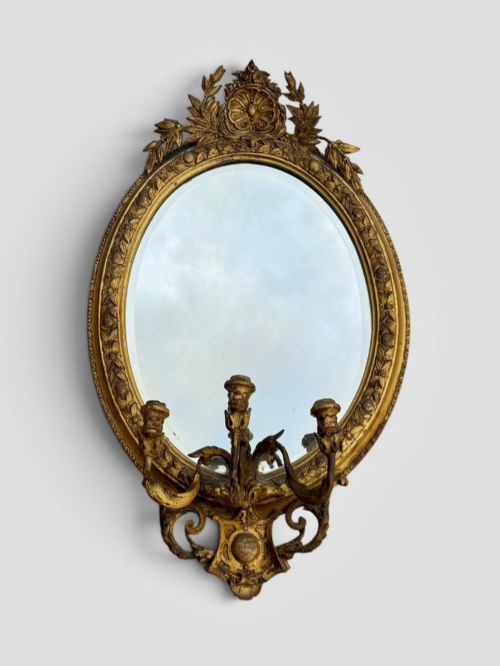
The selections available here span large pier mirrors intended for halls, smaller toilet mirrors for dressing tables, and pairs of girandoles equipped with candle sconces. Examples stretch from the restrained symmetry of the eighteenth century to the exuberant asymmetry of Rococo revival pieces.
Originating in English, French, and Italian workshops, these objects serve both functional and ornamental roles. They reflect light into dim corners while acting as focal points within formal reception rooms and domestic chambers alike.
How They Were Made
Makers fashioned the core structure from seasoned timber such as pine or hardwood, building up decorative relief using gesso or composition moulded over the wood. Artisans then applied thin sheets of gold leaf or metal leaf over a coloured bole, burnishing the surface to achieve a deep lustre.
Early pieces relied on hand-carved wooden details, whilst later nineteenth-century examples often utilised moulded composition for intricate floral vines, rope twists, and urn crests. Mirror glass plates from the eighteenth and early nineteenth centuries frequently exhibit original mercury silvering, which produces a softer, mottled reflection.
Giltwood Oval Mirror Retail Price Guide 2026
Typical asking prices for giltwood oval mirror among the pieces listed under this phrase on Sellingantiques today, from the lower quarter to the upper quarter. They describe what is for sale here now, not the wider market.
Listings feature periods spanning the early eighteenth century through the Edwardian era, encompassing Georgian, Regency, and Victorian aesthetics.
What Varies In Quality
The depth and crispness of the carving separate superior examples from standard production, as hand-carved wooden relief displays sharper undercut details than moulded composition. Artisans who invested time in meticulous gesso preparation created surfaces that aged gracefully.
The preservation of the original gold leaf and the authenticity of the mirror plate dictate desirability. Original mercury glass plates with minimal foxing hold greater historical value than modern replacement glass.
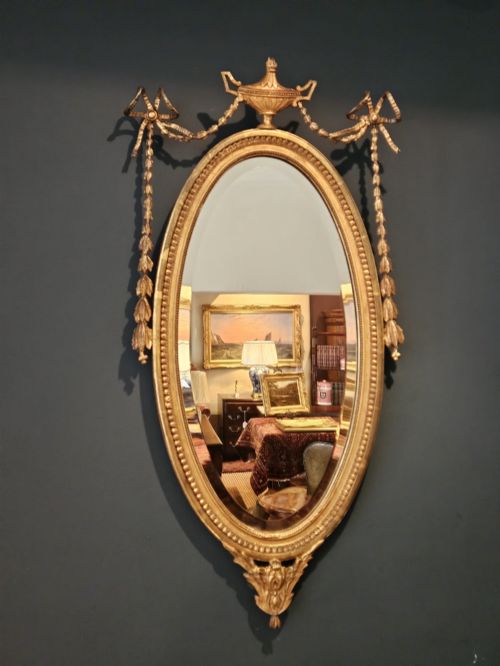
Proportion and balance in the frame design, particularly in complex Rococo or Adam style crests, determine aesthetic success. Pieces retaining their original backing boards and structural joints demonstrate higher integrity.
The Giltwood Oval Mirror Glossary
- Giltwood
- Timber that has been coated with gold leaf or metal leaf. This technique provides the signature metallic warmth seen on period frames.
- Gesso
- A plaster-like mixture applied to wood frames to create a smooth base for carving or moulding details. It allows for intricate relief work before gilding.
- Girandole
- A wall mirror featuring attached candle sconces or arms. The reflective glass multiplies the candlelight within the room.
- Mercury Plate
- An early type of mirror glass backed with a tin-mercury amalgam. It creates a distinctive, slightly uneven reflection with characteristic dark spots known as foxing.
- Composition
- A mouldable mixture of whiting, resin, oil, and glue pressed into decorative shapes. It speeded up production in nineteenth-century workshops.
Giltwood Oval Mirror: Frequently Asked Questions
How do I hang a heavy antique mirror?
Heavy antique mirrors require robust fixings secured directly into wall studs or masonry rather than relying on standard plasterboard plugs. Professional mirror hangers utilise multi-point hanging systems to distribute the substantial weight of timber and glass safely.
Ensure the hanging wire or integrated D-rings on the rear of the frame match the chosen wall brackets. Check that the original structural joints of the frame can support the vertical tension before installation.
What is the difference between Georgian and Victorian frames?
Georgian frames, particularly those from the mid to late eighteenth century, tend to feature hand-carved wooden enrichment with classical restraint, such as Adam style urns and beaded borders. The carving shows individual artisan touches and lighter, more balanced proportions.
Victorian frames often embrace revival styles like Rococo or Baroque with heavier ornamentation built using moulded composition over gesso. They appear more robust and frequently incorporate elaborate vine leaves, deep bevelling, and parcel-ebonised contrasts.
Can I clean original mercury mirror glass?
Original mercury glass requires gentle dusting with a dry, soft microfiber cloth rather than liquid glass cleaners. Moisture can seep behind degraded seals and damage the delicate historical backing.
Avoid commercial chemical sprays entirely, as they strip the remaining silvering. Preserving the hazy, mottled appearance safeguards the historical authenticity of the piece.
How do girandoles differ from standard wall mirrors?
Girandoles incorporate built-in candle holders projecting from the base or sides of the frame. These sconces were designed to amplify candlelight in dimly lit period rooms.
Standard wall mirrors serve solely for reflection and decoration without functional lighting attachments. Pairs of girandoles are frequently encountered flanking mantelpieces or doorways.