

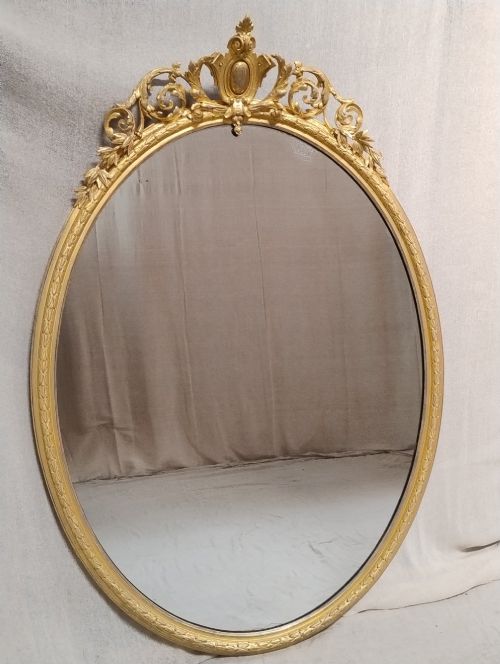
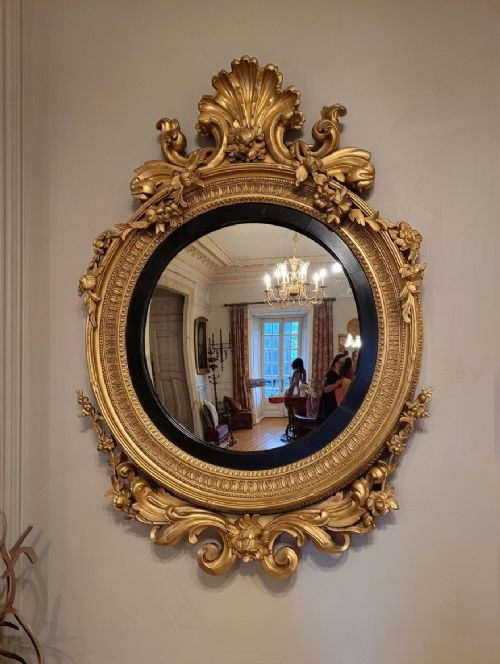
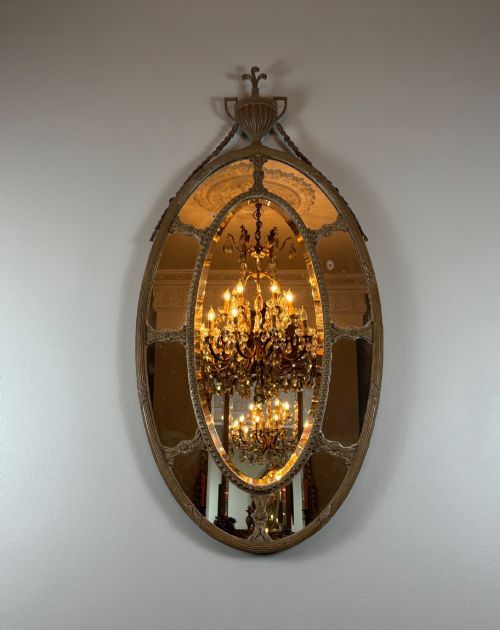


Neoclassical Oval Mirror
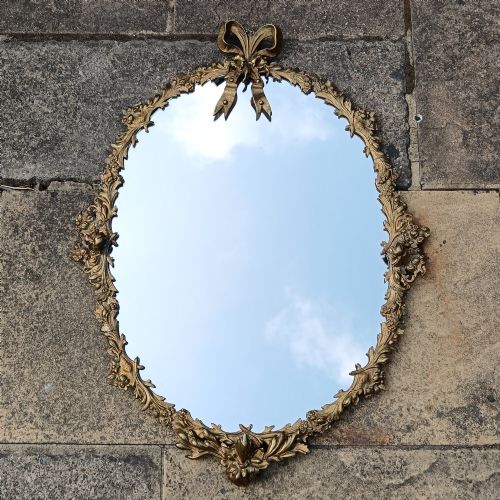
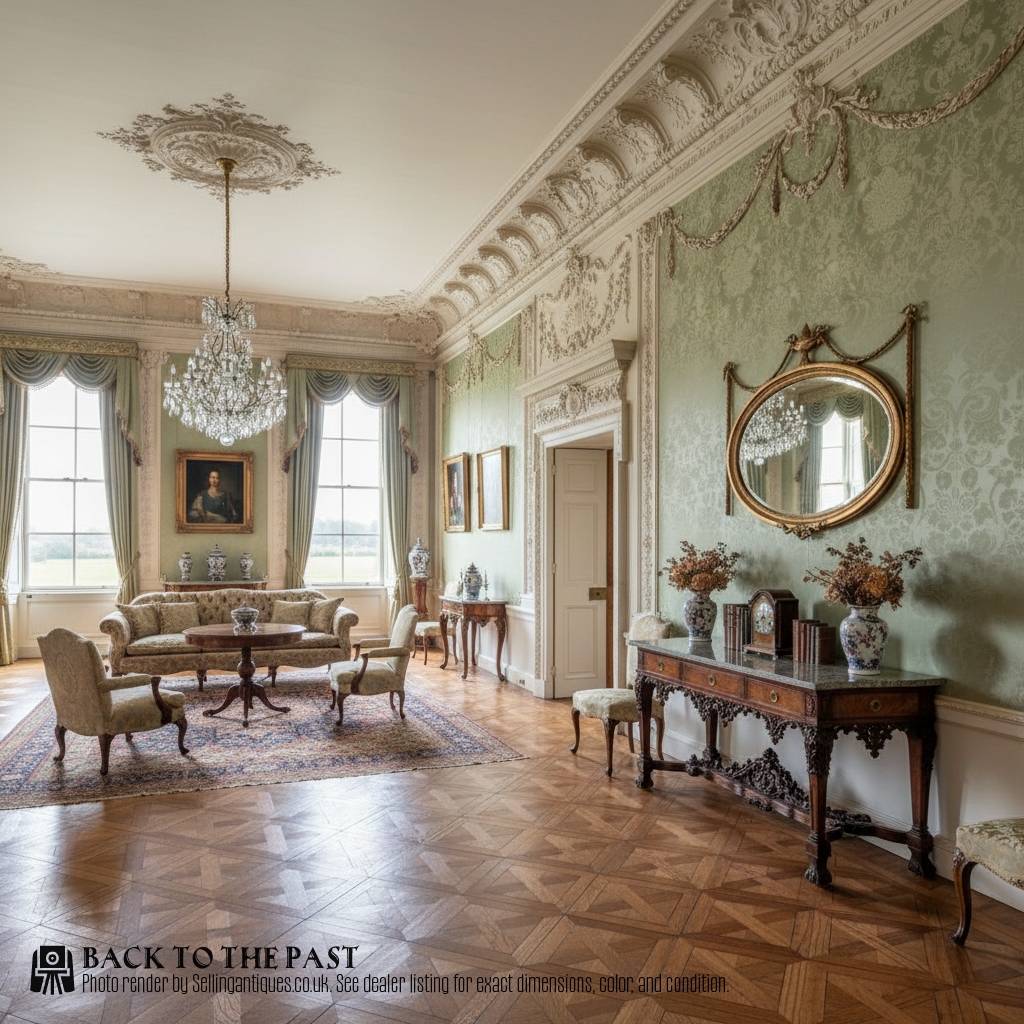
A neoclassical oval mirror brings symmetry, restraint and gilded light to a wall, drawing the eye with classical motifs like swags and ribbons.
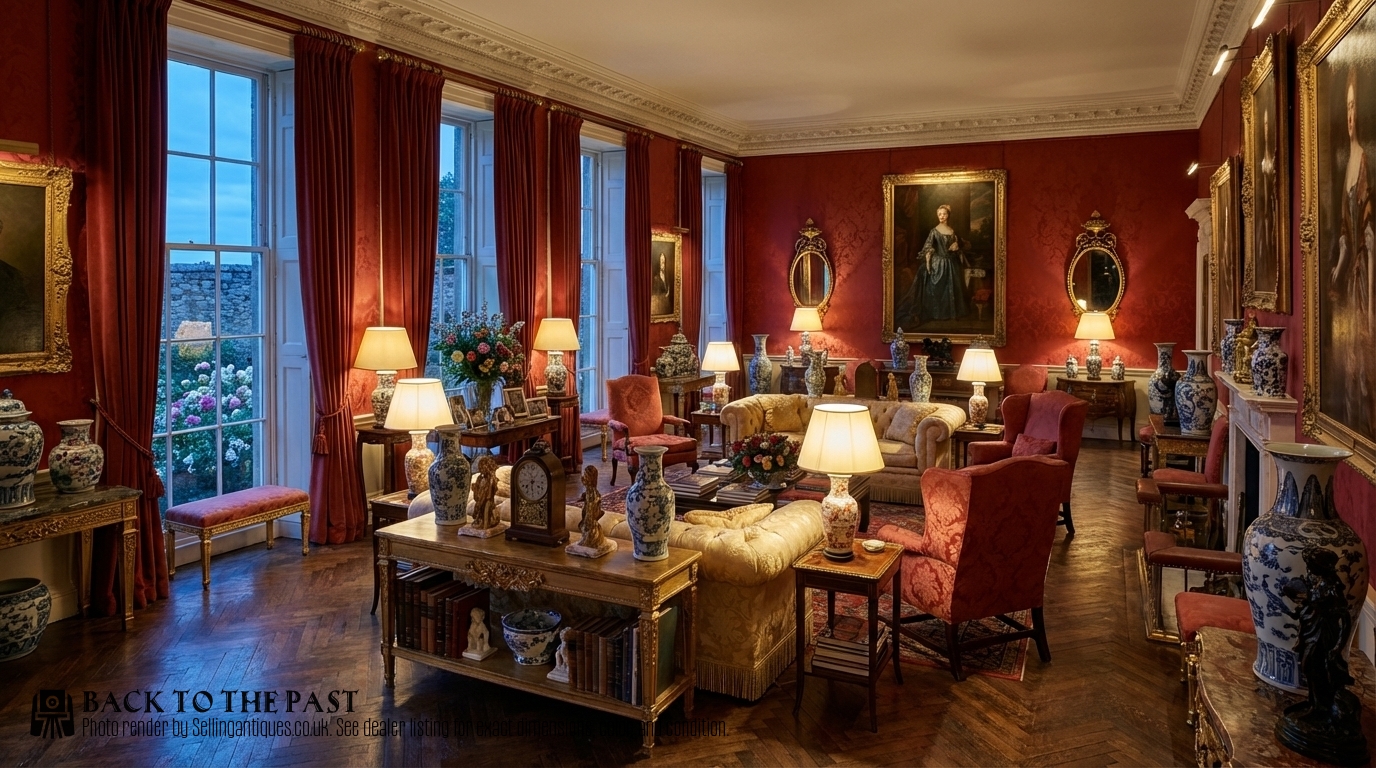
Neoclassical Oval Mirror
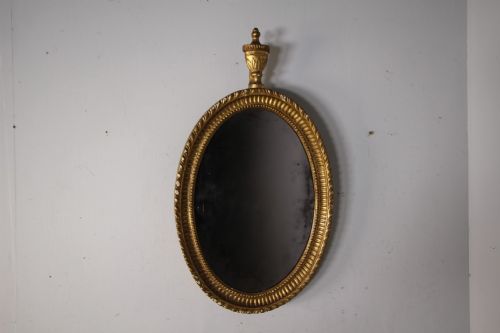
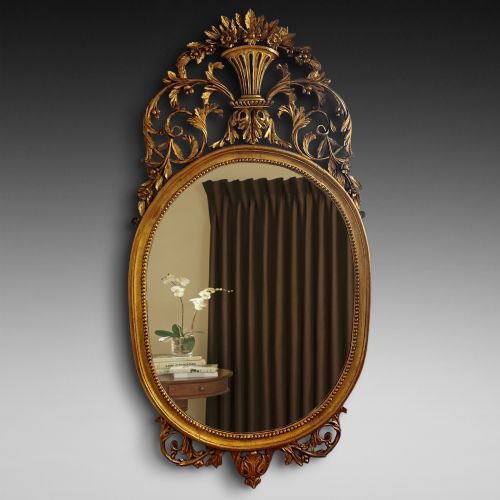
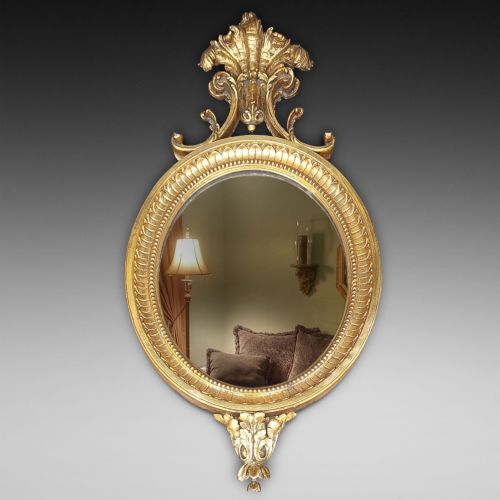
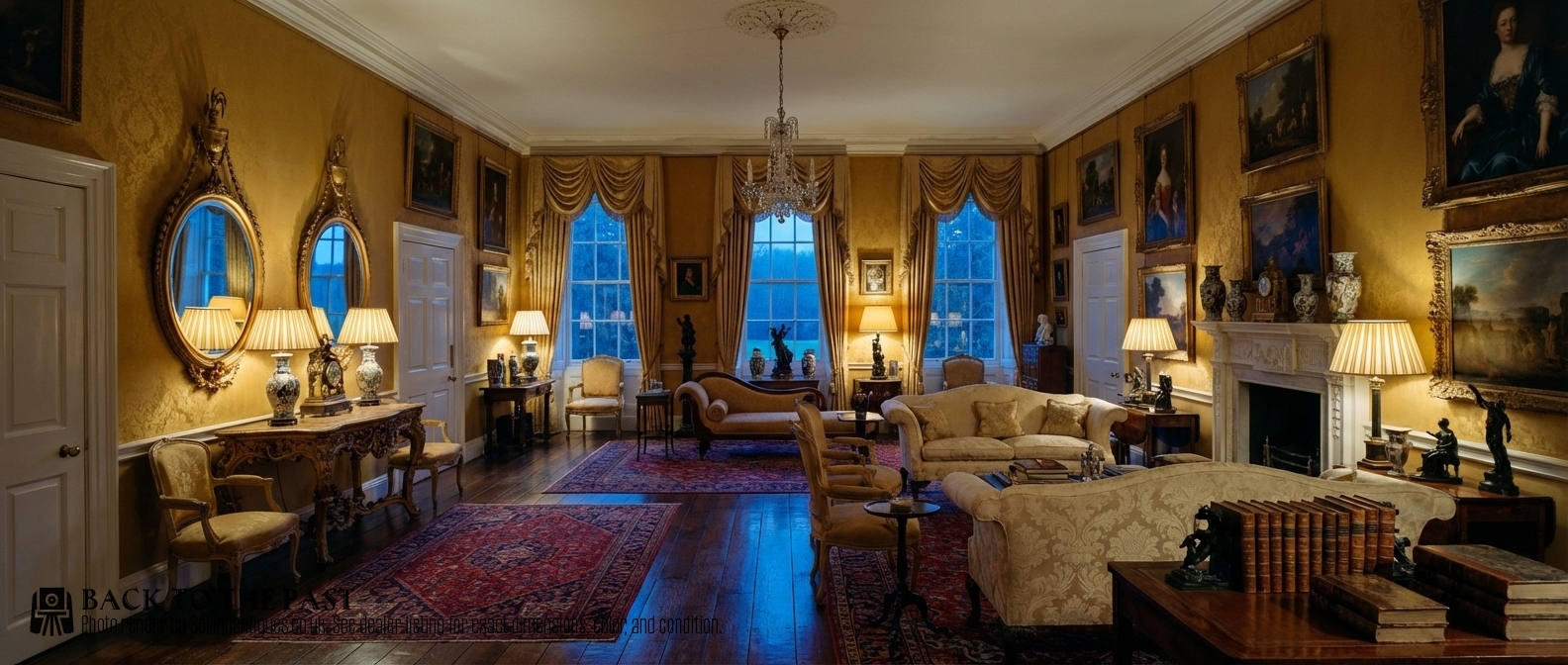
A neoclassical oval mirror is a wall-hanging glass plate enclosed in a frame shaped by the classical revival of the eighteenth and nineteenth centuries. These pieces draw on Georgian, Regency, and Victorian tastes, often showing symmetrical proportions, urns, and foliate swags.
Buyers meet examples spanning the eighteenth century through to nineteen hundred, including English and French interpretations. The selection ranges from compact pier mirrors to large overmantel pieces designed for principal rooms.
The aesthetic leans heavily on Adam style revivals and Louis XVI influences. Frames are frequently designed to hang vertically, accentuating the height and curve of the oval glass plate.
Materials and construction
Frames are constructed from wood, commonly carved giltwood, ebonised timber, or gilded wood combined with composition ornament moulded over gesso. Artisans applied gold leaf or liquid gilding to achieve a bright or burnished finish.
Mirror plates include mercury glass in earlier examples alongside standard mirror glass in later nineteenth and twentieth-century pieces. Border glasses and painted silk elements appear in specific decorative iterations.
Neoclassical Oval Mirror Retail Price Guide 2026
Typical asking prices for neoclassical oval mirror among the pieces listed under this phrase on Sellingantiques today, from the lower quarter to the upper quarter. They describe what is for sale here now, not the wider market.
Listings span the eighteenth century to nineteen hundred, uniting Georgian, Regency, Victorian, and Edwardian periods through shared neoclassical design.
Assessing quality and craftsmanship
The definition and depth of the carved ornament distinguish finer examples from standard production. Crisp detailing on urns, ribbons, and swags indicates skilled hand-carving rather than heavy composition moulding.
The integrity of the gilding and the preservation of the original mirror plate heavily influence the character of a piece. Original mercury plates show subtle age foxing that defines period authenticity.
The Neoclassical Oval Mirror Glossary
- Giltwood
- Wood coated with gold leaf or a gold-coloured substance. This material defines the bright, reflective frames typical of high-status neoclassical mirrors.
- Gesso
- A plaster-like mixture applied to wood frames as a base for gilding or moulding. It allows intricate relief decoration to be built up before finishing.
- Composition
- A moulded mixture of whiting, glue, resin, and oil pressed into ornament. It replaced laborious hand carving in many nineteenth-century revival frames.
- Mercury plate
- An early mirror glass backed with a tin-mercury amalgam. This technique produces a deep, dark reflection distinct from modern silvered glass.
- Girandole
- A branched wall mirror designed to hold candles. The reflective glass multiplies the candlelight in a room.
Neoclassical Oval Mirror: Frequently Asked Questions
What is the difference between Georgian and Victorian neoclassical styles?
Georgian neoclassical mirrors, particularly those in the Adam style, rely on hand-carved delicacy, balanced urns, and restrained floral swags. They reflect a purity of classical design popular in the eighteenth century.
Victorian interpretations often amplify these motifs with heavier composition ornament and bolder proportions, reflecting a nineteenth-century appetite for revival grandeur.
How should I clean an antique mirror plate?
Clean the glass gently using a soft, dry microfiber cloth to remove dust without disturbing fragile edges or degraded silvering. Avoid spraying liquid cleaners directly onto the glass, as moisture can seep behind the plate and damage the backing.
Apply mild cleaner to the cloth rather than the mirror if stubborn marks require attention, taking care near the gilded frame.
Can these mirrors be used in a hallway?
These pieces function effectively as hall or pier mirrors, reflecting light into narrow spaces and offering a final check before leaving the house. Their vertical oval format suits the narrower wall spans typically found in entranceways.
Ensure the hanging height clears console tables or radiators positioned beneath the frame.