

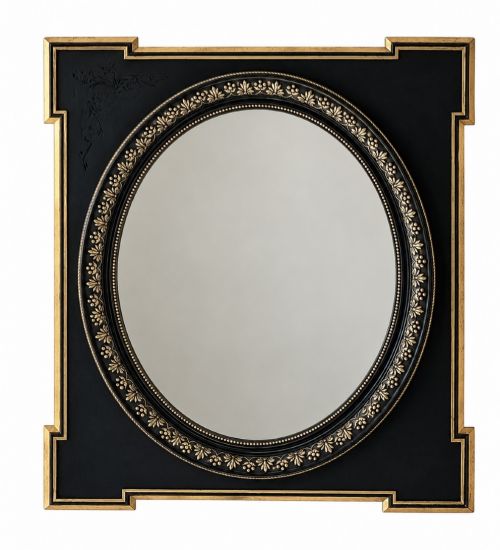
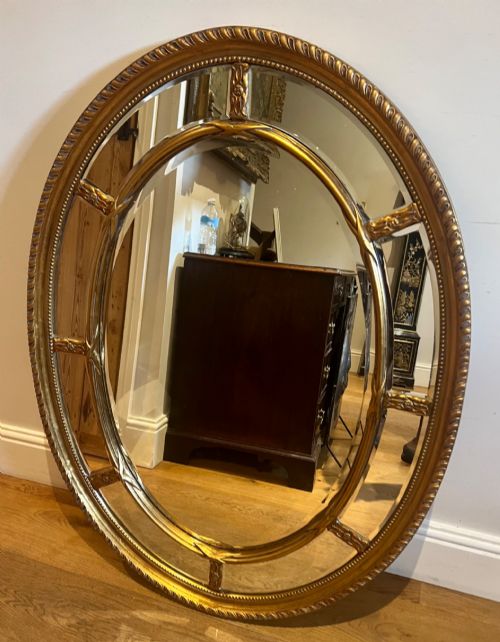
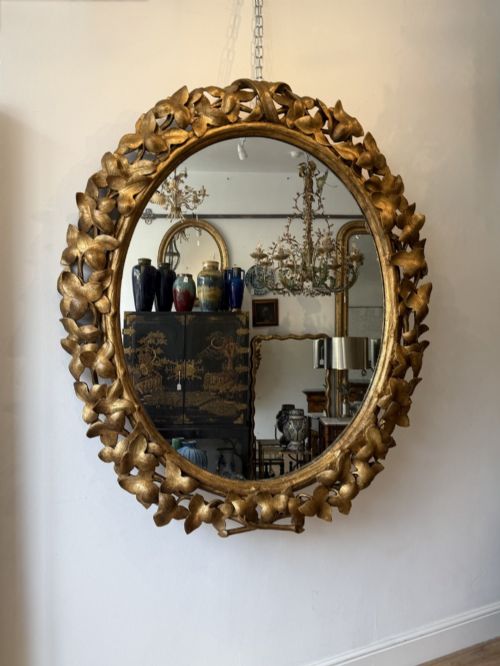
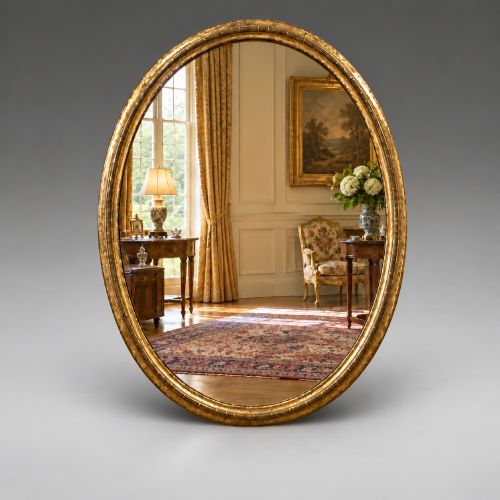
Gilded Oval Wall Mirror
A gilded oval wall mirror brings warmth and reflected light to a room, drawing the eye with its curved frame.
Gilded Oval Wall Mirror
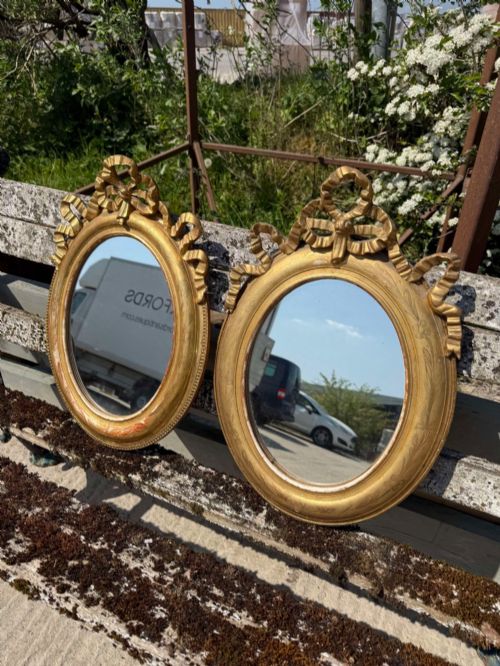
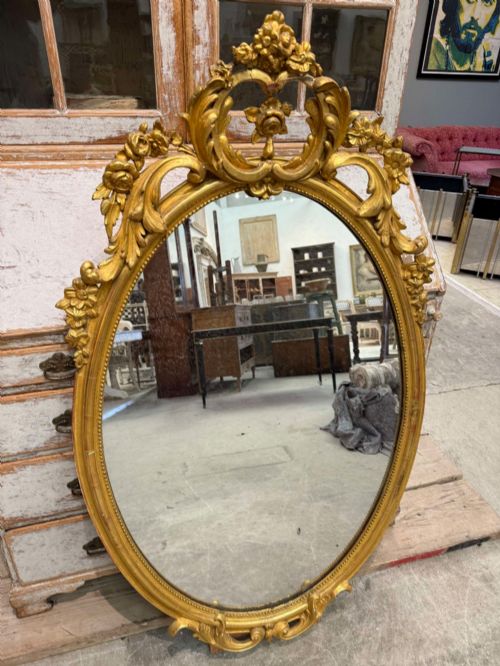
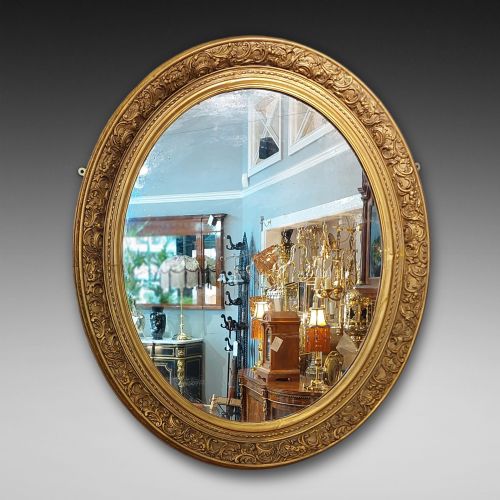
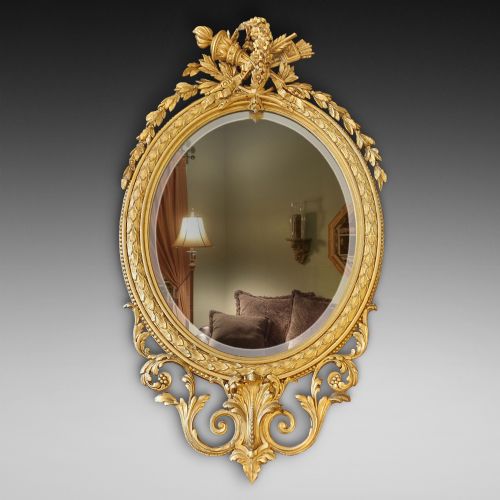
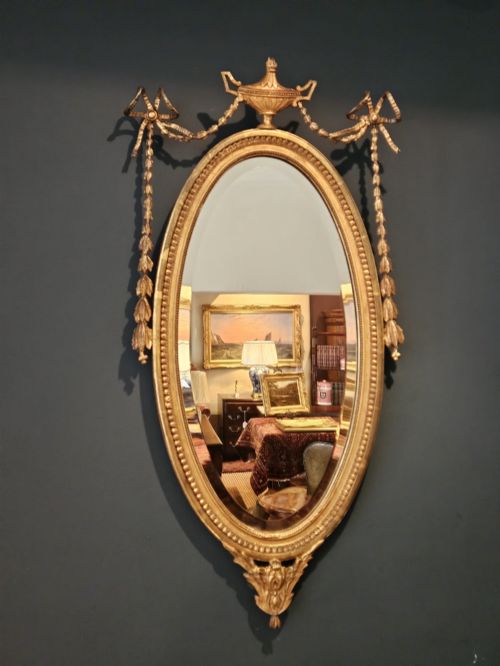
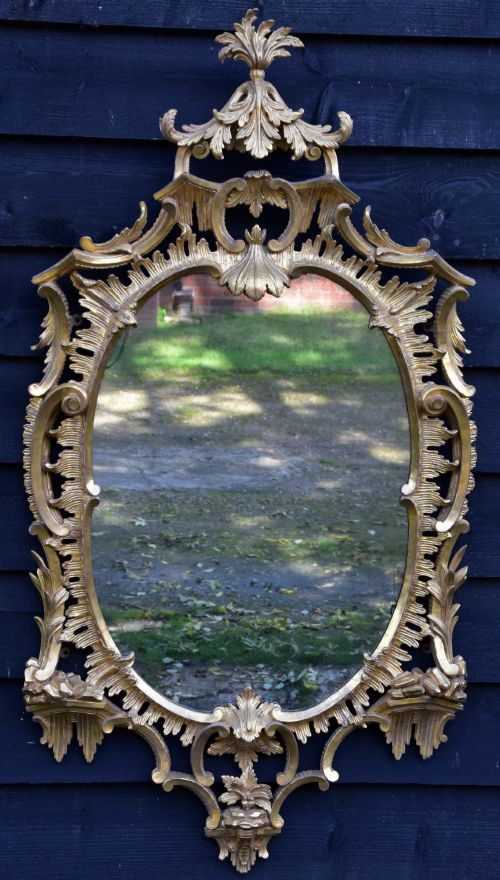
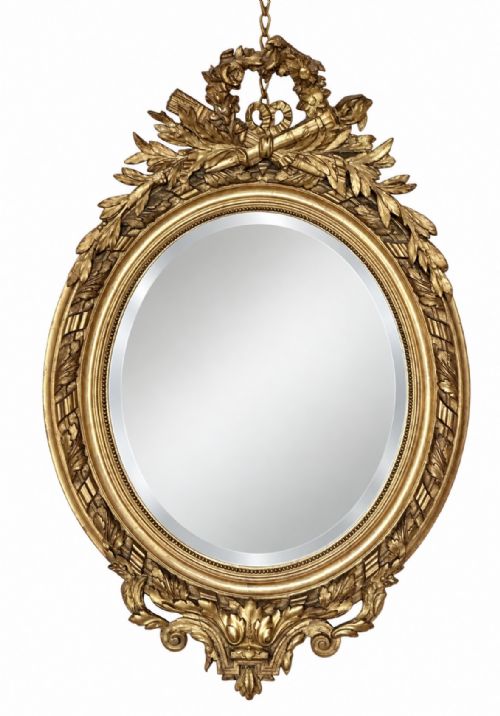
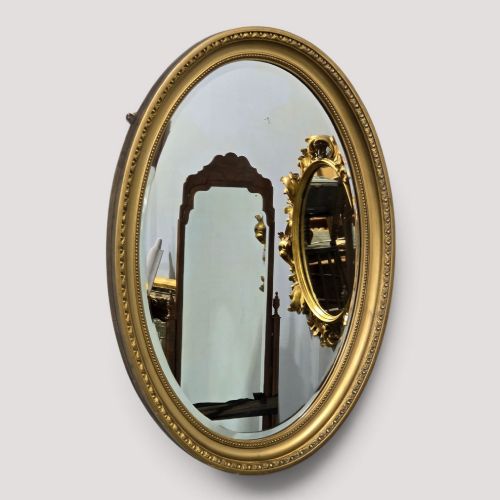
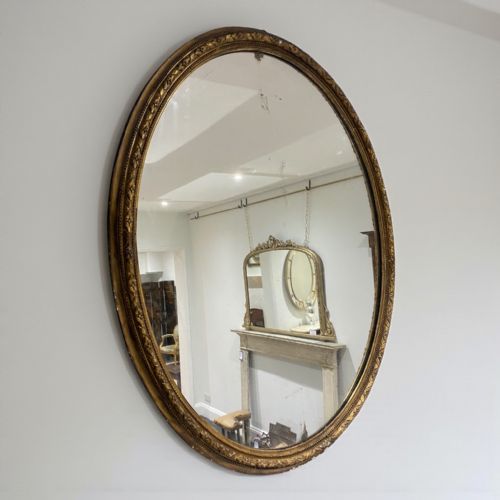
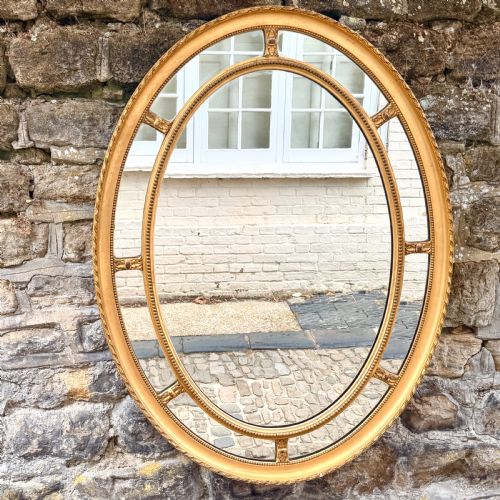
A gilded oval wall mirror is a decorative looking glass enclosed in a curved frame finished with gold leaf, giltwood, or gesso. These pieces span several centuries, including Georgian, Victorian, and Edwardian periods, appearing in both English and French regional styles.
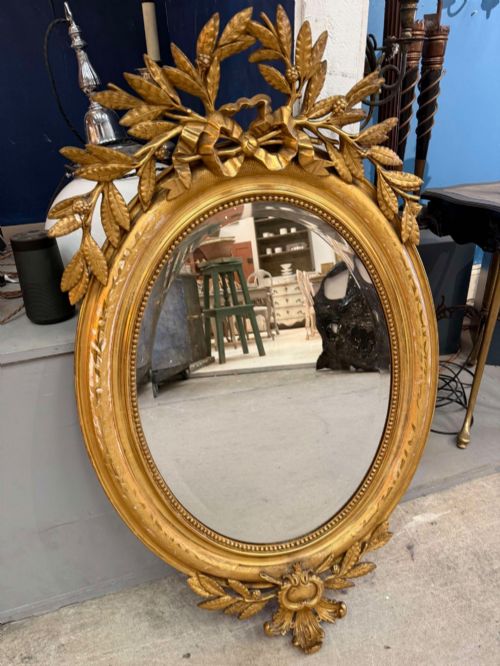
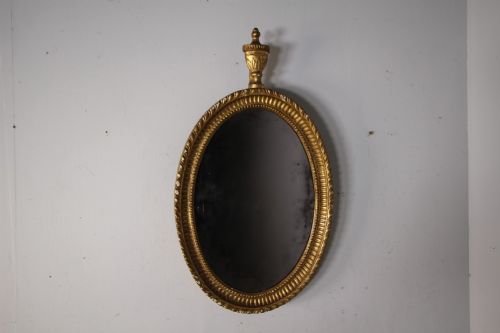
The most common examples encountered on this page date from the nineteenth century, often displaying Rococo Revival or Louis XVI style ornamentation such as urns, swags, and vine leaves. They function as wall mirrors, pier mirrors, or girandoles designed to hang in reception rooms and hallways.
How they were made
Carved timber and moulded composition or gesso form the foundational structure of the frames, providing the substrate for subsequent gilding techniques. Artisans applied thin layers of gold leaf or gilt paint over a prepared ground, sometimes utilising water gilding to achieve a bright, reflective finish.
Mirror glass plates within these frames vary from modern replacements to older silvered or mercury glass showing characteristic foxing and age spots. Frames frequently incorporate structural joinery hidden beneath the plaster and ornament layers.
Gilded Oval Wall Mirror Retail Price Guide 2026
Typical asking prices for gilded oval wall mirror among the pieces listed under this phrase on Sellingantiques today, from the lower quarter to the upper quarter. They describe what is for sale here now, not the wider market.
What varies in quality
The depth and crispness of the hand-carved woodwork separate finer Georgian and French pieces from simpler moulded composition examples. Sharp relief in motifs like acanthus leaves and ribbon twists indicates superior craftsmanship.
The preservation of the original gilding and the presence of period mirror glass influence the integrity of the piece. Subtle burnished details and intact original ground layers distinguish the higher tiers of the range.
The Gilded Oval Wall Mirror Glossary
- Giltwood
- Wood that has been coated with gold leaf or gold paint. This material provides the primary structural and decorative body for many antique frames.
- Gesso
- A plaster-like mixture applied to wood frames to create a smooth surface for carving and gilding relief decoration. It allows intricate moulded details to adorn the perimeter.
- Girandole
- A wall mirror featuring attached candle sconces or branches. The reflective glass multiplies the light cast by the candles.
- Pier glass
- A tall mirror designed to hang on the wall between windows or above a pier table. These large formats often feature elaborate urn and swag ornamentation.
- Mercury glass
- An older type of mirror glass made by pouring a mercury amalgam behind the glass plate. It develops characteristic dark speckling over time.
Gilded Oval Wall Mirror: Frequently Asked Questions
Where should I hang a gilded oval wall mirror?
These mirrors suit spaces above mantelpieces, console tables, or sideboards where the curved frame softens angular room layouts.
Positioning them opposite a window maximises natural light distribution across the interior.
How do I identify the period of a gilt mirror?
Frame materials and decorative motifs offer the clearest clues to age, with Georgian pieces showing fine hand-carved woodwork and Victorian examples often utilising moulded gesso.
Examining the backing boards, fixings, and glass plate provides further confirmation of the manufacturing date.
What is the difference between giltwood and composition frames?
Giltwood frames feature carved wooden substrates directly gilded with gold leaf, resulting in sharp, distinct decorative details.
Composition frames use a moulded paste pressed over a simpler wooden core, which can show softer relief edges.
How do I clean an antique gilt frame safely?
Dust the carved and gilded surfaces gently with a soft, dry brush to remove particles without disturbing delicate leaf layers.
Avoid using liquid cleaners, solvents, or moisture, as these can strip the historical finish from the gesso or wood.