

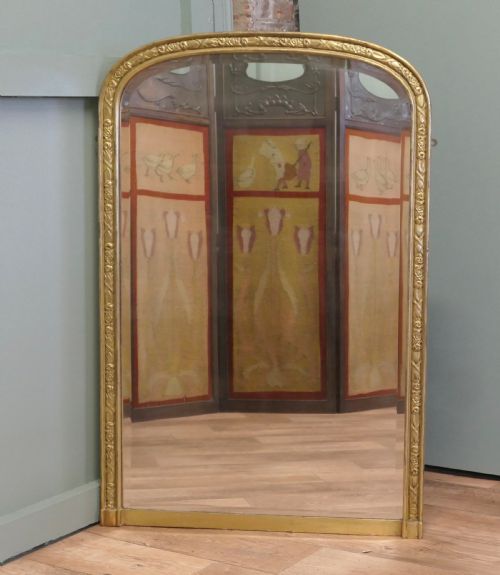
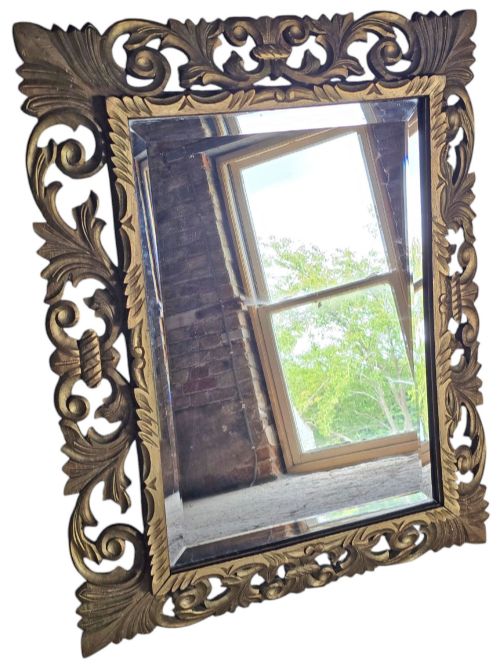
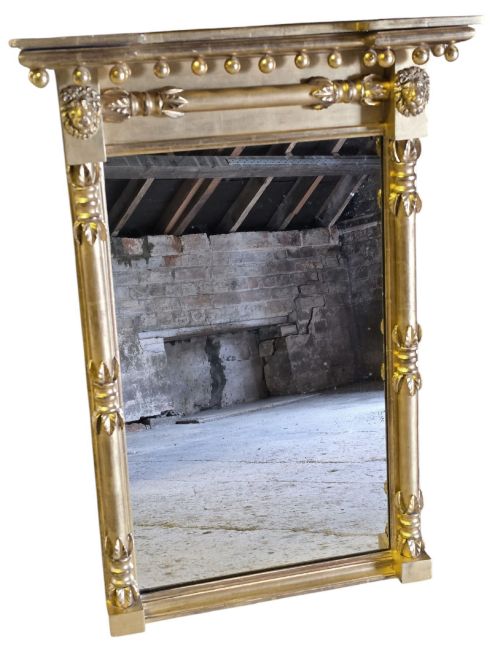
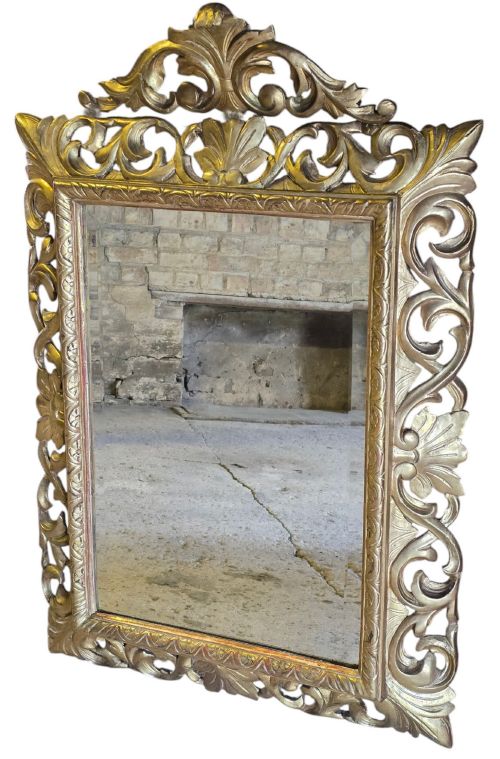
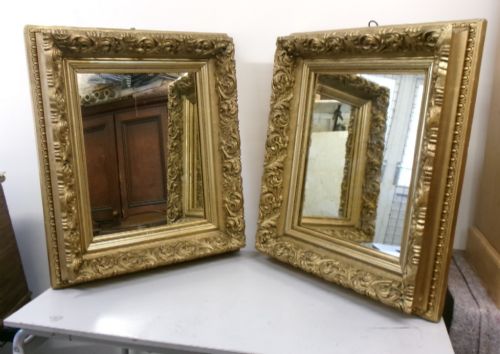



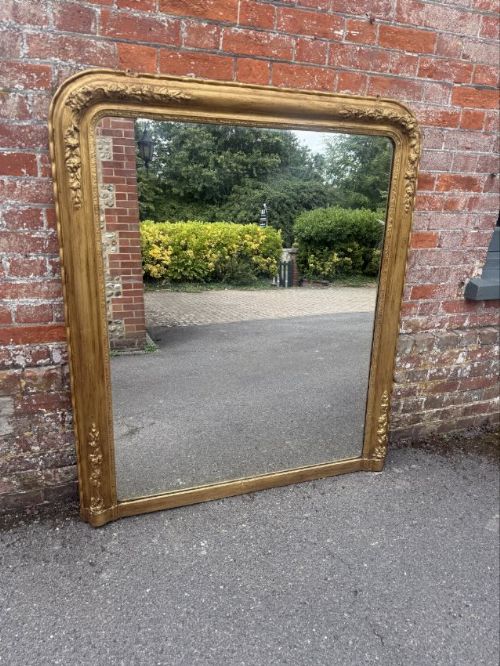
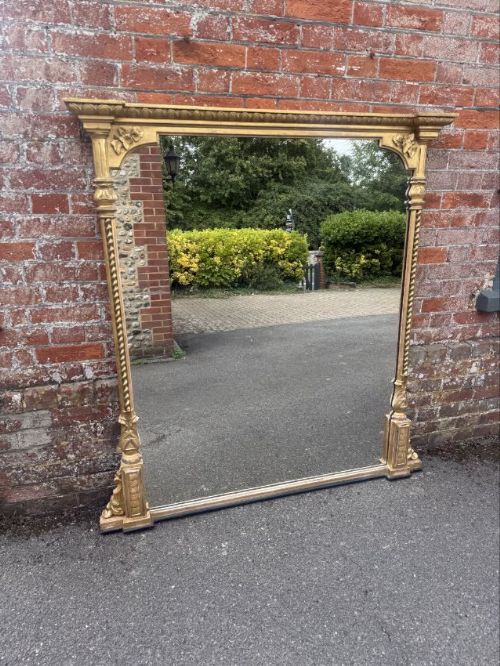
Large Overmantel Mirror
A large antique overmantel mirror anchors a room above a fireplace, bringing depth and period presence to an interior.
The Form and Origins
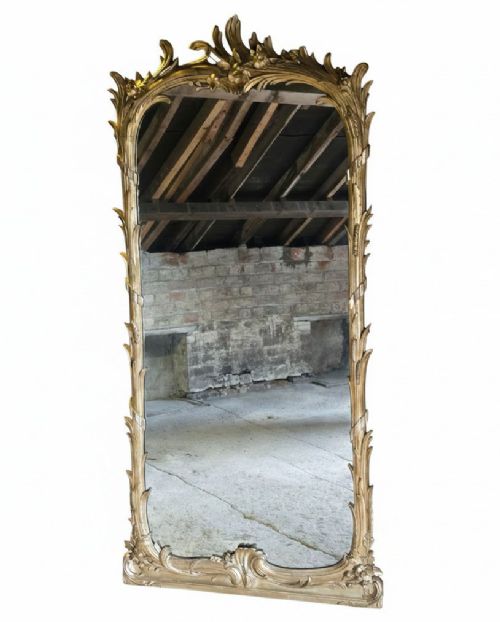
A large antique overmantel mirror serves as a grand architectural focus, traditionally hung above a mantelpiece to reflect light and expand the sense of space within a room. The examples found here span the nineteenth century, including specific dates such as 1860 and 1900, originating from English and French workshops.
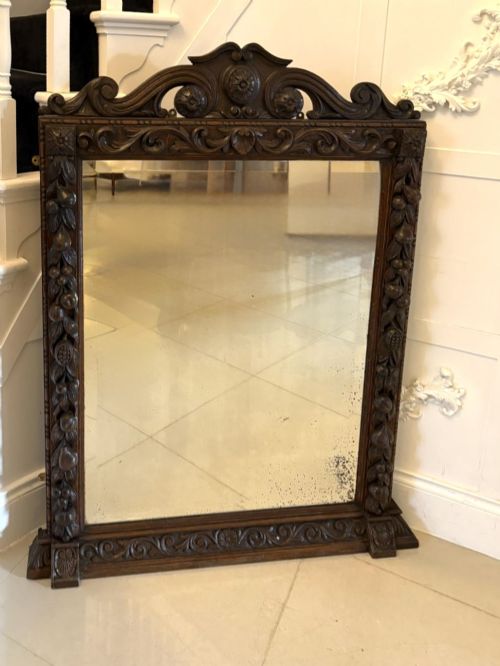
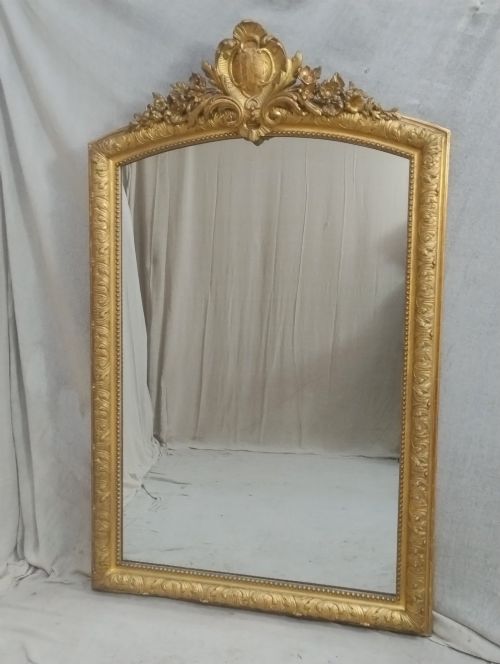
Most pieces take the form of overmantel mirrors, wall mirrors, or pier mirrors, with shapes ranging from arched and shaped tops to rectangular and oval formats. Stylistic influences include Victorian, French Neoclassical, Arts and Crafts, French Rococo, and Louis Philippe designs.
Materials and Construction
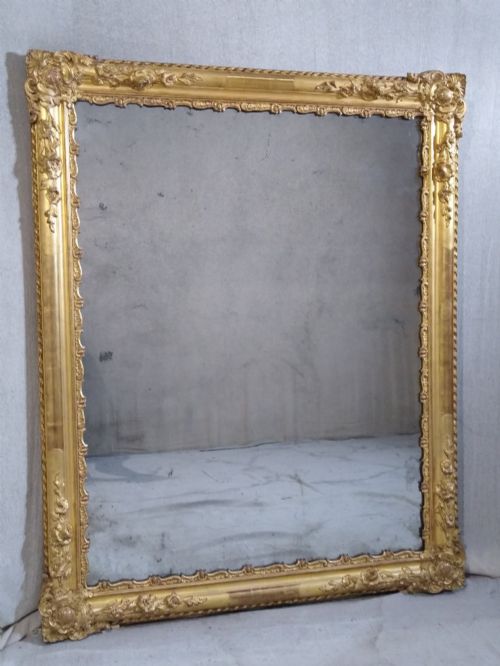
Makers constructed the structural frames using carved wood, oak, or walnut, applying layers of gesso to build up intricate decorative mouldings. Surfaces were then finished with gold leaf, giltwood, silver gilt, paint, or ebonisation.
Mirrored glass plates are set within these heavy frames, sometimes accompanied by plaster elements. The combination of timber, gesso, and gilding creates substantial weight suited to resting upon mantelpieces or securing to walls.
Retail Price Guide 2026
Typical UK retail prices for large overmantel mirror, calculated from the Sellingantiques database of over a million retail prices indexed since 2003. This retail price guide relies exclusively on Sellingantiques data; no external sources or auction records are used, so the figures do not describe the wider market.
Listings feature nineteenth-century pieces alongside works from 1860 and 1900, constructed from giltwood, oak, gesso, and mirrored glass.
Assessing the Craft
Quality rests in the crispness of the carved wood and gesso ornamentation, where hand-modelled detail and deep relief separate superior work from simpler moulded alternatives. The integrity of the original gilding or painted surface also dictates the character of the piece.
The condition and depth of the mirrored glass contribute significantly to the visual weight, with original plates showing distinct silvering characteristics that reflect age and authenticity.
The Large Overmantel Mirror Glossary
- Overmantel mirror
- A mirror designed specifically to be hung or placed on the mantelpiece above a fireplace. These pieces often feature wide proportions to match the width of the hearth below.
- Gesso
- A plaster-like mixture applied to wood frames and carved or moulded into decorative reliefs before gilding or painting. It provides the smooth base necessary for intricate ornamentation.
- Giltwood
- Timber that has been coated with thin sheets of gold leaf or gold powder. This finish catches candlelight and natural daylight within a room.
- Pier mirror
- A tall mirror designed to hang on the wall space between two windows, known as a pier. They share similar decorative traits with overmantel pieces.
- Louis Philippe
- A mid-nineteenth century French style characterised by restrained classical proportions and often a rounded upper frame. These mirrors offer understated elegance compared to heavily ornate Rococo pieces.
Frequently Asked Questions
How do I hang a heavy overmantel mirror safely?
Due to the substantial weight of timber, gesso, and glass, these frames require professional wall anchoring directly into structural masonry or stud work. Many were originally designed to rest part of their weight on the mantelpiece itself while secured safely to the wall behind.
Ensuring the fixings match the weight distribution prevents strain on the antique frame joints and protects the surrounding wall structure.
How do I date a nineteenth-century gilt mirror?
Dating relies on examining the construction methods of the wooden frame, the composition of the gesso, and the characteristics of the glass plate. Mid-nineteenth century pieces often display deep hand-carved gesso ornamentation reflecting Victorian or French Neoclassical tastes.
Later examples from around 1900 introduce Arts and Crafts simplicity or alternative timber choices such as oak.
Can these mirrors be placed in modern interiors?
The grand scale and reflective quality of these pieces allow them to function effectively in contemporary spaces by introducing texture and historic contrast. Placing one above a modern fireplace or low sideboard creates an immediate architectural focal point.
The neutral tones of giltwood, painted finishes, and aged glass complement minimalist or eclectic design schemes alike.