

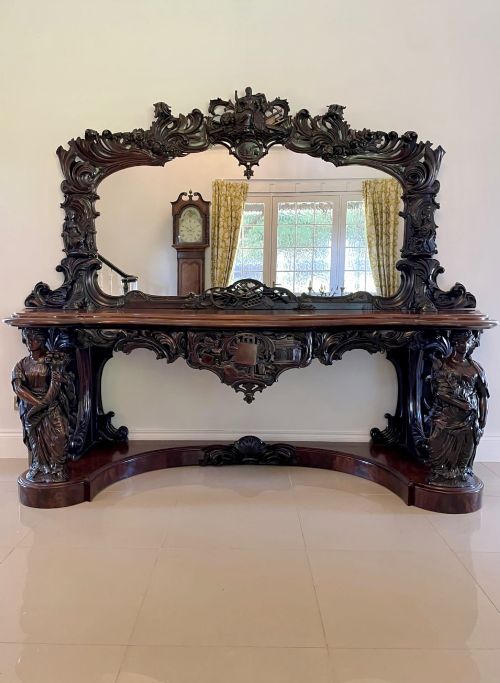
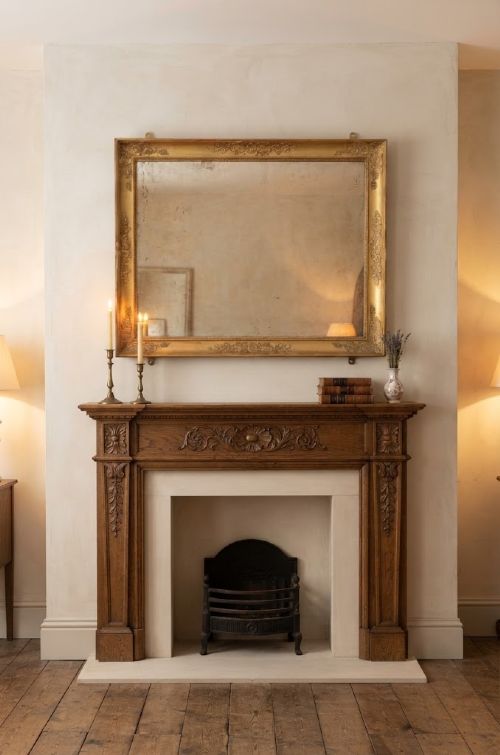
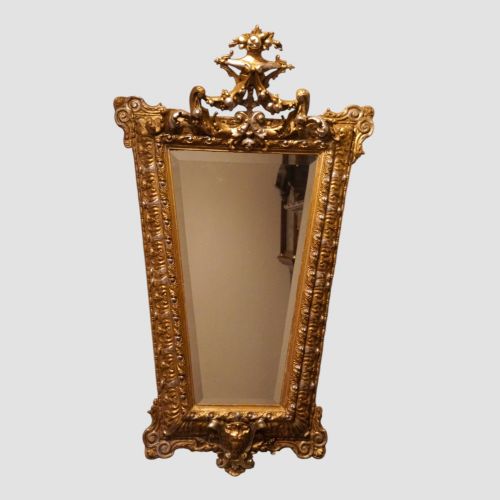
Carved Wooden Wall Mirror
These carved wooden wall mirror examples bring period timberwork and glass into a room, offering both function and decorative presence.
What They Are
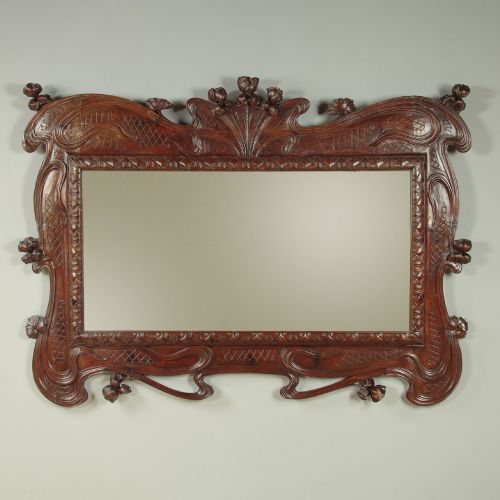
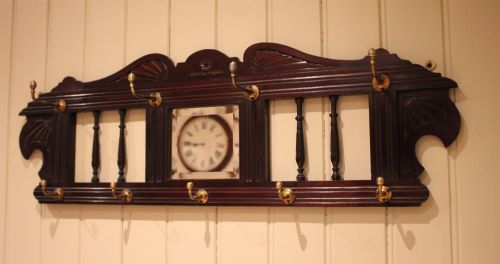
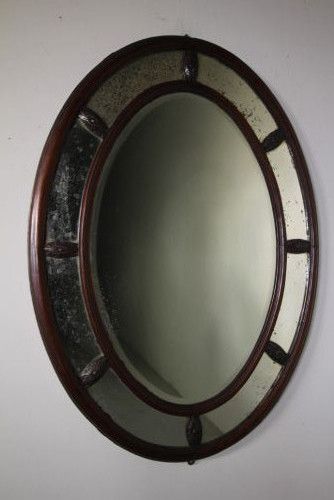
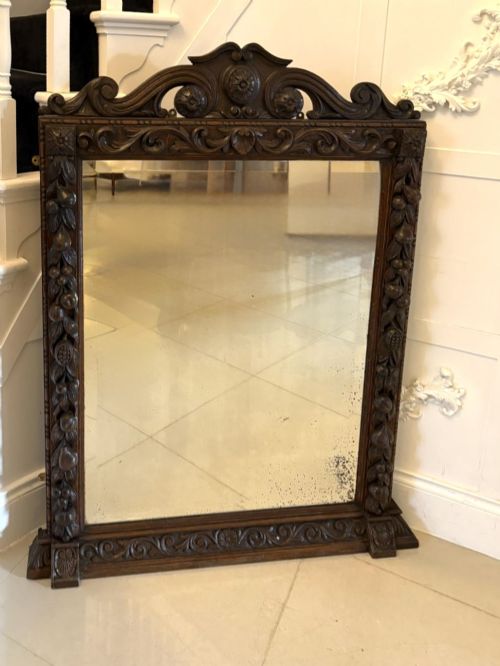
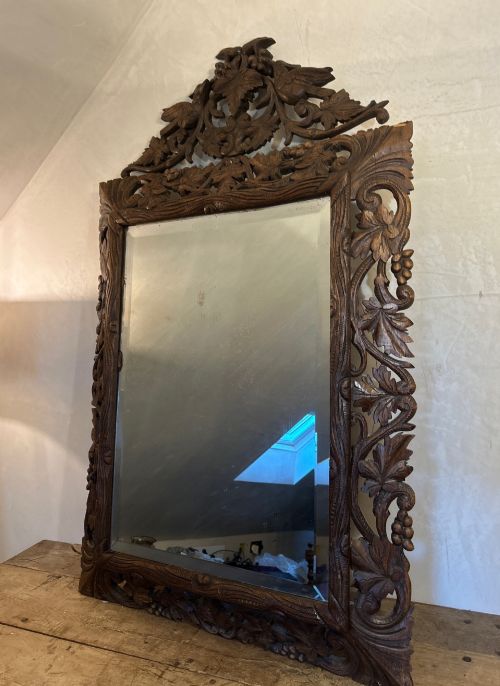
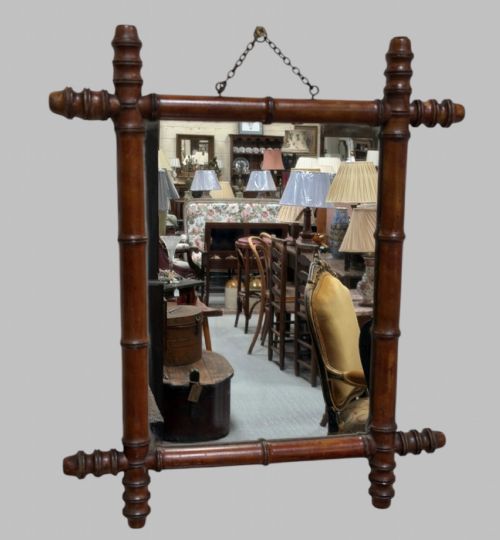
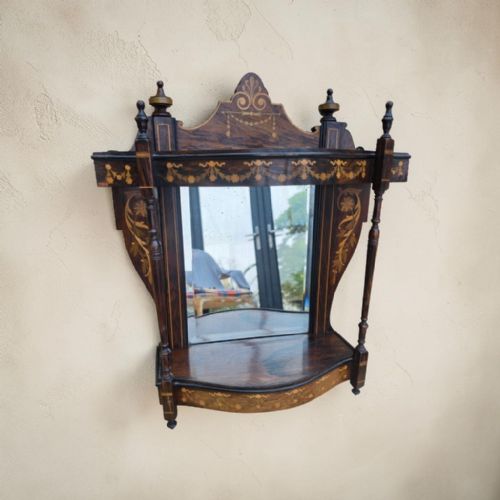
A carved wooden wall mirror brings period timberwork and glass into a room, offering both function and decorative presence. The pieces catalogued here span the Victorian, Edwardian, and later revival periods, bringing distinct historic forms to modern spaces.
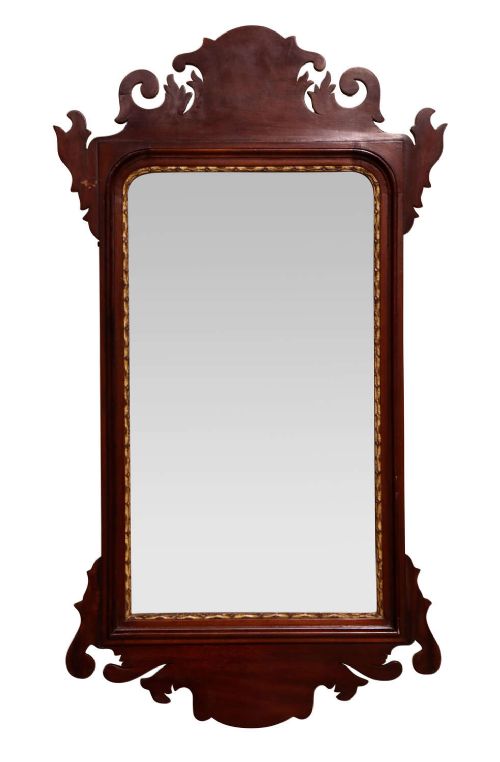
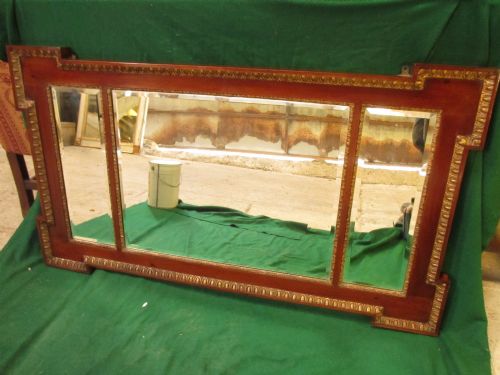
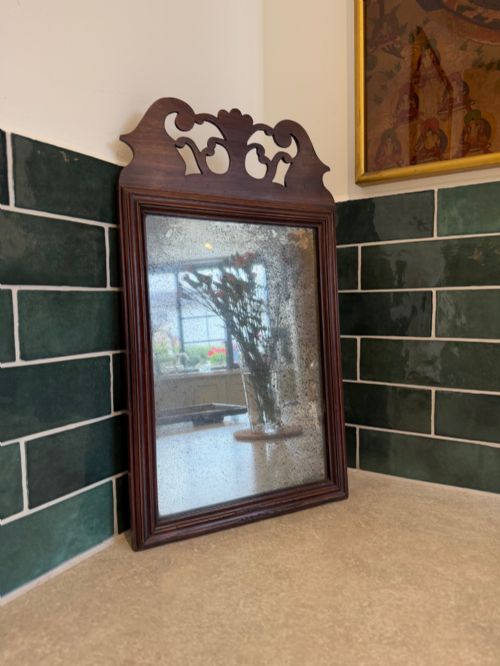
The most common formats on this page include substantial overmantel mirrors and wall-hanging pieces constructed from oak, walnut, and mahogany. These items often incorporate period revival styles, drawing heavily on Georgian and Chippendale aesthetics.
Makers of these items utilised various traditional woodworking techniques to shape timber frames around flat and bevelled glass plates. Some examples incorporate prints alongside the glass, reflecting the broader decorative tastes of their respective eras.
How They Were Made
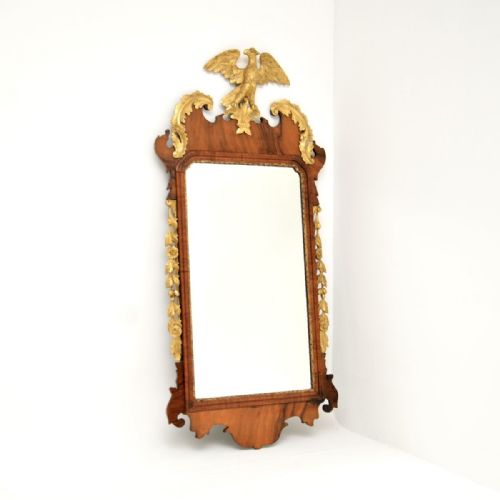
Construction relies upon solid timbers such as oak, mahogany, and walnut, frequently shaped through manual carving techniques. Giltwood finishes also appear, adding a layer of metallic or gilt preparation over the wooden base.
Glass plates within these frames vary between standard mirror glass and bevelled variants, secured into heavy wooden backs often reinforced with paper or secondary timber elements.
Retail Price Guide 2026
Typical UK retail prices for carved wooden wall mirror, calculated from the Sellingantiques database of over a million retail prices indexed since 2003. This retail price guide relies exclusively on Sellingantiques data; no external sources or auction records are used, so the figures do not describe the wider market.
Some Edwardian wall mirrors doubled as picture galleries, incorporating antique prints right alongside the looking glass.
What Varies in Quality
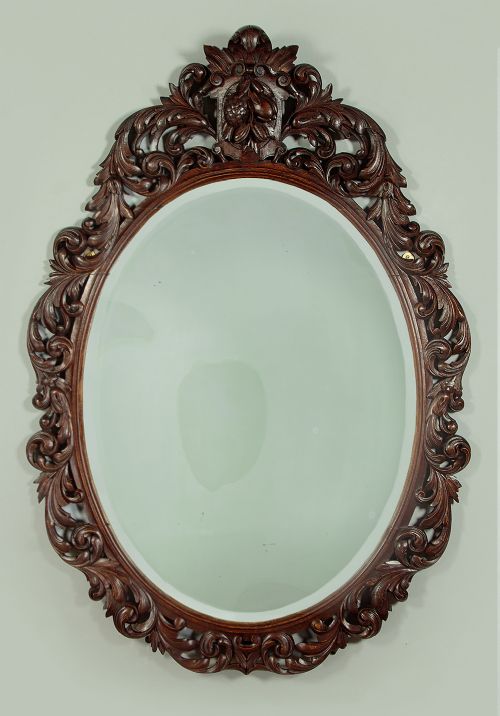
Depth and precision in the hand-carved wooden ornament separate standard production from superior examples. Crisp execution in revival styles demonstrates the carver's skill.
The choice of primary timber and the clarity of the glass plate, particularly bevelled edges, dictate the overall standard of the finished object.
The Carved Wooden Wall Mirror Glossary
- Overmantel mirror
- A large wall mirror designed specifically to hang above a fireplace mantelpiece. These items often feature wide wooden frames.
- Bevelled glass
- Mirror glass with an angled edge polished around the perimeter. This catches the light and adds depth to the reflection.
- Giltwood
- Timber coated with a thin layer of gold leaf or gilt preparation. It creates a bright, reflective surface finish on ornate frames.
Frequently Asked Questions
What is an overmantel mirror?
An overmantel mirror is a large format piece built to sit above a fireplace opening. They anchor the room's proportions.
These items frequently combine oak or walnut with expansive glass plates.
How do I date an antique wooden mirror?
Dating relies upon examining the timber species, construction joints, and the characteristics of the mirror glass itself. Revival pieces copy earlier styles.
Examine the backboards and paper linings for clues regarding the production era.
Are these mirrors suitable for bathrooms?
Period wooden frames and historic silvered glass react poorly to high humidity and direct moisture. Placing them in dry living spaces preserves the timber and finish.
蒸汽 and dampness can damage the backing materials over time.