



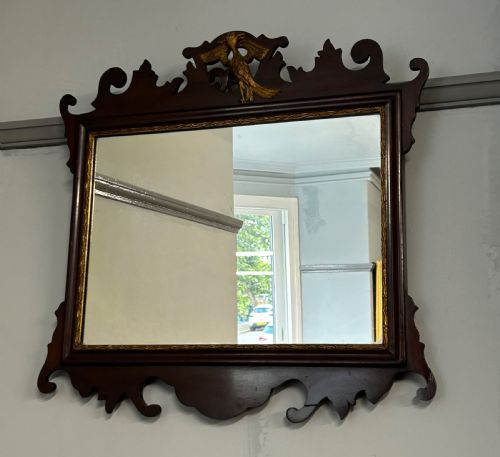

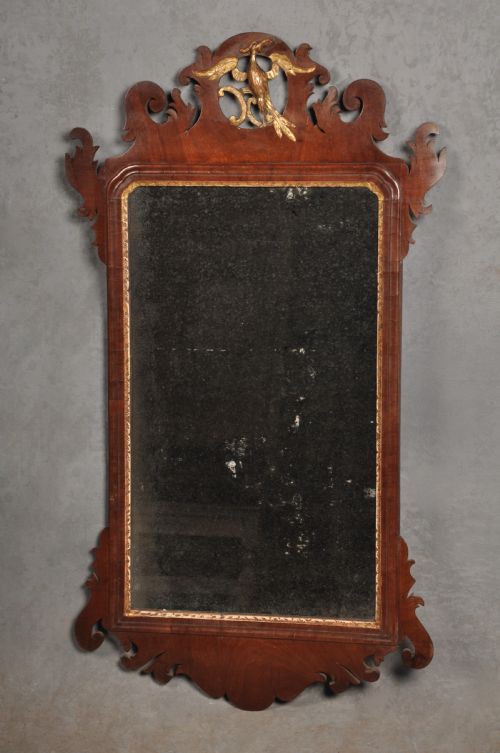


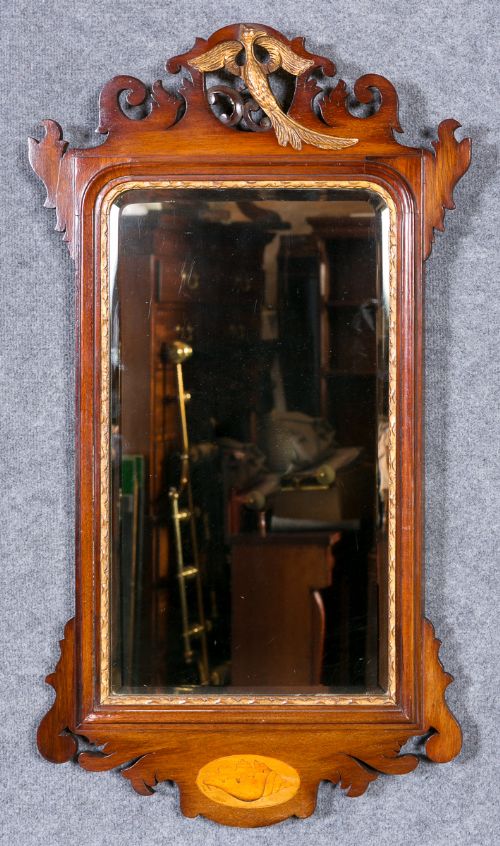
Phoenix Crest Mirror
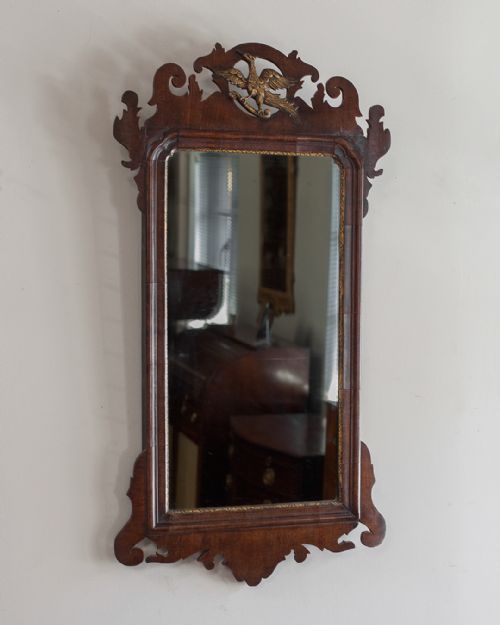
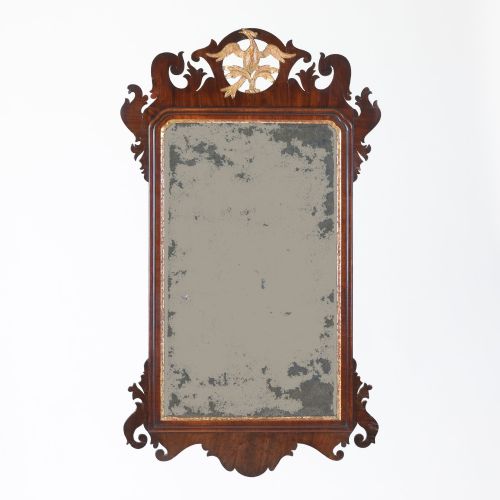
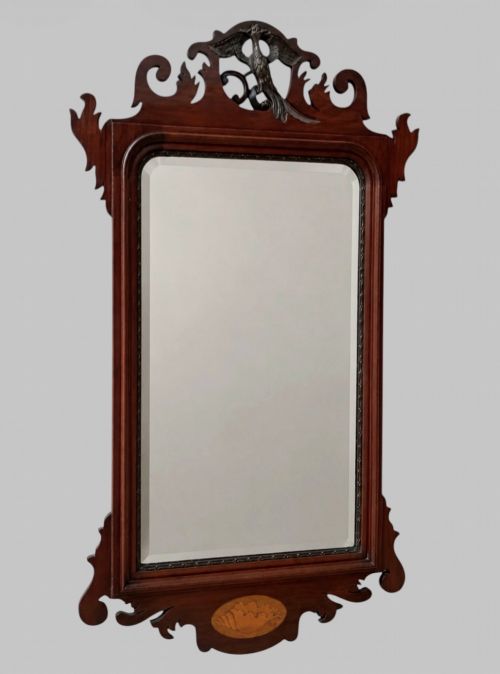
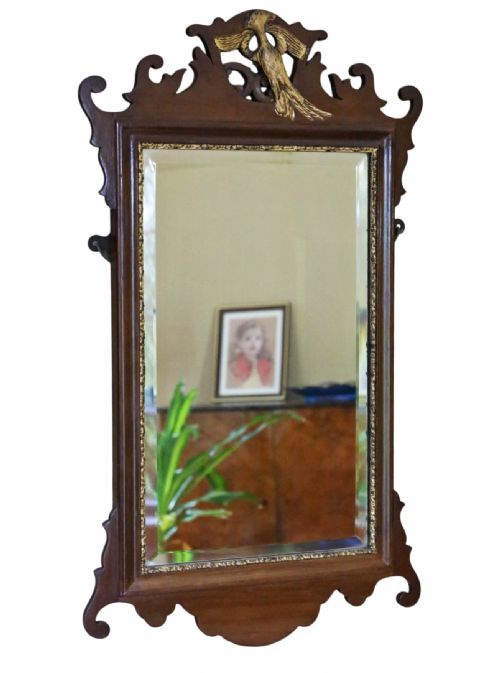
These phoenix crest mirrors are carved wooden wall hangings topped with mythical birds, offering stately elegance and historical character to any interior.
Phoenix Crest Mirror
A phoenix crest mirror brings traditional craftsmanship and striking avian motifs into modern interiors. When searching for a phoenix crest mirror, buyers encounter wall-hanging designs originating from various periods including the 18th century, Georgian era, Regency period, and Victorian times.
Makers and artisans across the 18th century and later periods constructed these items in woods like mahogany and walnut, frequently incorporating carved giltwood or gesso accents to highlight the top crest.
Materials and construction
Makers utilised solid timbers such as mahogany and walnut to form the structural body of each wall mirror. These woods were shaped using fret-cutting techniques to create intricate openwork frames.
Giltwood and gesso elements were applied to the carved crests, particularly around the ho-ho bird figures, adding metallic contrast to the dark wood grain. Glass plates, including bevel-edged variants, were then set securely into the rebated frames.
Phoenix Crest Mirror Retail Price Guide 2026
Typical asking prices for phoenix crest mirror among the pieces listed under this phrase on Sellingantiques today, from the lower quarter to the upper quarter. They describe what is for sale here now, not the wider market.
Current listings feature wall mirrors spanning from the 18th century through to 1900, incorporating mahogany, walnut, and giltwood.
Assessing quality and craftsmanship
The distinction between standard examples and finer pieces lies in the crispness and depth of the carved fretwork. Superior craftsmanship shows deliberate hand-tooling on the wooden scrollwork and the avian crest.
The integration of the gilt and gesso details relative to the primary timber dictates visual balance. Higher-grade mirrors maintain proportion between the rectangular glass plate and the elaborate pierced crest above.
The Phoenix Crest Mirror Glossary
- Fret-cut
- Woodwork pierced or perforated with a fretsaw to create decorative geometric or scrolling patterns. This technique defines the openwork silhouette of the frame.
- Gesso
- A plaster-like mixture applied to wood surfaces as a base for gilding or painting. It provides a smooth layer for subsequent metallic leaf application.
- Giltwood
- Timber coated with gold leaf or gold paint to give a luxurious metallic finish. It highlights the carved crests on these wall mirrors.
- Vauxhall mirror
- A historic term often associated with high-quality English mirror glass featuring bevelled edges. These plates reflect a period aesthetic.
- Ho-ho bird
- An East Asian-inspired mythical phoenix often used as the central carved motif on 18th-century and revival crests.
Phoenix Crest Mirror: Frequently Asked Questions
What periods do these mirrors come from?
The pieces span several centuries, including 18th-century origins, the Georgian and Regency eras, and later Victorian and 1900 revival periods.
These dates reflect both original antique manufacture and subsequent historical revivals in cabinetmaking.
What woods were used for the frames?
Craftsmen primarily utilised mahogany and walnut for the construction of the fret-cut frames.
Additional materials like gesso and giltwood frequently appear on the carved crests and decorative accents.
How do I hang a wall mirror safely?
Due to the solid timber frames and glass weight, secure wall fixings suited to your wall type are essential.
Professional hanging hardware ensures the piece remains stable and properly supported.
What is a ho-ho bird crest?
The ho-ho bird is a stylized phoenix figure carved at the very top of the wooden frame.
This mythical creature serves as the distinctive focal point for many Georgian and revival wall mirrors.
Are all these mirrors antique?
The selection includes both 18th-century originals and later revival pieces from around 1900 and the Victorian era.
Each listing specifies the period to help identify original Georgian work from later interpretations.