








Adam Style Mirror
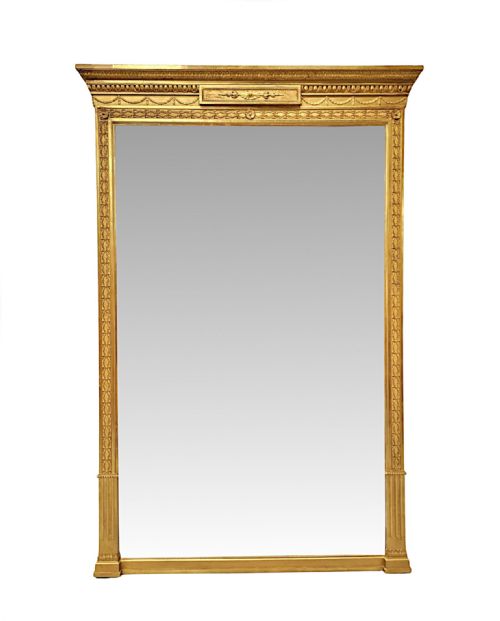
An adam style mirror brings classical symmetry and refined neoclassical ornament to a room, drawing the eye with urns, swags, and crisply carved frames.
Adam Style Mirror
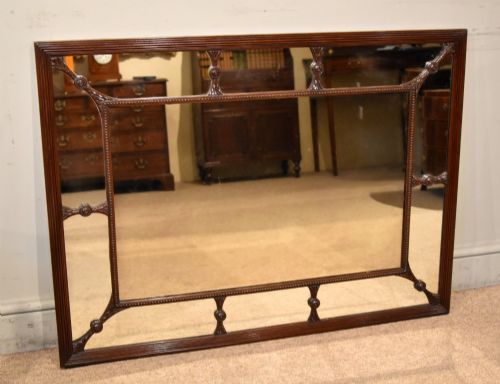
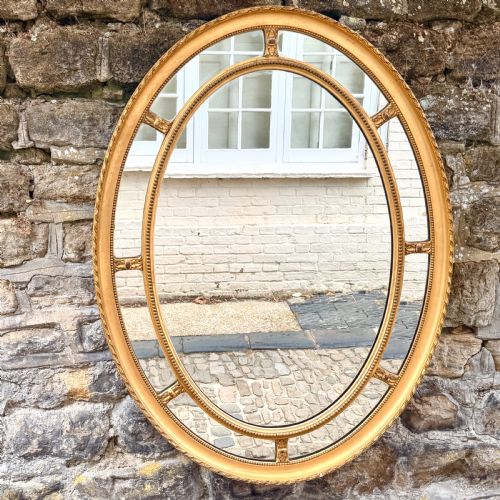
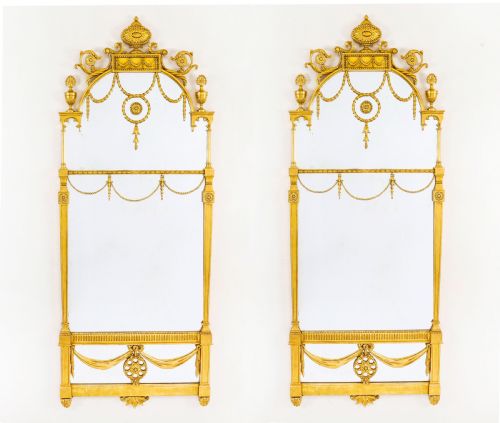
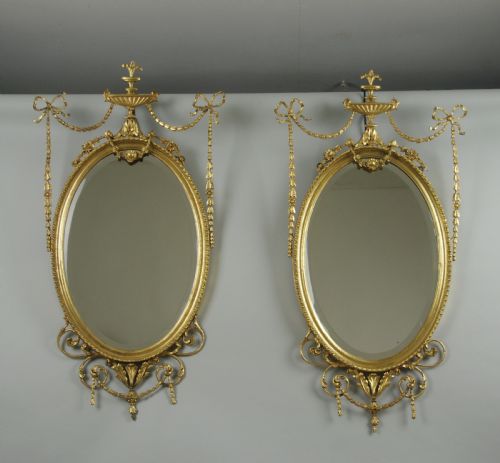
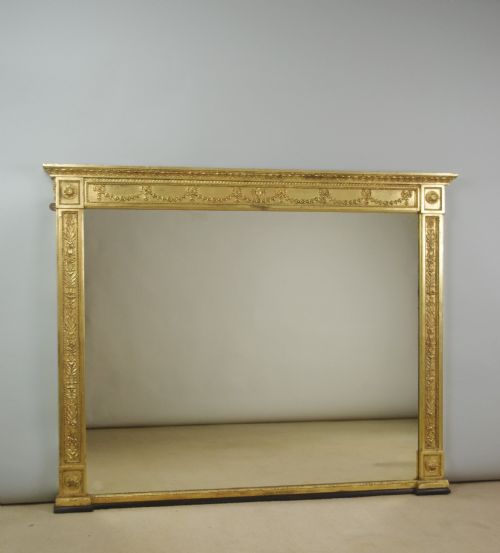
When you search for an adam style mirror, you encounter pieces spanning the Georgian era through Victorian revivals and Edwardian updates. The selection on this page leans heavily toward late nineteenth-century revivals alongside authentic Georgian examples, translating neoclassical design principles into tall hall mirrors, wide overmantels, and elegant oval wall formats.
The dominant forms are grand overmantels and vertical pier glasses or wall mirrors, often featuring symmetrical motifs such as draped swags and classical urns at the crest. Many examples are framed by curved ovals or rectangular panels designed to anchor a principal room.
Makers and manufacturers across the nineteenth and early twentieth centuries drew heavily on original eighteenth-century pattern books, producing both monumental giltwood centrepieces and domestic wall mirrors in mahogany or ebonised wood.
How they were made
The construction of these pieces relies on traditional cabinet-making joined with applied ornament. Carved wooden frames or composite mouldings provide the structural foundation for the glass.
Makers built up the intricate relief decoration using gesso and composition laid over timber frames, allowing for crisp classical detail on swags, urns, and beaded borders. These surfaces were then finished in gold leaf or painted gilt.
Mirror plates range from early single sheets to triple plate configurations and marginal mirror arrangements, secured within the timber and gesso rebate.
Adam Style Mirror Retail Price Guide 2026
Typical asking prices for adam style mirror among the pieces listed under this phrase on Sellingantiques today, from the lower quarter to the upper quarter. They describe what is for sale here now, not the wider market.
Some overmantel mirrors incorporate tiny candle sconces, ready to double the flicker of a Victorian evening fire.
What varies in quality
Quality rests in the crispness of the applied ornament and the depth of the hand-carved or moulded relief. Superior pieces exhibit sharp definition in the classical swags, ribbons, and urns rather than soft, blurred edges.
The integrity of the gilding and the preservation of the original mirror plate further separate the finest examples. Rich gold leaf and clear, age-silvered glass command greater appreciation than heavy, uniform modern finishes.
The Adam Style Mirror Glossary
- Giltwood
- Timber carved and covered with a thin layer of gold leaf. This material defines the most prestigious frames in the collection.
- Gesso
- A plaster-like mixture applied to wood frames and carved or moulded into low relief. It forms the base for crisp neoclassical ornament.
- Composition
- A hard, mouldable paste made from whiting, resin, and oil used for repeating ornamental details like swags and beads. It replaced slow hand-carving in many Victorian revival pieces.
- Pier glass
- A tall mirror designed to hang on the wall between two windows. These vertical pieces frequently incorporate neoclassical motifs.
- Overmantel mirror
- A wide mirror made specifically to sit above a fireplace mantel. They often feature extended horizontal proportions and triple plate layouts.
Adam Style Mirror: Frequently Asked Questions
How do I hang a heavy giltwood mirror safely?
Heavy frames require secure fixing directly into wall studs or masonry using appropriate brackets that bear the distributed weight. Professional mirror hangers utilise heavy-duty D-rings and steel wire rated well above the mass of the piece.
Ensure the hanging height allows the frame to sit firmly against the wall surface without placing undue strain on the upper joints or decorative crest.
Are these mirrors genuinely eighteenth-century?
While the design originates in the Georgian period under architects like Robert Adam, the vast majority of pieces available date from nineteenth-century revivals. Authentic eighteenth-century examples are exceedingly scarce and carry specific period construction traits.
Revival pieces from the Victorian and Edwardian eras faithfully replicate the classical aesthetic using nineteenth-century manufacturing methods and materials.
What is the difference between gesso and composition ornament?
Gesso is a liquid plaster applied in layers and smoothed or carved by hand. It provides a fine, stable ground for gilding on traditional frames.
Composition, often called compo, is a pliable mixture pressed into moulds while warm and applied to the frame in cured sections. It allowed makers to produce intricate neoclassical swags with consistent geometric precision.