



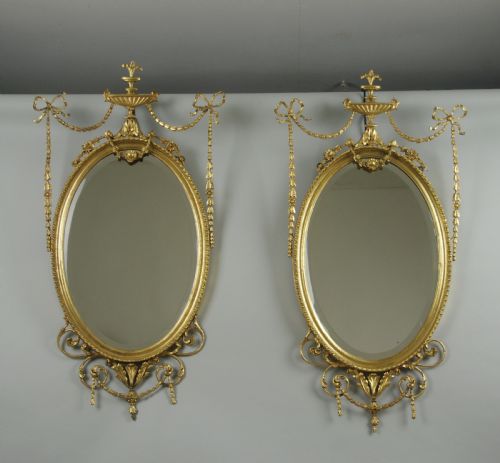


Urn Cresting Mirror
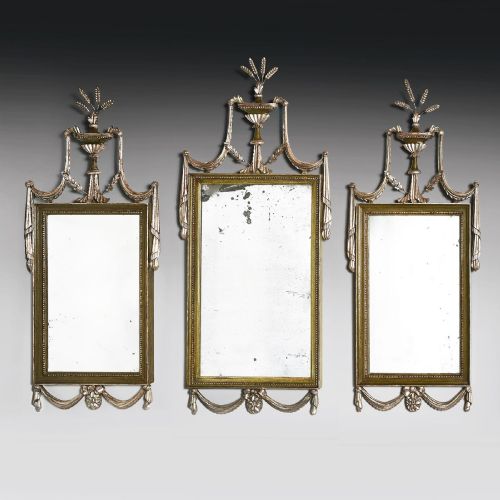
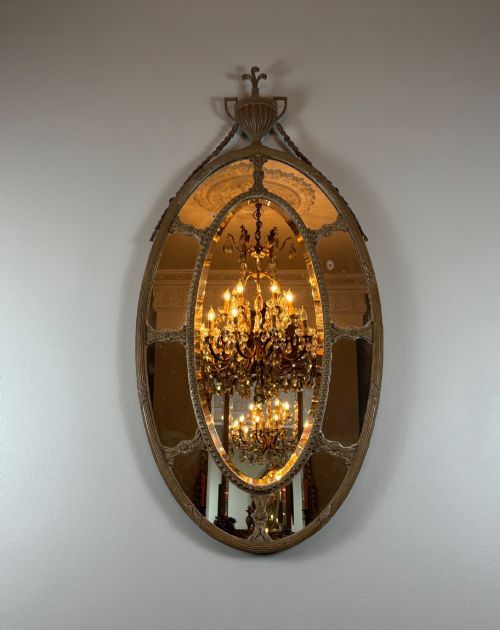
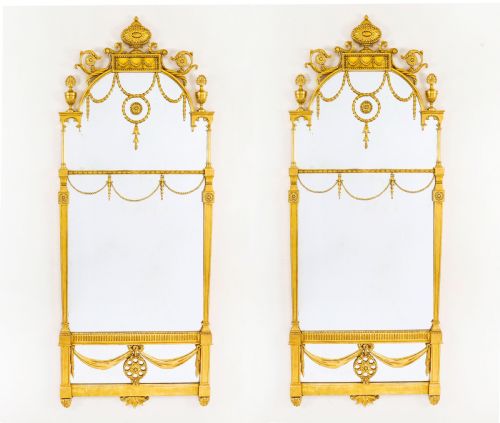
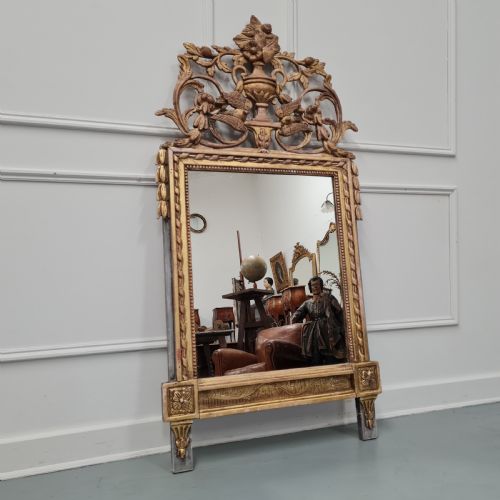
Urn cresting mirror examples bring neoclassical grace to a room, crowned by a carved vessel motif that draws the eye upward.
Urn Cresting Mirror
An urn cresting mirror centres on a classical vase or vessel mounted to the top frame, often flanked by swags or drapery. These pieces span from the late eighteenth century through the nineteenth and early twentieth centuries, drawing heavily on Adam revival and neoclassical styles. The selection includes grand overmantle mirrors alongside smaller wall-hanging ovals and rectangular pier glasses.
Most pieces encountered here date from the Victorian and Edwardian eras, reflecting a sustained appetite for revivalism. Makers frequently turned to French and English neoclassical design vocabularies, producing giltwood, gesso, and ebonised frames. Whether hung above a mantelpiece or mounted on a principal wall, these mirrors serve as focal points that introduce architectural structure to an interior.
Materials and construction
Giltwood and gesso form the primary vocabulary of these frames, where artisans carved wooden carcases and applied thin layers of gold leaf or paint. Composition ornament, often called compa, was pressed in moulds and applied to wooden substrates to create crisp floral swags and urn details. Ebonised wood and mahogany also appear, sometimes paired with parcel-gilt highlights to define the mouldings.
Silvered mirror glass reflects the light, frequently set within carved borders or panelled sections. Frame construction relies on traditional joinery techniques suited to heavy glass, securing the cresting securely to the main structure. Gilding techniques vary from single-tone gold leaf to two-colour applications that accentuate the depth of the carving.
Urn Cresting Mirror Retail Price Guide 2026
Typical asking prices for urn cresting mirror among the pieces listed under this phrase on Sellingantiques today, from the lower quarter to the upper quarter. They describe what is for sale here now, not the wider market.
Several mirrors arrive accompanied by floral swags so convincing they almost require watering.
Factors of quality
The crispness of the carved or moulded ornamentation dictates visual success, separating sharply defined swags and urns from softer, flattened pressings. Hand-applied gilding demonstrates depth through the interplay of burnished and matte surfaces, whereas flat metallic paints lack similar nuance. The integrity of the original glass and the stability of the frame joints govern how well a piece holds its presence on the wall.
Proportion remains paramount, as superior examples balance the mass of the cresting against the width of the glass plate and frame. The handling of secondary details, such as beaded inner borders or parcel-gilt accents, reveals the care taken during manufacture. Pieces that retain their original gilding and structural cohesion possess a superior decorative presence.
Gillows Of Lancaster
The Urn Cresting Mirror Glossary
- Gesso
- A plaster-like mixture applied to wooden frames as a base for gilding or painting. It allows artisans to carve or impress intricate decorative motifs before applying gold leaf.
- Giltwood
- Timber coated with gold leaf or metallic powder. It provides a reflective surface that catches interior light.
- Cresting
- The decorative element mounted at the very top of a mirror frame. In these pieces, it takes the form of a classical urn often accompanied by swags.
- Swag
- A draped garland of flowers, fruit, or fabric carved in relief. It frequently flanks the central urn on neoclassical frames.
- Overmantle
- A large mirror designed to hang specifically above a fireplace mantel. These pieces often feature extended horizontal proportions.
Urn Cresting Mirror: Frequently Asked Questions
Where should I hang an urn cresting mirror?
These mirrors suit locations where their height and architectural detail can be fully appreciated. Placing one above a fireplace mantel or a console table creates a balanced focal point in a principal room.
The vertical emphasis provided by the urn motif draws the eye upward, making them effective on walls with generous ceiling height.
How do I distinguish between eighteenth century and revival pieces?
Distinguishing between period pieces and later revivals involves examining the timber preparation, the composition of the gesso, and the ageing of the mirror glass. Eighteenth-century examples display hand-carved details and construction methods specific to that era, while nineteenth-century revivals often utilise moulded composition ornaments.
Revival pieces from the Victorian and Edwardian periods adopt the earlier neoclassical vocabulary with distinct nineteenth-century joinery and materials.
What is the difference between a pier glass and an overmantle mirror?
Pier glasses are traditionally narrow mirrors designed to hang on the wall space between windows, known as the pier. Overmantle mirrors are broader horizontal formats built to sit above fireplace surrounds.
Both forms can feature urn crests, but their proportions differ to suit their original architectural placement.
How do I care for a giltwood frame?
Giltwood frames require gentle maintenance to preserve the delicate gold leaf and gesso surfaces. Dusting with a soft, dry brush prevents particle buildup without disturbing the finish.
Moisture and chemical cleaners must be avoided entirely, as they can lift the gilding from the underlying wood or composition.