
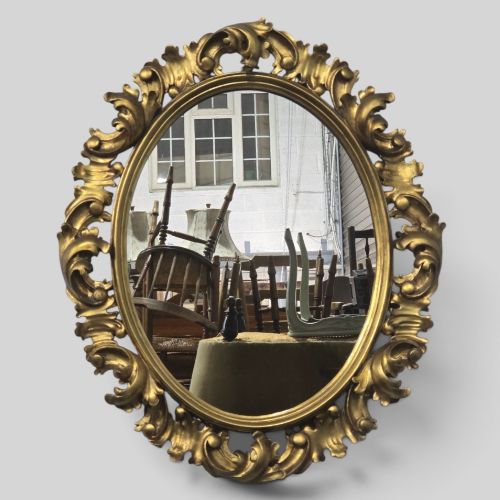
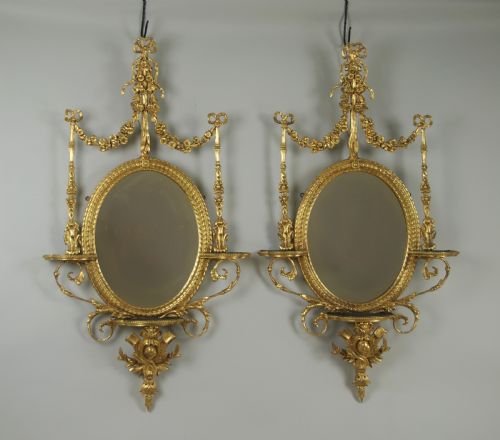

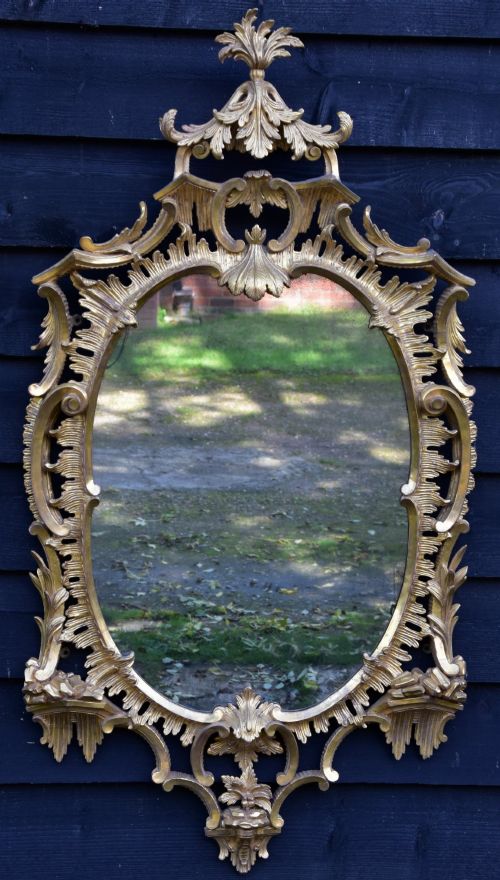
Gilt Oval Wall Mirror
When you search for a gilt oval wall mirror, you are seeking a reflective piece that unites warmth of gold leaf with curving vertical grace.
Gilt Oval Wall Mirror
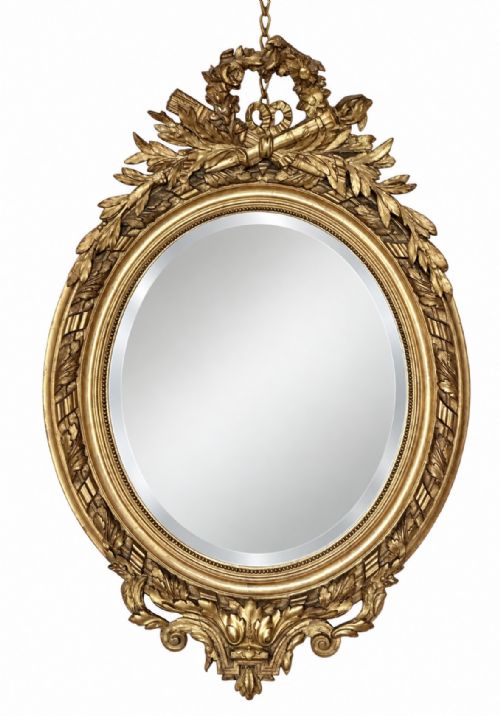
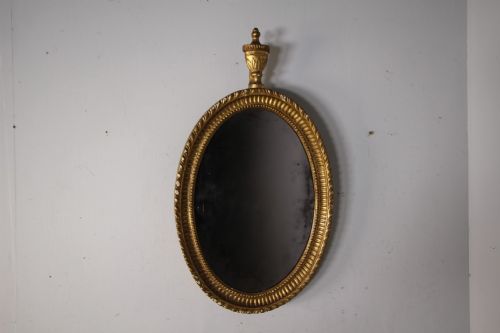
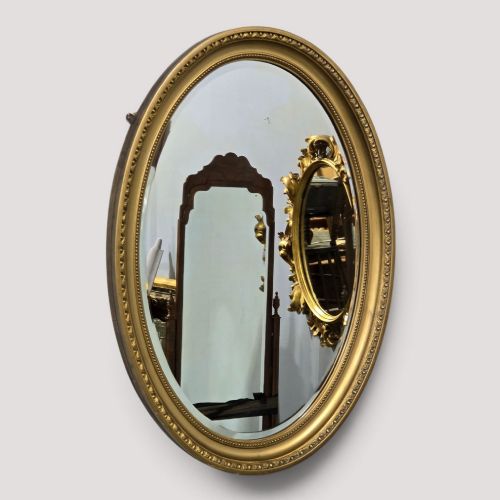
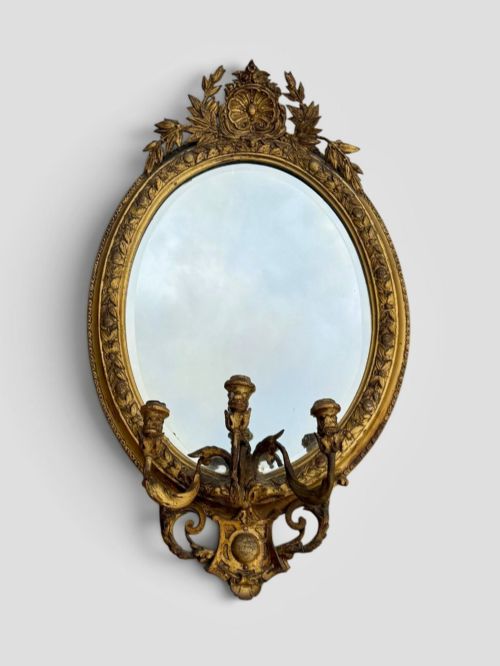
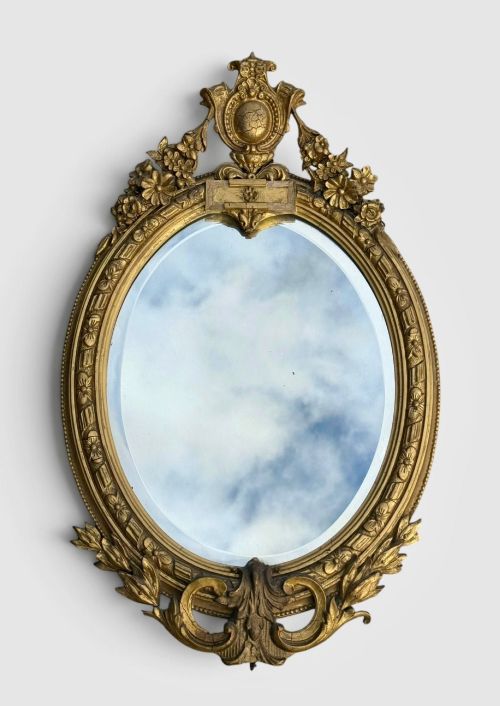
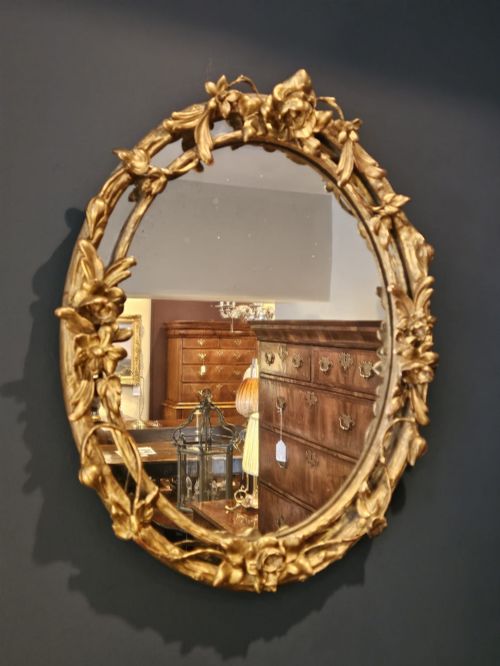
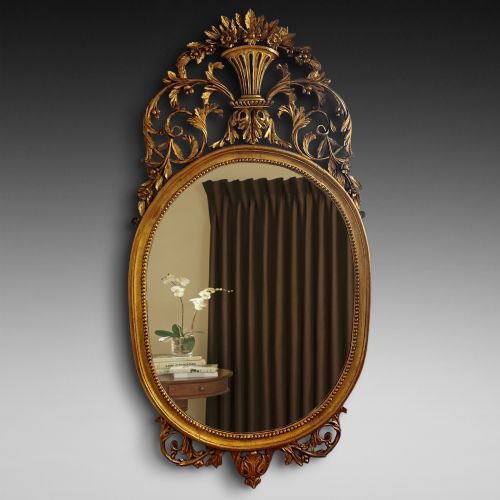
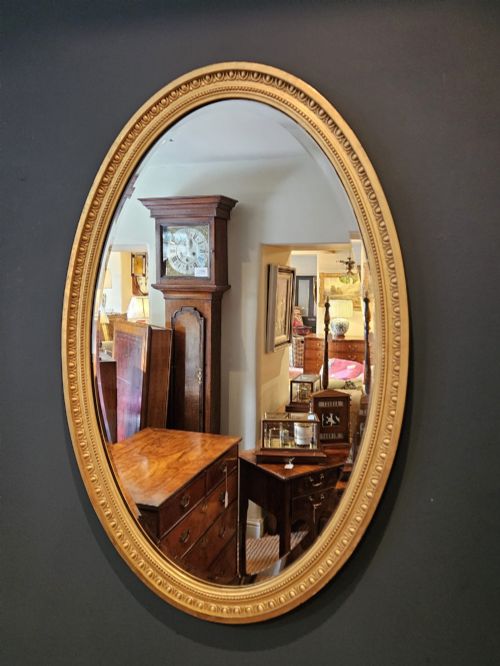
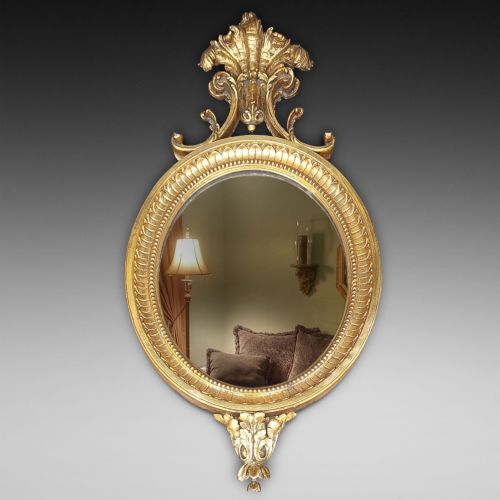
A gilt oval wall mirror brings a vertical curve to interior spaces, softening sharp room angles with disciplined proportion. These items range from Georgian and Regency creations to Victorian interpretations and later revivals.
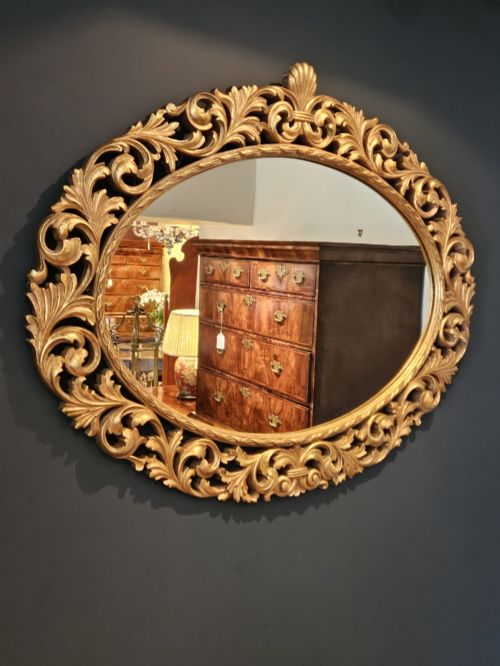
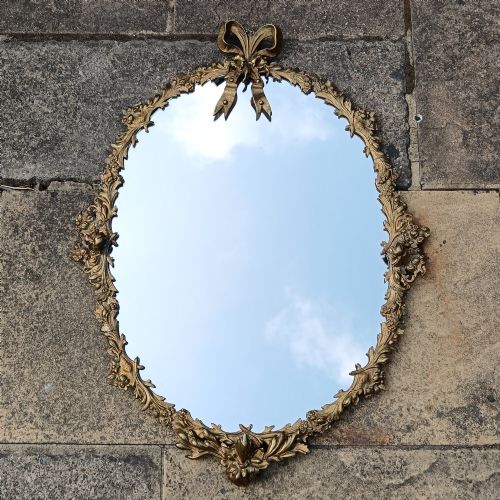
You will encounter pieces executed in distinct decorative vocabularies, including French Louis styles, Rococo Revival, and Adam neoclassical schemes. Many examples incorporate natural motifs like vine leaves, ribbons, or swags carved into the frame.
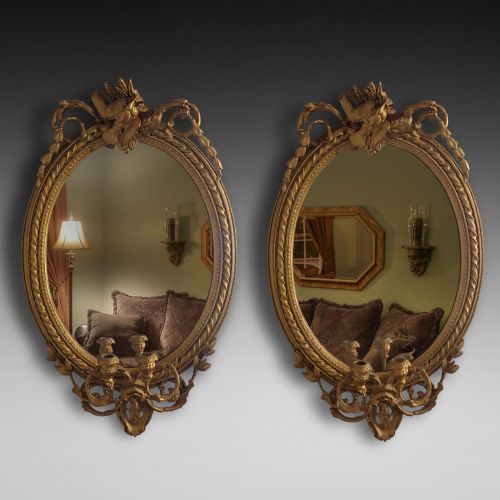
The format serves dual purposes as a functional looking glass and a decorative focal point above mantelpieces or console tables. Wall mirrors and girandoles both populate this category, bringing light deep into rooms.
How they were made
Carved timber frames provide the foundational structure for many pieces, whilst others utilise composition or gesso applied over wood to hold intricate ornamentation. Artisans sculpted intricate relief work such as acanthus leaves and rope twists directly into these preparatory layers.
Gold leaf or gilt paint was then meticulously applied to the prepared surfaces, sometimes supplemented by parcel-gilt details where underlying ebonised wood or red bole peeks through. Earlier examples frequently house mercury plates that exhibit characteristic ageing and depth.
Gilt Oval Wall Mirror Retail Price Guide 2026
Typical asking prices for gilt oval wall mirror among the pieces listed under this phrase on Sellingantiques today, from the lower quarter to the upper quarter. They describe what is for sale here now, not the wider market.
Listings span multiple eras, including Georgian, Regency, Victorian, and Edwardian periods, utilising wood, gesso, and glass.
What varies in quality
The depth and crispness of the carving distinguish finer examples from standard production, as hand-carved gesso and timber show sharper undercut details than moulded composition. Artisans who spent hours refining floral swags or ribbon bows created a tangible sense of relief.
The integrity of the gilding and the preservation of the original mirror plate heavily influence desirability. Older mercury plates display distinct character, whilst well-maintained gold leaf retains a softer luminescence than harsh modern paints.
The Gilt Oval Wall Mirror Glossary
- Gesso
- A plaster-like mixture applied to wood frames to create a smooth surface for carving and gilding. This material allows artisans to achieve sharp decorative relief.
- Girandole
- A decorative wall mirror fitted with candle sconces attached to the frame. The polished glass reflects the candlelight to brighten dark chambers.
- Parcel-gilt
- A decorative treatment where only specific portions of a wooden object are gilded, leaving other areas exposed such as dark timber or paint. This technique creates visual contrast.
- Mercury plate
- An older type of mirror glass backed with a tin and mercury amalgam before silvering methods were invented. It often exhibits tiny dark speckles and soft distortion.
- Acanthus
- A classical leaf ornament carved into wood or moulded in gesso, modelled on the Mediterranean plant. It frequently decorates the corners and crests of frames.
Gilt Oval Wall Mirror: Frequently Asked Questions
Where should I hang a gilt oval wall mirror?
These mirrors function well above mantelpieces, dressing tables, or entrance hall consoles where their vertical orientation balances surrounding furniture. They draw the eye upward and reflect natural light into darker corners of the room.
Ensure the wall fixings match the weight of the timber and gesso frame, particularly for larger antique examples. Positioning them opposite a window maximises the illumination they cast across the interior space.
How do I care for antique gilding?
Dust the frame gently with a dry, soft artist's brush or a clean microfiber cloth to prevent dirt accumulation. Avoid liquid cleaners, abrasive cloths, or chemical polishes which can strip the delicate gold leaf.
Keep the mirror away from direct sunlight and damp environments to protect both the wooden substrate and the reflective glass plate. Stable room temperatures prevent the gesso from cracking over time.
What is a girandole mirror?
A girandole is a wall mirror featuring integrated candle sconces branching out from the frame. In historical interiors, these arms held candles to multiply the ambient light within the room.
Today, they remain prized decorative objects even when the candle holders are no longer used for lighting. The metal or wooden sconces add architectural width to the composition.
How do I distinguish 18th-century frames from later revivals?
Eighteenth-century pieces typically show hand-carved timber construction with older patination on the gilding and traditional joinery methods at the corners. The hand-carved details exhibit subtle irregularities distinct from machine-moulded uniformity.
Later Victorian and 20th-century revivals often utilise composition mouldings over pine and feature different backing boards or modern screw fixings. Examining the back of the frame usually reveals the age of the wood and construction techniques.