

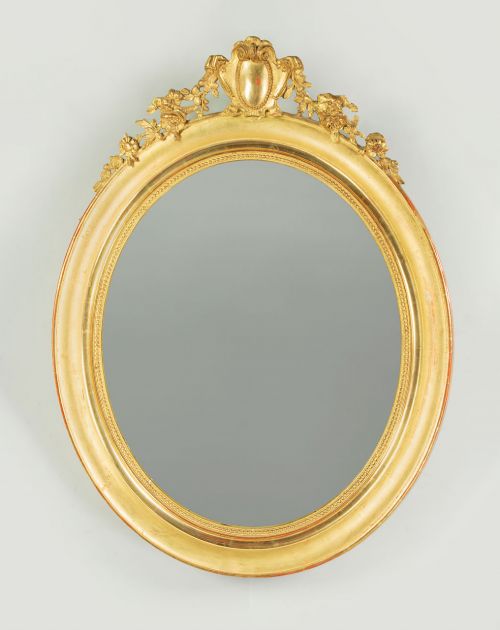
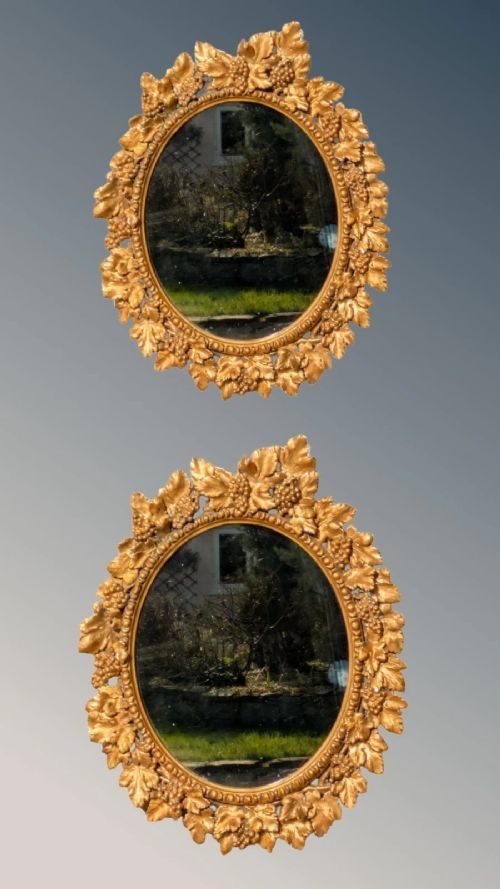

Gold Framed Oval Mirror
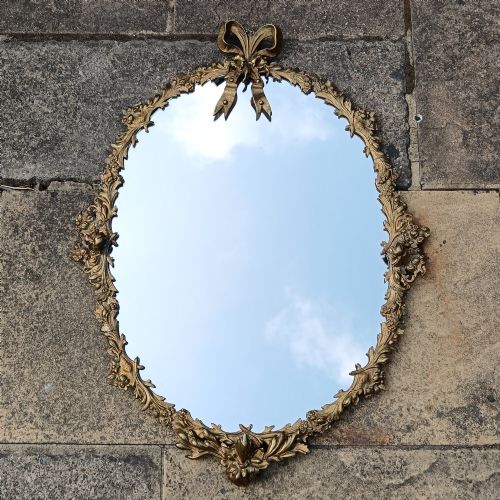
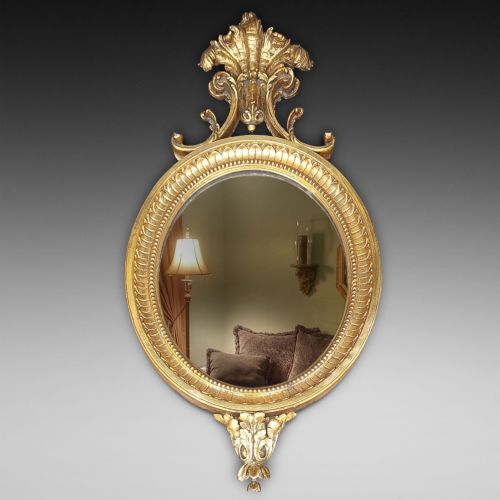
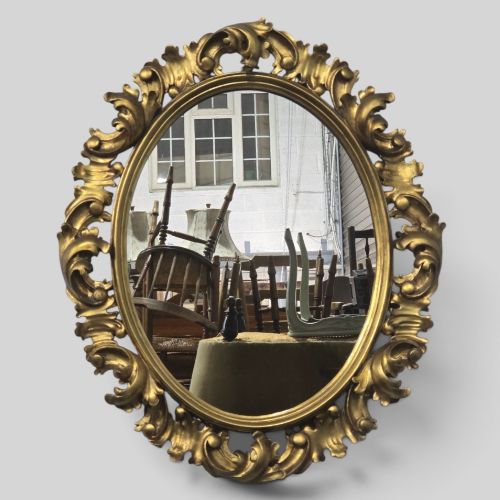
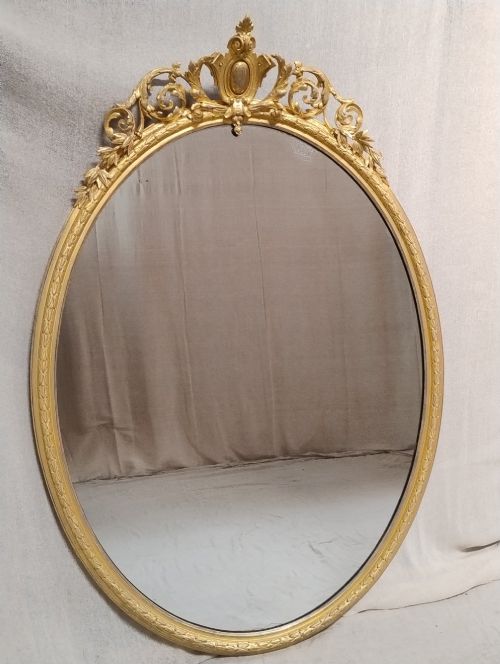
A gold framed oval mirror brings a vertical elegance and light to a room, drawing the eye with its curved contours and gilded surface.
Gold Framed Oval Mirror
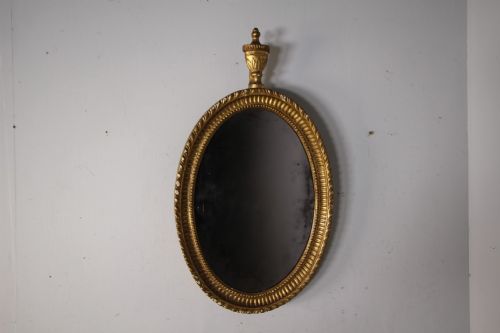
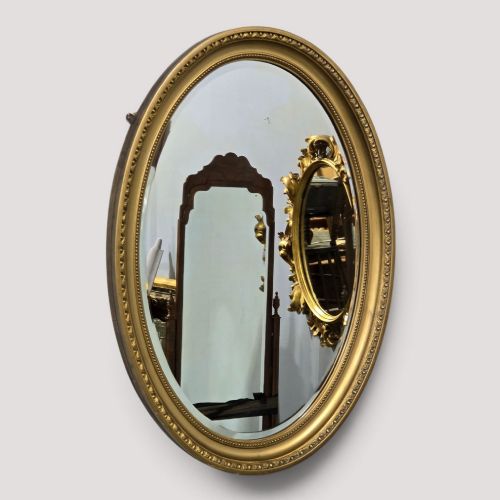
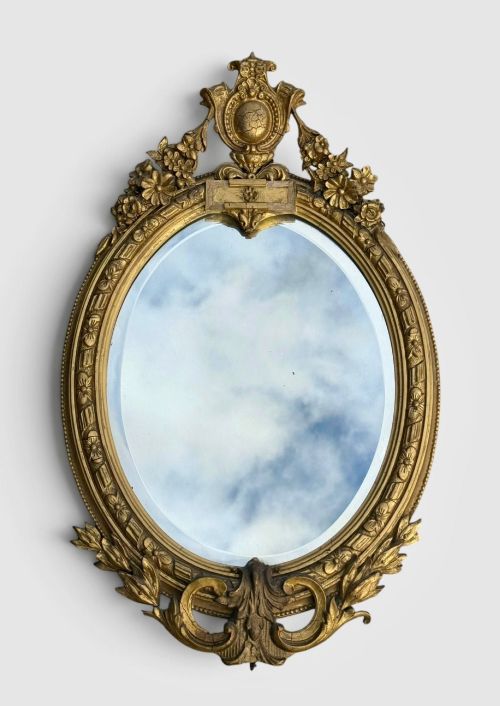
A gold framed oval mirror is a decorative wall hanging designed to reflect light and soften rectilinear interiors. When searching for a gold framed oval mirror, buyers encounter a diverse selection spanning from the eighteenth century through the Victorian era and into the early twentieth century.
The pieces on this page comprise wall mirrors, hall mirrors, and pier mirrors in various scales. Victorian and nineteenth century examples predominate, alongside earlier Georgian pieces and later Edwardian interpretations.
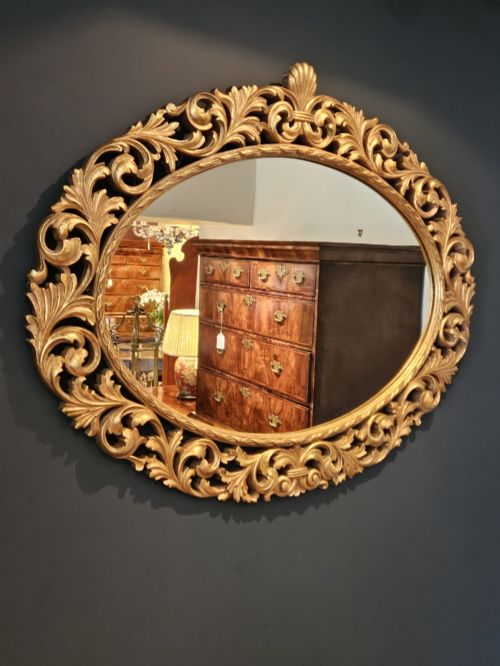
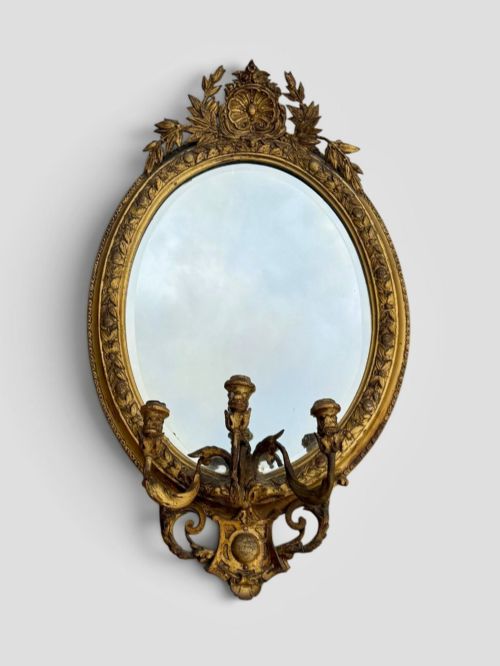
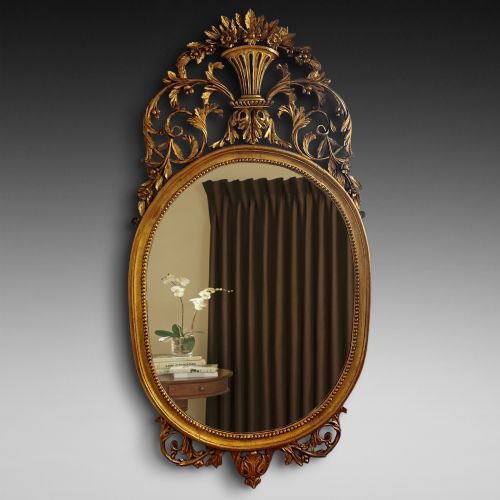
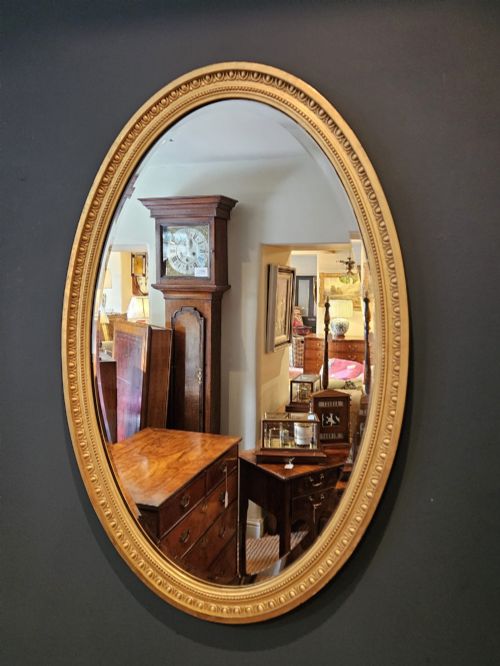
Stylistic variations range from restrained neoclassical and Adam designs to ornate Rococo revival, French chateau, and Louis XVI revival pieces. Timber forms appear in both carved giltwood and painted finishes.
Materials and construction
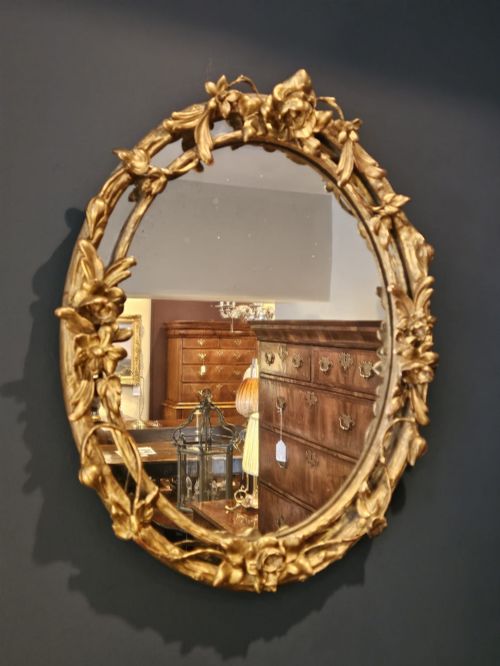
Craftsmen built the foundations of these pieces using timber such as wood, applying layers of gesso to carve intricate surface details like vine leaves or floral motifs. Gold leaf or composition was then applied over the prepared gesso ground to achieve the characteristic metallic sheen.
Mirror plates in older pieces frequently consist of mercury plate glass, which displays a characteristic mottled ageing and depth. Frames also utilise brass, ebonised wood with parcel-gilt highlights, and cast gilt bronze mounts on French examples.
Vine leaves and twisted rose stems frequently twine around nineteenth-century frames, bringing a touch of the greenhouse indoors.
Distinctions in quality
Quality rests upon the depth and crispness of the carving within the gesso and giltwood, where hand-carved detailing surpasses moulded composition. The preservation of the original gilding and the retention of authentic mercury mirror plates distinguish superior examples.
Proportion and scale dictate desirability, from smaller cushion mirrors to enormous wall mirrors intended for grand halls. The integrity of the timber frame and the subtlety of revival styling, whether Rococo, Neoclassical, or Chinoiserie, determine the distinction of each piece.
The Gold Framed Oval Mirror Glossary
- Giltwood
- Wood that has been coated with gold leaf. This method provides a rich and durable metallic finish found on superior antique frames.
- Gesso
- A plaster-like mixture applied to wooden frame bases. It is smoothed and carved to create relief ornament before gilding.
- Mercury Plate
- An early mirror glass manufacturing method using a tin and mercury amalgam. It produces a distinctive wavy reflection and dark spots from age.
- Girandole
- A decorative wall mirror featuring attached candle sconces. The candle arms multiply the reflected light in a room.
- Parcel-Gilt
- A finish where only specific portions of an object are gilded. The remaining areas typically show ebonised or painted wood.
Gold Framed Oval Mirror: Frequently Asked Questions
Where should I hang an oval wall mirror?
An oval wall mirror suits narrower wall spaces where a rectangular frame would appear too heavy. Common placements include above a mantelpiece, in a hallway, or over a pier table.
The vertical curve balances architectural angles in a room. Ensure the hanging fixings are securely anchored into wall studs due to the weight of timber and gesso frames.
How do I identify a Georgian mirror?
Georgian mirrors typically display restrained neoclassical or early Rococo motifs carved directly into timber or gesso. Proportions are balanced, and the gilding often shows fine craquelure from age.
Looking at the reverse reveals older pine backing boards and hand-cut fixings. Earlier pieces from this period frequently retain their original mercury glass plates.
How do I care for antique gilding?
Antique gilding requires dusting with a dry, soft feather duster or microfiber cloth. Avoid commercial cleaning sprays, moisture, and abrasive cloths which strip the delicate gold leaf.
Keep the mirror away from direct sunlight and high humidity areas to protect both the timber substrate and the historic surface finish.