



Mahogany Pier Glass
A mahogany pier glass brings architectural verticality and rich timber grain to a room, hung traditionally between windows to reflect natural light.
Mahogany Pier Glass
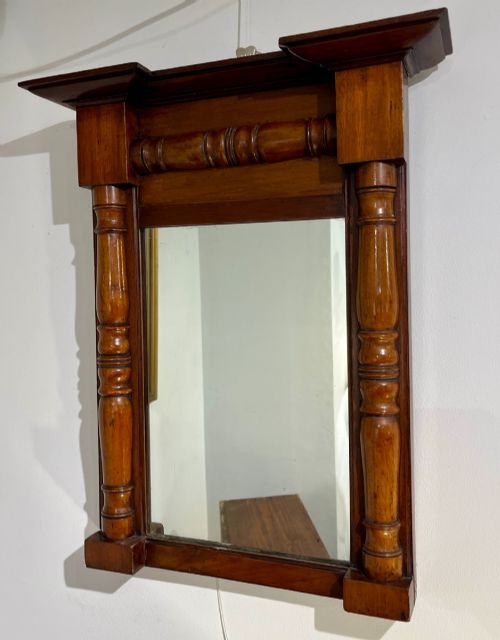
A mahogany pier glass is a tall, vertical wall mirror designed specifically to fit the narrow wall space, or pier, between two windows. These pieces emerged strongly during the 18th century and continued through the Regency and Victorian periods, often pairing with console tables placed directly below them.
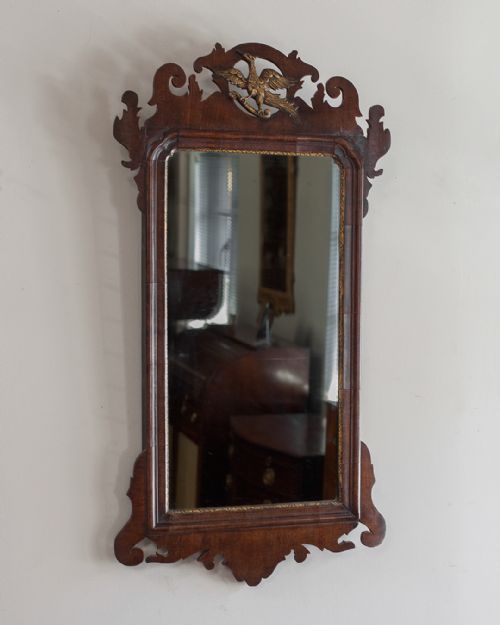
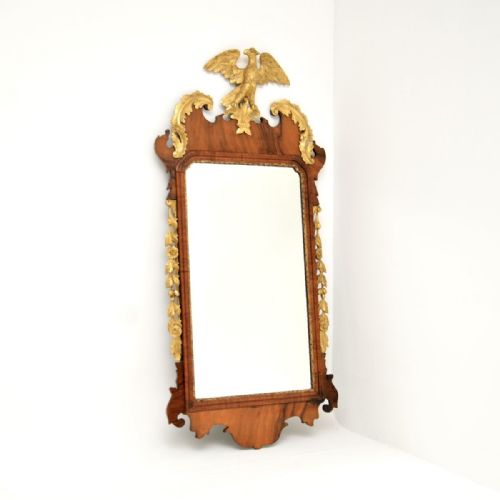
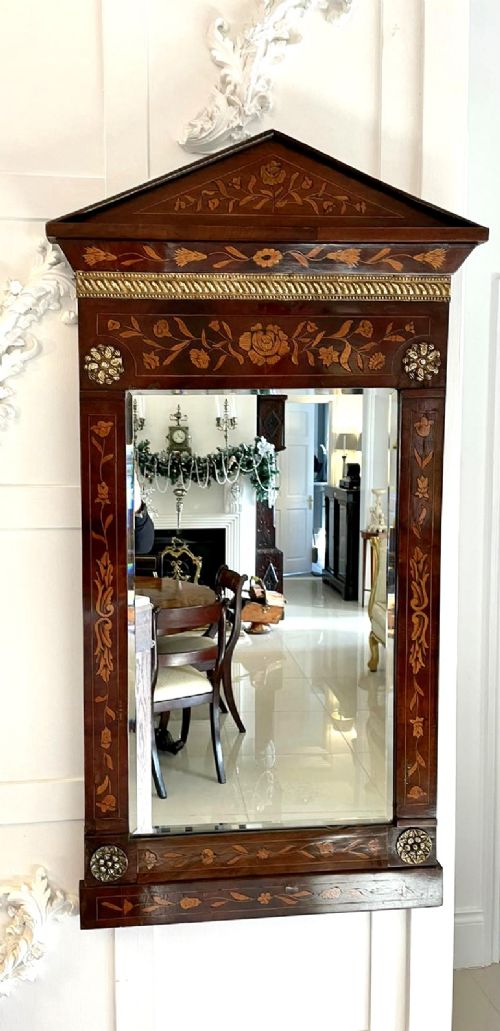
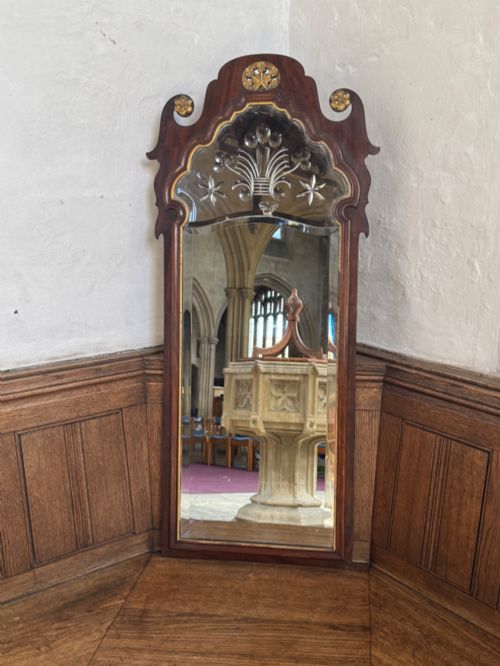
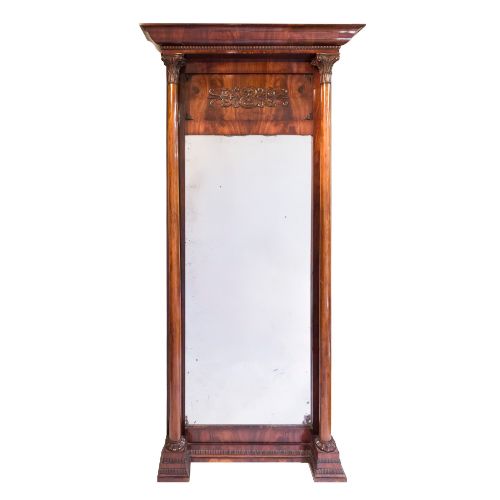
The versions met most frequently on this page date from the Georgian and Regency eras through to the mid 19th century, constructed in solid mahogany or finished with flame mahogany veneer. Many incorporate parcel gilt decoration, carved fretwork, or giltwood motifs such as the iconic Hoho bird.
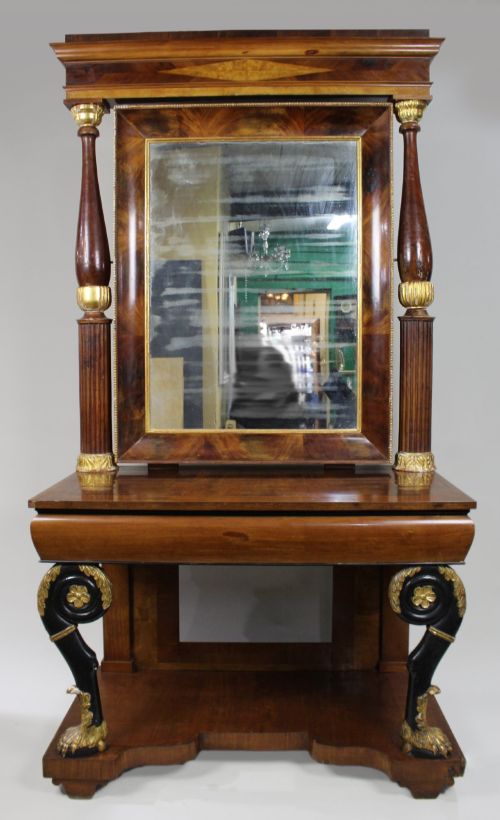
Beyond standard wall mirrors, the selection includes related forms like Biedermeier pier mirrors, console tables with integrated mirrors, and revival pieces reflecting William Kent or Chippendale designs. They serve the same spatial purpose as their historical ancestors, drawing light deep into a drawing room or hallway.
Materials and construction
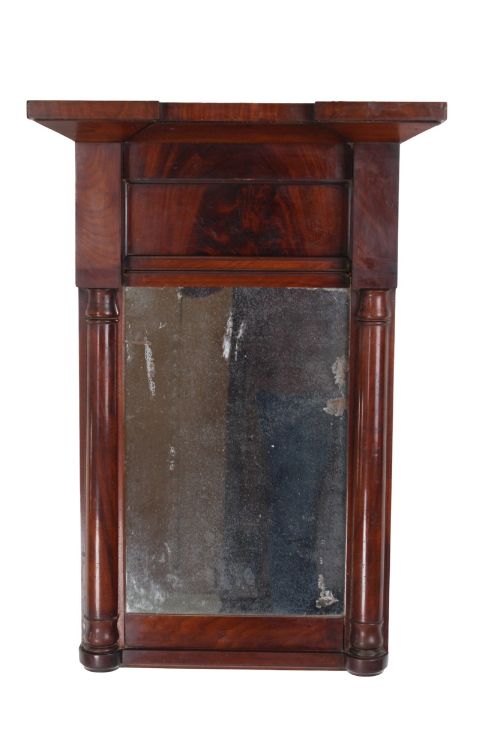
Cabinetmakers built the foundational frames using dense, durable mahogany, frequently applying figured flame mahogany veneer across the main board surfaces to create striking visual movement. Carved elements and mouldings were often enhanced with gesso and gold leafing, known as parcel gilt, to catch the candlelight or daylight.
Early examples utilised original mercury plates or mirror glass set by hand into the rebate behind wooden stops or secure backboards. Structural joints relied on traditional woodworking techniques, holding upright rectangular proportions that needed to remain stable over centuries of hanging.
Mahogany Pier Glass Retail Price Guide 2026
Typical asking prices for mahogany pier glass among the pieces listed under this phrase on Sellingantiques today, from the lower quarter to the upper quarter. They describe what is for sale here now, not the wider market.
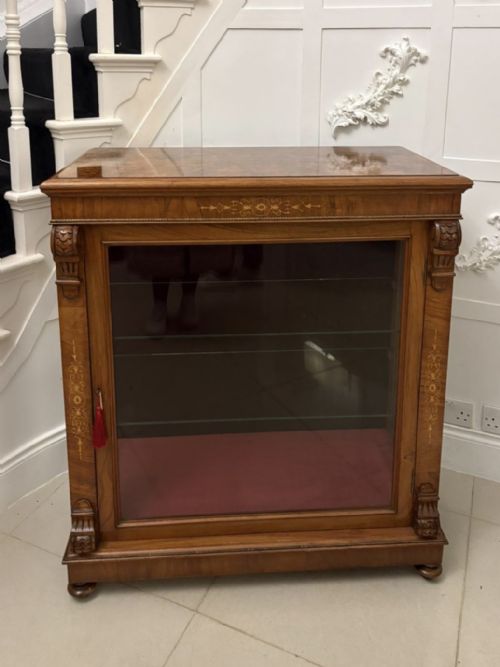
Listings feature mahogany pier glasses spanning the 18th, 19th, and early 20th centuries, alongside related console tables and display cabinets.
Separating the ordinary from the exceptional
Quality in a mahogany pier glass rests on the depth of the timber figuring, the crispness of the hand-carved fretwork or gilded details, and the survival of the original mirror plate. Superior pieces display master craftsmanship in the joinery of the frame and the proportion of the parcel gilding relative to the dark mahogany grain.
Lesser examples show mechanical cutting in decorative elements, flat or uninspiring veneer selection, or replacement plates that lack the soft distortion and foxing characteristic of period glass. The most desirable items retain their untouched original surfaces and historic gilding without excessive intervention.
Edwards & Roberts
The Mahogany Pier Glass Glossary
- Pier Glass
- A tall wall mirror designed to hang on the narrow expanse of wall between windows. These mirrors maximise available daylight in a formal room.
- Parcel Gilt
- Partially gilded woodwork where gold leaf is applied only to specific carved highlights, mouldings, or motifs against the dark mahogany background.
- Flame Mahogany Veneer
- A thin slice of timber cut from the point where a branch joins the main trunk, yielding a distinctive flickering flame pattern across the frame.
- Gesso
- A plaster-like mixture applied to wooden frames as a smooth base layer for subsequent gilding with gold leaf.
- Fretwork
- Openwork ornamentation cut from thin boards using a fretsaw, frequently featuring geometric, floral, or avian designs along the frame borders.
Mahogany Pier Glass: Frequently Asked Questions
Where should I hang a pier glass?
Historically, these mirrors were hung on the narrow wall space between two tall windows to bounce natural light back into the centre of a room. Today, they work equally well above a low sideboard, console table, or in a high-ceilinged hallway.
Because of their vertical proportions, they draw the eye upward and make smaller spaces feel significantly taller and brighter.
How do I identify a Georgian pier glass?
Georgian examples often feature rich mahogany timbers, precise fretwork borders, and parcel-gilt accents such as carved wooden leaves or a traditional Hoho bird crest at the top. The glass plates may show subtle signs of age, such as slight waviness or foxing.
Construction details on the reverse, including hand-cut screws or old pine backing boards, further help confirm the 18th or early 19th-century origin.
What is Biedermeier style?
Biedermeier furniture originates from Central Europe during the first half of the 19th century, favouring clean architectural lines and warm, beautifully figured wood grains over heavy ornamentation. A Biedermeier pier glass relies on the natural beauty of flame mahogany veneer rather than carved gilding.
These pieces offer a restrained, elegant aesthetic that suits both traditional and contemporary interiors.
Are the mirror plates original?
Many pier glasses retain their original mercury or early silvered glass plates, which often display characteristic speckling, minor oxidation, or soft reflections. Some pieces have had their plates replaced over the centuries due to damage or deterioration.
Examining the depth of the glass and how it sits within the frame helps determine whether the plate has survived from the period of manufacture.