

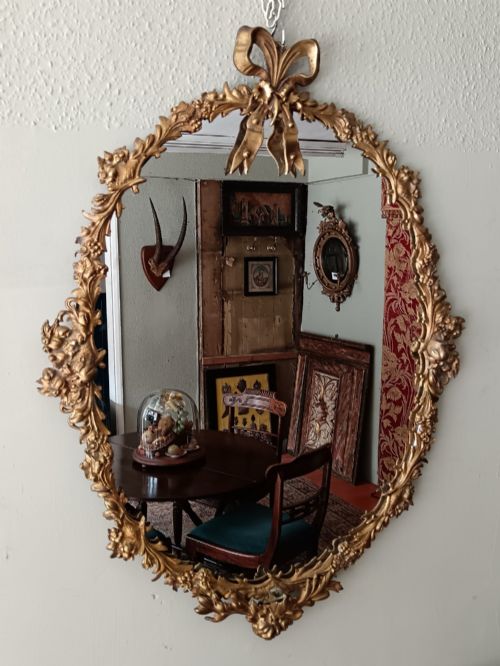
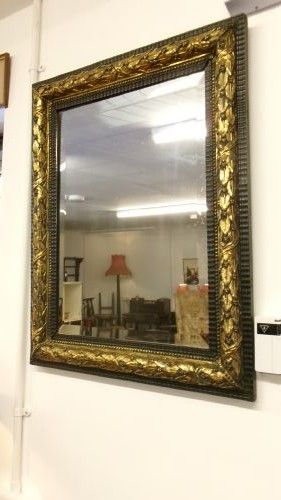
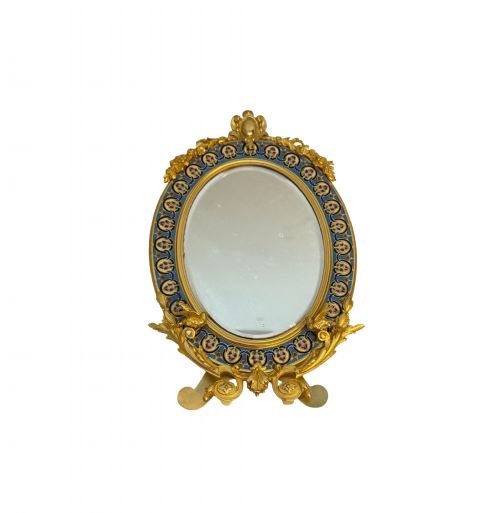


Gilt Brass Mirror
When you select a gilt brass mirror, you choose a reflective object that brings nineteenth-century French and Victorian warmth to a room.
Gilt Brass Mirror
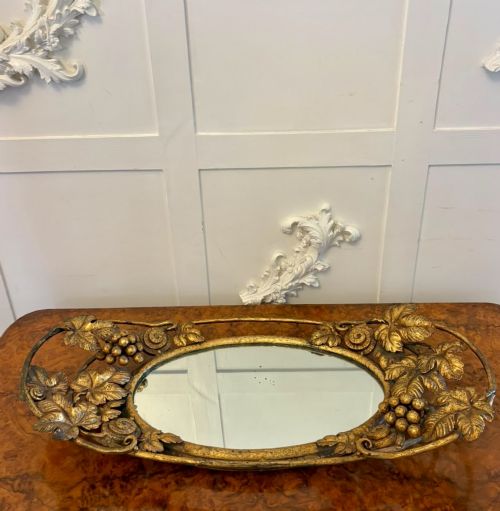
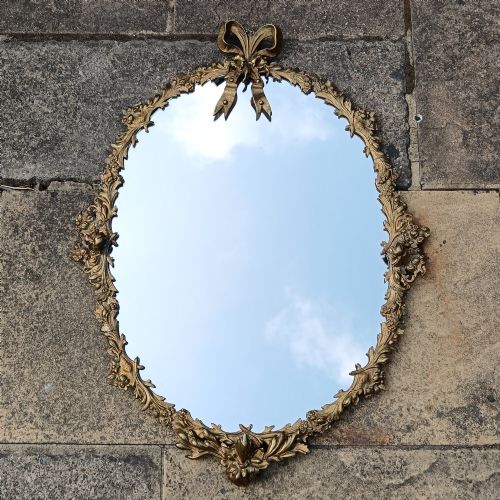
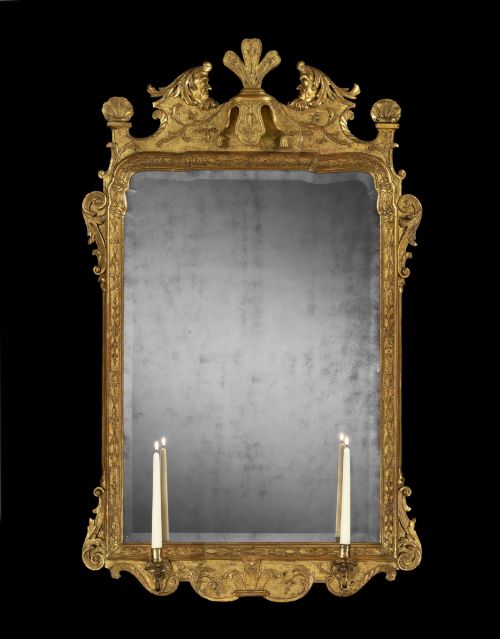
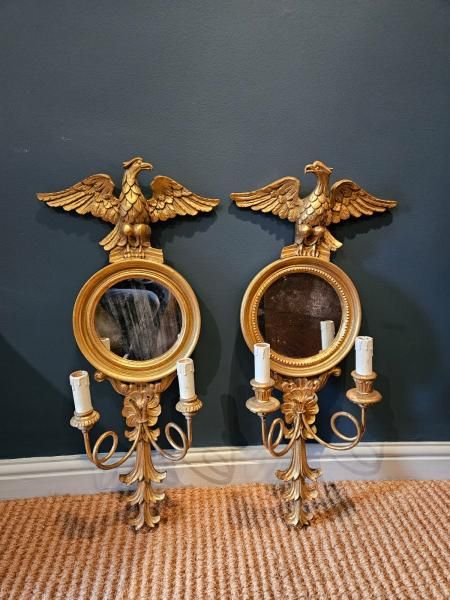
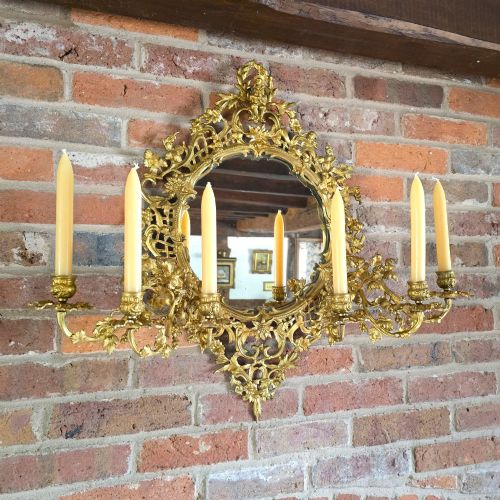
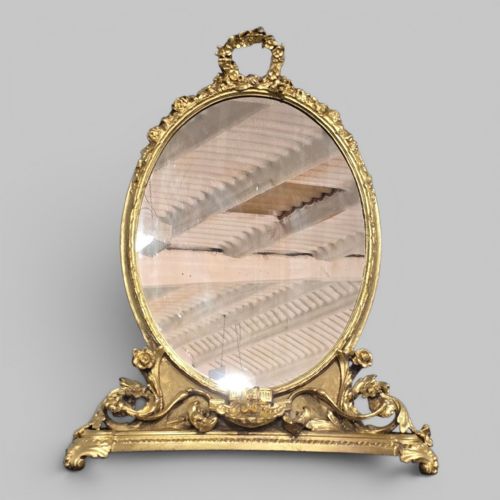
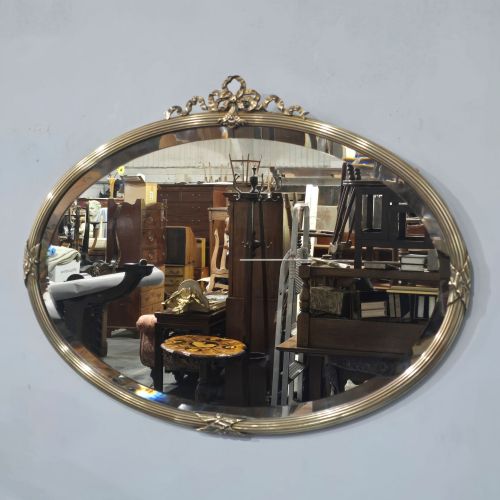
A gilt brass mirror combines cast or stamped metal frames with reflective glass, appearing frequently in nineteenth-century French and Victorian designs. Buyers encounter wall mirrors, table dressing variants, and sconces equipped with candle branches or mirror backs.
The selection ranges from small vanity pieces for dressing tables to large wall-mounted formats displaying Louis XVI, Empire, or Rococo revival characteristics. Many examples integrate gilt bronze, ormolu, or gilt metal mounts alongside wooden or ebonised elements.
Origins trace principally to continental workshops and British makers from the Victorian era up to the Edwardian period and the 1930s. These objects served functional and decorative roles in period interiors, often functioning as pairs or matching girandoles.
How they were made
Frames rely on cast brass, ormolu, and gilt bronze, often shaped through traditional foundry methods that permit intricate scrolling, floral motifs, and figural details. Artisans applied gold leaf or gilding solutions over the metal substrates to achieve a lasting luminous finish.
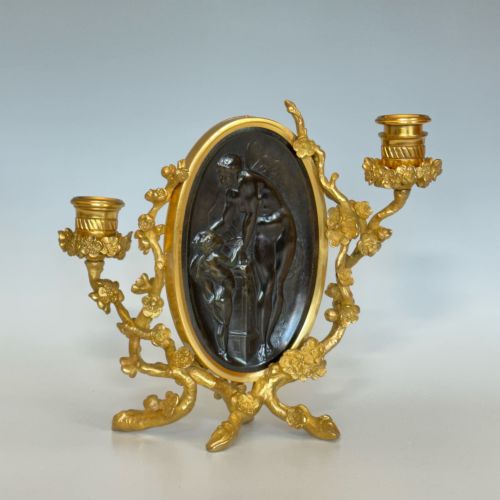
Mirror plates consist of glass set into the metal housing, sometimes featuring bevelling or original sparkle within the silvering. Secondary materials like wood, ebonised elements, champleve enamel, and Limoges plaques appear in composite frames.
What varies in quality
The crispness of the metal casting defines the upper tier of production, where chased details and finely articulated ornament show human handiwork rather than mass-produced smoothing. Heavier brass frames with robust structural integrity and original mercury or silvered glass plates command greater appreciation.
Integration of secondary materials such as porcelain plaques, enamel work, or fine woodwork alters the character of individual pieces. Preservation of the original gilding surface without aggressive cleaning or re-plating remains central to the integrity of the object.
Thiebaut Freres·Joseph Meissonnier·F. Bienvue
The Gilt Brass Mirror Glossary
- Ormolu
- Gilded bronze produced by applying a mercury-gilding amalgam to cast bronze objects during the eighteenth and nineteenth centuries. This technique created a durable, deep golden surface on decorative metalwork.
- Girandole
- A branched wall-mounted candlestick or sconce incorporating a reflective mirror back to amplify candle light. These pieces often feature matching pairs and elaborate metal frames.
- Champleve
- An enamelling technique where troughs or cells are hollowed out of a metal surface and filled with vitreous enamel paste before firing. The resulting coloured patterns sit flush with the surrounding metal borders.
- Cushion mirror
- A frame style with a broad, outward-sloping border resembling a cushion, frequently wrapped in tortoiseshell, ebonised wood, or metal mounts. This form gained popularity during the seventeenth century and returned in nineteenth-century revivals.
- Bevel
- An angled edge cut along the perimeter of a mirror plate to catch and refract light. This detail distinguishes finer optical glass from flat, plain-cut alternatives.
Gilt Brass Mirror: Frequently Asked Questions
How do I hang a heavy brass mirror?
Heavy wall mirrors require secure fixings anchored directly into wall studs or solid masonry using appropriate weight-rated screws and brackets. The hanging wire or heavy D-rings on the reverse must match the substantial mass of the metal frame.
Professional installation is recommended for large nineteenth-century pieces to prevent strain on the original antique frame joints and mounting hardware.
Where should I place a table mirror?
Table and dressing mirrors suit stable surfaces such as mahogany chests of drawers, vanity tables, or console tables where they can reflect natural light from windows. Adjustable pedestal models allow you to alter the viewing angle for practical daily use.
Keep these pieces away from areas prone to moisture or direct, harsh sunlight to protect the fragile silvering on the glass and the metallic gilding.
Can I polish the brass frame?
Aggressive metal polishes strip away historic gilding and should be avoided entirely on antique gilt brass and ormolu surfaces. Gentle dusting with a dry, soft cloth remains the best method for removing everyday particles without causing damage.
Professional conservation is required if heavier cleaning is necessary, as chemical dips destroy the subtle patination built up over decades.
How do I date a gilt brass mirror?
Dating relies on examining the casting quality, style revival period, assembly screws, and the condition of the mirror plate itself. Nineteenth-century French pieces often exhibit distinct maker signatures, heavier bronze casting, and hand-bevelled glass.
Later Edwardian and 1930s interpretations display lighter stamped metal frames and different fastening techniques that separate them from earlier Victorian examples.