
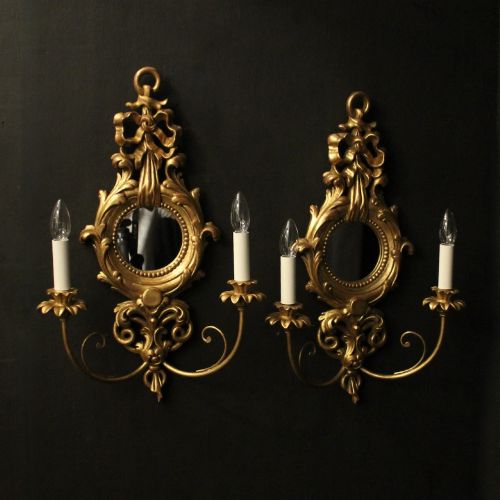
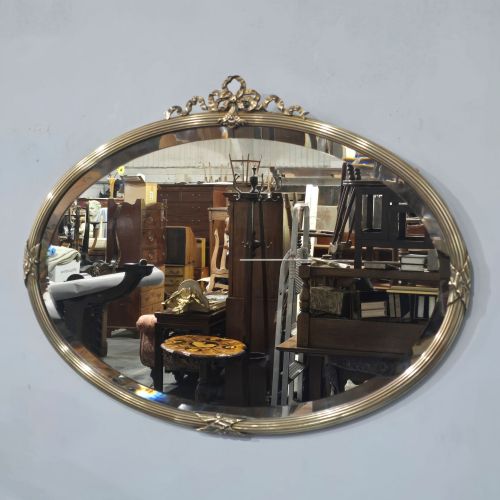


Ribbon Bow Mirror
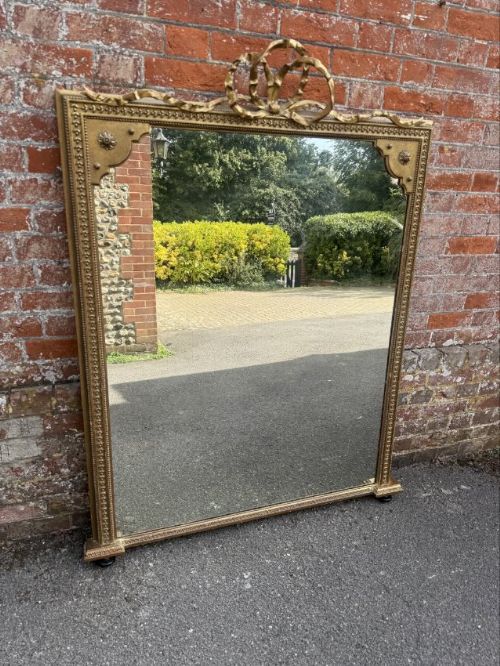
A ribbon bow mirror brings a touch of neoclassical elegance to a room, offering refined crests and carved hanging motifs.
Ribbon Bow Mirror
These items originate from French and English workshops, utilising Louis XVI Revival, Adam Style, and 19th Century aesthetics. A buyer looking at this collection will find wall mirrors and overmantel mirrors alongside matching girandoles and wall lights.
How they were made
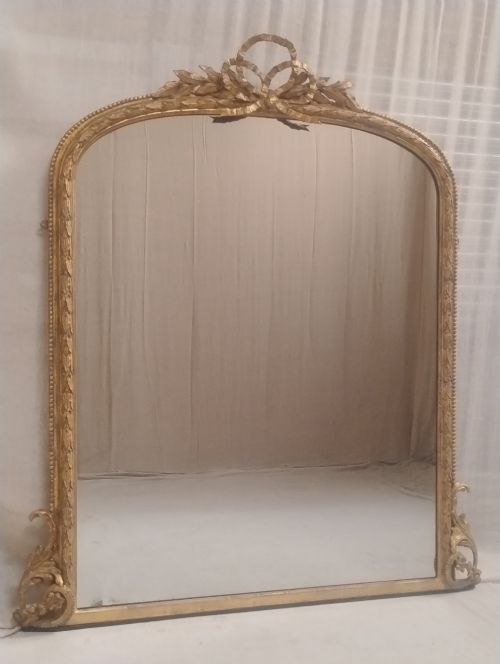
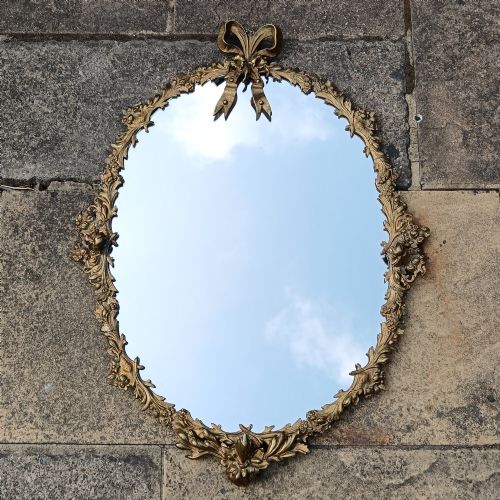
Frames rely on carved wood, gesso, and giltwood finishes, frequently combined with white painted details or rope twist carved frames. Metal versions utilise brass and gilt bronze to form the distinct oval and hanging structures.
Mirrors employ glass and bevelled glass plates set within securely joined wooden or cast metal structures. Pairs of wall lights and twin arm girandoles incorporate bronze to support structural arms.
What varies in quality
The sophistication of the carved crests and the crispness of the ribbon and bow motifs distinguish the finest examples. Finer pieces demonstrate deep relief work in the giltwood or bronze casting.
Proportion and scale dictate the visual weight of an overmantel or wall mirror within an interior. The application of the original gilding and the clarity of the mirror glass contribute significantly to the character of each piece.
The Ribbon Bow Mirror Glossary
- Giltwood
- Wood that has been coated with gold leaf or a gold-coloured finish. This material defines the surface of numerous period frames.
- Gesso
- A plaster-like mixture applied to wood surfaces before gilding to create a smooth base for carving. It allows intricate decorative details to be moulded onto the frame.
- Overmantel Mirror
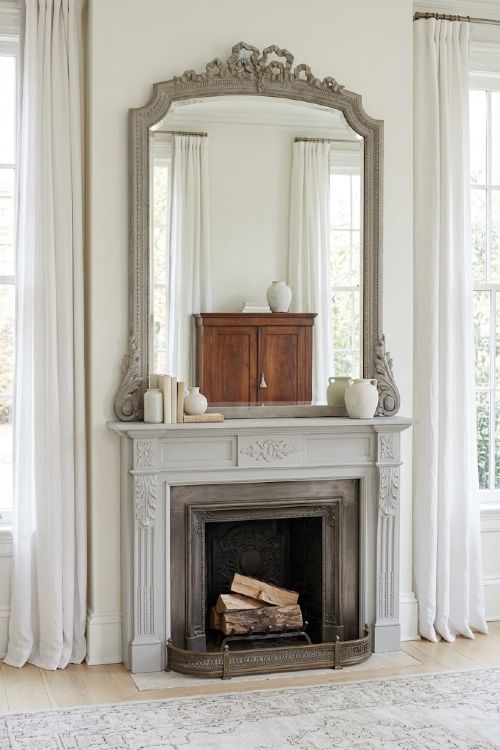
- A large mirror designed to hang above a fireplace mantelpiece. These pieces often feature substantial arched or rectangular wooden frames.
- Girandole
- A decorative wall-mounted mirror equipped with one or more candle branches or arms. Pairs of these fixtures provide reflected light.
- Bevelled Glass
- Mirror glass with edges cut and polished at an angle. This technique creates a framed border effect within the glass itself.
Ribbon Bow Mirror: Frequently Asked Questions
Where should I hang a ribbon bow mirror?
These pieces suit living rooms, hallways, and bedrooms where their decorative frames can serve as a focal point. Overmantel versions sit naturally above mantelpieces, while smaller oval examples fit well on narrower wall spaces.
Positioning the mirror opposite a window helps to maximise natural light within the room. Ensure the wall structure supports the weight, particularly with larger giltwood overmantels.
How do I identify the period of a mirror?
Examine the materials, frame construction methods, and stylistic revival influences present in the piece. Victorian and Edwardian examples often incorporate Adam or Louis XVI revival motifs.
Backboards, fixings, and the composition of the glass plate provide additional clues regarding age. Comparing the specific carving style helps distinguish between nineteenth-century and later interpretations.
Are brass and gilt bronze mirrors different?
Brass and gilt bronze utilise distinct metal alloys and casting techniques. Gilt bronze typically exhibits a heavier weight and finer detail associated with French decorative metalwork.
Brass frames frequently appear in Victorian pieces with simpler structural requirements. Both metals provide a durable alternative to carved wooden frames.
What is an Adam style mirror?
An Adam style mirror reflects the neoclassical design principles popularised by the Adam brothers in the eighteenth century and revived later. These pieces feature symmetrical ornamentation, swags, and ribbon motifs.
They rely on light proportions and delicate frames rather than heavy Baroque carving. This aesthetic complements both period interiors and simplified modern spaces.