






Repousse Copper Mirror
These repousse copper mirror pieces bring tactile Arts and Crafts and Aesthetic Movement character to a room through hand-hammered metalwork.
Repousse Copper Mirror
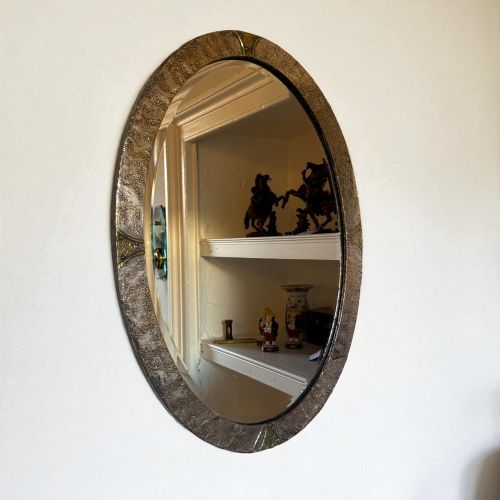
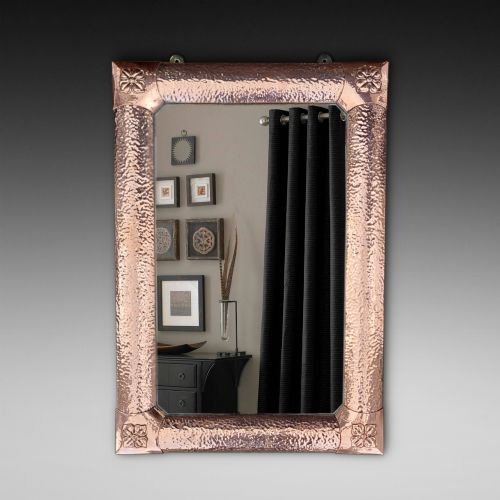
A repousse copper mirror combines reflective glass with hand-beaten metal frames, predominantly produced during the Arts and Crafts and Aesthetic periods. You will most frequently encounter wall mirrors and table mirrors dating from the late nineteenth century into the early twentieth century.
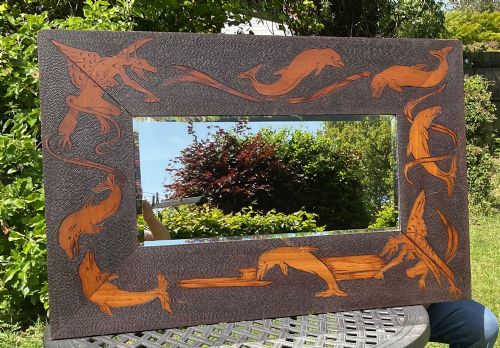
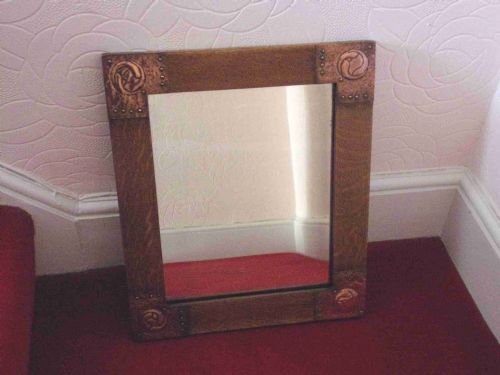
The forms range from simple rectangular and oval wall mirrors to pieces embellished with oak, brass, velvet, and ceramic details. Some examples incorporate striking naturalistic and mythological motifs such as stylised trees, honesty seed pods, dragons, and dolphins.
Makers and workshops from this era utilised traditional hand-crafting methods, resulting in distinctive surface textures and patination. Examples span from standard domestic furnishings to attributed Liberty & Company designs featuring Celtic knotwork and organic patterns.
Materials and construction techniques
The primary construction relies on sheet copper shaped by hand using repousse and chasing techniques, mounted onto supportive wooden structures such as oak or standard timber backing frames. Metalworkers hammered the copper from the reverse side to raise ornamental designs in relief.
Surfaces often display the distinct individual hammer marks of the artisan, sometimes complemented by silvered copper finishes, brass accents, or inset ceramic elements. Original mirror glass is frequently secured within wooden sub-frames behind the beaten metal frontage.
Repousse Copper Mirror Retail Price Guide 2026
Typical asking prices for repousse copper mirror among the pieces listed under this phrase on Sellingantiques today, from the lower quarter to the upper quarter. They describe what is for sale here now, not the wider market.
Some dragons and dolphins ended up guarding reflections.
Distinctions in craftsmanship and design
Quality in a repousse copper mirror is determined by the depth, crispness, and artistic ambition of the hand-hammered relief work rather than mere decorative complexity. Pieces with intricate naturalistic motifs like stylised trees or honest seed pods demonstrate superior artisan engagement compared to plain borders.
The integration of supportive materials such as solid oak frames or specialised silvered copper finishes separates standard utilitarian production from workshop pieces attributed to prominent retailers like Liberty & Company. The dexterity shown in handling the metal edges and securing the mirror glass indicates the maker's skill level.
Liberty & Company
The Repousse Copper Mirror Glossary
- Repousse
- A metalworking technique where the artisan hammers metal from the reverse side to create a raised design in relief on the front. This process gives the copper frames their tactile, three-dimensional surface texture.
- Arts and Crafts
- A design movement spanning the late nineteenth and early twentieth centuries that championed traditional handcraftsmanship and simple forms. It rejected mass production in favour of visible artisan skill.
- Aesthetic Movement
- A late nineteenth-century movement that emphasised decorative art and visual beauty over narrative subject matter. Pieces from this period often incorporate eclectic or stylised cultural motifs.
- Stylised
- A design approach that interprets natural or figurative subjects into simplified, decorative geometric or organic patterns. This is commonly seen in the tree and seed pod motifs on these frames.
- Patina
- The surface ageing, oxidation, and colour variation that develops on copper over time through exposure to the environment. Collectors value original patination for displaying the true age of the metal.
Repousse Copper Mirror: Frequently Asked Questions
How do I hang a heavy copper mirror safely?
These mirrors require robust wall fixings due to the combined weight of the copper sheet, wooden backing, and glass. Ensure the screw or hook engages directly with wall studs or utilises appropriate cavity anchors.
Position the mirror at eye level where the repousse metalwork catches natural light to best reveal the hand-beaten relief details.
How should I clean the copper frame?
Dust the surface gently with a soft, dry cloth to preserve the natural oxidation and historical patina accumulated over the decades. Avoid abrasive metal polishes that remove the characteristic dark highlights and hand-hammered character.
Keep the glass clean using standard window cleaner applied to a cloth rather than sprayed directly, preventing moisture from reaching the vulnerable wooden backing and metal joints.
Where were these mirrors displayed originally?
Domestic interiors during the late nineteenth and early twentieth centuries featured these mirrors in hallways, reception rooms, and above fireplaces. They served both a functional purpose and a decorative role in reflecting light within period spaces.
Table mirrors were typically placed on sideboards or dressing tables, while larger wall-mounted versions anchored principal living spaces alongside oak furniture.