





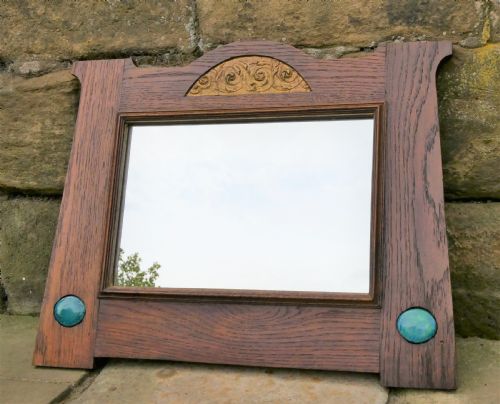

Liberty Style Mirror
A liberty style mirror brings the distinctive craftsmanship of the turn of the twentieth century directly into a room through copper, oak and glass.
Liberty Style Mirror
A liberty style mirror draws upon the Arts and Crafts and Moorish Revival movements spanning the late nineteenth and early twentieth centuries. These pieces display distinct forms ranging from compact table mirrors to large wall-mounted overmantels.
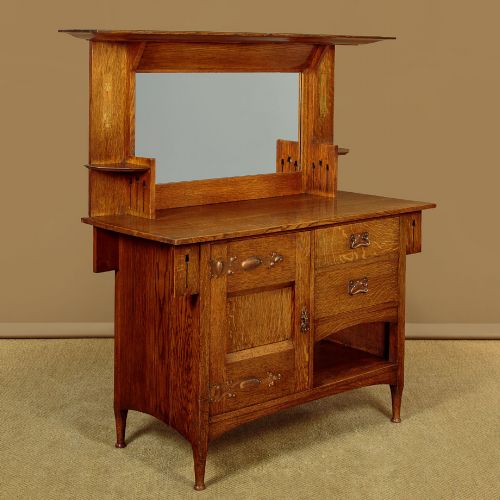
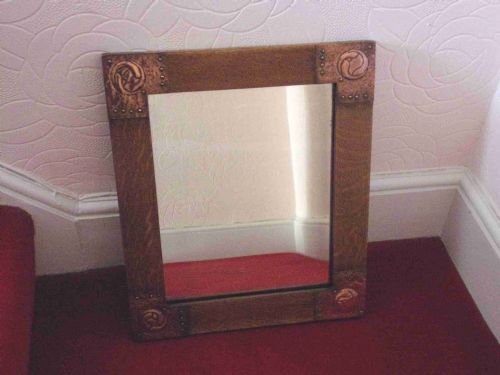
The most common examples encountered here utilise hammered or repoussé copper frames, often paired with robust oak or mahogany structures. Makers frequently integrated ceramic cabochons or enamelled details into the design.
Dating primarily from around nineteen hundred through to the Edwardian period, these mirrors reflect an era of artistic reform. They turn functional domestic items into focal points of handcrafted design.
How they were made
Metalwork forms the defining characteristic of these pieces, employing sheet copper, brass, pewter and silvered copper fixed to wooden backings. Artisans shaped these metals by hand utilising repoussé and hammering techniques to create organic motifs.
Woodwork relied on solid oak and mahogany, sometimes carved or left with a natural grain to complement the metallic elements. Glass plates, often bevelled, were fitted securely into custom rebates within the frames.
Liberty Style Mirror Retail Price Guide 2026
Typical asking prices for liberty style mirror among the pieces listed under this phrase on Sellingantiques today, from the lower quarter to the upper quarter. They describe what is for sale here now, not the wider market.
One particularly imaginative copper frame even incorporates hand-hammered oil galleons sailing across the metal.
What varies in quality
Quality rests in the depth and execution of the hand-beaten metalwork and the originality of integrated decorative elements like Ruskin ceramic cabochons. Superior examples exhibit crisp detail in stylised motifs such as trees or honesty seed pods.
The construction of the wooden frame determines structural integrity, with dense oak and well-joined corners elevating a piece. Original mirror glass and uncompromised metal patination separate standard production items from finer workshop output.
Liberty & Company·Clarkson Northallerton
The Liberty Style Mirror Glossary
- Repoussé
- Metalworking technique where the design is hammered into relief from the reverse side. This method allows artisans to create tactile, three-dimensional patterns in copper frames.
- Cabochon
- Polished gemstone or ceramic piece shaped with a convex surface rather than faceted. These elements frequently accent the corners or crests of copper frames.
- Mashrabiya
- Wooden oriel window enclosed with carved latticework originating in Islamic architecture. This influence appears in Moorish Revival pieces associated with the aesthetic.
- Overmantel mirror
- Large mirror designed specifically to hang above a fireplace mantelpiece. They often feature extended wooden frames and elaborate decorative crests.
- Honesty seed pod
- Botanical motif frequently utilised in the stylised natural ornamentation of the period. Artisans translated the translucent seed cases into hammered metal designs.
Liberty Style Mirror: Frequently Asked Questions
How do I date a liberty style mirror?
Dating relies on materials, construction methods and stylistic markers recorded across pieces from the late nineteenth century to nineteen ten. Oak frames, hammered copper and integrated ceramic cabochons typically point to the height of the Arts and Crafts movement.
Examining the reverse of the mirror, the type of fixings and the condition of the glass provide further clues. Surviving labels or attribution to specific workshops like Liberty and Company help narrow down the decade of manufacture.
Where should I hang an overmantel mirror?
An overmantel mirror finds its traditional home directly above a fireplace, anchoring the room and reflecting natural light. Ensure the wall structure can support the combined weight of the heavy wood and metal frame.
Beyond the fireplace, these larger pieces work effectively above a sideboard or in a spacious hallway. Positioning them opposite a window maximises the brightness they bring into the interior.
Are these mirrors made of solid oak?
Many frames utilise solid oak or mahogany, selected for durability and the rich grain patterns favoured during the period. The woodwork often forms a substantial structural base for the decorative metal elements.
Some examples combine a wooden carcass with overlaid copper sheeting or pewter panels. Inspecting the edges and joints reveals the underlying timber construction.
What is Moorish Revival style?
Moorish Revival draws upon Islamic architectural elements, featuring intricate geometric patterns and mashrabiya woodwork. This style entered British interior design through Liberty and Company catalogues in the late Victorian era.
In mirrors, this translates to arched frames, complex fretwork and exotic decorative details. These pieces offer a distinct contrast to standard Arts and Crafts copper work.