





Rustic Oak Mirror
A rustic oak mirror brings warmth and solid timber texture to a hallway or overmantle.
Rustic Oak Mirror
When you search for a rustic oak mirror, you look at heavy wooden wall hangings, overmantles, and leaner glasses framed in natural or carved timber. The pieces appearing here span from the nineteenth century into the Edwardian period, often reflecting regional workshop traditions.
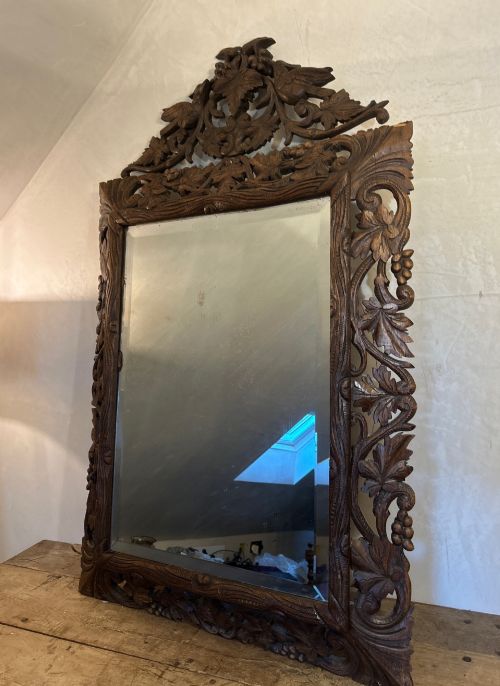
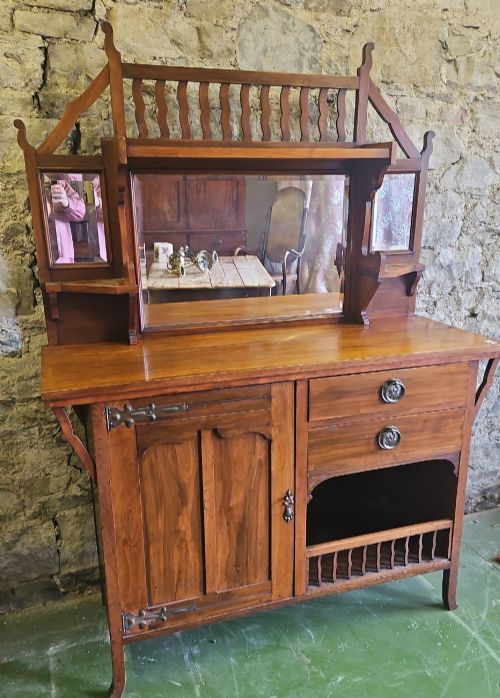
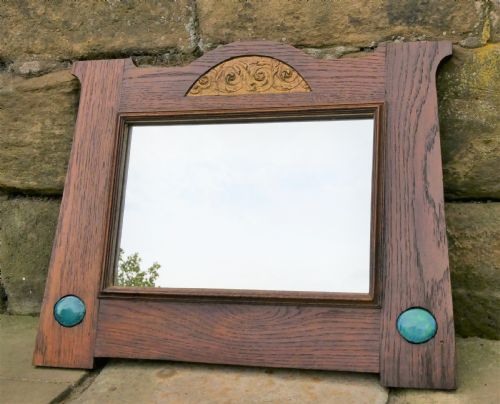
The version you are most likely to meet on this page is a wall-mounted piece combining solid oak with bevelled or plain glass. Many of these display simple framing, whilst others incorporate shelves, carved foliage, or metalwork details.
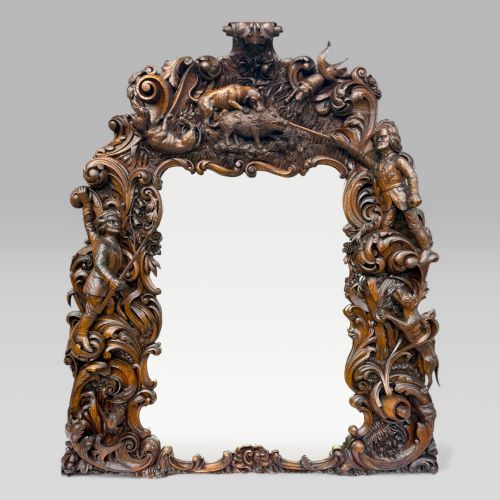
Makers ranged from British country joiners to continental workshops producing Black Forest and French Renaissance revival designs. These frames were built for domestic utility in hallways, cloakrooms, and hunting lodges.
How they were made
Carpenters constructed these frames from solid oak boards, frequently employing mortise and tenon joinery to endure heavy daily use. Surfaces were left plain, scrubbed, or treated with a dark wax finish to highlight the natural grain of the timber.
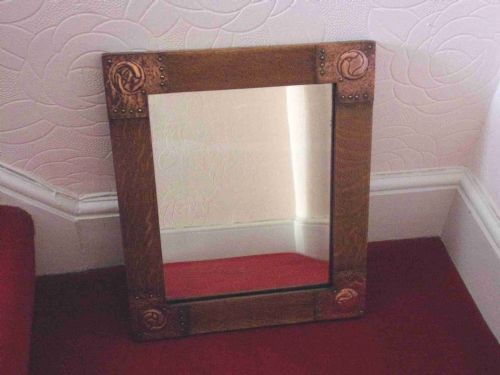
Decoration often involved hand-carving deep foliage or geometric patterns directly into the wood. Metal elements such as brass, copper, and iron appeared as strapwork, corner brackets, or repoussé panels fastened with slotted screws.
Some nineteenth-century frames retain traces of hunting lodge mud tucked deep inside the carved oak acorn recesses.
What varies in quality
Quality rests in the depth and crispness of the hand-carving and the thickness of the oak boards. Superior examples display thoughtful proportions and harmonious integration of metal mounts rather than hasty assembly.
The condition of the mirrored glass itself influences the character of the piece, with original silvering showing aged patination. Robust backboards and secure hanging brackets separate better-preserved domestic items from simpler utilitarian pieces.
The Rustic Oak Mirror Glossary
- Overmantle mirror
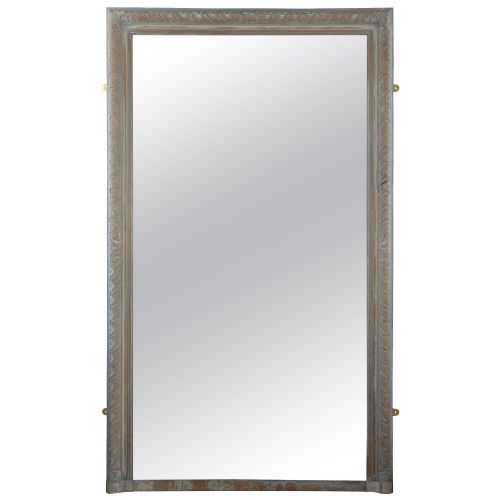
- A large wall mirror designed to hang specifically above a fireplace mantelpiece. These often feature extended horizontal proportions and substantial wooden frames.
- Black Forest
- A nineteenth-century style originating from the wooded mountain region of central Europe, noted for elaborate, naturalistic animal and foliage carvings. Pieces in this manner display deep relief work in dark oak.
- Arts and Crafts
- A design movement valuing traditional craftsmanship, simple forms, and visible construction methods. Frames from this tradition frequently incorporate hand-beaten copper or iron decorative elements.
- Fret cut
- A technique where timber is pierced and shaped with a fretsaw to create intricate openwork patterns. This method produces lighter, decorative borders around the central glass.
Rustic Oak Mirror: Frequently Asked Questions
Where should I hang a rustic oak mirror?
These frames suit entrance halls, boot rooms, and living spaces where solid timber adds immediate character to plain walls. Their weight requires secure fixings directly into wall studs or solid masonry.
Overmantle versions work naturally above a fireplace, reflecting light and balancing the proportions of the chimney breast.
How do I care for the oak frame?
Dust the timber regularly with a dry cloth and apply a quality beeswax sparingly once or twice a year to nourish the grain. Avoid placing the mirror in direct sunlight or near active heat sources to prevent the wood from splitting.
Clean the glass with a mild window solution applied to a cloth rather than sprayed directly, protecting the wooden edges from excess moisture.
Are the mirror plates original?
Many nineteenth-century and Edwardian pieces retain their original glass, which often exhibits minor foxing, speckling, or gentle distortion. These signs of age confirm the historical integrity of the piece.
Replacement glass occasionally appears in older frames when the original plate suffered breakage during past house moves.
How do I date an oak mirror?
Examination of the fixings, backing boards, and construction marks reveals the likely period of manufacture. Hand-cut joinery and early screw types point toward nineteenth-century origins.
Stylistic markers, such as Celtic knotwork associated with the Arts and Crafts movement, help narrow the timeframe to around nineteen hundred and the Edwardian decade.