
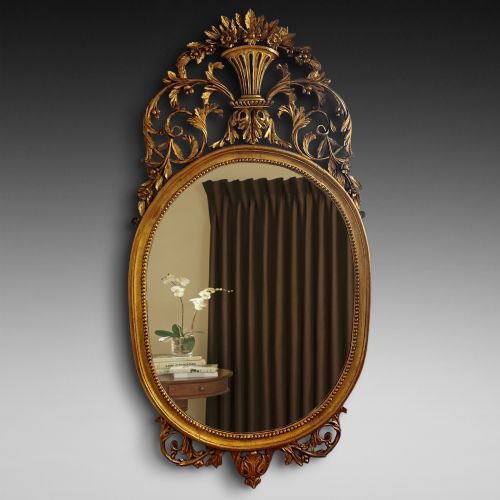
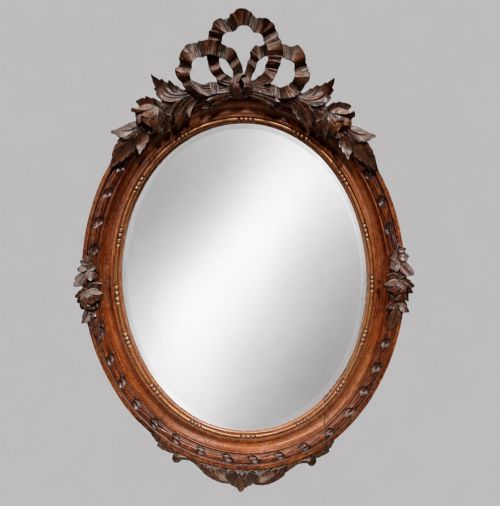
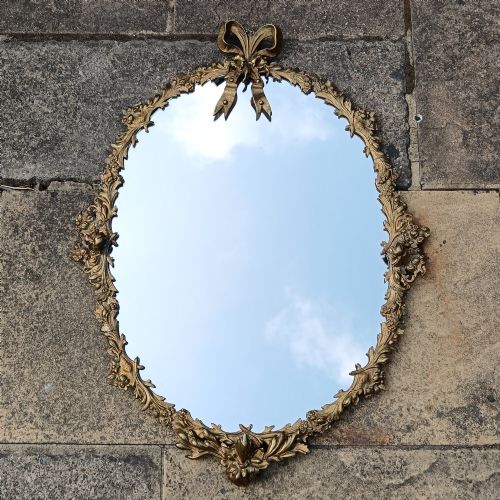
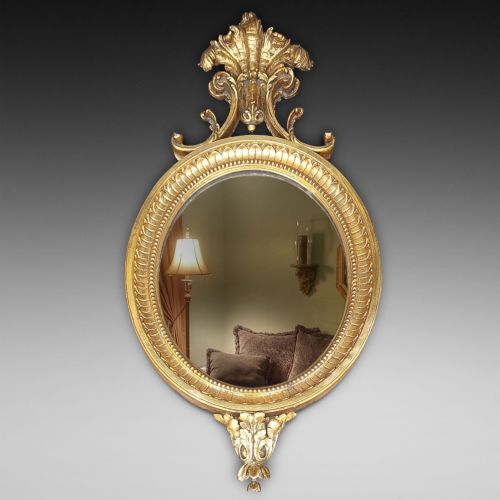
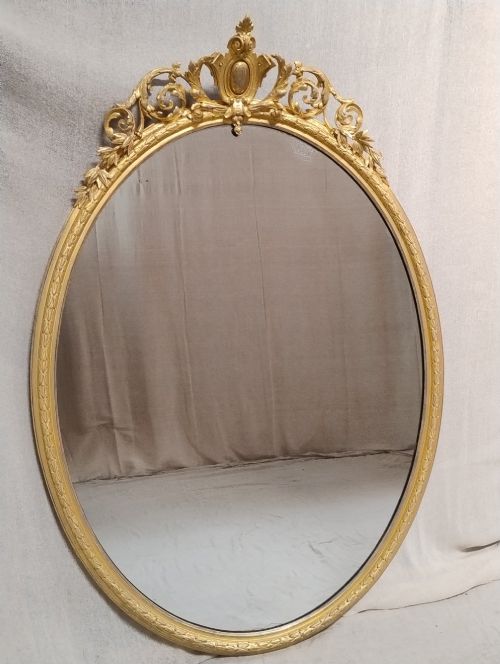
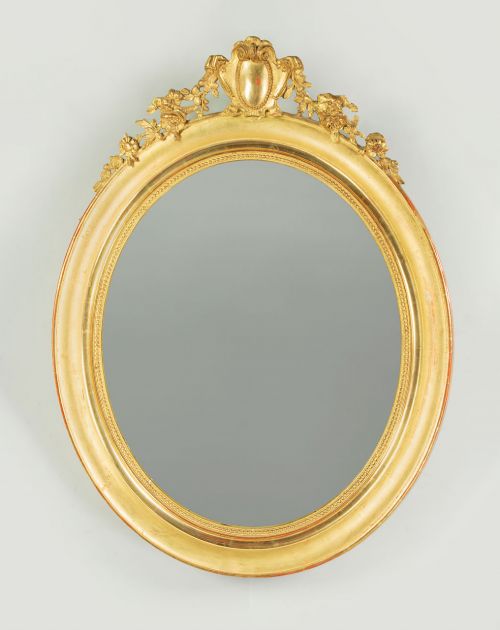
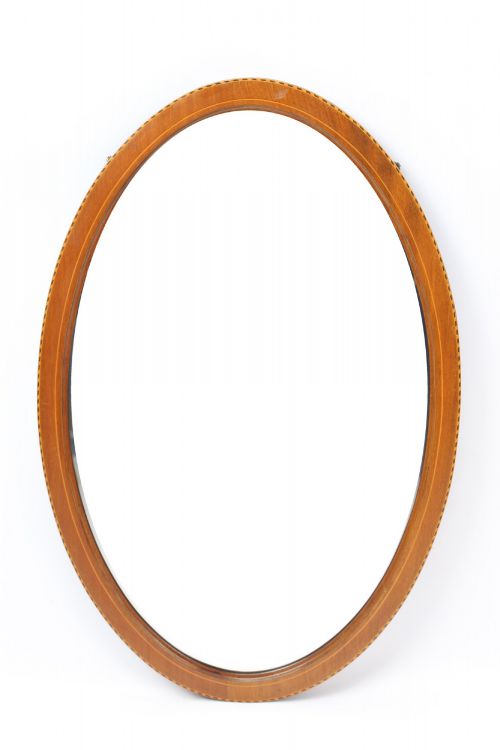
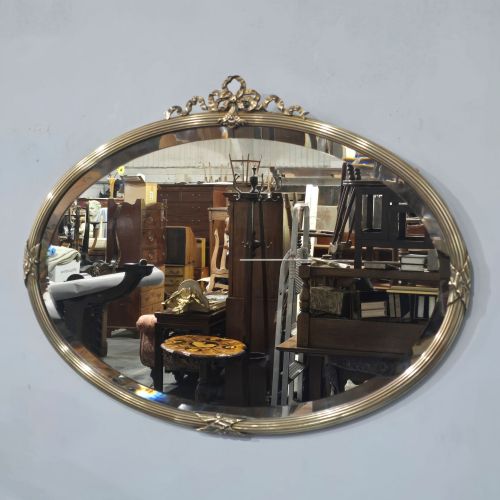
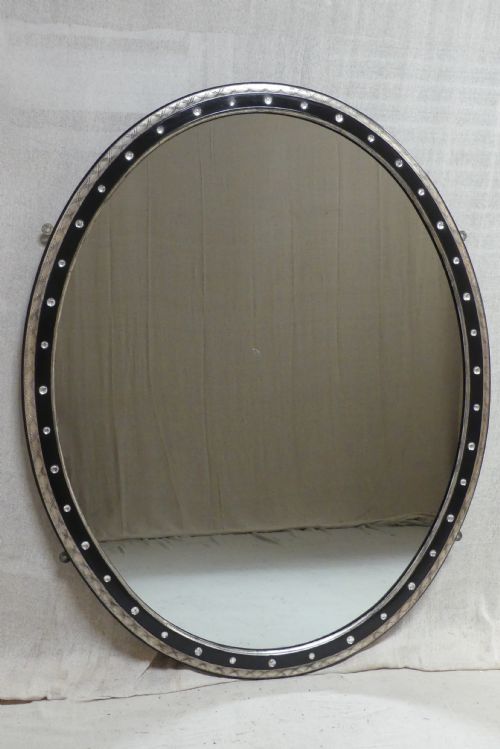


Framed Oval Glass Mirror
A framed oval glass mirror brings vertical grace and reflected light to a room, drawing the eye with curved timber or gilded plaster.
Framed Oval Glass Mirror
A framed oval glass mirror is a wall hanging designed to soften room corners through its curved perimeter, appearing frequently in Victorian, Edwardian, and Georgian guises across these listings.
Makers shaped these plates into tall hall pieces, smaller boudoir designs, and decorative wall furnishings that span from the eighteenth century into the twentieth.
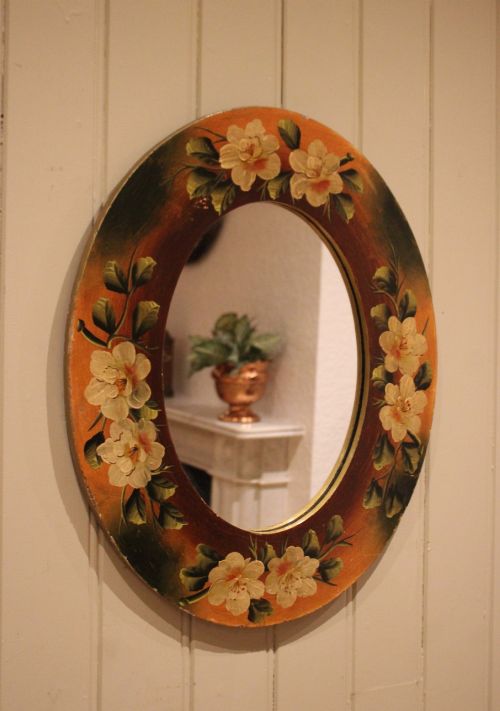
The materials holding these glasses range from heavy carved giltwood and gesso to plain oak, mahogany, and painted wood.
Materials and construction
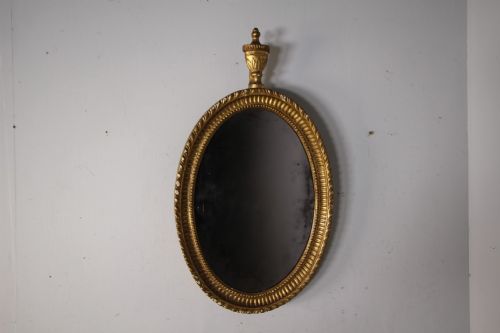
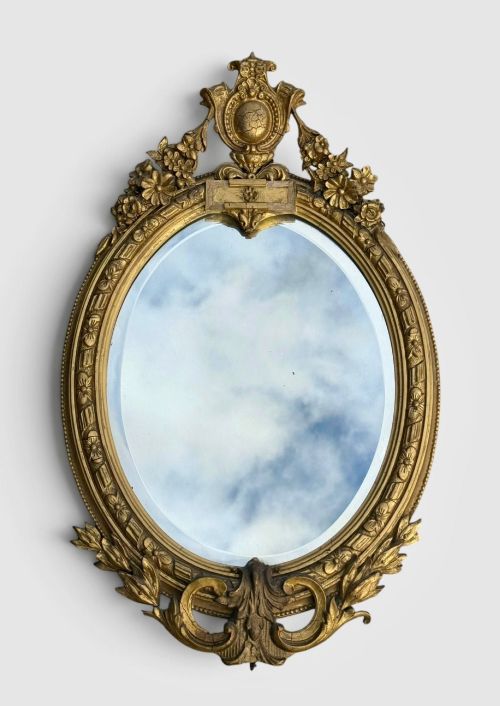
Carvers shaped wood, gesso, and giltwood to form ornate frames, applying gold leaf and paint directly onto the moulded surfaces.
Glass plates were silvered using mercury in older examples or bevelled by hand in later workshops to catch the light.
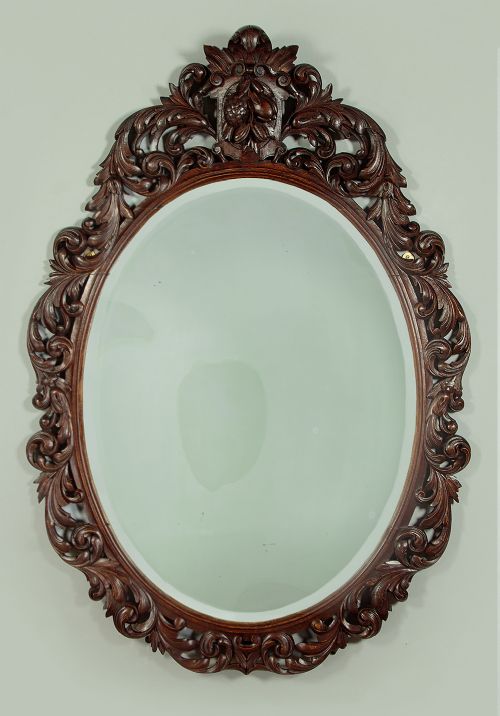
Joiners utilised oak and mahogany for timber frames, often adding inlaid details or brass fittings to secure the glass.
Listings feature items spanning from the seventeenth century through to the Edwardian era, incorporating materials like oak, mahogany, brass, and giltwood.
Assessing quality in framing and glass
The depth and crispness of the carved detail separate standard production from master craftsmanship, particularly where giltwood and gesso ornament the frame.
Original mercury plates and foxed bevelled glass show age distinctively, whereas replacement glass alters the historical integrity of the piece.
The Framed Oval Glass Mirror Glossary
- Giltwood
- Wood carved and coated with gold leaf or gold paint to create a reflective, ornate surface. It defines many formal eighteenth and nineteenth century frames.
- Gesso
- A plaster mixture applied to wood frames and carved into decorative relief before gilding. This compound allows for intricate scrollwork and floral motifs.
- Mercury Plate
- An older style of mirror glass backed with a tin and mercury amalgam. It produces a soft, mottled reflection characteristic of antique pieces.
- Bevelled Glass
- Glass with an angled edge ground down to catch the light. This technique adds depth and sparkle to the perimeter of the mirror plate.
Framed Oval Glass Mirror: Frequently Asked Questions
How do I hang a heavy antique oval mirror safely?
Heavy frames require sturdy fixings screwed directly into wall studs or masonry using appropriate wall plugs. Ensure the hanging wire or integrated brackets match the weight of the timber and glass.
Position the piece at eye level so the curved frame balances the surrounding wall space without straining the fixings.
How do I clean old mirror glass?
Wipe the glass gently with a soft microfibre cloth and a mild, ammonia-free cleaning solution sprayed onto the cloth rather than the mirror. This prevents moisture from seeping behind the plate.
Avoid harsh chemical cleaners that can damage fragile mercury backing or lift old paint from the surrounding frame.
Can I place these mirrors in a bathroom?
Steam and high humidity from bathrooms can damage nineteenth century gilding, gesso, and vulnerable wood frames over time. These pieces survive best in dry, stable environments like hallways and reception rooms.
If placed in a damp space, the backing materials and original metal plates may deteriorate rapidly.
How do I tell a Georgian mirror from a Victorian one?
Georgian examples typically feature carved giltwood with classical Neoclassical or Adams motifs and lighter proportions. Victorian pieces often employ heavier gesso ornaments and darker, more robust construction.
Examine the backboards and fixings for clues about the period of manufacture and original assembly techniques.