
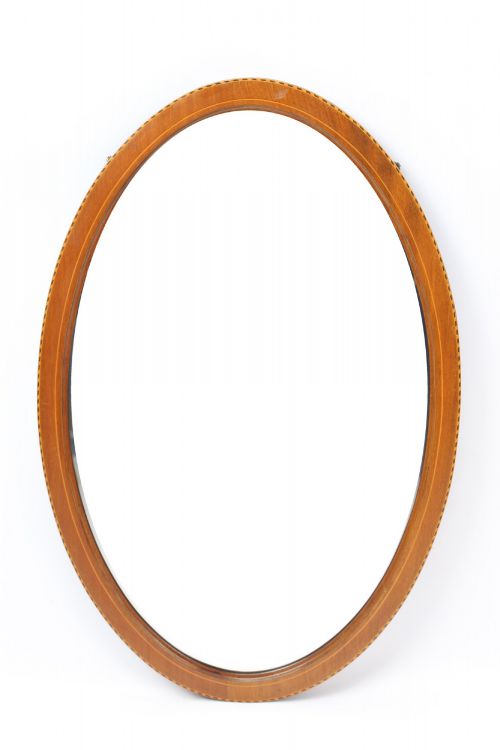
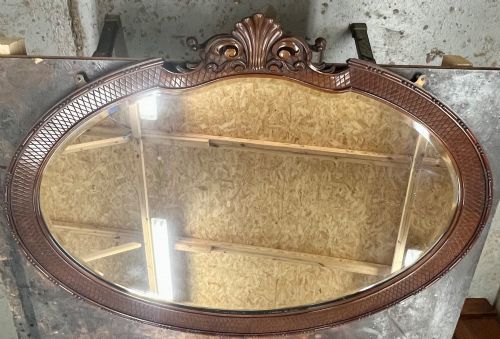
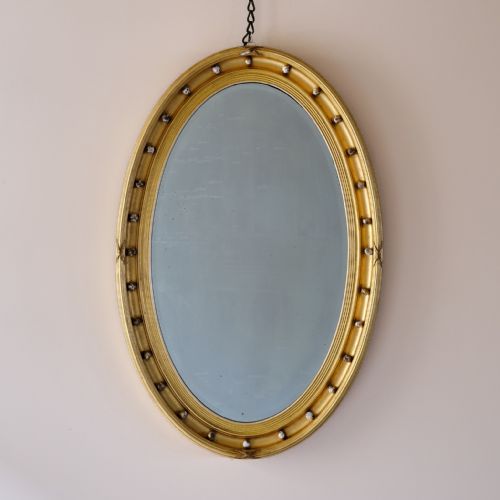


Hallway Oval Mirror
A hallway oval mirror brings light and proportion to a narrow entrance space, drawing the eye with its curved frame.
Hallway Oval Mirror
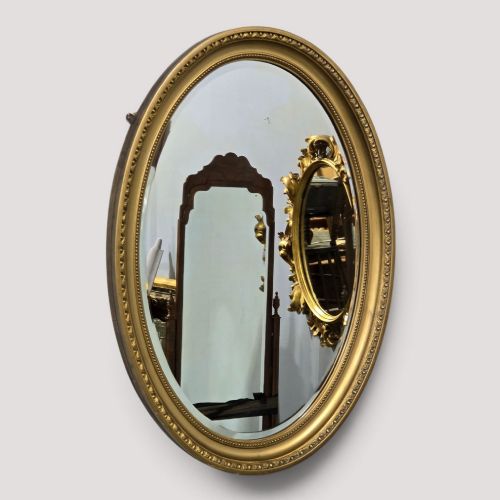
A hallway oval mirror is a wall-mounted glass plate set within a curved timber or gilded frame designed specifically for entrance spaces and corridors. These pieces primarily date from the Victorian and Edwardian eras, alongside items from the late nineteenth century and the early twentieth century.
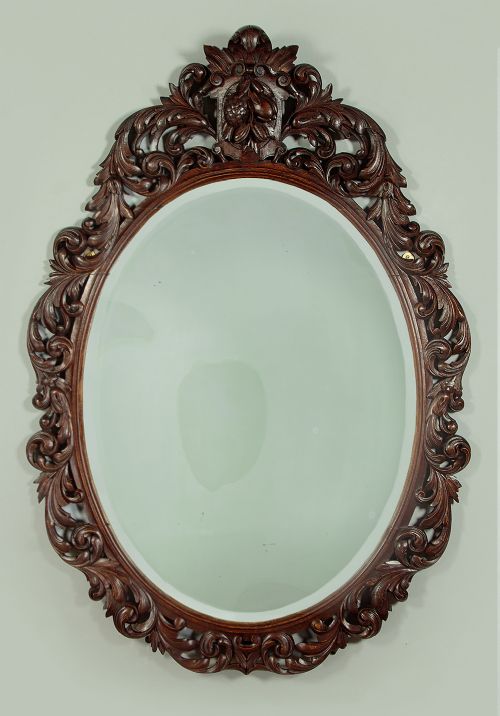
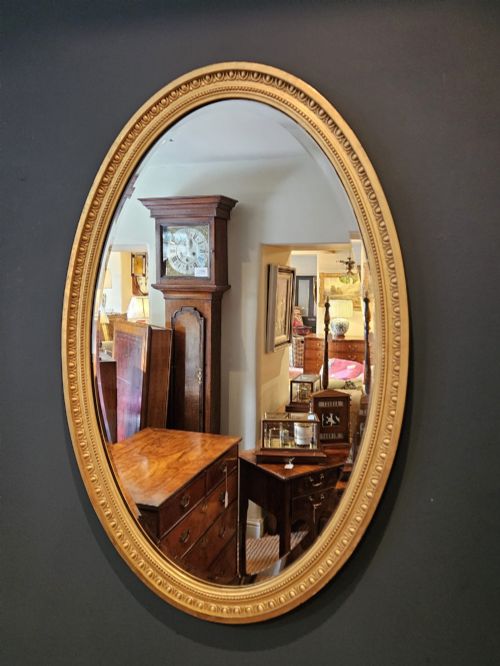
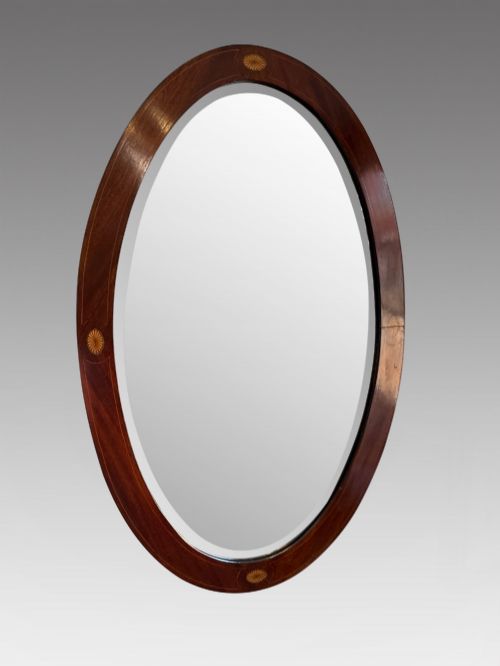
The most common versions encountered on this page are Victorian and Edwardian pieces framed in giltwood, gesso, or mahogany. Styles range from simple polished wood borders to ornate Neoclassical, Rococo Revival, and Adam Revival designs.
How they were made
Frames utilise solid timbers such as mahogany and oak, often shaped and carved by hand. Mahogany pieces frequently incorporate decorative inlay work, while oak examples emphasise the natural grain of the wood.
Giltwood and gesso pieces combine a wooden base covered in plaster layers, which are then carved or moulded with relief ornament before being finished with gold leaf. This technique creates the reflective, ornate surfaces seen on nineteenth-century revival styles.
Many of these mirrors spent generations checking the hats of visitors before they stepped into the Victorian drawing room.
What varies in quality
Quality rests in the depth and crispness of the frame carving, whether executed in solid mahogany, oak, or gesso. Finer pieces display sharply defined mouldings and well-preserved gilding, whereas simpler examples rely on plain timber or modest surface treatment.
The integrity of the original glass plate and the backing construction also separate standard examples from finer ones. Well-constructed frames retain their original hanging hardware and stable joinery at the curved corners.
The Hallway Oval Mirror Glossary
- Giltwood
- Wood that has been coated with gold leaf. This finish is characteristic of many nineteenth-century wall mirrors.
- Gesso
- A plaster-like mixture applied to wooden frames as a base for gilding. It allows for intricate moulded decoration.
- Inlay
- Contrasting strips of wood embedded into the surface of a larger piece. Mahogany frames often use this technique for linear decoration.
- Neoclassical
- A revival style drawing on classical Greek and Roman motifs. These frames appear frequently in late nineteenth-century pieces.
Hallway Oval Mirror: Frequently Asked Questions
Where should I hang a hallway oval mirror?
Hang the mirror at eye level where it can capture natural light from doorways or windows. This placement opens up narrow corridors and creates a balanced focal point.
Ensure the wall fixings match the weight of the frame, particularly for heavier giltwood and gesso pieces.
How do I date a Victorian oval mirror?
Examine the timber, the backing boards, and the composition of the frame. Victorian examples often combine plaster gesso with pine or hardwood carcasses.
Stylistic cues such as Rococo or Adam revival motifs also point towards the nineteenth-century manufacturing period.
Are Edwardian mirrors different from Victorian ones?
Edwardian pieces tend to feature lighter mahogany frames, sometimes with delicate string inlay. They reflect a shift towards simpler domestic interiors.
Victorian frames are frequently heavier, employing richer giltwood and more ornate moulded plaster decoration.
How do I clean an antique mirror frame?
Dust giltwood and gesso frames gently with a soft, dry brush to protect the delicate surface finish. Avoid using liquid cleaners on the carved portions.
Clean the glass plate with a mild glass cleaner applied to a cloth rather than sprayed directly onto the mirror.