

Victorian Oval Wall Mirror
A victorian oval wall mirror brings depth and reflected light to a room through curved frames shaped in the nineteenth century.
Victorian Oval Wall Mirror
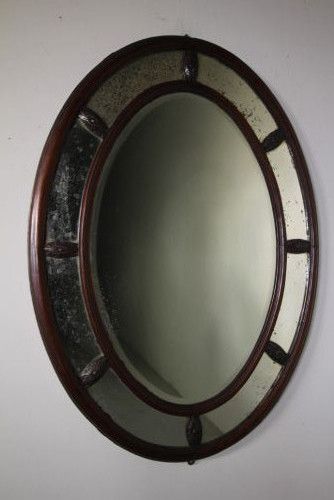
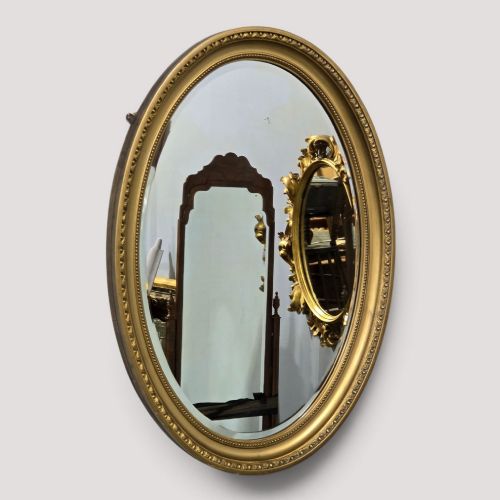
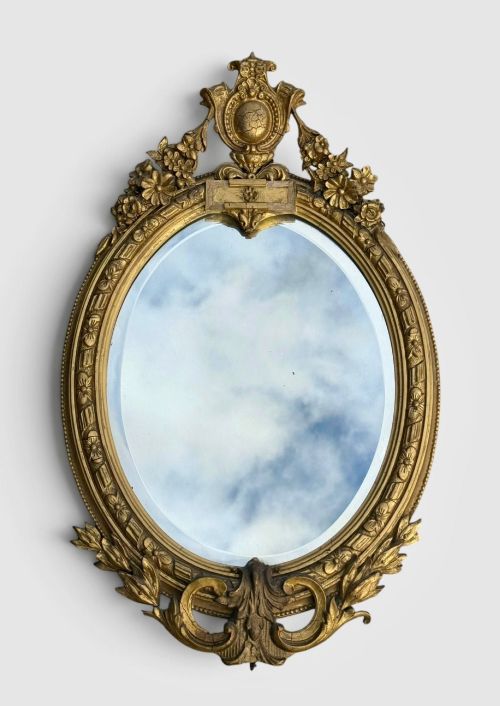
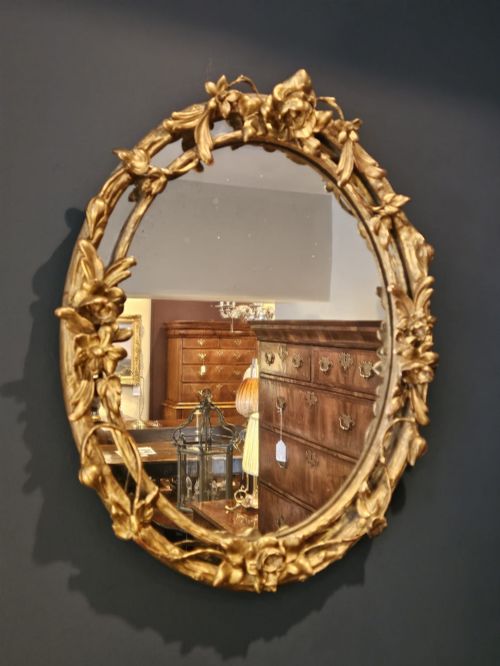
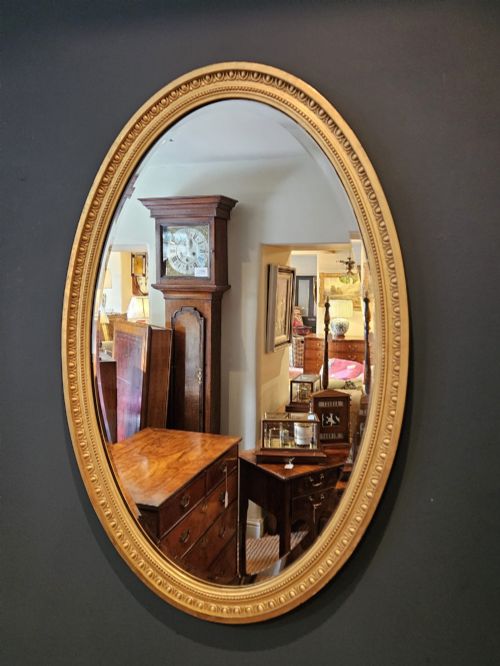
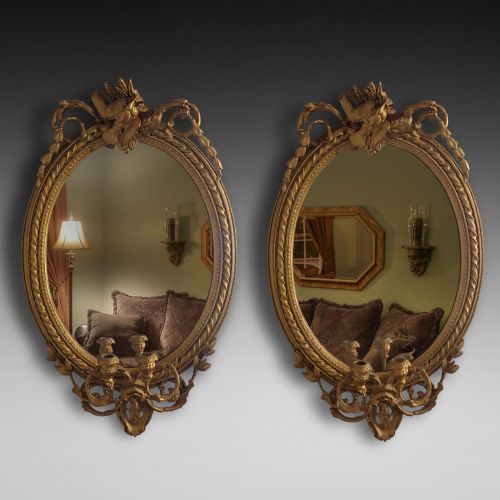
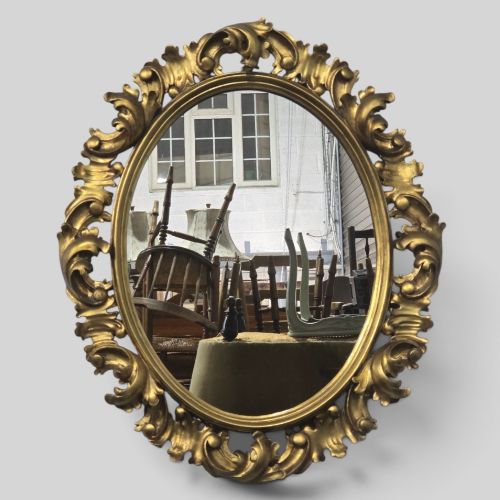
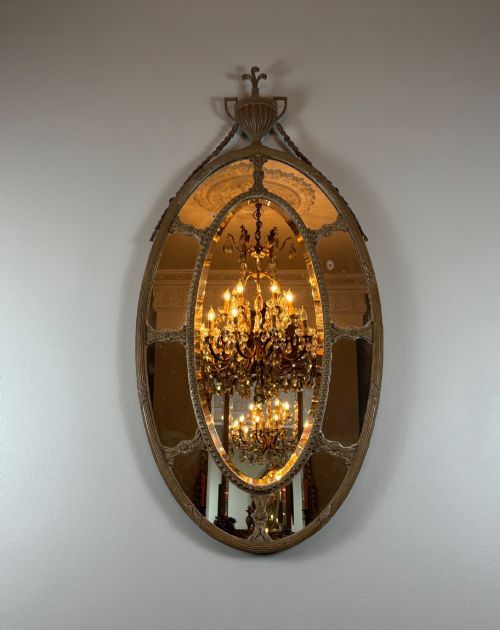
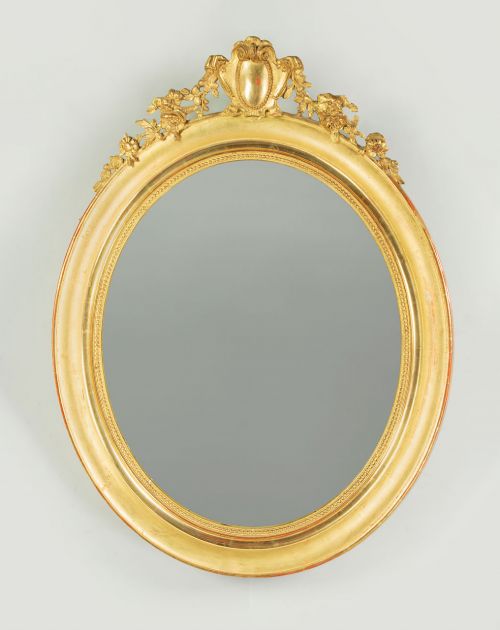
A victorian oval wall mirror is primarily encountered in giltwood and gesso, often bearing the characteristic rounded borders and ornate crests of the nineteenth century. These items span from smaller pier and hall mirrors to substantial overmantels designed to anchor a drawing room or hallway.
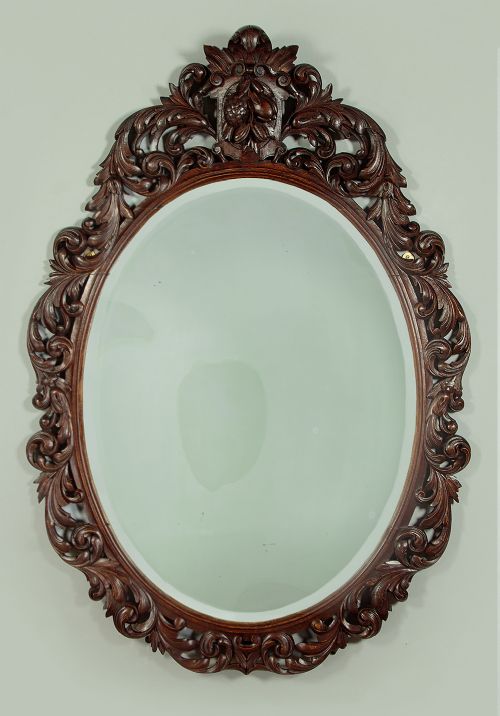
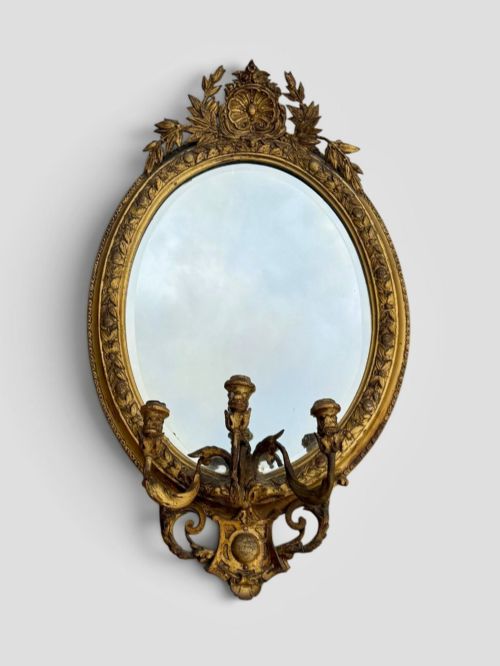
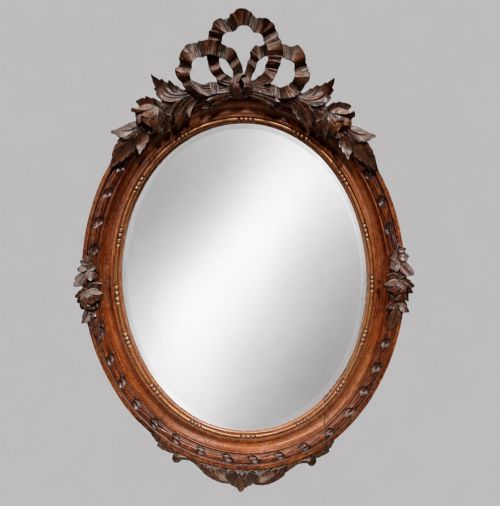
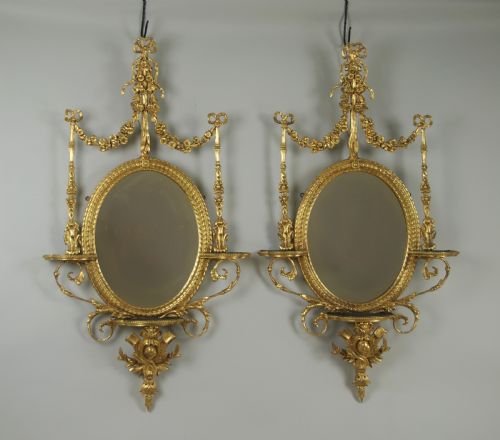
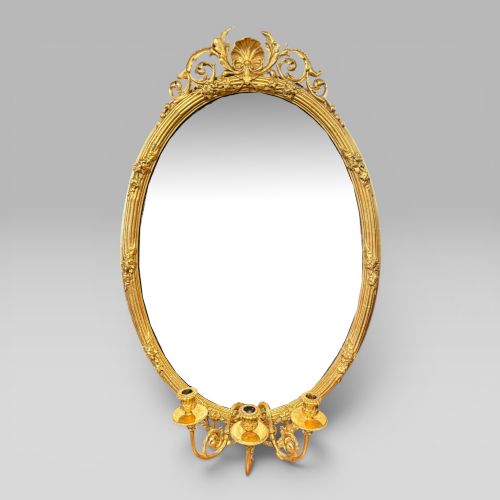
The styles recorded in the evidence range from straightforward timber frames in mahogany or oak to elaborate revivals drawing on Rococo, Adam, and Louis XVI motifs. Many examples integrate candle sconces or display brackets into their side frames, reflecting the functional requirements of nineteenth-century interiors.
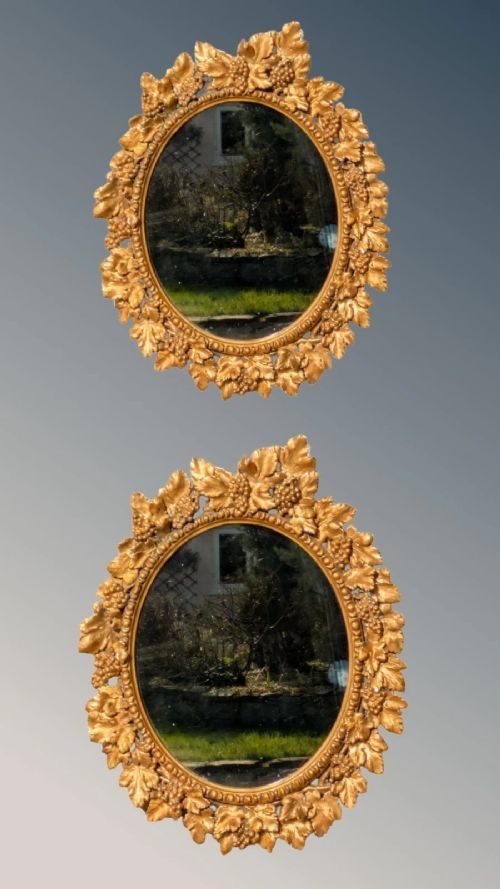
Buyers will find both single statement pieces and matched pairs within the selection, originating from English workshops as well as French makers of the period. The vertical or horizontal orientation of the oval plate determines how the frame interacts with surrounding furniture and architectural proportions.
Materials and construction
Makers built the foundational framework from solid timbers such as mahogany, oak, or pine, sometimes shaping the wood directly to display a natural grain. More frequently, carvers applied layers of gesso - a mixture of plaster and glue - over a wooden base to build up intricate relief decoration.
Gilders then applied thin sheets of gold leaf or gilt paint across the gesso mouldings, burnishing specific areas to create contrast between matte and reflective surfaces. Composition ornaments, moulded from a mixture of whiting, resin, and glue, were pressed into place while pliable to achieve complex swags, urns, and vine leaves.
Victorian Oval Wall Mirror Retail Price Guide 2026
Typical asking prices for victorian oval wall mirror among the pieces listed under this phrase on Sellingantiques today, from the lower quarter to the upper quarter. They describe what is for sale here now, not the wider market.
Several mirrors come equipped with display brackets, ready to hold your smallest curiosities right beneath their reflections.
Evaluating craftsmanship
The standard of a victorian oval wall mirror rests largely on the depth and sharpness of the hand-carved or moulded relief work on the frame. Crisp undercutting in gesso and wood indicates a maker who invested significant time in finishing the ornamental details.
The quality of the glass plate itself and the method of its retention within the frame also mark out superior items. Bevelled edges, original mirror plates with authentic foxing, and robust rear framing construction distinguish workshop standards across the period.
The Victorian Oval Wall Mirror Glossary
- Gesso
- A plaster-based mixture applied to wooden frames as a smooth base for gilding or painting. This material allowed makers to carve intricate three-dimensional motifs before applying gold leaf.
- Girandole
- A wall mirror featuring integrated candle sconces or arms attached to the frame. These fixtures were designed to reflect and multiply the candlelight in a room.
- Overmantel
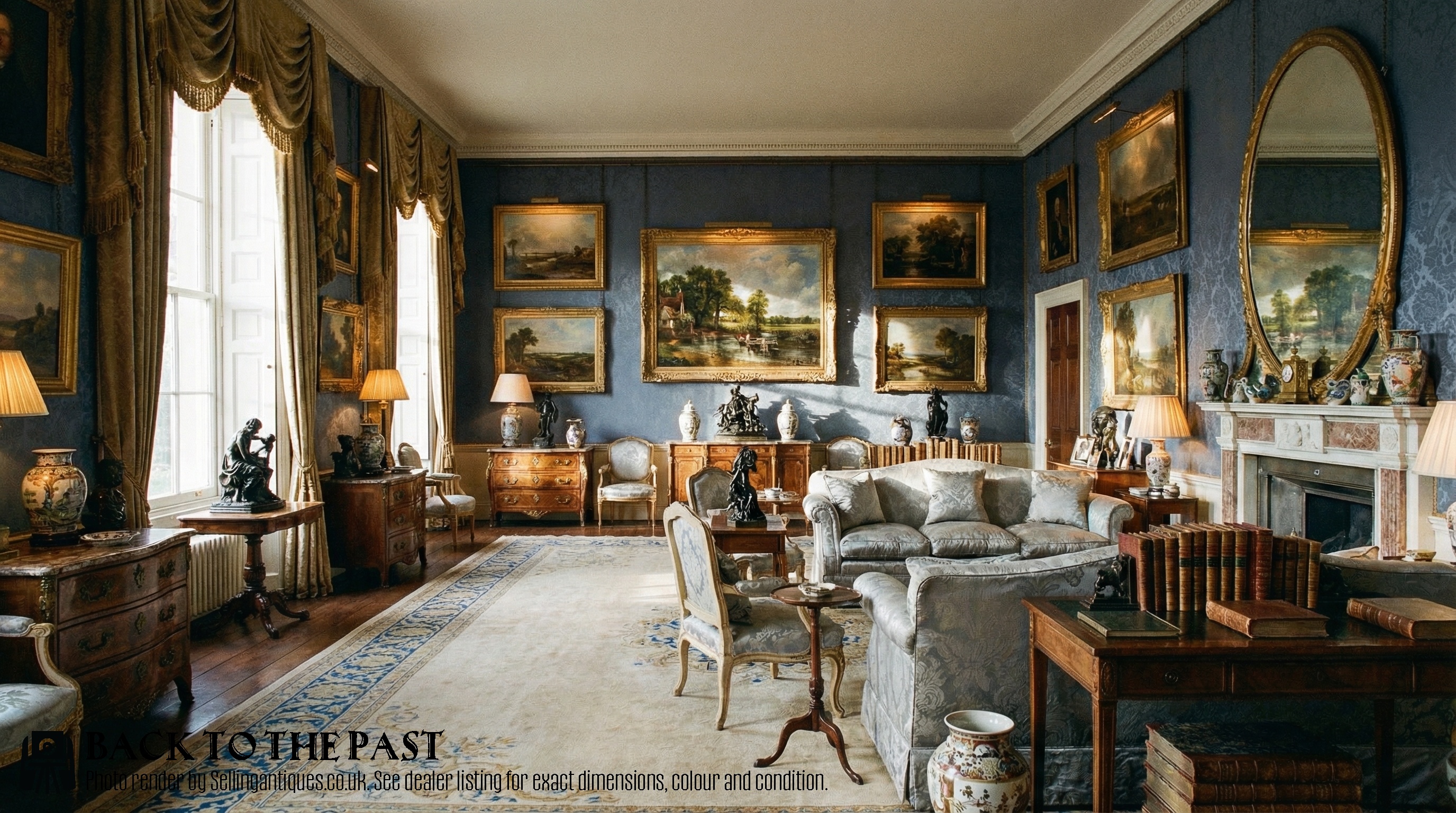
- A large mirror specifically proportioned to hang above a fireplace mantelpiece. They often share the width of the fireplace surround to balance the vertical space of the chimney breast.
- Parcel-gilt
- A decorative treatment where only specific portions of a frame are highlighted with gold leaf while the underlying wood or ebonised finish remains visible elsewhere.
- Composition
- A moulded material made from whiting, linseed oil, resin, and glue that was pressed into ornamental shapes for mirrors. It provided a faster alternative to hand-carving complex swags and vine leaves.
Victorian Oval Wall Mirror: Frequently Asked Questions
How do I hang a heavy mirror safely?
Heavy nineteenth-century mirrors require secure attachment directly into wall studs or through the use of appropriate masonry fixings matched to the weight of the timber and gesso frame. Professional mirror hangers often utilise split battens or heavy-duty D-rings screwed firmly into the structural woodwork at the back.
Ensuring the hanging wire or chain is rated well above the actual weight of the piece prevents structural failure over time. It is also wise to check that the original mirror plate is securely seated within the rebate before mounting.
What is an overmantel mirror?
An overmantel mirror is a wide or tall looking glass designed explicitly to sit above a fireplace mantelpiece. In nineteenth-century interiors, these pieces served to bounce light around the room and visually complete the fireplace surround.
They often incorporate display brackets or candle sconces and tend to be scaled to match the width of the mantel shelf below them. Their substantial construction makes them natural focal points in reception rooms.
Can I clean the original glass?
Cleaning antique mirror glass requires gentle treatment to protect both the silvering behind the plate and the aged surface. Using a soft microfibre cloth with a mild, ammonia-free glass cleaner sprayed onto the cloth rather than directly onto the glass prevents moisture seeping behind the edges.
Care must be taken around the edges of the plate where the silvering is often fragile or degraded over time. Avoid harsh chemical agents that can damage both the glass and the surrounding gilt frame.
How are different revival styles told apart?
Revival styles draw on distinct historical vocabularies, such as the asymmetric scrolls and naturalistic foliage of Rococo Revival or the symmetrical urns, swags, and ribbon motifs of Adam and Louis XVI styles. Examining the decorative elements on the crest and base of the frame usually reveals the primary design influence.
While Victorian makers freely combined these historical idioms, individual frames typically lean towards one primary architectural source. Comparing the crispness of the gesso mouldings helps place the piece within its specific decorative context.