

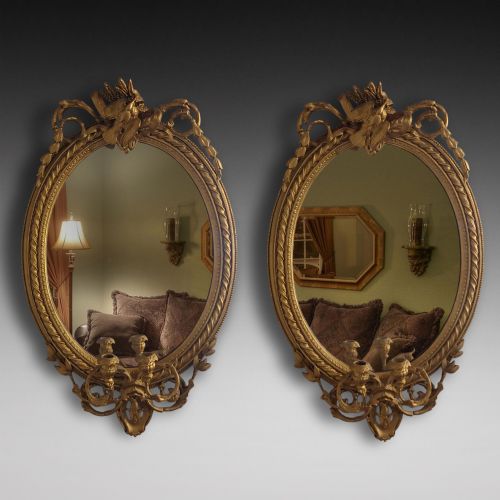
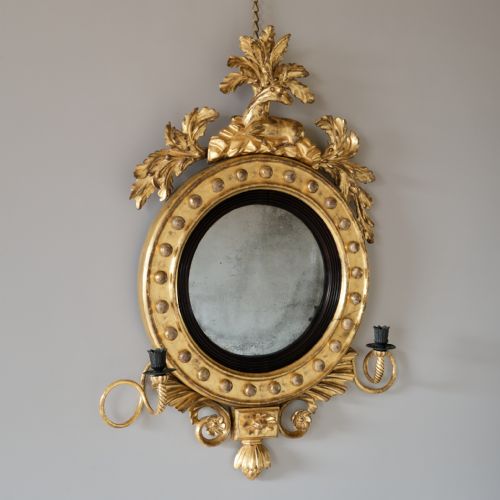
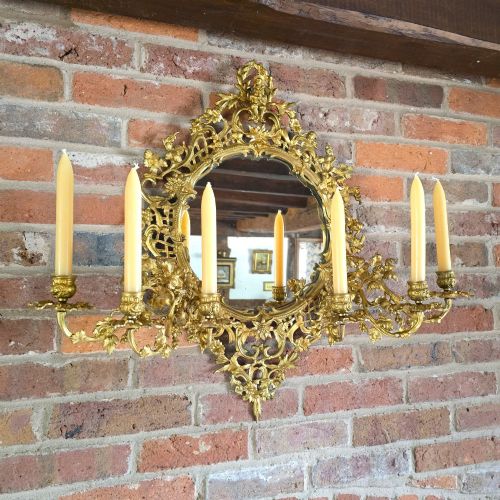

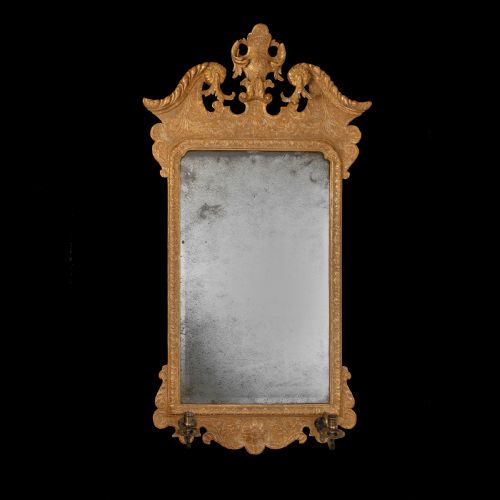

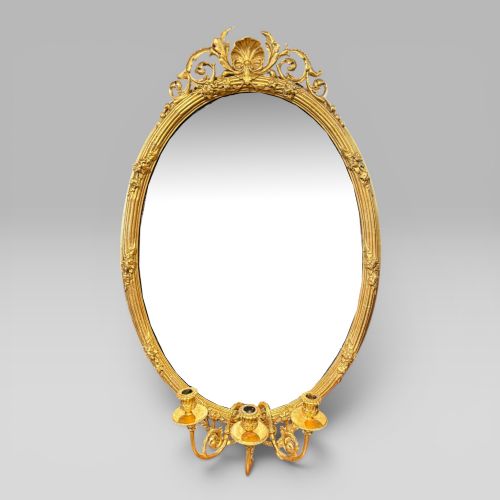

Gold Girandole Mirror
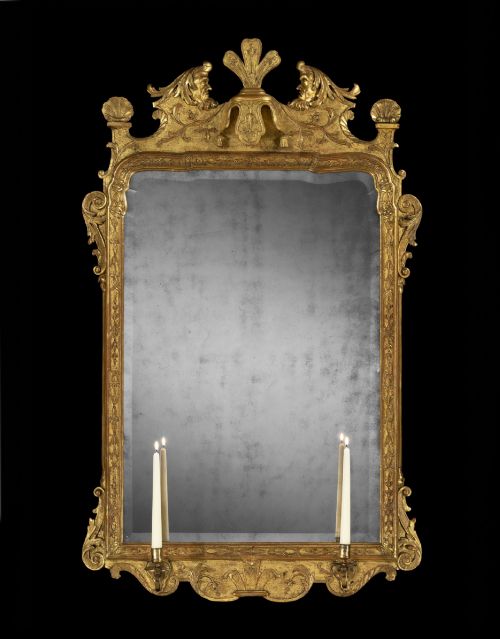
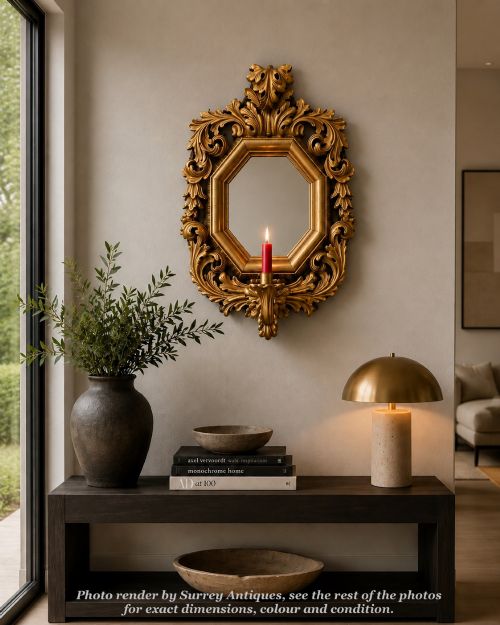
A gold girandole mirror brings both a reflective surface and integrated candle sconces to a room, catching the eye with its gilded frame.
Gold Girandole Mirror
A gold girandole mirror combines a wall mirror with one or more candle arms attached to the frame. When buyers search for a gold girandole mirror, they encounter wall-mounted pieces designed to amplify candlelight and daylight within a room.
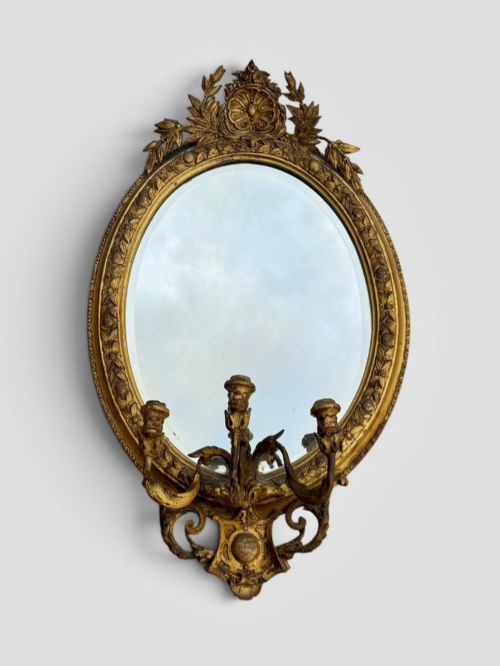
The selections span several distinct eras, with Regency convex forms and Victorian revival pieces appearing frequently alongside 18th century examples and early 20th century Florentine designs. These objects function primarily as decorative focal points for principal reception rooms.
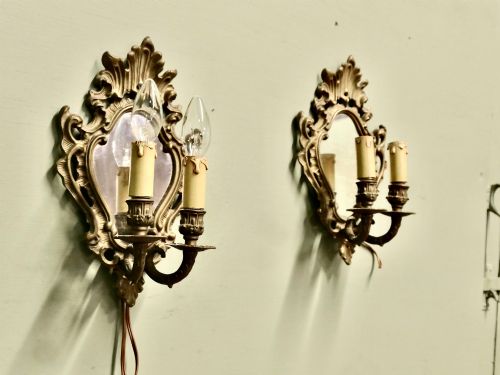
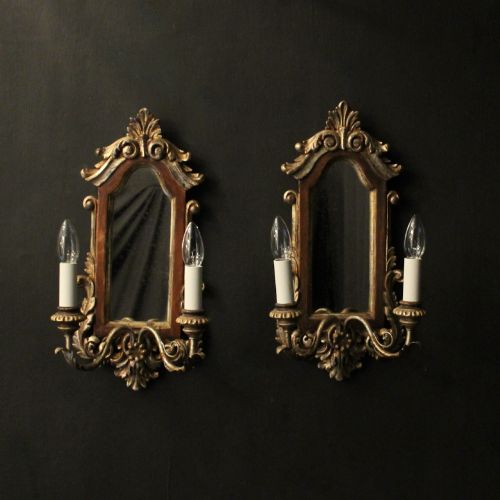
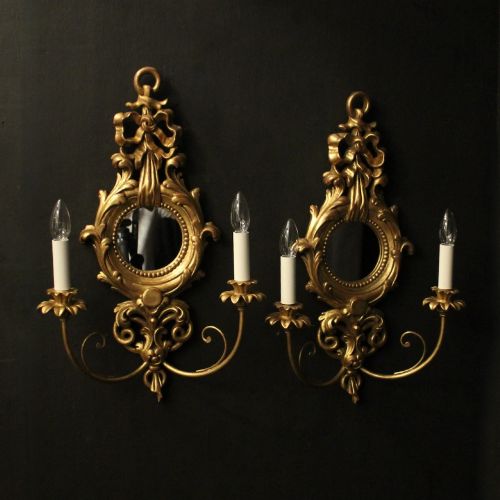
Most examples take the form of circular convex mirrors flanked by sconces, or tall vertical plates framed in elaborate woodwork. Pairs of twin arm girandoles also emerge regularly across the listings from French and Italian workshops.
How they were made
Carvers built the structural foundations of these frames from timber such as ebonised wood or pine before applying layers of gesso. This fine plaster mixture accepted intricate carving and provided a smooth base for subsequent gilding.
Gilders applied thin sheets of gold leaf over the prepared gesso surfaces, sometimes combining this technique with painted or burnished details. Brass, ormolu, and metal elements also appear on specific French and Victorian wall sconces.
The glass itself takes different forms, including flat mirror plates and curved convex lenses designed to project a wide-angle reflection of the interior. Metal candle branches were screwed securely into the wooden or cast frames to support lit tapers.
Gold Girandole Mirror Retail Price Guide 2026
Typical asking prices for gold girandole mirror among the pieces listed under this phrase on Sellingantiques today, from the lower quarter to the upper quarter. They describe what is for sale here now, not the wider market.
The listings span eight distinct periods, reaching from 18th Century pieces through Regency and Victorian examples up to 1930s Florentine pairs.
What varies in quality
The depth and crispness of the carved ornamentation separate standard production from superior work. Master carvers created undercut foliage, sharp eagles, and dragons with precise detail, whereas lesser pieces rely on simpler moulded gesso decorations.
The quality of the gilding and the preservation of the original gold leaf influence the overall visual impact. Intact mercury glass plates and well-balanced candle arms also distinguish the finer items from heavily restored alternatives.
Benjamin Goodison
The Gold Girandole Mirror Glossary
- Girandole
- A branched wall-light or sconce, frequently incorporating a mirror to multiply the reflection of the candles.
- Gesso
- A plaster mixture applied to wood frames to create a smooth surface for carving and gilding. Artisans built up layers of this compound before cutting fine decorative details into the dry medium.
- Convex mirror
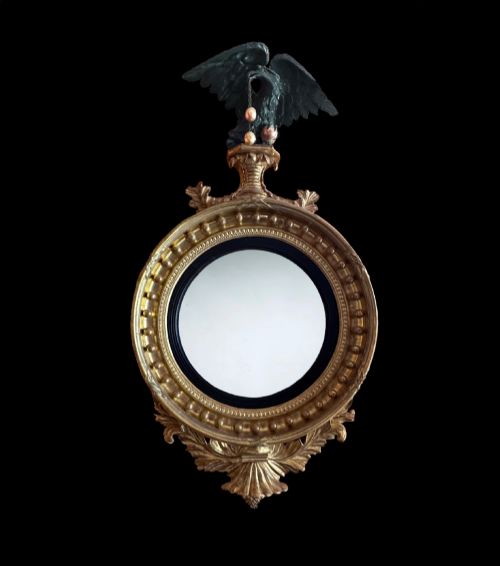
- A round mirror glass curved outward to reflect a wide, distorted field of vision. These pieces often feature an eagle or dragon crest at the top.
- Ormolu
- Gilded bronze used for decorative mounts and candle branches on French wall mirrors. The technique involves applying a gold amalgam to heated bronze.
- Giltwood
- Timber that has been coated with thin gold leaf over a prepared base. This finish gives the frame its characteristic metallic sheen.
Gold Girandole Mirror: Frequently Asked Questions
Where should I hang a convex mirror?
These mirrors function best on principal walls in reception rooms, dining areas, or hallways where they can capture light from multiple angles and reflect the entire space.
Because convex lenses offer a wide-angle view, placing them opposite a window or doorway maximises their visual impact within the room.
How do I light candles safely in a girandole?
Use appropriately sized tapers that fit snugly into the metal sconce cups to prevent any movement while burning. Keep the flame at a safe distance from the gilded frame and mirror glass.
Extinguish the candles well before they burn down to the metal drip pans to protect the historic finish from heat damage.
How do I tell a Regency convex mirror from a Victorian one?
Regency convex mirrors frequently incorporate specific motifs such as carved eagles, girle-edge balls around the circular frame, and ebonised reeded sight lines. They date from the early nineteenth century.
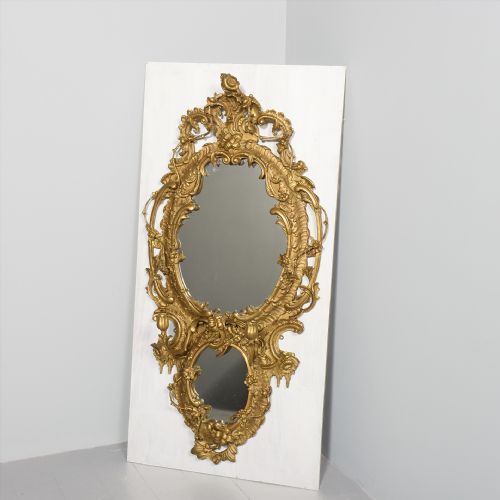
Victorian pieces often display heavier revival styles, such as Rococo or French influences, with more exuberant gesso ornamentation and broader dimensions.