
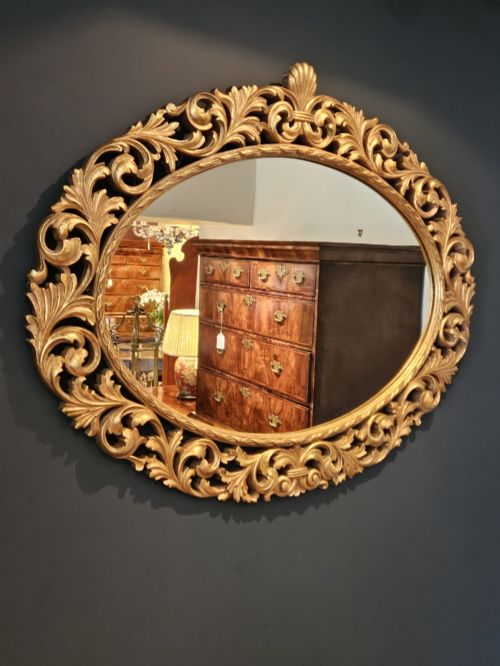
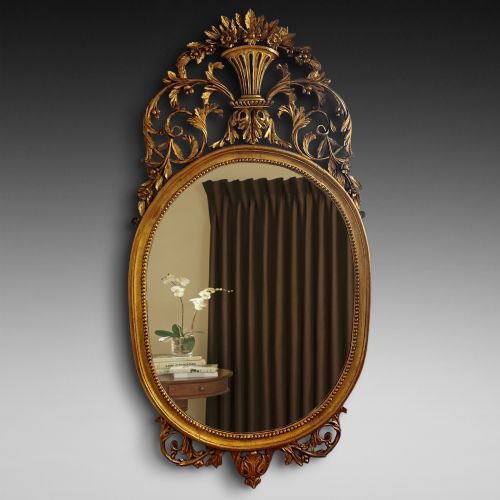
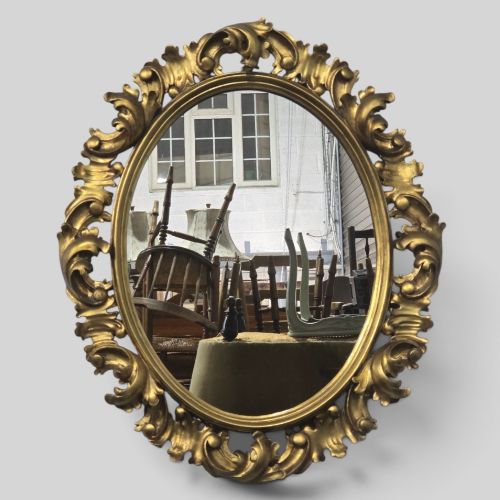
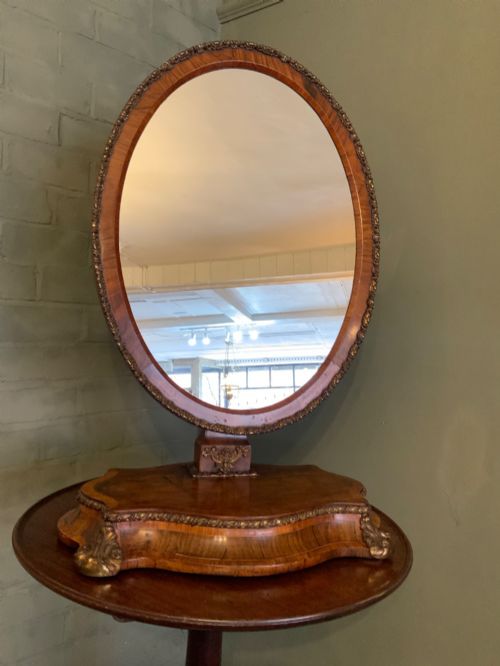
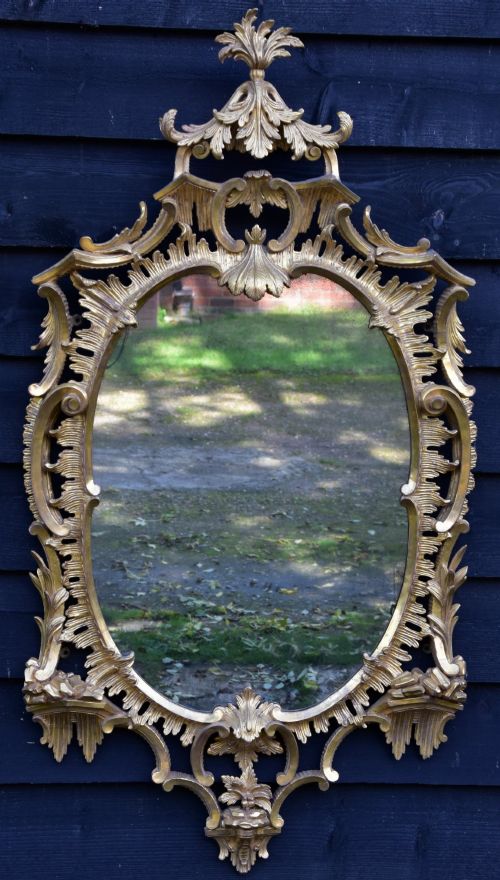
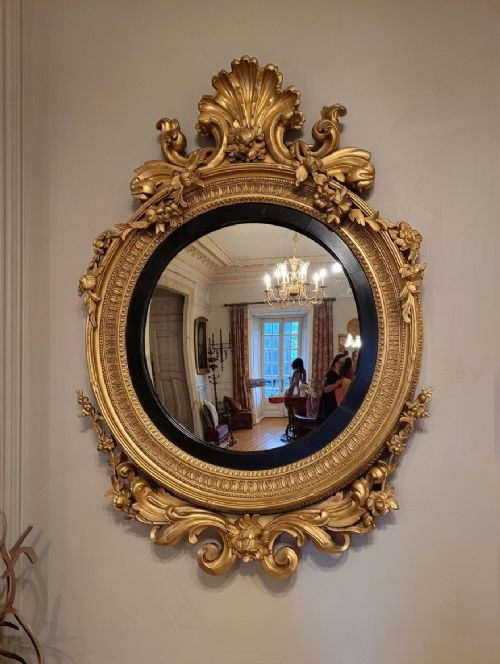
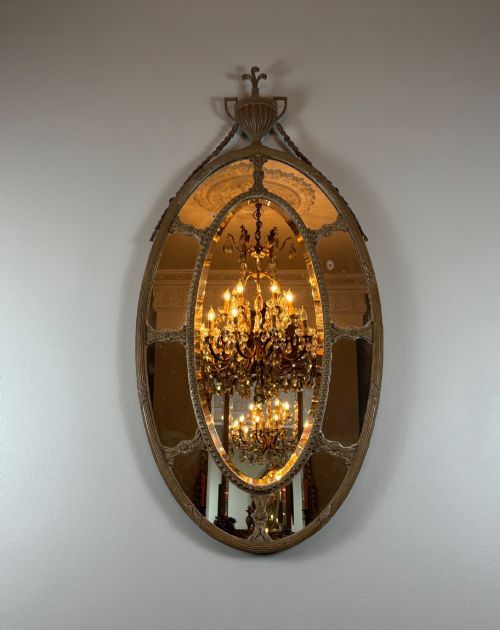

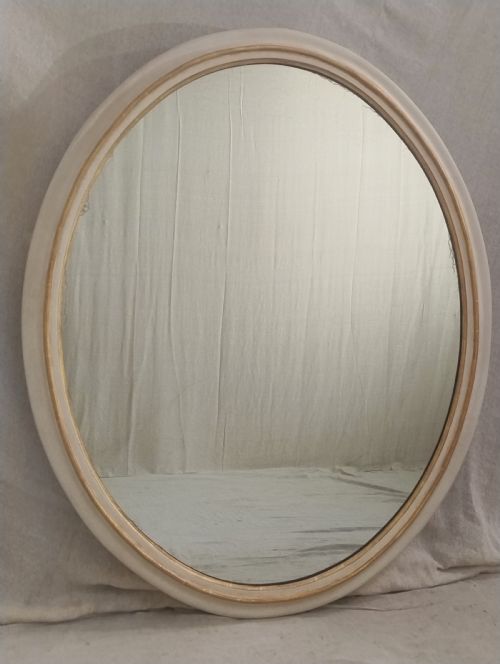
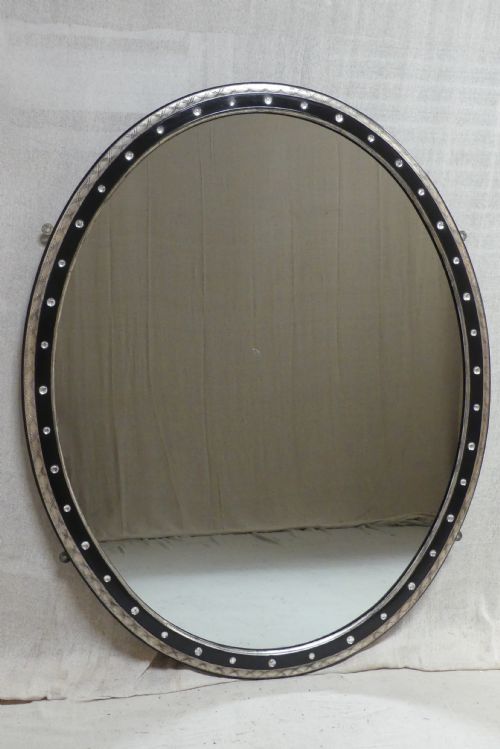
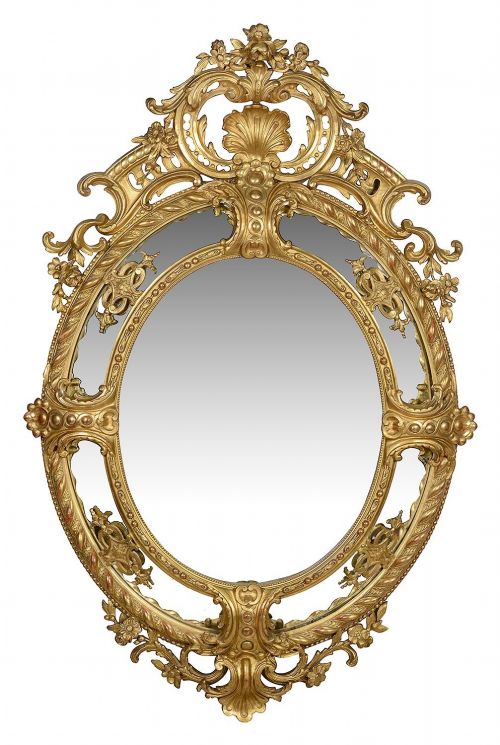


Large Oval Gilt Mirror
A large oval gilt mirror brings scale, light and classical warmth to a room, drawing the eye naturally.
What these pieces are
A large oval gilt mirror serves as a dominant wall hanging or overmantel centrepiece. These items originate predominantly from the nineteenth century, encompassing Victorian, Regency and French periods.
The standard form encountered here is the wall mirror or overmantel mirror, often framed in gold tones. Surviving examples reflect domestic settings from the 1880s back through the early nineteenth century.
How they were made
Construction relies on wood carcasses overlaid with gesso, which accepted intricate carving and moulding before gilding. Glass plates are set within these frames, occasionally featuring bevelled edges or segmented designs.
Makers applied thin layers of gold leaf or gilt finish over the prepared surfaces to achieve the characteristic metallic sheen. Structural details include carved wooden elements, gesso studs and ribbed frame patterns.
Retail Price Guide 2026
Typical UK retail prices for large oval gilt mirror, calculated from the Sellingantiques database of over a million retail prices indexed since 2003. This retail price guide relies exclusively on Sellingantiques data; no external sources or auction records are used, so the figures do not describe the wider market.
Materials appearing across the archive include gesso, glass, giltwood and wood, fashioned into wall and overmantel forms.
What varies in quality
The distinction between tiers rests upon the depth of hand-carving in the wood and the crispness of the gesso mouldings. Finer pieces demonstrate superior joinery and original glass plates with authentic silvering.
Proportion and decorative ambition dictate the upper range, where French rococo or neoclassical framing shows greater sculptural complexity. Simpler domestic versions rely on standard gilt surfaces with less elaborate ornamentation.
The Large Oval Gilt Mirror Glossary
- Giltwood
- Timber that has been gilded with gold leaf or metal powder. This material defines the warm metallic finish of the frame.
- Gesso
- A plaster mix applied to a wooden base to form a smooth surface for moulding and gilding. It allows for sharp decorative relief.
- Overmantel mirror
- A large mirror designed specifically to hang above a fireplace mantel. These pieces anchor the domestic hearth.
- Cushion mirror
- A frame profile that curves outward like a pillow towards the outer edge. This design adds dimensional depth to the wall.
- Original plate
- The primary glass mirror sheet retained from the period of manufacture. It often shows natural ageing and foxing.
Frequently Asked Questions
Where should I hang an overmantel mirror?
These large pieces sit naturally above a fireplace mantel to reflect light and anchor the room's proportions.
Ensure the wall fixings match the substantial weight of the timber and gesso frame.
How do I date a nineteenth century gilt mirror?
Examine the construction methods of the wooden frame, the composition of the gesso and the characteristics of the glass plate.
Victorian and Regency pieces often show distinct stylistic cues in their neoclassical or rococo ornamentation.
Can these mirrors be hung horizontally as well as vertically?
The oval orientation is generally designed for a vertical hang to emphasise height and classical proportions.
Check the placement of the original hanging loops on the reverse before attempting any change in orientation.