
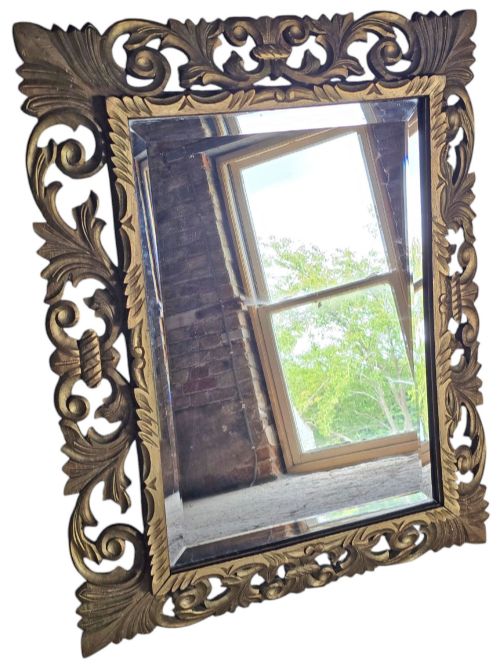
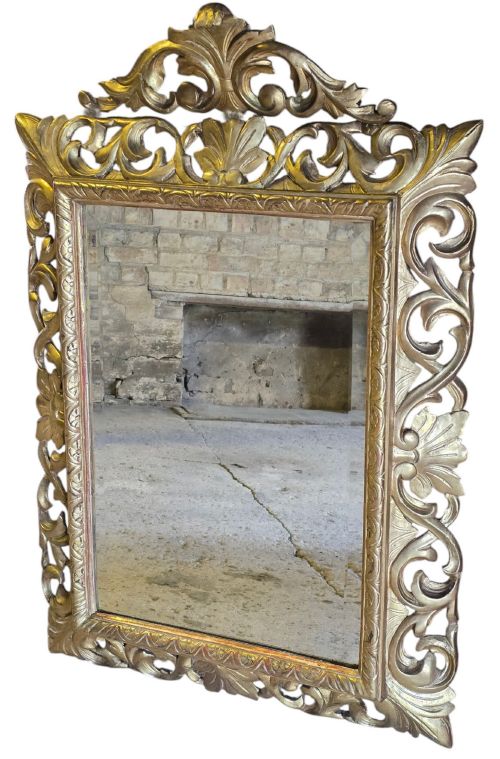
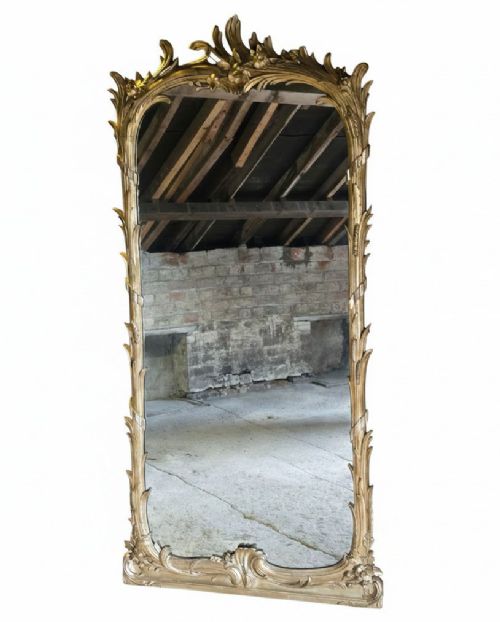
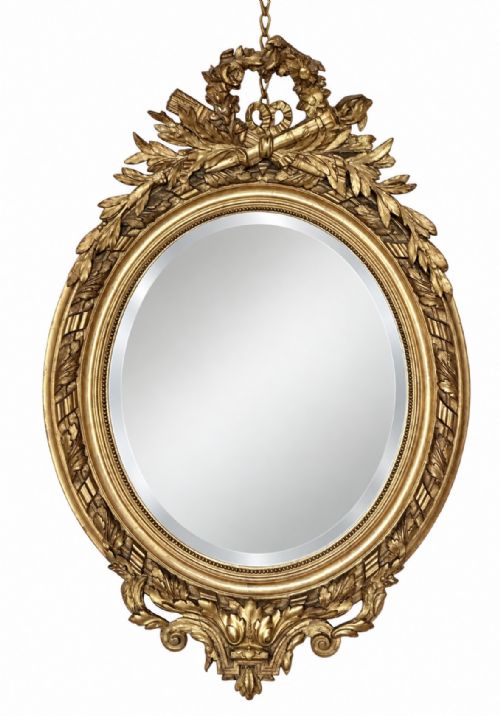
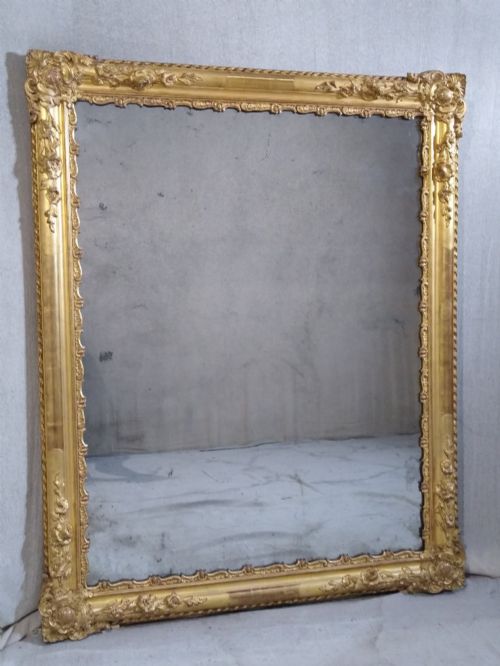
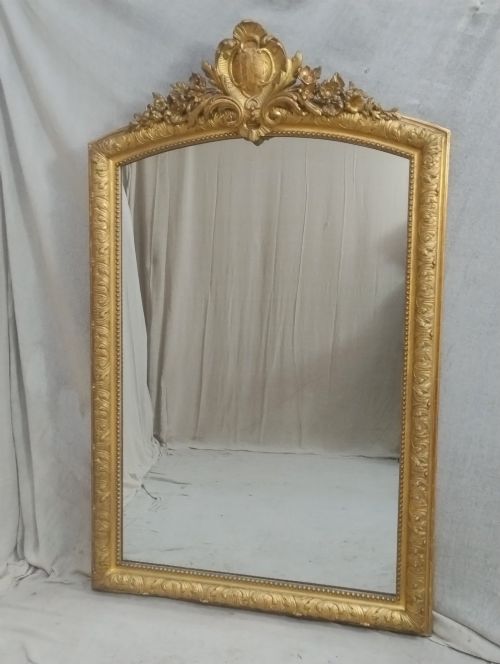
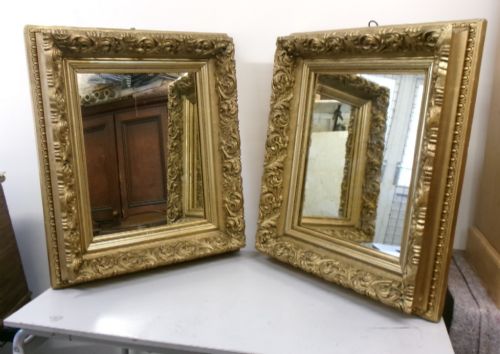


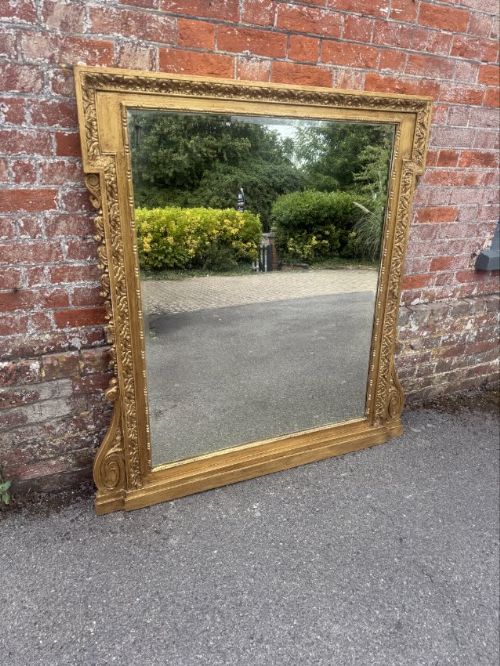
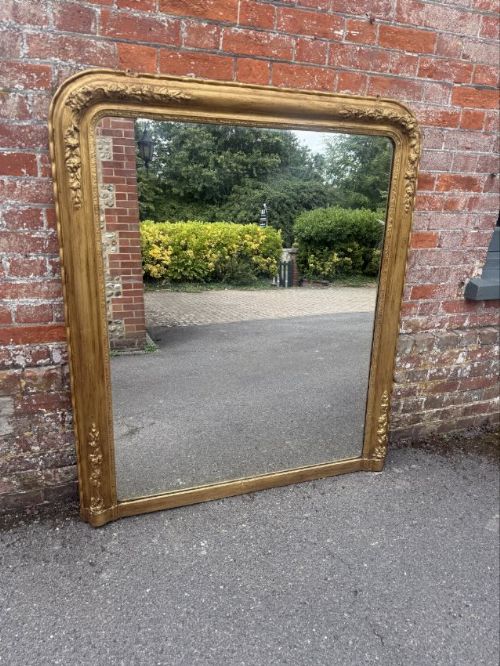
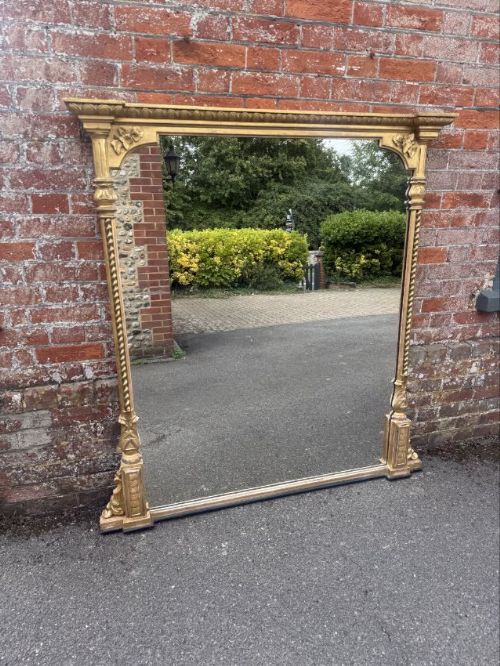
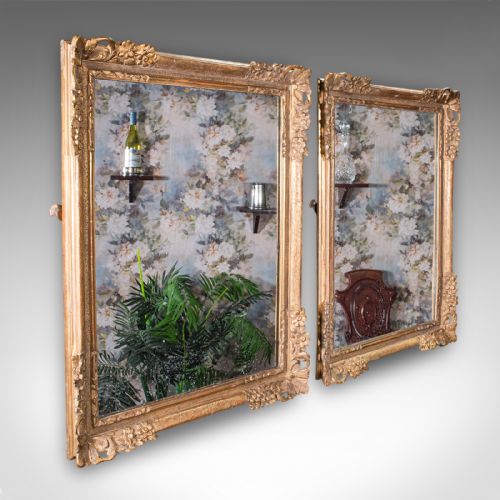
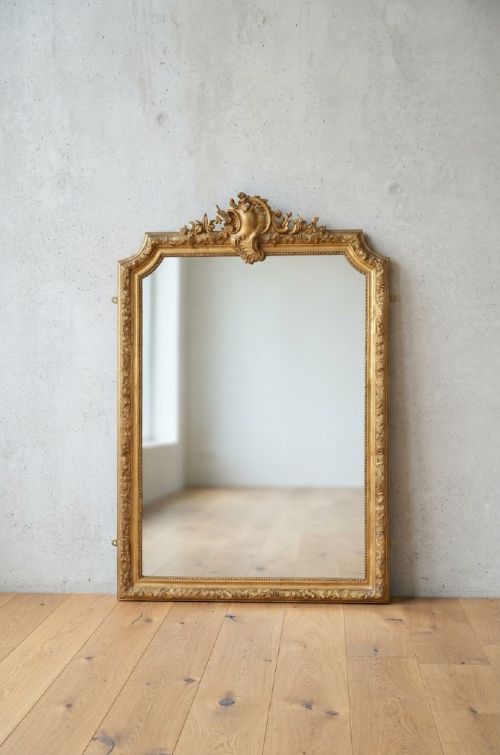
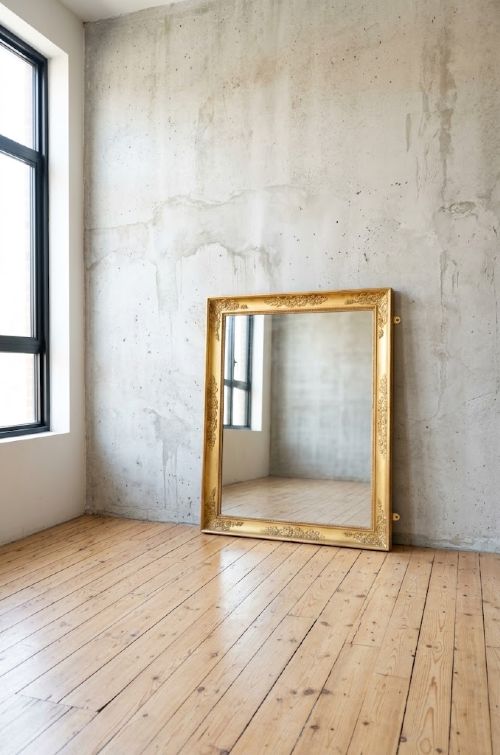
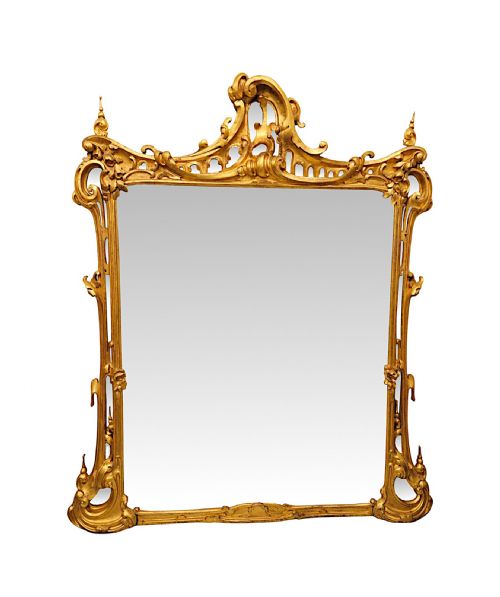
Carved Giltwood Overmantel Mirror
A carved giltwood overmantel mirror anchors a room with golden reflection and presence, bringing period character directly above the fireplace.
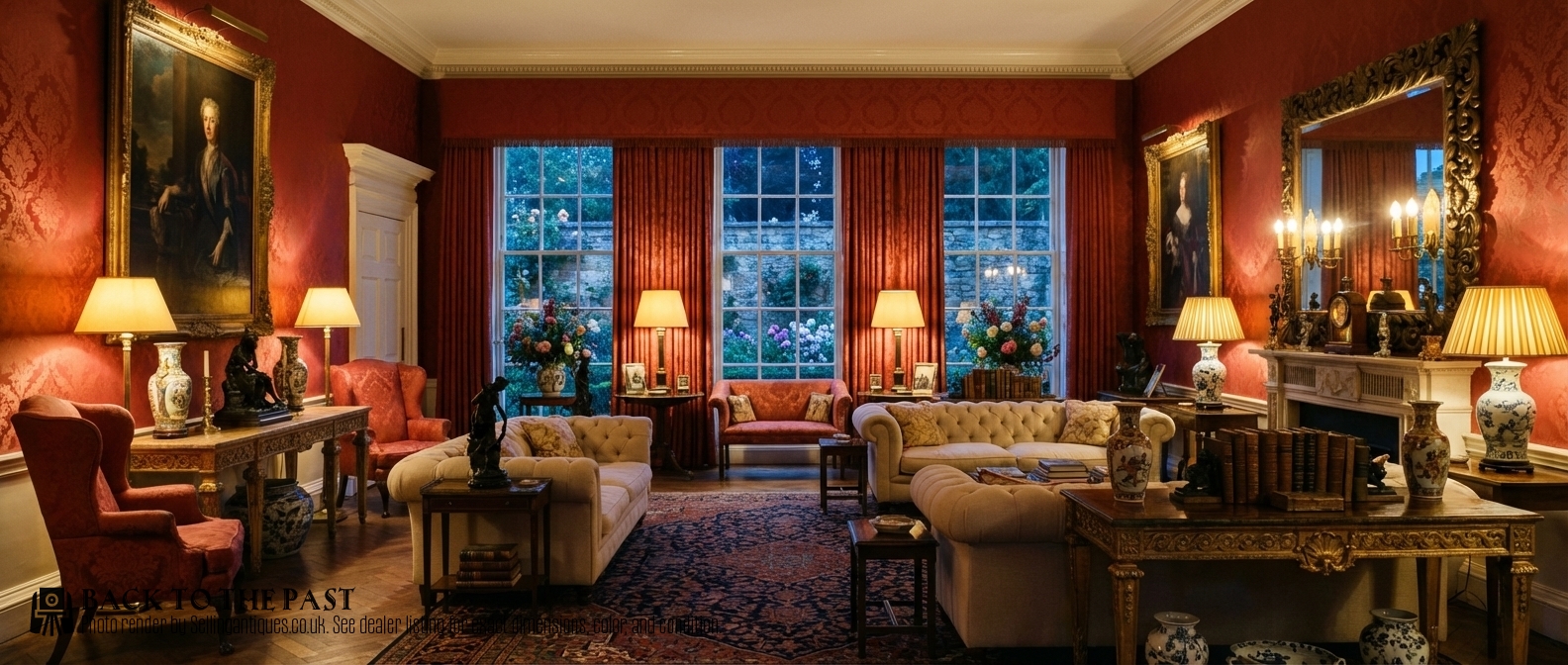
Understanding carved giltwood overmantel mirror designs
A carved giltwood overmantel mirror is a substantial looking-glass designed specifically to hang above a fireplace mantelpiece. These pieces anchor the domestic interior, reflecting light and amplifying the proportions of a principal reception room.
The pieces on this page span the Georgian era, the Regency period, the Victorian age, and the early twentieth century. Styles range from restrained neoclassical lines to exuberant French Rococo and Gothic Revival interpretations.
Horizontal proportions dominate the form to fit the width of a chimney breast, though vertical trumeau variants and oval formats also appear. Surviving examples include multi-plate configurations alongside grand single-glass formats.
Materials and construction methods
Makers formed the structural carcasses of these looking-glasses from timber, applying layers of gesso to build up intricate decorative motifs before gilding. Gold leaf was meticulously laid over the prepared surfaces to catch the ambient light of the room.
The mirror plates themselves consist of heavy silvered glass, sometimes divided into multiple sections within a single frame. Additional details such as painted canvas panels appear in trumeau variants, while brass elements sometimes supplement the timber structure.
Retail Price Guide 2026
Typical UK retail prices for carved giltwood overmantel mirror, calculated from the Sellingantiques database of over a million retail prices indexed since 2003. This retail price guide relies exclusively on Sellingantiques data; no external sources or auction records are used, so the figures do not describe the wider market.
Surviving examples incorporate diverse materials including timber, gesso, gold leaf, mirror glass, painted canvas, and brass.
Distinguishing quality in period frames
The distinction between standard domestic mirrors and exceptional works lies in the depth and crispness of the carving. Hand-carved wooden ornament retains sharp relief and vitality, whereas moulded composition decoration often appears softer and more uniform.
The integrity of the original gilding and the clarity of the historical mirror glass contribute significantly to the character of a piece. Retaining the original wood substrate beneath stable gold leaf marks the better class of surviving work.
E James Bruton Road London
The Carved Giltwood Overmantel Mirror Glossary
- Giltwood
- Timber frames coated in thin leaf gold over a prepared gesso ground. This finish provides a warm, reflective surface that patinates gracefully over centuries.
- Overmantel
- A mirror or painting specifically scaled to hang on the wall directly above a fireplace mantel. These pieces were traditionally designed to coordinate with the architectural woodwork of the room.
- Trumeau
- A decorative wall mirror incorporating a painted panel or artwork directly above the glass plate. Originating in neoclassical interior design, these tall formats create a striking focal point.
- Gesso
- A plaster-like mixture applied to timber frames to create a smooth, sculptable surface for carving and gilding. High-relief ornamentation depends entirely upon the skilful buildup of this material.
- Pier glass
- A tall mirror designed to hang on the wall space between windows. They share many stylistic traits with overmantel mirrors but follow a vertical format.
Frequently Asked Questions
How do I hang a heavy overmantel mirror?
Due to their substantial weight and timber construction, these large looking-glasses require secure fixing directly into structural masonry or heavy wall studs using appropriate brackets.
Professional installation is strongly advised to distribute the load safely across the wall above the fireplace.
Did these mirrors always hang above fireplaces?
While specifically proportioned to sit above mantelpieces, many examples were also hung as pier mirrors between windows or utilised as leaner mirrors.
Their wide horizontal formats naturally complemented the proportions of chimney breasts in principal reception rooms.
How do I clean antique giltwood safely?
Dust the carved surfaces gently with a soft dry brush, taking care not to catch or lift delicate edges of gold leaf.
Avoid liquid cleaners, moisture, and chemical sprays entirely, as these can permanently damage the historic gesso and gilding underneath.
How can I tell a Georgian mirror from a Victorian copy?
Georgian pieces generally exhibit crisp, hand-carved wooden ornamentation and simpler construction methods appropriate for eighteenth-century workshops.
Victorian and later interpretations often incorporate moulded composition details and heavier framing proportions typical of nineteenth-century production.