


Vintage Mantelpiece Mirror
These vintage mantelpiece mirror pieces bring architectural presence and historic light into a room, making them essential for a period interior.
What a vintage mantelpiece mirror is
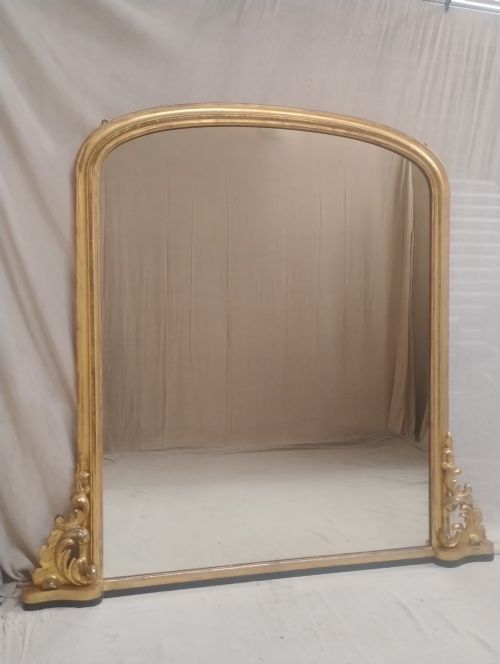
A vintage mantelpiece mirror sits low and wide above a fireplace, designed specifically to reflect the hearth and bounce daylight across the room. These substantial looking-glasses anchor a chimney breast and define the proportions of a formal reception space.
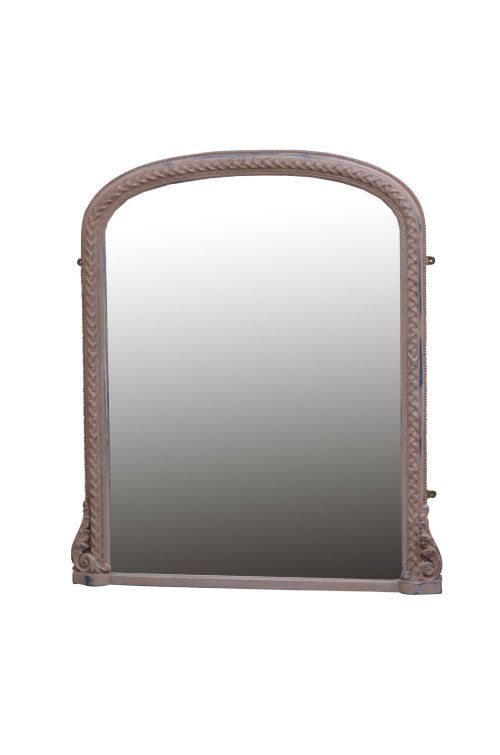
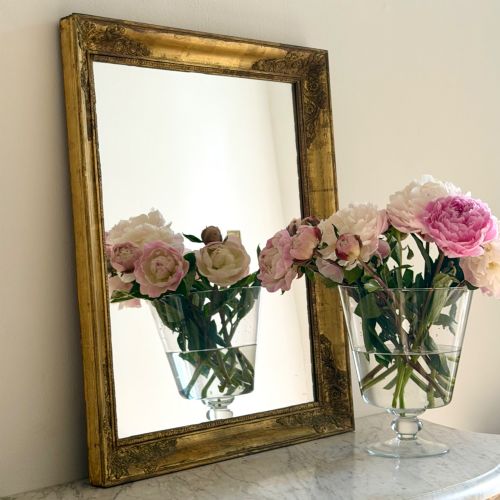
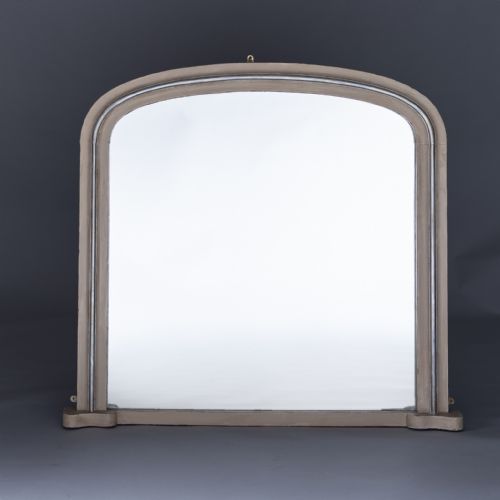
The pieces appearing on this page span the Victorian era, the Edwardian period, and the early twentieth century, taking forms such as overmantel mirrors and wall mirrors. Origin points include English workshops and Italian studios, spanning styles from Regency Revival and Italian Rococo Revival to Neoclassical and Louis Philippe.
Buyers meet architectural arched tops, hour glass framed profiles, and very large proportions stretching over a metre and a half in height. Some examples keep things restrained with painted finishes, while others present full architectural grandeur.
How they were made
Carved wood provides the structural core for many examples, worked into complex shapes before receiving layers of gesso and plaster to build up sharp decorative relief. Craftsmen then applied gold leaf or paint over these prepared surfaces to achieve a lustrous metallic finish or a muted tonal effect.
Glazing relies on heavy historic glass plates set securely into rebated wooden frames, sometimes showing the natural grain of pine beneath decorative treatments. The combination of carved wood, gesso, and gold leaf creates the characteristic weight and texture expected of nineteenth and early twentieth century overmantels.
Retail Price Guide 2026
Typical UK retail prices for vintage mantelpiece mirror, calculated from the Sellingantiques database of over a million retail prices indexed since 2003. This retail price guide relies exclusively on Sellingantiques data; no external sources or auction records are used, so the figures do not describe the wider market.
The selection includes pieces spanning the Victorian and Edwardian eras, alongside Italian Rococo Revival and Neoclassical design influences.
What varies in quality
Quality reveals itself in the crispness of the carved detail and the depth of the gesso application beneath the gold leaf or paint. Superior pieces display fluid, confident lines in their frames, particularly where arched tops or hour glass profiles require precise manual shaping.
The integrity of the original surface finish dictates the standing of a piece within the range, distinguishing untouched historic gilding or early paint from later interventions. Substantial scale combined with structural harmony marks out the more ambitious examples from simpler utilitarian mirrors.
The Vintage Mantelpiece Mirror Glossary
- Gesso
- A plaster-like mixture applied to wood frames to create a smooth surface for gilding or painting. This material allows artisans to carve intricate relief ornaments.
- Giltwood
- Timber that has been coated with gold leaf over a prepared base. It provides a warm, reflective metallic sheen characteristic of formal period furnishings.
- Overmantel mirror
- A wide looking-glass specifically scaled to hang above a fireplace mantelpiece. Its proportions relate directly to the width of the hearth below.
- Louis Philippe
- A nineteenth-century French style known for softer architectural curves and restrained ornamentation. It balances classical dignity with domestic warmth.
Frequently Asked Questions
How do I hang a heavy overmantel mirror?
These large mirrors require fixing directly into structural wall studs or masonry using heavy-duty brackets rated for substantial weight.
Because of their considerable height and width, professional installation ensures the piece remains secure above the fireplace.
Are these mirrors meant to stand on the mantel?
Many overmantel mirrors were traditionally designed to rest directly on the mantel shelf while being secured to the wall with safety brackets.
This placement allows the frame to sit naturally as an extension of the fireplace architecture.
How do I identify a Victorian overmantel?
Victorian pieces often feature heavy gesso ornamentation, giltwood finishes, and substantial arched or hour glass wooden frames.
They typically display the grand proportions and revival styles popular during the nineteenth century.
Can I place a mirror over a working fireplace?
Placing a looking-glass above a working hearth is a historic practice that amplifies the light and warmth of the fire.
Historic frames handle ambient room heat well, provided the wall fixings bear the full weight independently of the mantel shelf.