




Three Plate Mirror
A three plate mirror delivers architectural presence and reflected light, making it the definitive choice for hanging above a fireplace.
Three Plate Mirror
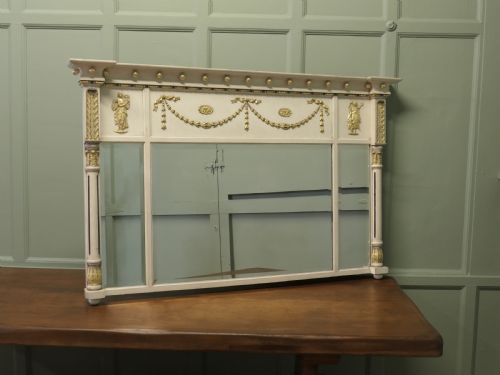
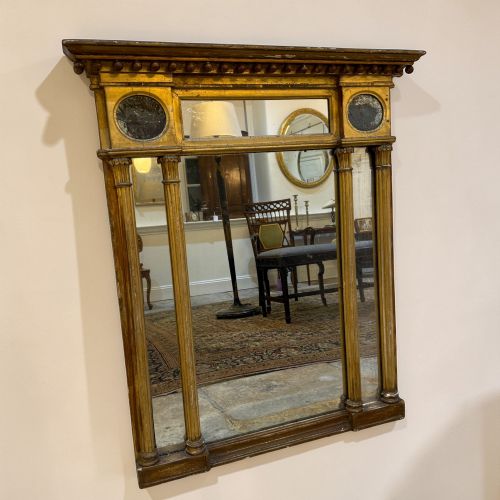
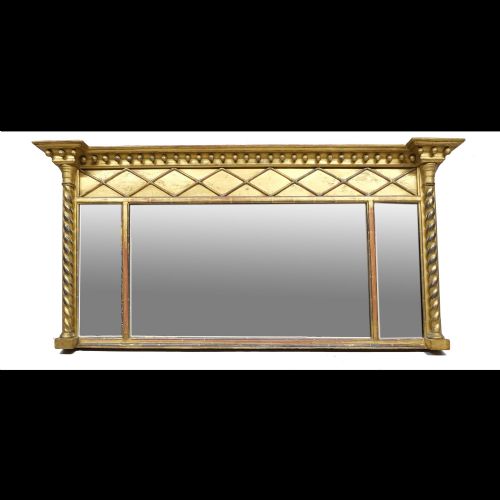
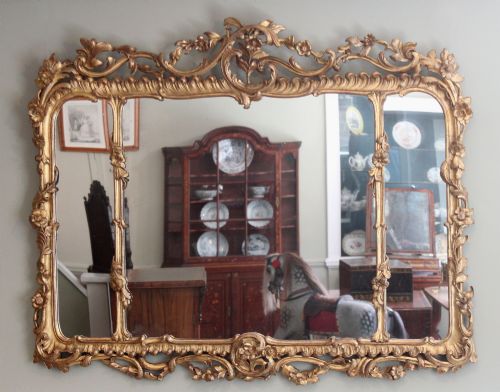
A three plate mirror divides its reflective surface into three distinct sections, often arranged horizontally to span the width of a chimney breast. These pieces primarily function as overmantel mirrors or wall mirrors, designed to anchor large expanses of wall in formal rooms.
The version most commonly encountered on this page originates in the nineteenth century, bearing the characteristic giltwood frames of the Regency or Victorian periods. Alongside these, examples stretch back into the eighteenth century under Georgian and George II styles, while later adaptations reach into the early twentieth century.
Makers fashioned these compartmentalised glasses in various scales, from intimate dressing table pieces to grand scale trumeau mirrors. While the horizontal triple plate format dominates, variations include pier mirrors and rectangular shapes suited to specific architectural proportions.
Materials and construction
Makers constructed the primary frameworks using timber such as mahogany, walnut, rosewood, or ebonised wood, often building up decorative relief with gesso and composition ornaments. Gilding was applied extensively, coating the carved surfaces in gold leaf to catch the ambient light of domestic interiors.
The mirror glass itself was set into compartments divided by slender wooden or gilded bars, known as muntins, which secured the multiple plates within a single frame. Paint and parcel gilt finishes also appear, adding tonal depth to the woodwork beneath.
Three Plate Mirror Retail Price Guide 2026
Typical asking prices for three plate mirror among the pieces listed under this phrase on Sellingantiques today, from the lower quarter to the upper quarter. They describe what is for sale here now, not the wider market.
One unexpected archive piece reimagined the three-plate concept horizontally as a shimmering table plateau simulating water beneath metal cornucopiae.
Evaluating the standard
Quality reveals itself in the crispness of the carved ornamentation and the depth of the gilding applied over the gesso ground. Finer examples display hand-modelled details like laurel wreaths, scrollwork, or figurative friezes rather than repetitive moulded composition.
The integrity of the original mirror plates and the structural tightness of the divided frame dictate the standing of a piece. Superior proportioning and well-executed joinery separate standard decorative items from works of notable craftsmanship.
Ciceri & Co.
The Three Plate Mirror Glossary
- Overmantel mirror
- A large mirror specifically designed to be hung on the wall directly above a fireplace mantelpiece. They often feature elongated horizontal proportions to match the width of the hearth below.
- Giltwood
- Timber that has been coated with a thin layer of gold leaf. This technique was standard for formal mirrors throughout the eighteenth and nineteenth centuries.
- Gesso
- A plaster-like mixture applied to wooden frame bases to provide a smooth surface for carving or gilding. It allows for intricate relief ornamentation.
- Trumeau mirror
- A decorative mirror incorporating a painted panel or carved artwork directly into the upper section of the frame. These pieces often served as permanent fixtures in grand interior schemes.
- Triptych
- A piece divided into three distinct panels or sections. In mirror design, this refers to the use of three separate glass plates within one unified frame.
Three Plate Mirror: Frequently Asked Questions
Where should I hang a three plate mirror?
These mirrors find their traditional home centred above a fireplace mantelpiece, where their horizontal span balances the hearth. They also work effectively on expansive dining room walls to reflect light across the space.
Ensure the wall fixings are secured directly into structural studs or masonry to support the considerable weight of the timber and glass framework.
How do I distinguish a Regency frame from a Victorian one?
Regency frames typically exhibit Neoclassical restraint, featuring architectural elements like reeded columns, ball-stud motifs, and classical friezes. Victorian examples often lean towards heavier, more exuberant Rococo revival scrolling and deep moulded relief.
Looking closely at the underlying gesso work and the style of the gilt finish usually clarifies the period of manufacture.
Can I use a dressing table version on a wall?
Smaller triptych mirrors designated for dressing tables are engineered for tabletop stands rather than heavy wall suspension. Converting them requires checking the rear structure to ensure the hanging brackets can safely bear the weight.
It is generally preferable to keep dressing table pieces on surfaces or utilise purpose-built wall mirrors for hanging.
How do I clean the divided glass plates?
Use a soft microfiber cloth lightly misted with a mild glass cleaner, applying the liquid to the cloth rather than directly onto the glass. This prevents moisture from seeping behind the plate edges where it can damage the antique silvering.
Take care around the wooden muntins and gilt borders to avoid abrasive contact with the historical finishes.