



Ball Cornice Mirror
A ball cornice mirror brings unmistakable Regency character to a room, offering striking architectural presence and bright reflection.
Ball Cornice Mirror
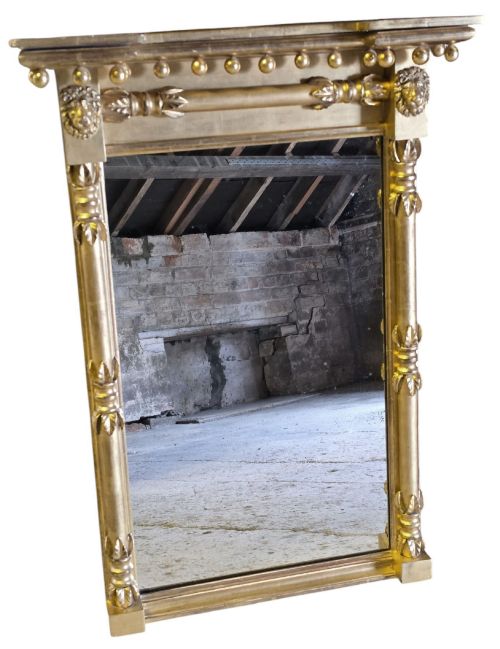
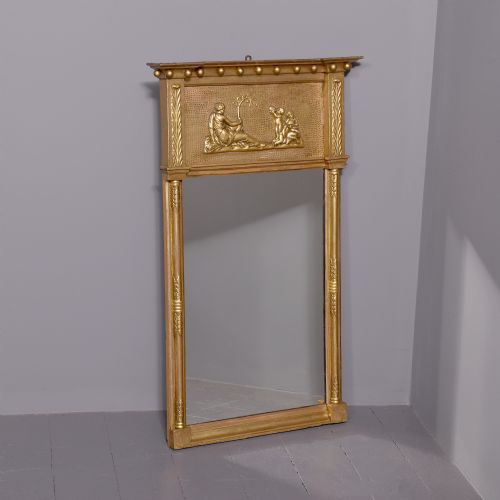
A ball cornice mirror belongs to the Regency and nineteenth century periods, taking the form of wall mirrors, pier mirrors and overmantel mirrors. These substantial wall hanging pieces often feature decorative elements such as lion masks.
The version most commonly met on this page is the Regency giltwood or painted pier mirror, designed to hang between windows or above a mantelpiece. Such pieces combine architectural dignity with decorative restraint.
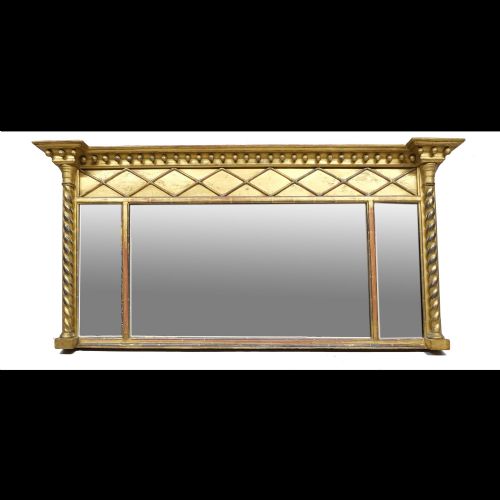
Makers of the era utilised distinct formats, including triptych overmantels that divide the reflective surface into three sections. These larger formats anchor a room and expand the sense of light.
How they were made
Craftsmen shaped these frames from carved wood, applying gesso to create crisp architectural details and relief ornaments before finishing the surfaces. Giltwood examples received layers of gold leaf to achieve a luminous metallic sheen.
Painted and parcel gilt variants combined flat or toned paintwork with selective gilding to highlight specific mouldings and carved motifs. Mirror glass was then fitted into the rebate behind the frame to complete the piece.
Ball Cornice Mirror Retail Price Guide 2026
Typical asking prices for ball cornice mirror among the pieces listed under this phrase on Sellingantiques today, from the lower quarter to the upper quarter. They describe what is for sale here now, not the wider market.
Every listing on this page dates from the Regency period or the wider nineteenth century.
What varies in quality
Quality rests in the crispness of the carved wood and gesso ornamentation, where sharper relief and finer detailing separate superior examples from softer, more rounded work. The application of gold leaf or paintwork dictates the visual depth of the finish.
The Ball Cornice Mirror Glossary
- Giltwood
- Wood carved and prepared with gesso before being covered in fine gold leaf. This traditional finish provides a warm, enduring metallic surface.
- Gesso
- A plaster-like mixture applied to carved wood as a smooth base for gilding or painting. It allows craftsmen to model sharp decorative details.
- Pier mirror
- A tall mirror specifically designed to hang on the wall space between two windows. These pieces often sat above low console tables.
- Parcel gilt
- A decorative treatment where only selected portions of a painted or stained wooden object are gilded. This creates a striking contrast between the two finishes.
Ball Cornice Mirror: Frequently Asked Questions
Where should I hang a ball cornice mirror?
These mirrors suit principal reception rooms, dining spaces or hallways where their architectural frames can command attention. Hanging them above a fireplace or a low console table provides a traditional and balanced setting.
Ensure the wall fixings match the substantial weight of the timber and gesso construction. Secure placement into solid masonry or proper stud work is essential for safety.
How do I clean the antique glass?
Use a soft, dry microfibre cloth to gently remove dust from the glass surface and the surrounding gilded frame. Avoid spraying liquids directly onto the mirror plate or the gesso.
If moisture is necessary, apply a minimal amount of mild glass cleaner to the cloth rather than the glass. Keep all cleaning products away from the antique giltwood and painted surfaces.
Are these mirrors heavy?
The combination of solid carved wood, thick gesso layers and heavy mirror glass creates a substantial weight. Professional installation using appropriate hardware is strongly recommended for all large examples.
Check that the hanging loops or wire attached to the reverse remain secure before mounting. Regular inspection of the wall fixings ensures the piece stays safely in place.
How do I identify a Regency period mirror?
Regency mirrors typically display classical architectural motifs, ball-turned cornices and restrained ornamentation. The integration of carved details like lion masks points directly to this stylistic period.
Materials such as gesso over carved wood and early mirror glass help confirm the nineteenth-century origins. Examining the construction methods on the reverse provides further clues to the date.